
Reviewed · QUEBRADA DE HUMAHUACA TOURS
Purmamarca: Hiking with Llamas through multicolored mountains
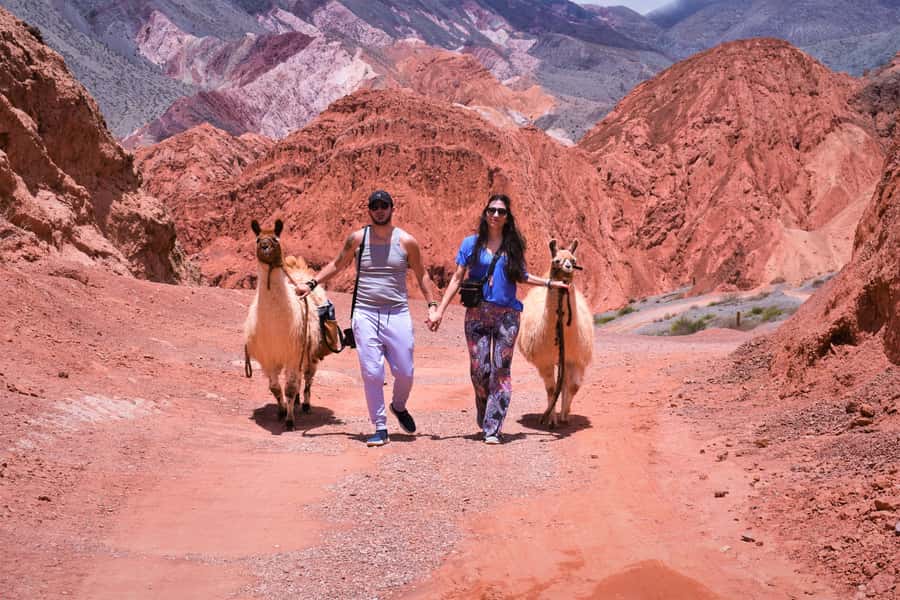
Purmamarca’s famous Seven Colors Hill gets plenty of attention, but this quiet llama walk offers a more personal way to meet the Quebrada de Humahuaca. You walk beside the animals rather than ride them, pausing for photos and learning how Andean people understand the bond between humans, nature, and Pachamama.
I like the gentle handling of the llamas and the chance to hear about geology, medicinal plants, and Andean culture from a local guide. I also like the small group limit of eight, which gives you more privacy and makes it easier to ask questions. The main consideration is access: the walk is easy rather than strenuous, but it is not suitable for wheelchair users, people with significant mobility or visual impairments, or babies under one year.
In This Review
- Key points at a glance
- Why this llama walk adds something to Purmamarca
- Meeting beside Paseo de los Colorados
- Learning how to walk with the llamas
- Walking through Purmamarca’s multicolored mountains
- Pachamama and the Andean view of nature
- How long the experience really takes
- Group size, comfort, and the pace of the visit
- What to bring for the high-altitude sun
- Is the experience good value?
- Who should book this Purmamarca walk?
- Practical verdict: book it for connection, not mileage
- FAQ
- Where does the llama walk meet?
- How long does the activity last?
- Can I ride the llamas?
- What languages does the guide speak?
- Is the walk suitable for children?
- What should I bring?
- Can wheelchair users join?
Key points at a glance
- Lead, do not ride: You learn how to hold and guide the llamas, with no riding or forced demands on the animals.
- A short walk from Purmamarca: The meeting point is about 200 meters from the town square, beside the cemetery on Paseo de los Colorados.
- Andean stories along the way: Your guide covers mountain geology, local plants and their medicinal use, camelid biology, and Pachamama.
- Small and personal: Groups are limited to eight people, with English and Spanish guiding available.
- Flexible walking routes: The circuit can be adapted to different ages and physical needs, with the service lasting about 90 minutes to two hours.
- Bring sensible gear: Wear closed shoes, carry water, and protect yourself from the strong sun with a hat and biodegradable sunscreen.
Why this llama walk adds something to Purmamarca
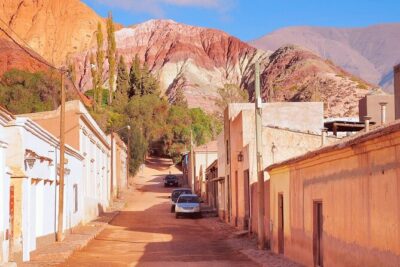
Purmamarca is a compact adobe village surrounded by striking bands of red, orange, green, purple, and gold rock. It is easy to spend a short time taking pictures and then move on. This experience gives you a reason to slow down.
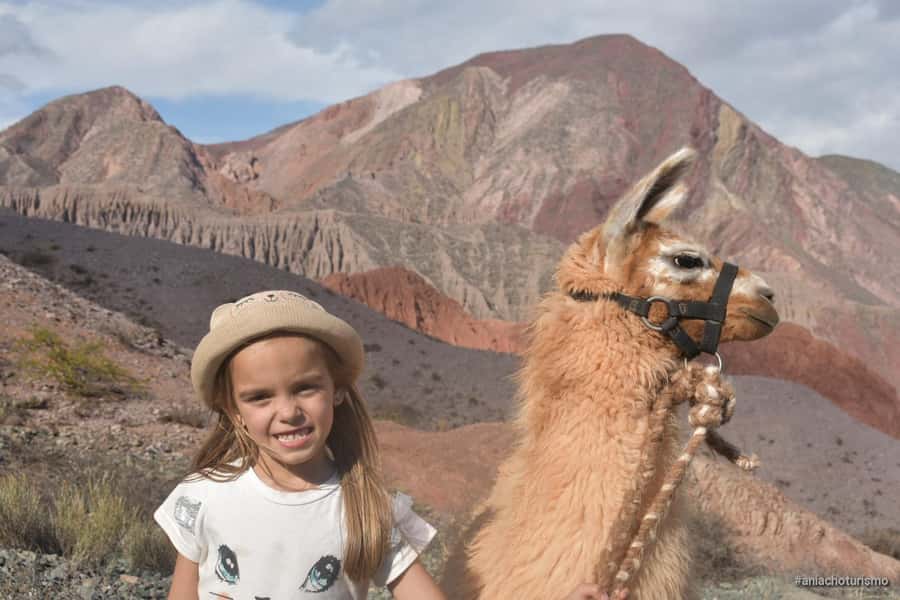
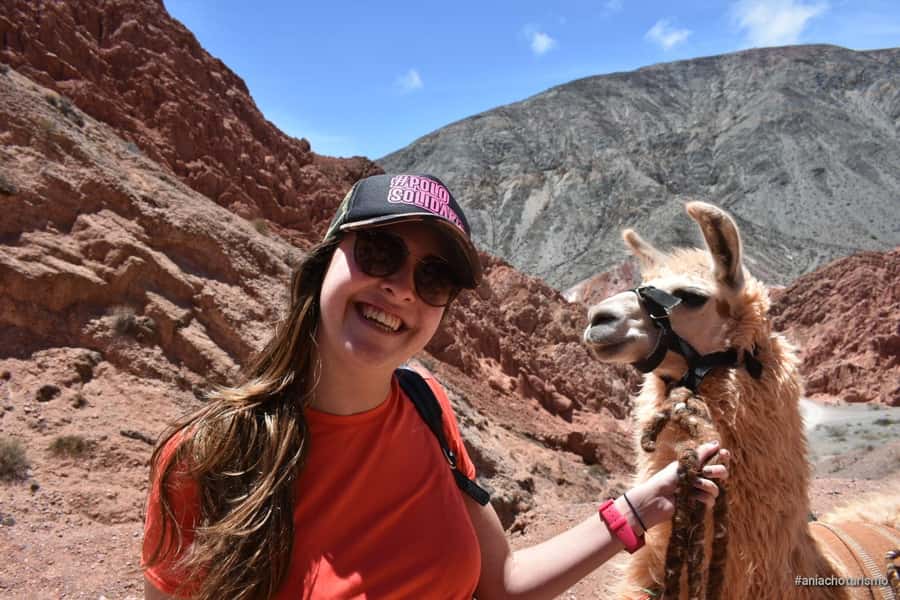
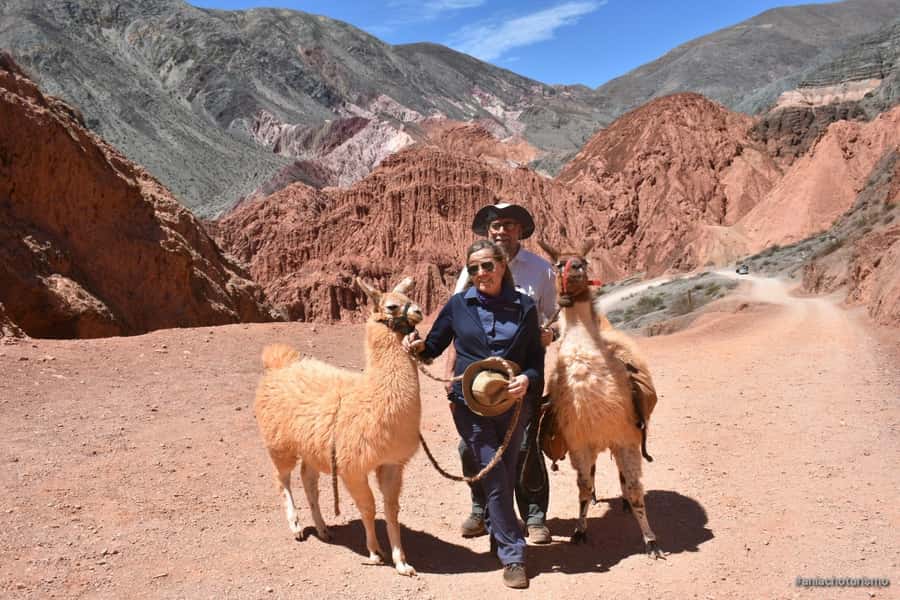
The llamas are not treated as props. At the start, you learn how to hold them and begin walking with them at a comfortable pace. You can offer caresses and, when the animals are receptive, closer contact such as an embrace. The activity makes clear that you do not ride the llamas, hurt them, or force them to perform.
That distinction matters. A llama walk can be a pleasant photo stop, but it is more worthwhile when the animals are treated with care and the cultural setting is explained. Here, the guide connects the animals to Andean life, not just to a colorful backdrop.
I also appreciate the balance between scenery and conversation. The mountains are the obvious attraction, yet the guide explains how they formed, what plants grow in the area, and how camelids fit into local life. You get more than a few attractive photographs. You get a better sense of why llamas belong here.
More quebrada de humahuaca tours in Salta:
- From Salta: Full-Day Trip to Salinas Grandes and Purmamarca
★ 4.6 · 914 reviews - From Salta: Salinas Grandes, Purmamarca & Los Colorados Hike
★ 4.3 · 356 reviews - From Salta: Serranías del Hornocal & Hill of 14 Colors Tour
★ 4.4 · 339 reviews
Meeting beside Paseo de los Colorados
The meeting point is on Paseo de los Colorados, beside the cemetery, roughly 200 meters from Purmamarca’s main square. The stated coordinates are -23.74663543701172, -65.4992446899414.
This is close enough to reach on foot from the center, but I would still allow a few extra minutes to find the precise spot. Purmamarca’s streets and paths can feel less obvious than a city address, and the cemetery-side meeting point is more useful than simply looking for a central plaza.
At the start, the guide checks the supplies needed for the activity and introduces you to the llamas. This first contact is important. You do not simply get handed a lead and sent off. You learn how to hold it before the walk begins.
Recent departures have been led by guides named Fabrizio and Aniacho. The guide’s role is central because the walk is built around explanation as much as movement. English and Spanish are offered, though some material may appear in its original language, so ask at booking if language support is especially important to you.
Learning how to walk with the llamas
The central rule is simple: you walk with the llamas, and you do not ride them. The activity is based on contact, calm handling, and respect for the animals.
You can expect time for direct interaction, including photographs, videos, gentle strokes, and close contact. The supplied information also makes clear that the llamas do not attack participants and are not made to meet demands. That should reassure anyone who enjoys animals but feels uneasy about activities that use them for entertainment.
The llamas also shape the pace. This is not a fast hike designed to cover a large distance. You are there to enjoy the company of the animals and take in the surroundings. The walk can be adjusted to the physical condition of the people in the group, and different circuits are available for different ages and needs.
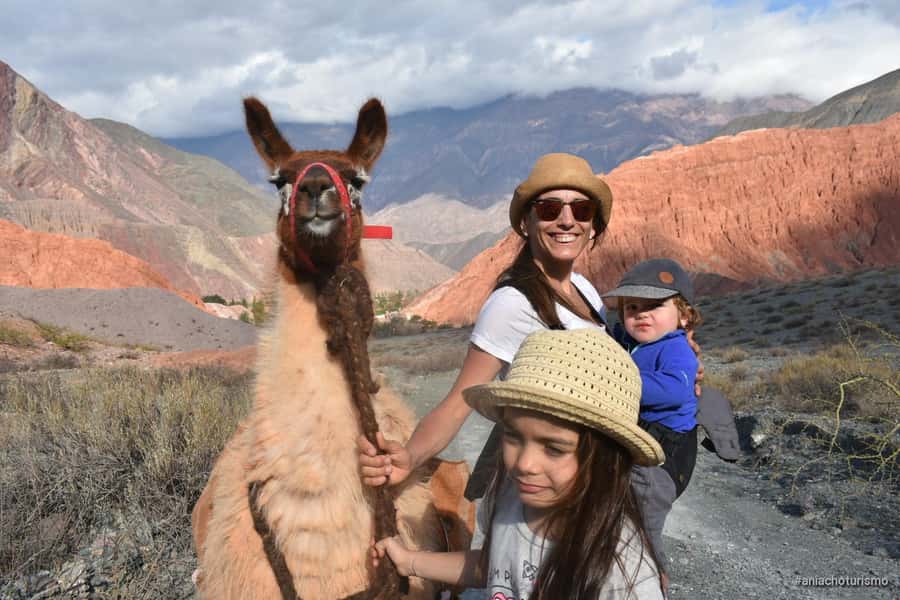
That flexibility makes the experience a good fit for families with children and for adults who want a gentle outing. Still, easy does not mean fully accessible. The activity involves walking outdoors and cannot accommodate wheelchairs. Sandals and flip flops are not allowed, so closed footwear is required.
Walking through Purmamarca’s multicolored mountains
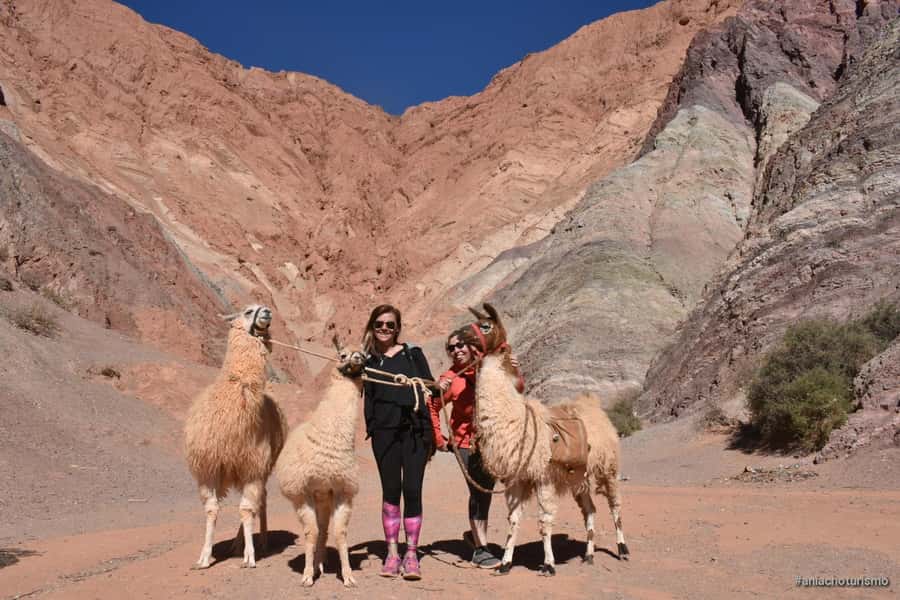
Once the introduction is finished, the group sets out through the colored mountain area around Purmamarca. The route is described as scenic and suitable for a relaxed walk, with time for stops and views rather than a demanding climb.
The colors are the main visual draw. Bands of mineral-rich rock form the dramatic hills around the village, and the changing shapes give you plenty to look at while the llamas move along beside you. If you have already seen the town’s famous viewpoints, this walk gives you a different angle and a slower rhythm.
The guide adds useful context about the geology. Instead of treating the hills as a simple photo background, you can ask how the rock layers formed and why the colors differ. That explanation can turn a quick glance at the mountains into a more lasting memory.
The route also includes discussion of local flora and medicinal uses. The information supplied does not promise a botanical walk with a fixed list of plants, so you should not expect a formal plant-identification course. You can expect the guide to point out relevant features and explain how nature is understood and used in the area.
The walk ends where it begins, about 200 meters from the main square. That makes the timing easy to manage if you have lunch, a bus, or another Purmamarca visit planned afterward.
A few more Salta trips to weigh up
- From Jujuy: Salinas Grandes, Purmamarca & Los Colorados Hike
★ 4.2 · 75 reviews - Trekking Purmamarca
★ 5.0 · 52 reviews - El Calafate: Perito Moreno Glacier Trekking Tour and Cruise
★ 4.8 · 805 reviews - From Ushuaia: Tierra del Fuego Emerald Lagoon Trekking Tour
★ 4.9 · 271 reviews
Pachamama and the Andean view of nature
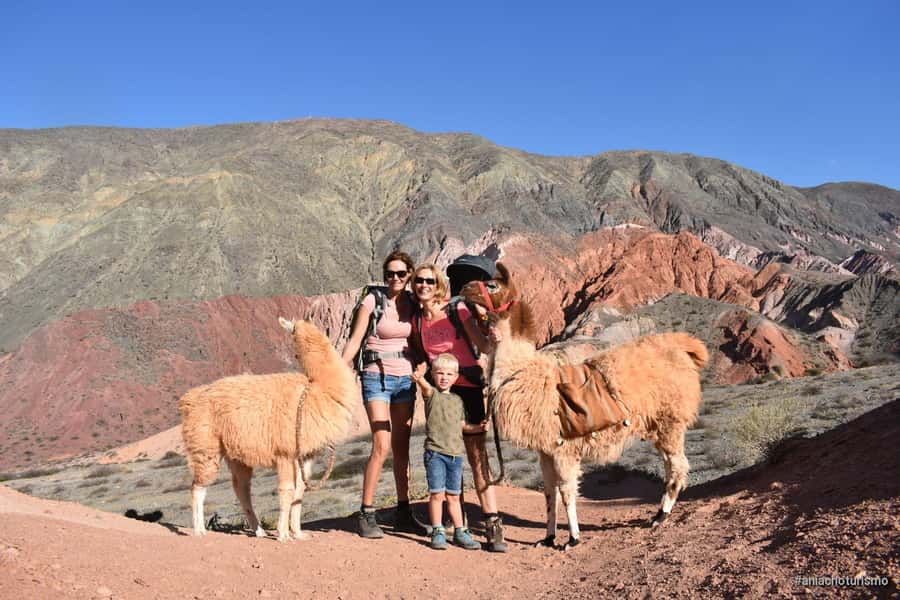
The cultural part is not an add-on. The experience is framed around reciprocity between people, the mountains, and the llamas. The guide discusses Pachamama, the Andean understanding of Mother Earth, and the way human life is connected to the natural world.
This is a useful perspective in a region where scenery can otherwise become a quick series of viewpoints. You are encouraged to consider the mountains as part of a living cultural setting, not just as colorful rock formations.
The subject is also linked to the llamas themselves. Camelids have long been part of Andean life, and the tour covers their biology as well as their place in local culture. The result is a conversation that moves between practical facts, animal behavior, geology, plants, and beliefs.
I would treat this as an introductory cultural experience rather than a full anthropology lesson. Its strength is the setting and the direct connection with the guide. In a small group, you can ask about points that catch your interest instead of listening to a fixed lecture from a distance.
How long the experience really takes
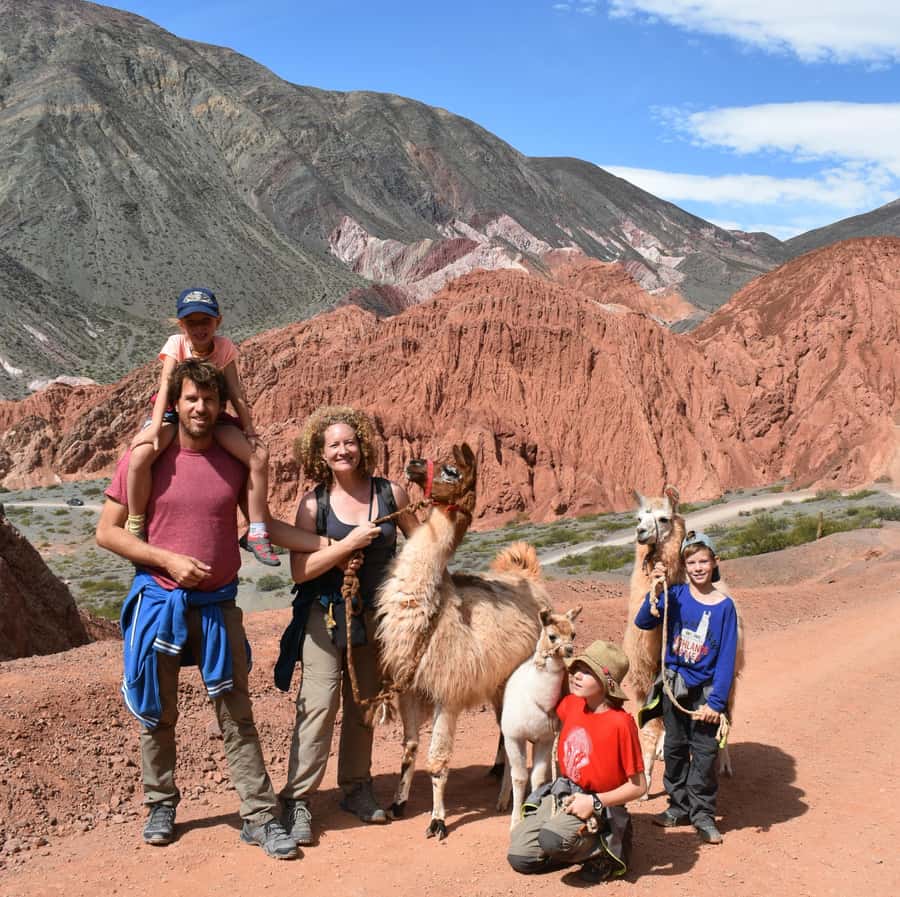
The advertised duration is two hours, with the service described more precisely as lasting between one and a half and two hours. That is the time I would use when planning your day.
One itinerary display refers to four hours, but the detailed activity information gives the shorter 90-minute to two-hour duration. If you have a tight schedule, confirm the exact starting time and expected end time before booking. The meeting and return point are the same, so there is no separate transfer time built into the activity.
The short duration is a strength if you are combining this with other sights in Purmamarca or a wider visit to the Quebrada de Humahuaca. It is long enough for contact with the llamas, a scenic walk, photographs, and cultural explanations without taking up an entire day.
It is not a substitute for a full-day mountain excursion. Trips to places such as Salinas Grandes, Hornocal, or the wider Humahuaca region cover much more ground and usually involve transport between several sites. Choose this walk for close contact and a local-scale experience, not for maximum sightseeing mileage.
Group size, comfort, and the pace of the visit
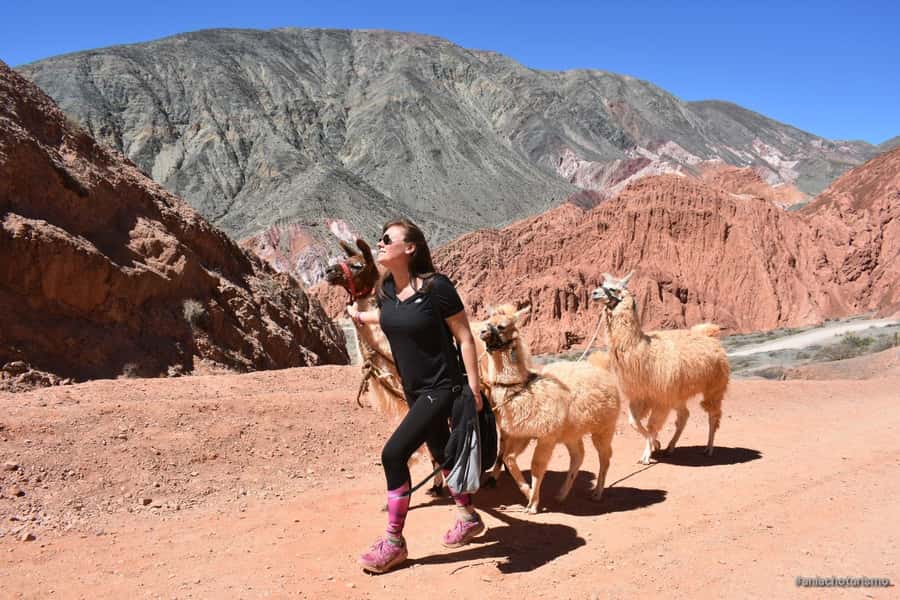
The group is limited to eight participants. That number is small enough to keep the experience personal without making it a private tour by default.
A small group matters here more than it would on a standard viewpoint stop. You need room to walk beside the llamas, take pictures, and hear the guide. A crowded group would make those moments less relaxed and could reduce the amount of direct contact.
The experience is meant to suit different ages, and the circuits can be changed to meet different needs. The walk itself is not described as demanding. Even so, you should be comfortable walking outdoors and following the route on foot.
Children can participate, but babies must be carried in a baby backpack. Strollers are not possible. The activity is not suitable for people with mobility impairments, wheelchair users, visually impaired people, recent surgery, babies under one year, or people over 95.
These restrictions are worth taking seriously. The walk may be gentle, but the setting is outdoors and the operator cannot provide wheelchair access. If someone in your group needs a fully accessible route, this is not the right choice.
What to bring for the high-altitude sun
The supplied advice is practical and should be followed:
- A sun hat
- Water
- Biodegradable sunscreen
- A small daypack
- Closed walking shoes
The hat and sunscreen are especially important. The open mountain setting offers strong sun, and you may spend time standing still while the guide explains the area or while the llamas pause.
Water belongs in your daypack even for a short walk. The experience lasts up to two hours, and the activity takes place outside town. Alcohol and drugs are not allowed, and sandals or flip flops are prohibited.
You should also bring a phone or camera if photographs matter to you. The walk includes time for pictures and video, and the llamas provide the kind of close subject that is difficult to capture from a roadside viewpoint. Handle your device carefully, though, and give attention to the animals rather than spending the entire outing behind a screen.
Is the experience good value?
No price is provided in the available information, so I cannot judge the exact cost. The value depends on what you want from Purmamarca.
If you only want a quick photograph of the Seven Colors Hill, any paid activity may feel unnecessary. You can see the town’s scenery without joining a guided walk. But if you want direct contact with llamas, local interpretation, and a quiet outing in a group of no more than eight, the experience offers more than a simple viewpoint visit.
The small-group format improves the value because the guide can respond to your questions and keep the pace comfortable. The inclusion of geology, plants, camelids, and Andean beliefs also gives the two hours a clear purpose.
I would compare it with the cost of a longer day trip before booking. A full-day tour from Salta or Jujuy may include transport to Purmamarca, Salinas Grandes, Hornocal, or other villages, but it will not necessarily give you this close, calm contact with the animals. Those are different products, not direct substitutes.
Flexible booking terms also reduce the risk of committing too early. You can reserve now and pay later, and cancellation is allowed up to 24 hours before the activity for a full refund. Confirm the terms shown for your specific booking, since departure details can vary.
Who should book this Purmamarca walk?
I would recommend it to families with children old enough to walk comfortably, couples who want a quiet shared activity, and solo visitors who enjoy animals and local culture. It also suits anyone who has already seen Purmamarca’s main viewpoint and wants a slower way to experience the area.
It is particularly good for photographers who want close portraits of llamas against colored mountains. It also works for visitors who prefer a small group and conversation over a large bus excursion.
I would not choose it if your priority is a challenging hike. The circuits are designed to be accessible in terms of effort, not to provide a serious trekking test. I would also avoid it if you dislike animal contact, need wheelchair access, or have very limited vision or mobility.
The experience received an overall rating of 4.4 from nine ratings, with especially strong marks for the llama contact, personal attention, small group, scenery, and explanations of mountain formation and Andean life. The main pattern is clear: the value comes from the combination of gentle animals, close guiding, and place-based stories.
Practical verdict: book it for connection, not mileage
You should book this experience if you want to spend two quiet hours walking through Purmamarca with llamas and learning how the animals, mountains, plants, and Andean beliefs fit together. The strongest parts are the respectful animal handling, the small group, and the chance to ask questions directly.
Skip it if you want a full-day tour, a strenuous hike, or guaranteed wheelchair access. For everyone else, it is a thoughtful way to see more than the famous colors of Purmamarca. You leave with photographs, but the better souvenir is a clearer understanding of why llamas and mountains matter here.
FAQ
Where does the llama walk meet?
The meeting point is on Paseo de los Colorados, beside the cemetery, about 200 meters from Purmamarca’s main square. The coordinates are -23.74663543701172, -65.4992446899414.
How long does the activity last?
The detailed activity information gives a duration of between one and a half and two hours. The listed duration is two hours. One itinerary display shows four hours, so confirm the exact timing when you book.
Can I ride the llamas?
No. You do not ride the llamas at any point. You learn how to hold and walk with them, with gentle contact, photographs, and videos during the outing.
What languages does the guide speak?
Live guiding is available in English and Spanish. Some content may be presented in its original language.
Is the walk suitable for children?
Families with children of different ages can participate if they can manage the outdoor walk. Babies must be carried in baby backpacks, and babies under one year are not suitable for the activity.
What should I bring?
Bring a sun hat, water, biodegradable sunscreen, and a daypack. Sandals and flip flops are not allowed.
Can wheelchair users join?
No. The activity is not suitable for wheelchair users or people with mobility impairments. Wheelchairs cannot be used on the walk.
Just added around Salta
- Trekking Purmamarca★ 5.0 · 52 reviews
- Salinas Grandes and Purmamarca Full Day Tour★ 4.5 · 34 reviews
- Tilcara: 2 hours cycling tour trough the rural area★ 5.0 · 5 reviews
- Salta: Tour to the Salinas Grandes and Purmamarca★ 3.7 · 3 reviews
- From Salta: Cafayate, Humahuaca, Cachi, & Salinas Grandes★ 4.3 · 13 reviews
- Salta or Jujuy: Iruya and Salinas Grandes 2-Day Tour★ 4.3 · 3 reviews
- From Salta: Cafayate, Cachi and Salinas Grandes in 3 days★ 3.3 · 6 reviews
- Salta en un Bocado – Cultural Tour & Empanada Tasting★ 5.0 · 3 reviews
Quebrada de Humahuaca Tours, compared.
Full-Day Trip to Salinas Grandes and Purmamarca
Read our review →
Salinas Grandes, Purmamarca & Los Colorados Hike
Read our review →
Serranías del Hornocal & Hill of 14 Colors Tour
Read our review →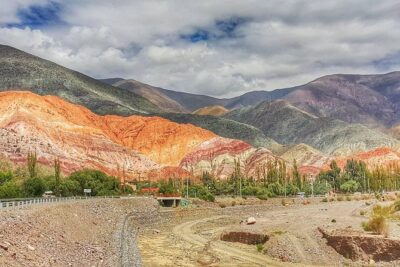
Full-Day Tour Salinas Grandes and Purmamarca from Salta
Read our review →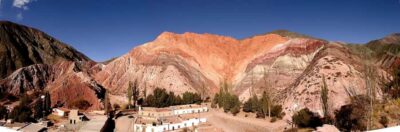
Full-Day Tour to Salinas Grandes and Purmamarca From Salta
Read our review →
Hornocal: Tour of the 14 Colors Mountain & Humahuaca´s Gorge
Read our review →
Salinas Grandes, Purmamarca & Los Colorados Hike
Read our review →Browse the lists this tour appears in