
Reviewed · TANGO SHOWS
Private Underground Tango Immersion
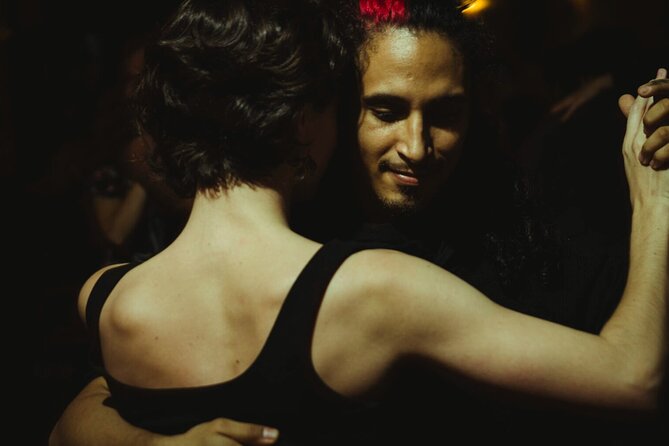
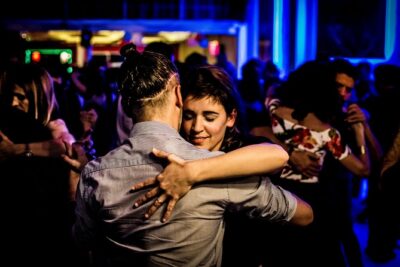
Buenos Aires tango is best understood not from a theater seat, but at a milonga, where local people gather to dance, watch, talk, and follow a set of quiet social rules. This three-hour private evening begins with a lesson from Rafael, Esther, or Andrea, then takes you to the kind of dance hall you would be unlikely to find comfortably on your own. I like the direct link between lesson and nightlife, and I like that your guide stays with you at the milonga to explain what you are seeing. The main consideration is the late start: you meet at 9:30 p.m., and some evenings have continued until 1 or even 2 a.m.
I also like the small-group format. You are not being moved through a large class or parked in a theater audience. You learn basic social tango, hear about the dance’s codes, sip Argentine wine, and sit at your guide’s table among local dancers. The price, $330 per person, is high for three hours, so this makes the most sense if you want personal attention and cultural context, not simply a short dance lesson.
In This Review
- Key points at a glance
- Why a milonga gives you more than a tango show
- Starting at 9:30 p.m. with a private lesson
- Learning the codes before entering the dance hall
- The ride from the studio to a local milonga
- What makes the milonga feel different
- A private evening, but not a private performance
- Is $330 per person a fair price?
- Who will enjoy this most
- Practical details that matter
- My verdict on the Private Underground Tango Immersion
- FAQ
- Where does the tango experience begin?
- What time does the activity start?
- How long does the experience last?
- Is the activity private?
- What happens during the tango lesson?
- What is a milonga?
- Is transportation included?
- Is wine included?
- Could I see live music or a tango performance?
- What languages does the guide speak?
- Are tips included in the price?
- Can I cancel for a full refund?
Key points at a glance
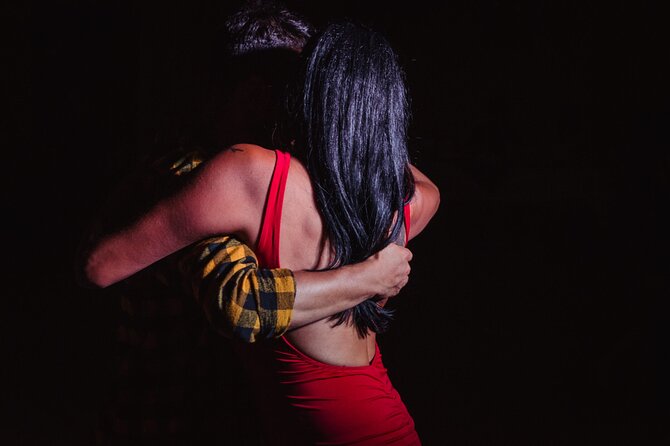
- Private lesson at Honduras 3700: Learn the basic tools, mechanics, ocho, and closing steps used in social tango.
- A real local milonga: See how Buenos Aires residents dance in a social setting, rather than only watching a staged production.
- Guides with personal ties to tango: Rafael, Esther, and Andrea teach, interpret the customs, and help you understand the room.
- Possible live orchestra and show: Depending on the night, you may see live tango music, a singer, or professional dancers.
- Transportation after class: Your guide takes you from the lesson to the milonga and returns with you to the starting point.
- Late-night schedule: The meeting time is 9:30 p.m., with the official duration listed as about three hours.
Why a milonga gives you more than a tango show
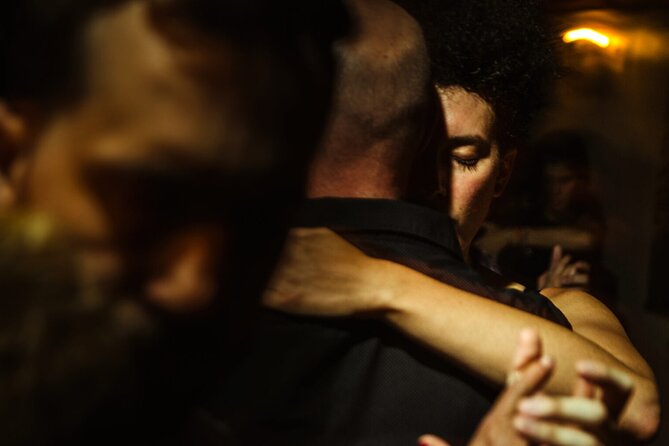
A Buenos Aires tango show is polished, dramatic, and easy to fit into a sightseeing plan. A milonga is different. It is a social dance night, and the pleasure comes from seeing how the room works as much as from watching individual dancers.
That distinction matters. On stage, tango is presented for an audience. At a milonga, dancers move for one another. You see couples enter the floor, follow the traffic, accept or decline invitations, and use small gestures that may not be obvious to an outsider. Your guide explains these customs as they happen, so the dancing becomes easier to read.
The evening is designed to give you both sides of the experience. First, you try the dance yourself. Then you sit back and watch local dancers apply the same ideas in a real setting. Even if your feet feel uncertain, the lesson gives you a useful frame for understanding the movement and connection.
This is why I would choose this activity over a standard stage show if you want to know how tango fits into daily life in Buenos Aires. It is less about grand spectacle and more about being shown how the culture works from inside the room.
More tango shows in Buenos Aires:
- Buenos Aires: Piazzolla Tango Show with Optional Dinner
★ 4.4 · 2,122 reviews - Buenos Aires: Tango Show at Tango Porteño & Optional Dinner
★ 4.6 · 981 reviews - Buenos Aires: Madero Tango Show with Optional Dinner
★ 4.3 · 748 reviews
Starting at 9:30 p.m. with a private lesson
You meet at Honduras 3700 in Buenos Aires at 9:30 p.m. The exact meeting details are confirmed after booking, and the starting point is near public transportation. The class is private, so only your own group takes part.
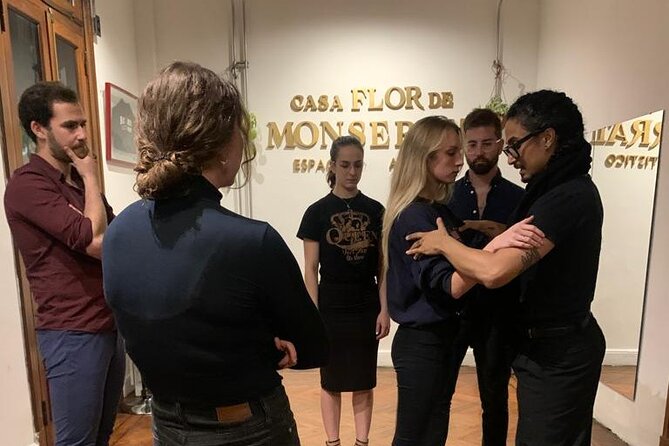
The lesson focuses on the basic tools and mechanics needed to improvise with other dancers. That wording is important. You are not simply memorizing a routine for a photograph or a stage performance. The goal is to give you enough control to understand social tango, where the dance changes according to the partner, the music, and the space on the floor.
The class can cover fundamental steps such as the ocho and closing steps. An ocho is a turning figure that asks you to shift weight and trace a curved movement with the feet. It can look simple when an experienced dancer does it, but beginners quickly learn that posture, timing, balance, and communication all matter.
You should not expect to become a polished tango dancer in one evening. You should expect to learn why tango feels different from ordinary partner dancing. The instruction is aimed at beginners and people with some previous experience, and the guides are described as patient teachers. That is helpful if one person in your group dances often while another feels uneasy on a dance floor.
The private format is one of the strongest parts of the experience. A public class may require you to keep up with a group. Here, the pace can be adjusted to your ability, and you can ask direct questions about your steps, posture, or the dance’s social rules. You may also have time to discuss tango’s origins and the role of the milonga before heading out.
Learning the codes before entering the dance hall
Tango has its own manners. The dance floor is not simply an open area where anyone walks in and starts moving. Couples share space, follow a direction, and communicate through subtle signals.
Your guide introduces these codes before you watch the dancing. That preparation makes a real difference. Without it, a visitor might see a room full of elegant couples and miss the small decisions that keep the floor orderly. With some guidance, you can notice how dancers interact, how the floor moves, and how invitations may be made without a spoken request.
This part also gives the evening a cultural focus beyond steps. The guides discuss local perspectives on tango and share personal stories from the Buenos Aires dance scene. Rafael is described as a professional dancer and teacher, and some evenings have included him performing at the same milonga. Esther and Andrea are also described as accomplished instructors who explain both movement and custom.
The emphasis is not on making you perform for strangers. You may dance at the milonga if the setting and your comfort allow, but you can also sit at your guide’s table and watch. That makes the experience workable for a mixed group, including a confident dancer paired with a complete beginner or someone who prefers to observe.
The ride from the studio to a local milonga
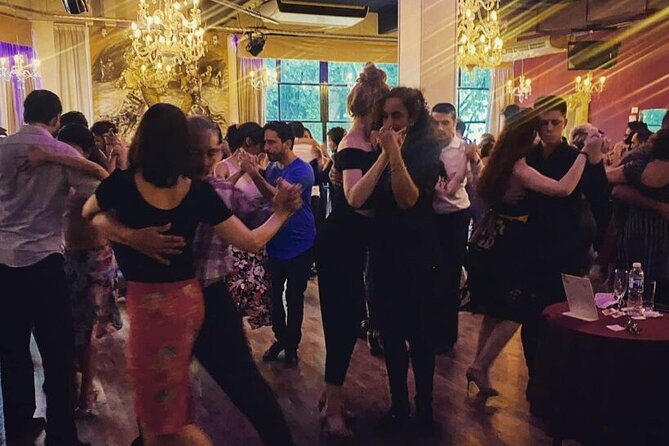
After the lesson, transportation is provided to the social dancing venue. This is a practical benefit, especially because the evening begins late and the venue is not presented as a place you would easily discover on your own.
The milonga is selected as part of the evening, so the exact venue and program can vary by date. That flexibility is useful because the Buenos Aires tango calendar changes from night to night. Depending on when you book, there may be a live tango orchestra, a singer, or a professional dance performance.
Do not treat the transportation as a sightseeing transfer. It is there to connect the two parts of the activity and make the night simpler. You are not promised a city tour on the way. The real value begins when you arrive and your guide helps you understand the room.
At the venue, you sit at your guide’s table and receive Argentine wine. The table gives you a home base, which can make an unfamiliar social setting feel much less awkward. You can ask questions without interrupting the action, talk with your guide about tango, and watch dancers from a comfortable position.
A few more Buenos Aires trips to weigh up
- Buenos Aires Private City Tour with Local Guide
★ 5.0 · 308 reviews - Buenos Aires: Private Tango Lesson
★ 4.9 · 244 reviews - Buenos Aires: Personalized 2 to 8-Hour Private Walking Tour
★ 4.7 · 149 reviews - Private Arrival Transfer: Ezeiza Airport to Buenos Aires Hotels
★ 4.0 · 136 reviews
What makes the milonga feel different
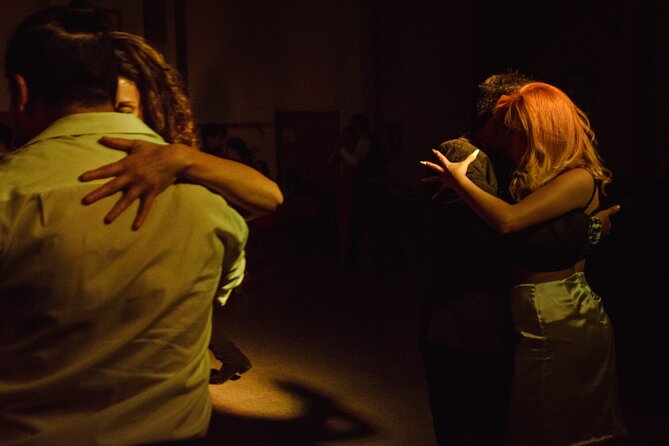
The best part of this night is the contrast between the lesson and the room you enter afterward. In class, you think about your own feet. At the milonga, you start to see tango as a shared language.
You might watch couples glide past at close range, see a singer or orchestra perform, and notice how the audience responds. One evening may include a live orchestra and a dance company. Another may offer a quieter night focused mainly on social dancing. The program is not fixed, so you should regard the performance element as a possibility, not a guarantee.
Some groups have been seated close to the floor, which makes professional performances especially easy to see. If you are interested in tango technique, this is a good chance to watch details that disappear in a distant theater seat: the pause before a step, the control of a turn, and the way dancers use very small movements.
The atmosphere is also more informal than a formal dinner show. You can have wine, talk with your guides, and mingle with local people. The night is built around conversation and observation, not just a scheduled show with a clear beginning and end.
For me, this is the right choice if you want context. You are not only told that tango is important to Buenos Aires. You are shown how people practice it, socialize around it, and preserve its customs.
A private evening, but not a private performance
The activity is private for your group, but the milonga itself is a public social setting. That difference is worth understanding before you book.
You receive personal instruction and guidance, but the dancers you watch are not performing solely for your party. The appeal is precisely that you are entering a real local night rather than a set built for tourists. The tradeoff is that the venue, seating, crowd, and entertainment can vary.
This also means the evening may not follow the tidy rhythm of a theater production. A dance performance might begin later. A live orchestra may or may not be scheduled. The night can stretch beyond the listed three hours if you are having a good time, so do not book an early morning activity immediately afterward.
The guides’ role is central here. They translate the unwritten rules, introduce you to the setting, and help the evening feel social rather than clinical. Several accounts describe the experience as spending time with friends who happen to know tango well. That personal quality is a major reason to choose this activity, but it also means the experience depends heavily on the guide assigned to your date.
Is $330 per person a fair price?
At $330 per person, this is an expensive evening activity. The cost includes the private lesson, Argentine wine, all fees and taxes, transportation from the lesson to the milonga, and an English-speaking guide who is also fluent in Spanish and Japanese. Tips are not included.
You are paying for access and interpretation as much as for instruction. A cheap group class can teach a few steps, and a standard tango show can give you an entertaining performance. This activity combines a private class, transport, a local dance venue, a guide at your table, and a chance to see live music or professional dancers when scheduled.
The value is strongest for first-time visitors who would not know which milonga to choose or how to behave once inside. It is also strong for couples who want a shared cultural evening and for solo visitors who would rather have a local companion than enter a late-night dance hall alone.
The value is weaker if you already dance tango regularly in Buenos Aires, know the milonga codes, or only want a short performance. In that case, you may be paying for instruction and guidance you do not need.
I would also compare the price with your overall Buenos Aires plans. If tango is one of your main reasons for visiting, this can serve as both an introductory class and a culturally focused night out. If tango is only a minor curiosity, the cost may feel steep for three hours.
Who will enjoy this most
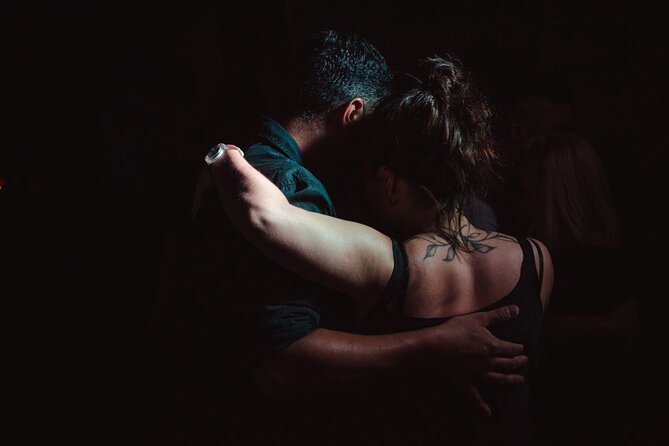
This activity suits couples especially well, since you can learn together and share the surprise of seeing the dance in a local setting. It also works for solo visitors and families with adult children. Alcoholic beverages are available only to people age 18 and older.
You do not need prior dance experience. The instruction is pitched toward beginners, and the guides are described as patient with people who feel they have two left feet. That said, you should be comfortable with a late evening and with trying basic partner movement in a private class.
The activity can also suit older participants. One account describes a 78-year-old taking part, dancing, and staying out until 1 a.m. Still, the late hour is the key practical issue. Most people can participate, but anyone who needs an early night should think carefully about the 9:30 p.m. start.
You will get the most from it if you enjoy conversation, observation, and cultural explanation. If you prefer a large spectacle, a formal meal, and a predictable schedule, a standard tango show may fit better.
Practical details that matter
The meeting point is Honduras 3700, C1174 Buenos Aires, and the activity ends back at the meeting point. Confirmation is received at booking, and the exact meeting point information is provided after you reserve.
The listed duration is approximately three hours. In practice, some evenings have continued well past midnight, with accounts of returning at 1 or 2 a.m. Treat the schedule as a late-night plan, not an activity that wraps neatly at midnight.
The guide speaks English, Spanish, and Japanese. That makes the cultural explanations easier for many international visitors, and it may help you ask about subtle social customs without relying on gestures or guesswork.
The booking pattern also matters. This experience is booked about 15 days ahead on average, so I would not leave it until the last night of your trip if tango is important to you. The cancellation policy allows a full refund if you cancel at least 24 hours before the start time. Cancellations or changes inside that window are not refunded or accepted.
One poor logistical incident has been reported, involving a guide who did not arrive and failed to communicate until the following day. That appears to be an exception among otherwise highly positive feedback, but it is still a useful reminder: confirm the meeting details and keep the operator’s contact information handy. A late-night meeting requires clear communication.
My verdict on the Private Underground Tango Immersion
I would book this if you want to understand tango as a living social tradition, not just watch attractive dancers under stage lights. The private lesson gives you a basic vocabulary, and the milonga shows you how that vocabulary works among local people.
I especially like the combination of patient beginner instruction and a real night out. I also like the guide’s table, the Argentine wine, and the chance to see an orchestra or performance when the date lines up. Those details turn a dance class into a fuller Buenos Aires evening.
I would skip it if $330 feels too high, if you dislike late nights, or if you want a guaranteed show with a fixed program. For everyone else, particularly first-time tango visitors, this is one of the more personal ways to meet Buenos Aires after dark. Book it early, arrive ready to learn a few steps, and leave room in your schedule for the night to run long.
FAQ
Where does the tango experience begin?
It begins at Honduras 3700, C1174 Buenos Aires, Argentina. The exact meeting point information is provided after booking.
What time does the activity start?
The stated start time is 9:30 p.m.
How long does the experience last?
The listed duration is approximately three hours. Some evenings may continue until 1 or 2 a.m.
Is the activity private?
Yes. Only your own group participates in the private tour and lesson.
What happens during the tango lesson?
You learn fundamental tools and mechanics for improvising with other dancers in a social setting. The instruction may include basic movements such as the ocho and closing steps.
What is a milonga?
A milonga is a social tango dancing venue where local people gather to dance and watch tango. Your guide explains its codes and customs during the visit.
Is transportation included?
Yes. Transportation from the lesson to the milonga is included, and the activity ends back at the original meeting point.
Is wine included?
Yes. Argentine wine is included. Alcoholic beverages are available only to people age 18 and older.
Could I see live music or a tango performance?
Depending on the day you book, the milonga may have a live tango orchestra, a singer, or a professional dance performance. These elements are not guaranteed for every date.
What languages does the guide speak?
The guide is fluent in English, Spanish, and Japanese.
Are tips included in the price?
No. Tips are not included.
Can I cancel for a full refund?
Yes, if you cancel at least 24 hours before the experience start time. Cancellations within 24 hours are not refunded, and changes within that period are not accepted.
Just added around Buenos Aires
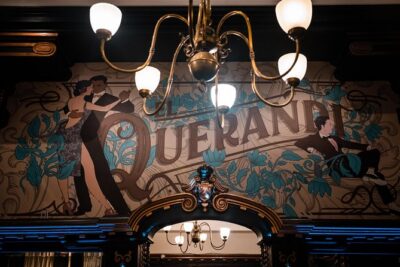
- Tango Show at El Querandi with optional Dinner★ 4.2 · 3 reviews
- Wine Tasting in Buenos Aires★ 4.2 · 4 reviews
- Walking Tour: Buenos Aires bookstores★ 4.3 · 12 reviews
- Velez Sarsfield Football Match★ 5.0 · 3 reviews
- Unique Tigre and Delta Private Day Cruise Navegation★ 5.0 · 3 reviews
- Tour Buenos Aires in one day on Electric Scooters★ 5.0 · 33 reviews
- Experience The Essence of Buenos Aires in San Telmo★ 5.0 · 51 reviews
- Sailing with Wine Tasting in Buenos Aires★ 5.0 · 50 reviews
Tango Shows, compared.

Palacio Tango: Tango Show at the Piazzolla Theater
Read our review →
Browse the lists this tour appears in