
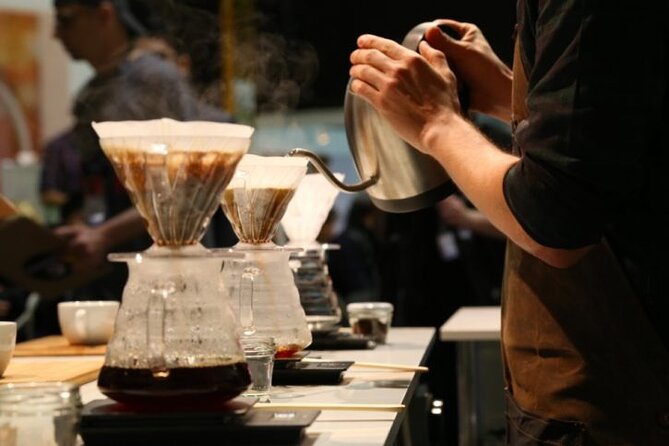
Reviewed · FOOD & DRINK
N1 Coffee Tasting Experience in Buenos Aires
Coffee takes center stage here, not as a quick café stop but as a hands-on lesson in how a bean becomes a cup. At Al Diablo Coffee Roasters, guide Lyubov leads you through origins, farming, harvesting, roasting, aromas, and tasting, with several freshly roasted single-origin coffees to compare.
I like the private format, since you can ask basic questions without feeling out of place and spend more time on the flavors you enjoy. I also like the Le Nez du Café aroma kit, which turns smelling into a playful test rather than a lecture. The main consideration is the price: at $85 per person, this is a serious coffee class, not a casual tasting.
In This Review
- Key points to know before booking
- Why this is more than a Buenos Aires café visit
- Meeting Lyubov at Al Diablo Coffee Roasters
- The Le Nez du Café aroma challenge
- From seed to roast: the coffee lesson
- Tasting several single-origin coffees
- What you take home from the workshop
- Who will get the most from the $85 price
- Timing, group size, and planning your day
- My practical verdict on N1 Coffee Tasting
- Should you book this coffee experience?
- FAQ
- Where does the N1 Coffee Tasting Experience begin?
- Where does the experience end?
- How long does the coffee tasting last?
- How much does the experience cost?
- Is the experience private?
- Can I choose a morning or afternoon departure?
- What coffees will I taste?
- What is the Le Nez du Café kit used for?
- Can I cancel for a full refund?
Key points to know before booking
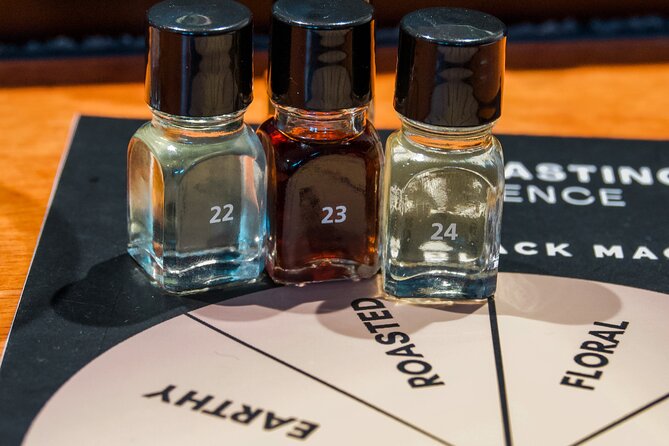
- A private lesson with Lyubov: Your group receives her full attention during the roughly two-and-a-half-hour session.
- Four coffees to compare: The tasting helps you notice how origin, roast, and preparation affect flavor.
- A coffee aroma game: The Le Nez du Café kit trains your nose before you taste.
- Useful shopping skills: You learn how to read coffee-bag labels and choose beans for your own palate.
- Morning or afternoon departures: You can fit the workshop around your Buenos Aires plans.
- A hands-on class for beginners and coffee fans: You touch, smell, examine, and taste rather than simply listen.
Why this is more than a Buenos Aires café visit
Buenos Aires is full of cafés, and you can easily spend an afternoon with a cortado and a pastry. This experience offers something different. It asks you to slow down and pay attention to what is in the cup.
The focus is specialty coffee, with single-origin beans and coffees from leading roasters in Buenos Aires. That matters because single-origin coffee gives you a clearer chance to compare place, processing, roasting, and flavor. You are not just asking if one cup tastes good. You are learning why it tastes the way it does.
I would think of the session as a beginner-friendly coffee master class. It is not aimed only at experts who already know their washed Ethiopian beans from their natural Colombian beans. The structure starts with basic ideas and builds toward tasting, so you can arrive with little coffee knowledge and still follow the discussion.
At the same time, coffee enthusiasts have plenty to discuss. Lyubov encourages questions and explains the subject in a way that connects facts to what you are smelling and drinking. That connection is the real value. Instead of hearing a list of coffee terms, you can test those ideas with your own senses.
Other Buenos Aires days worth booking alongside this:
- Buenos Aires Hop-On Hop-Off Bus, Free Walking Tours & Discounts
★ 4.5 · 2,218 reviews - Buenos Aires: Piazzolla Tango Show with Optional Dinner
★ 4.4 · 2,122 reviews - Buenos Aires: City Highlights Guided Tour with Transfer
★ 4.7 · 1,946 reviews
Meeting Lyubov at Al Diablo Coffee Roasters
The experience begins at Al Diablo Coffee Roasters, at Costa Rica 4752 in Buenos Aires. It ends at the same place, which keeps the arrangement simple. The meeting point is near public transportation, so you do not need to build a complicated route into your day.
Lyubov is central to the experience. She brings a personal coffee journey, a warm teaching style, and a strong grasp of the full production chain. Her job is not simply to pour samples. She explains how coffee begins as a planted seed, moves through cultivation and harvest, reaches the roaster, and finally becomes a drink.
That broad view helps you understand why a coffee bag can contain so much information. Origin, processing, roast, and tasting notes are not random marketing language. They tell you something about what you may find in the cup, although you still need to know how to interpret them.
The private setup makes this especially useful for couples, friends, families, or solo visitors. If you are the only person in your group who drinks coffee, you can ask beginner questions. If everyone already has strong opinions, you can spend more time comparing preferences.
The Le Nez du Café aroma challenge
One of the most unusual parts of the session is the use of Le Nez du Café, a sommelier-style aroma kit. You smell individual aromas and try to identify them. This becomes a game, but it also serves a real purpose.
Coffee tasting depends heavily on smell. Many of the notes people describe as fruit, flowers, nuts, chocolate, or spice are tied to what your nose detects, not just what your tongue tastes. The aroma exercise helps you notice scents before the coffee itself adds another layer of information.
Do not worry if you cannot identify every aroma right away. The value is in learning to pay attention. You may discover that you can recognize a smell clearly but have trouble naming it. That is normal, and the activity gives you a way to build a personal vocabulary.
I especially like this part for people who think coffee tasting sounds too serious. The game takes some pressure off. You are not being graded as a professional sommelier. You are learning how to notice.
The aroma kit also makes the class more active. You handle the samples, make guesses, compare impressions, and then connect those smells to the coffees you taste later. That hands-on rhythm keeps the session from becoming a long talk.
From seed to roast: the coffee lesson
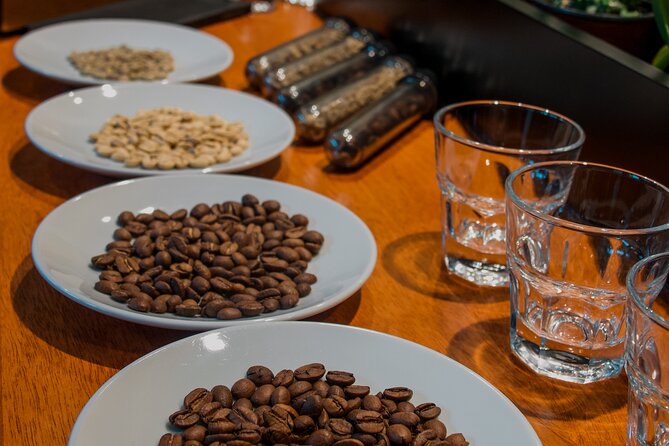
After the aroma work, Lyubov explains the path from coffee plant to finished cup. The lesson covers growing, harvesting, production, roasting, and preparation. This is useful context because flavor begins well before brewing.
The same coffee bean can produce a very different drink depending on how it is processed and roasted. A roast can affect body, bitterness, sweetness, and the way origin flavors show up. Learning those basics gives you a better way to understand why two coffees that look similar can taste far apart.
You will also learn how to examine beans and make sense of coffee packaging. This is one of the most practical parts of the workshop. Coffee-bag descriptions can be confusing, especially when they list several tasting notes and production terms. Lyubov breaks the language into usable pieces so you can make a more informed choice later.
I would pay close attention here if you buy coffee at home. The point is not to memorize every technical term. It is to recognize which details match your preferences. If you like bright, fruit-forward coffee, you can look for clues that may lead you in that direction. If you prefer a heavier, more familiar cup, you can learn what to seek instead.
The session also explains different ways to prepare coffee and how preparation affects the final result. The focus is not simply on finding one correct method. It is on understanding how brewing choices can bring out different qualities in the same beans.
A few more Buenos Aires trips to weigh up
- Buenos Aires: 9-Course Argentine Meat Tasting at Fogón Asado
★ 4.9 · 826 reviews - Buenos Aires: Local Foodie Adventure with Sherpa Food Tours
★ 4.9 · 670 reviews - Buenos Aires: Wine Tasting and Lunch at Bodega Gamboa
★ 4.8 · 177 reviews - Buenos Aires Food Tour: Local Dishes, Steak, Empanada & More
★ 5.0 · 118 reviews
Tasting several single-origin coffees
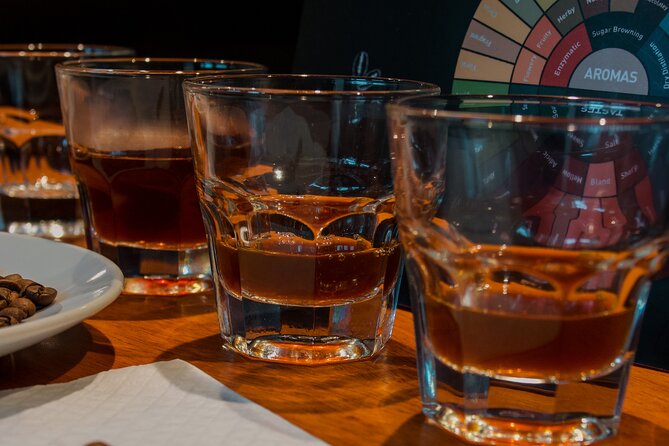
The tasting is the heart of the experience. You sample a range of specialty coffees, including four different coffees in the described format, and compare them side by side. The point is not to rush through a flight. It is to pause between cups and ask what has changed.
You might notice differences in aroma first. Then look at flavor, acidity, sweetness, body, and finish. You do not need professional language to take part. Your own reaction is useful. One coffee may seem floral, another fruity, another nutty or chocolate-like, and another may feel fuller or sharper.
Lyubov guides you toward your own palate rather than telling you what you must like. That distinction matters. A coffee described as excellent may still not be the best match for you. The lesson helps you separate quality from personal preference.
This is also where the earlier aroma exercise pays off. You have already trained yourself to stop and smell. Now you can connect a scent to a flavor and begin to describe what you are experiencing with more confidence.
Some tasting sessions can feel intimidating because people worry about giving the wrong answer. This one is designed as a learning activity. You can ask questions, compare your impressions, and revise your opinion as you taste. That makes it a good fit for someone who enjoys coffee but has never had a formal tasting.
The range of samples is another reason to book this rather than simply visit one café. At a normal coffee stop, you may enjoy one drink without knowing what else you might prefer. Here, contrast is built into the session.
What you take home from the workshop
The best souvenir is not a bag of beans. It is a better sense of what to buy and how to taste it.
By the end, you should have a clearer idea of your personal preferences. You may find that you favor certain origins, roast levels, aromas, or preparation styles. That can save money over time because you are less likely to choose beans based only on an attractive label.
You also gain a practical way to read coffee packaging. Terms that once seemed decorative become clues. You can ask better questions at a roaster and make a more informed choice when you shop.
The workshop can also change how you drink your everyday coffee. Several people who have taken the session went on to adjust their home brewing or rethink the way they consume coffee. That makes the $85 price easier to defend if you drink coffee often.
Still, you should be clear about what you are paying for. This is not a large plantation tour, a sightseeing excursion, or a long food-and-drink crawl. It is a focused educational experience in one coffee shop. The value comes from Lyubov’s instruction, the private attention, the aroma kit, and the guided comparisons.
Who will get the most from the $85 price
At $85 per person, the experience costs more than ordering a few specialty coffees in Buenos Aires. I would book it if you want an organized lesson and expect to use what you learn after the session.
It is a strong choice for:
- Coffee drinkers who want practical skills: You learn how to compare beans and read labels.
- Beginners who feel lost by coffee language: The lesson starts with fundamentals and uses tasting to make them clear.
- Experienced coffee fans: You can ask detailed questions and test your preferences against several coffees.
- Solo visitors: A private booking gives you direct time with the guide.
- Couples, friends, and families: The tasting works well as a shared activity with plenty of conversation.
- People looking for something outside standard sightseeing: It is interactive, local, and centered on a craft rather than a landmark.
I would skip it if you only want a quick caffeine stop or if you dislike structured tastings. Two and a half hours is a long time if you have no interest in coffee production, aroma, or brewing.
The price may also feel high for casual drinkers. If you drink coffee only once in a while, the lasting benefit may not justify the cost. If coffee is part of your daily routine, the new buying and brewing skills have a better chance of paying off.
Timing, group size, and planning your day
You can choose a morning or afternoon departure. A morning slot could work well before sightseeing, while an afternoon booking gives you time to ease into the day first. Since the activity lasts about two hours and thirty minutes, leave space around it rather than trying to squeeze in another fixed appointment.
The activity is private, so only your group takes part. This is important for the teaching style. You can ask Lyubov to explain a point again, spend longer on a particular aroma, or talk about the coffee you like best without worrying about a larger group waiting.
The experience is commonly reserved well ahead of time, with an average booking lead of about 38 days. If your Buenos Aires dates are fixed, I would not leave this until the last minute.
Confirmation is provided at booking. The meeting point is near public transportation, and the session returns you to Al Diablo Coffee Roasters. You can cancel for a full refund up to 24 hours before the start time. Changes or cancellations inside that 24-hour window are not accepted for a refund, and the cut-off follows local time.
My practical verdict on N1 Coffee Tasting
I like this experience because it gives you a useful skill, not just a pleasant drink. The strongest elements are the private instruction from Lyubov, the playful aroma training, and the chance to compare several coffees instead of judging one cup in isolation.
The biggest caution is simple: $85 is a lot for a coffee activity. You should book it because you want the class, not because you expect a cheap tasting. The session is most worthwhile for people who will carry the lessons into future coffee purchases and brewing.
Should you book this coffee experience?
Book it if you enjoy coffee, want to understand specialty beans, or need help finding the flavors that suit you. It is also a good pick if you have already visited the main Buenos Aires sights and want a quieter, more personal activity.
I would also recommend it to non-experts. You do not need a trained palate. The class is built around smelling, tasting, asking questions, and learning at your own pace.
Skip it if you want a short café visit, a plantation outing, or a broad city tour. For everyone else, this is a thoughtful way to spend a morning or afternoon in Buenos Aires, with lessons that can improve every cup you drink afterward.
FAQ
Where does the N1 Coffee Tasting Experience begin?
It begins at Al Diablo Coffee Roasters, Costa Rica 4752, C1414 Cdad. Autónoma de Buenos Aires, Argentina.
Where does the experience end?
The activity ends back at the meeting point at Al Diablo Coffee Roasters.
How long does the coffee tasting last?
The experience lasts approximately two hours and thirty minutes.
How much does the experience cost?
The listed price is $85 per person.
Is the experience private?
Yes. Only your group participates in this private activity.
Can I choose a morning or afternoon departure?
Yes. Morning and afternoon departure options are available.
What coffees will I taste?
You will sample a variety of freshly roasted single-origin specialty coffees. The described tasting format includes four different coffees.
What is the Le Nez du Café kit used for?
The Le Nez du Café kit is used during an aroma exercise. You smell different samples, try to identify them, and build your awareness of coffee aromas.
Can I cancel for a full refund?
Yes. You can cancel at least 24 hours before the experience starts for a full refund. Cancellations or changes made less than 24 hours before the start time are not refunded or accepted.
Just added around Buenos Aires
- Tango Show at El Querandi with optional Dinner★ 4.2 · 3 reviews
- Wine Tasting in Buenos Aires★ 4.2 · 4 reviews
- Walking Tour: Buenos Aires bookstores★ 4.3 · 12 reviews
- Velez Sarsfield Football Match★ 5.0 · 3 reviews
- Unique Tigre and Delta Private Day Cruise Navegation★ 5.0 · 3 reviews
- Private Underground Tango Immersion★ 5.0 · 31 reviews
- Tour Buenos Aires in one day on Electric Scooters★ 5.0 · 33 reviews
- Transfers from or to the airport In Argentina Your Best Choice★ 5.0 · 28 reviews
Food & Drink, compared.

Buenos Aires Food Tour: Local Dishes, Steak, Empanada & More
Read our review →
Full-day Cafayate, Lerma Valley, and Wine Tasting from Salta
Read our review →Browse the lists this tour appears in