
Reviewed · BARILOCHE TOURS
OneWay Journey: from Bariloche, Argentina to Puerto Varas, Chile
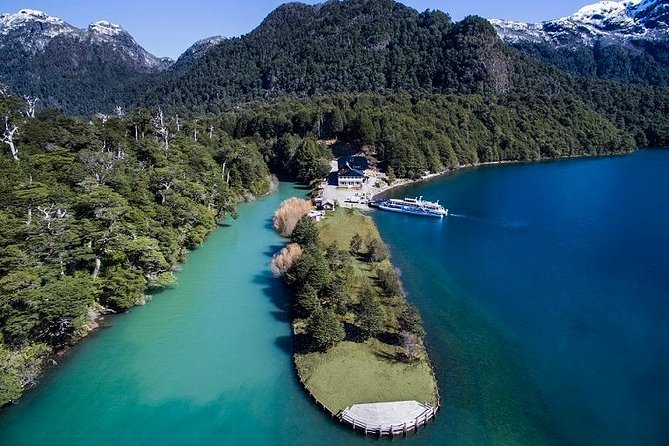
The Andean Lakes Crossing is one of South America’s most unusual ways to cross an international border. Instead of flying from Argentina to Chile, you travel by road and boat through Nahuel Huapi, Frías, and Todos Los Santos, following an old Patagonia route used by the region’s first inhabitants. The first lake cruise is the star.
I like the direct connection between two very different towns, and I like that the trip turns transport into sightseeing. The small maximum group of 14 should also make the bus transfers and border process easier to manage. The catch is the length: about 12 hours of boats, buses, waiting, and customs, with lunch and several fees still payable separately.
- Three lakes, two countries: Cross from Bariloche to Puerto Varas by a mix of catamarans, buses, and short road transfers.
- Nahuel Huapi is the highlight: Look for condors, eagles, deer, forests, and broad mountain views during the first major cruise.
- Puerto Frías handles the border: Argentina and Chile immigration procedures take place here, so timing can vary.
- Peulla is a late lunch stop: Food costs about US$25 per person and may not happen until midafternoon.
- Pack for changing weather: Sunblock, sunglasses, comfortable shoes, and waterproof clothing all make sense.
- This is a one-way trip: Your Bariloche lodging and Puerto Varas lodging are not included, and you need a place to stay in Chile.
In This Review
- A 12-hour crossing through Patagonia by road and water
- Leaving Bariloche and reaching Puerto Pañuelo
- Nahuel Huapi is the finest part of the first half
- The Frías River and the small Lago Frías
- Peulla offers a pause, but lunch comes late
- Todos Los Santos and the final catamaran ride
- Arriving in Puerto Varas, Chile
- What the $347 price really covers
- How to prepare for the long day
- Who should book the Andean Lakes Crossing?
- Should you book this one-way crossing?
- FAQ
- How long does the Bariloche to Puerto Varas crossing take?
- Is hotel pickup included?
- How much luggage can I bring?
- Is lunch included?
- Do I need to bring my passport?
- Are national park and port fees included?
- Does the tour include accommodation in Puerto Varas?
A 12-hour crossing through Patagonia by road and water
This trip is not simply a boat ride with a bus transfer at the end. It is a full-day crossing through forests, glacial lakes, mountain passes, and two national border systems. You leave Bariloche in the morning and finish in Puerto Varas, usually after a series of timed connections.
I like the old-fashioned feel of the route. Long before modern roads, people moved through this part of Patagonia by water and overland paths. Today, you get a comfortable version of that journey, with organized transfers and boats replacing the harder work.
The practical point is that the trip moves in stages. You may board a catamaran, leave it for a bus, board another boat, and repeat the process. That variety keeps the day interesting, but it also makes the crossing tiring. One person can find the constant starts and stops frustrating, especially when customs takes longer than planned.
The group limit is 14 people, and a driver-guide is included. That is a useful size for loading luggage and keeping track of everyone at the ports. Commentary can be less smooth for English speakers, though. One English-speaking passenger found that the guide gave the main explanation in Spanish and then offered a quieter translation near the front of the vehicle. If you need detailed commentary in English, ask about language arrangements before booking.
Leaving Bariloche and reaching Puerto Pañuelo
Bariloche is a good place to begin. The city sits inside Nahuel Huapi National Park and is known for its chocolate shops, traditional civic center, hotels, and restaurants. The tour includes about an hour connected with Bariloche, but the real departure point is Puerto Pañuelo, 25 kilometers from the city.
Hotel pickup is listed as included, which is convenient when you have luggage. You should still confirm the exact pickup and final drop-off details. One booking included hotel drop-off on paper but ended with a long walk through town and up a steep hill. That is not a small issue after a 12-hour crossing, especially with a full suitcase.
At Puerto Pañuelo, you need cash for the listed boarding and national park fee. The amount is given as US$3.50 or AR$500, and the price can change under local authority rules. Carry Argentine pesos as well as a small reserve of foreign cash if possible, since the fee is stated as cash-only.
The morning start is 8:00 a.m. That gives you a long day, but it also helps fit the boats and road transfers into daylight. Bring your passport, since the booking requires passport name, number, expiration date, and country for every person.
Other Bariloche days worth booking alongside this:
- Bariloche: 7 Lakes & San Martin de Los Andes Road Trip
★ 4.5 · 624 reviews - Bariloche: Circuito Chico with optional Cerro Catedral
★ 4.5 · 316 reviews - Bariloche: German Immigration and History Walking Tour
★ 4.8 · 169 reviews
Nahuel Huapi is the finest part of the first half
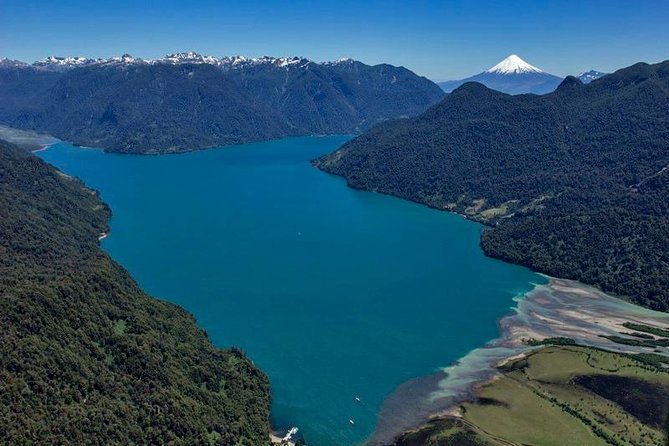
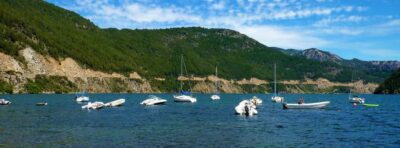
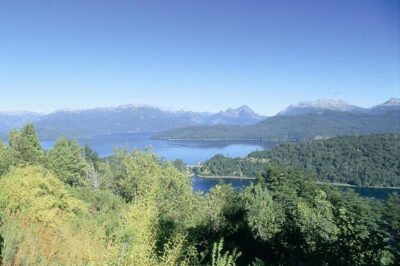
Once you are on Lago Nahuel Huapi, the trip begins to feel special. You have about two hours around the lake, with large stretches of water framed by mountains and native forest. The scenery changes with the weather, and the lake can look completely different under bright sun, rain, or low cloud.
I would bring binoculars if you have them. Condors, eagles, deer, and other wildlife are listed in the area, though no sighting is guaranteed. A camera is useful, but do not spend the whole crossing looking through a screen. The best part is the scale of the place, particularly when the boat leaves the port and the shoreline begins to fall away.
This is also the most praised portion of the route. If you are considering making the crossing only for the scenery, Nahuel Huapi is the strongest reason to go. Some people find the later Todos Los Santos section less exciting, and the bus portions offer less to look at than the lake cruises.
The boats are not described as especially crowded, which helps. You can move between indoor seating and the deck, although weather may limit how long you want to stay outside. Sunblock and sunglasses are useful even on a cool day, while waterproof clothing matters when rain or spray arrives.
The Frías River and the small Lago Frías
At one point, the green waters of the Frías River meet the blue waters of Nahuel Huapi. This is a striking color contrast, made more memorable by the cold Valdivian Forest. Valdivian Forest is a rare type of cold forest, and this route gives you a chance to see it in a setting shaped by water and glacial runoff.
The next stop is Puerto Frías and Lago Frías, the smallest of the three lakes used on the crossing. Its green-turquoise color comes from glacial meltwater. The stop itself is short, listed at about 20 minutes, so you do not get a long independent visit.
Puerto Frías is important for another reason: this is where the Argentina-Chile border procedures take place. Keep your passport handy and stay close to your group. Customs timing can affect the rest of the schedule, including lunch at Peulla. That is why I would not plan a tight evening connection from Puerto Varas or a same-day flight after arrival.
The border crossing is part of the character of this trip, but it is also the main source of uncertainty. A delay here can turn an already long day into a very late arrival. You need to be comfortable with a flexible schedule.
Peulla offers a pause, but lunch comes late
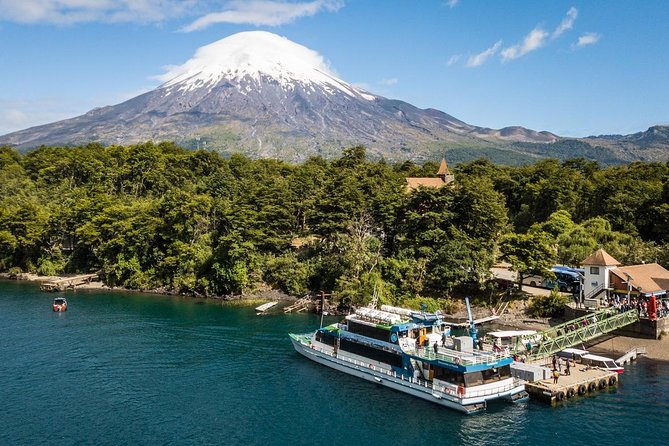
After the border process, you continue toward Peulla, a small ecological village in Chile. The stop lasts about two hours and is used for lunch. Lunch is not included and is listed at roughly US$25 per person.
Plan for a late meal. Depending on the timing of the boats and customs, lunch may not happen until 2:30 or 3:00 p.m. I would carry a snack, especially if you are traveling with children or simply dislike waiting for food. The tour includes no food or drinks, so do not assume that refreshments will be available at every transfer.
Peulla is described as one of Chile’s most sustainable locations. It is a small place rather than a town with a long list of things to do. For most people, it functions as a welcome break from the boats and buses, a chance to eat, stretch, and reset before the final lake crossing.
The two-hour stop can feel generous if the schedule is running normally. If customs has taken a while, it may feel short. Keep your belongings organized and be ready to board when instructed.
Same city, a completely different kind of day:
- San Martín de los Andes por 7 Lagos
★ 4.4 · 155 reviews - Circuito Chico
★ 4.5 · 146 reviews - Bariloche Small Circuit: Mt Campanario and Llao Llao Peninsula
★ 4.0 · 142 reviews - Fly Fishing Trips in Bariloche
★ 5.0 · 137 reviews
Todos Los Santos and the final catamaran ride
The final major cruise takes place on Lago Todos Los Santos, where you spend roughly two hours on emerald-colored water. Evergreen forest covers the surrounding hills, and waterfalls may appear along the shoreline.
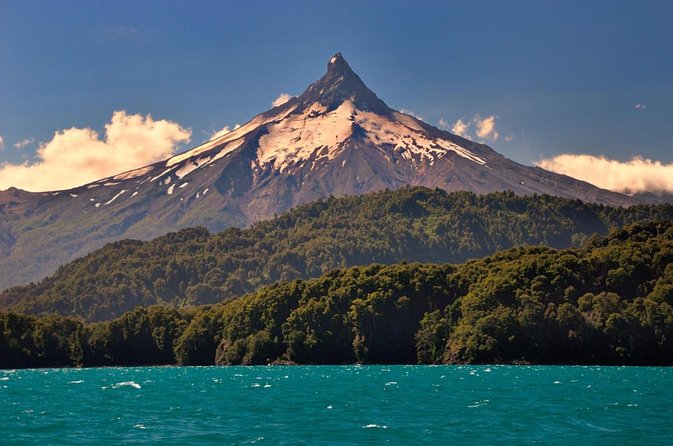
This section has the biggest mountain calling cards. From the catamaran, you may see Mount Tronador, Osorno Volcano, and Puntiagudo. Clear weather makes these peaks the main event, but cloud and rain can hide them. The trip still operates in poor weather, and the covered boat areas mean you can continue enjoying the crossing, but your views may be limited.
This is where expectations matter. If you need perfect mountain visibility, choose your travel date carefully, though the weather cannot be controlled. If you enjoy being outside even when the skies are gray, rain can give the forests and water a moody beauty. One particularly wet crossing was still considered worthwhile because the boats and buses allowed the day to continue comfortably.
I would avoid feeding the seagulls from the upper deck. It may seem harmless, but dropped food can enter the lakes and affect the local environment. The setting calls for quiet observation, not treating wildlife like a roadside attraction.
Arriving in Puerto Varas, Chile
Puerto Varas is the final destination, near Puerto Montt. It is a practical endpoint for continuing through Chile’s Lake District, with Frutillar nearby and views toward Osorno and Calbuco volcanoes in the wider area.
The tour does not include accommodation in Puerto Varas. That detail matters more than it may first appear. This is not a round trip, and one person was disappointed after realizing that the crossing required a hotel stay in Chile before continuing. Book your Puerto Varas room before setting out, and make sure the final drop-off point works for your luggage and lodging.
Puerto Varas gives you a natural next chapter after the crossing. You can look for Chilean food, wine, and the town’s German pioneer influence, then use it as a base for nearby places such as Frutillar. Those activities are not part of the tour, but they are good reasons to spend at least one night at the destination instead of treating it as a quick transit point.
The arrival may be late, so avoid scheduling an ambitious evening plan. A simple dinner and an early rest may be the sensible choice.
What the $347 price really covers
At $347 per person, this is an expensive transfer. The price makes more sense when you consider that it includes all land and lake transfers, the driver-guide, hotel pickup, and checked luggage allowances of one suitcase up to 23 kilograms plus one carry-on up to 10 kilograms.
You are paying for coordination across several boats, buses, ports, and a national border. That is valuable if you do not want to arrange the route yourself. It is also more than a point-to-point bus ticket because the route itself is the attraction.
Still, budget for extras:
- Lunch at Peulla, about US$25 per person
- Puerto Pañuelo and Nahuel Huapi National Park charges, listed as US$3.50 or AR$500 in cash
- Any additional port, migration, or national park fees set by local authorities
- Food and drinks during the day
- Accommodation in both Bariloche and Puerto Varas
The value is strongest for someone who wants the crossing as part of the holiday. If you see it only as transport from Argentina to Chile, the price may feel high. If you want the lakes, forest, boats, and border route, the cost pays for a memorable day that would be difficult to reproduce independently.
How to prepare for the long day
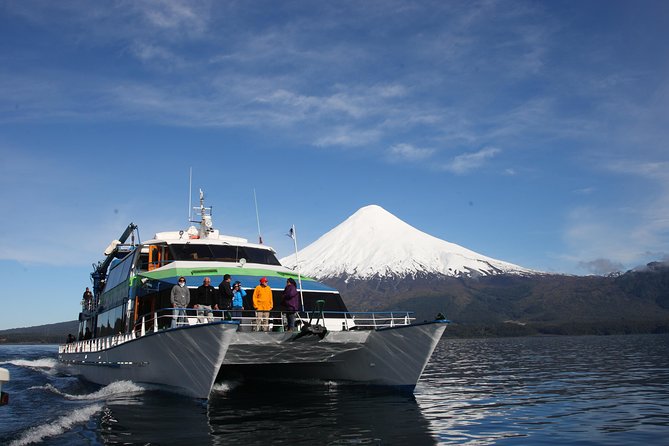
Wear comfortable shoes. You will move between vehicles, ports, and boats, and the day includes more walking and standing than the schedule may suggest.
Pack waterproof clothing, even if the morning forecast looks good. Sunglasses and sunblock are just as important, since open water can reflect strong sunlight. A small day bag should hold your passport, cash, snacks, water, medication, and a camera.
Your main suitcase is limited to 23 kilograms, with a 10-kilogram carry-on. Keep anything essential in the carry-on rather than buried in the larger bag. During repeated transfers, you may need quick access to your documents and rain gear.
Expect the day to run slowly. The boats are scenic, but the bus sections are mainly functional. Customs can add time, and Peulla lunch comes late. I would not schedule a same-day flight, long-distance connection, or fixed evening appointment.
Free cancellation is available when you cancel at least 24 hours before the 8:00 a.m. start. Changes or cancellations made less than 24 hours before departure are not accepted for a refund.
Who should book the Andean Lakes Crossing?
I would choose this trip if you value scenery and unusual transport more than speed. It suits couples, solo visitors, and small groups who want to cross from Bariloche to Puerto Varas without flying and who can handle a long, structured day.
It is also a good choice if you like the idea of meeting other people during a shared journey. The group size is limited to 14, and the repeated boat and bus changes give the day a social, communal feel.
I would think twice if you dislike early starts, late meals, border delays, or fixed schedules. If the first part of the route is your main goal, a day trip from Bariloche that returns to Argentina may give you more time on Nahuel Huapi, followed by a flight to Chile. That option is less romantic, but it may be more efficient.
Should you book this one-way crossing?
Book it if you want the journey itself, not just the arrival. Nahuel Huapi is exceptional, Lago Frías adds a glacial color change, and Todos Los Santos brings forests, waterfalls, and possible views of three snowy peaks. The route is beautiful even when rain changes the mood.
Skip it if you need dependable timing or if $347 feels too steep for a transfer. Confirm hotel pickup and drop-off, check how English commentary will be handled, carry food and cash, and reserve a Puerto Varas hotel before departure.
For the right person, this is a memorable way to cross the Andes. It is not the fastest way, and it is not always perfectly smooth, but it turns a border crossing into a full day of Patagonia.
FAQ
How long does the Bariloche to Puerto Varas crossing take?
The experience lasts approximately 12 hours, beginning at 8:00 a.m. The exact arrival time can change because of boat connections, road transfers, and border procedures.
Is hotel pickup included?
Hotel pickup and drop-off are listed as included. Because the final drop-off arrangements have caused confusion, confirm the exact pickup and destination details before departure.
How much luggage can I bring?
The included allowance is one suitcase weighing up to 23 kilograms and one carry-on weighing up to 10 kilograms.
Is lunch included?
No. Lunch at Peulla costs about US$25 per person. Since the meal may not take place until 2:30 or 3:00 p.m., carrying a snack is a sensible idea.
Do I need to bring my passport?
Yes. Passport name, number, expiration date, and country are required for every participant at booking, and border procedures take place at Puerto Frías.
Are national park and port fees included?
No. The listed Puerto Pañuelo and Nahuel Huapi National Park charge is US$3.50 or AR$500, payable in cash. Port, migration, and national park fees may change under local authority rules.
Does the tour include accommodation in Puerto Varas?
No. Your stay in Puerto Varas is not included, and your stay in Bariloche is also excluded. This is a one-way trip, so arrange your Chilean accommodation before departure.
Just added around Bariloche
- Road of the Seven Lakes from San Martin de los Andes★ 4.5 · 32 reviews
- Kayak paddling adventure around Bariloche★ 5.0 · 49 reviews
- From Bariloche: San Martin de los Andes and 7 Lakes Circuit★ 4.6 · 22 reviews
- From Bariloche: Half-Day Circuito Chico Sightseeing Tour★ 4.3 · 9 reviews
- Crossing to Puerto Blest and Cascada de los Cántaros★ 4.4 · 5 reviews
- Chico Circuit and Cerro Campanario★ 4.6 · 48 reviews
- Bariloche: Tour to Circuito Chico + Optional: Arrayanes★ 4.2 · 3 reviews
- Indigenous People of Patagonia History Tour★ 5.0 · 8 reviews
Bariloche Tours, compared.
Bariloche Small Circuit: Mt Campanario and Llao Llao Peninsula
Read our review →
Browse the lists this tour appears in