
Reviewed · WALKING TOURS
Bariloche: German Immigration and History Walking Tour
The most arresting part of this Bariloche walk is its final chapter: the house where Erich Priebke lived before his 1994 extradition, after American journalist Sam Donaldson exposed his presence. The tour also visits the school where Priebke was intercepted, turning a difficult subject into a clear lesson about how Bariloche’s German story unfolded.
I like the three-wave structure, which keeps the subject from shrinking into a simple tale about Nazis in Patagonia. I also like the way guide Diego uses old photographs, short stops, and cliffhangers between locations to connect Bariloche’s buildings with its past.
The main drawback is the uphill walking. The route covers only about 1 kilometer, but parts of the German neighborhood rise noticeably. A bilingual tour can also take more time, leaving less room for questions, especially when English and Spanish groups share the same guide.
In This Review
- Key points at a glance
- Why this Bariloche history walk is more than a Nazi story
- Starting at the Civic Center
- The Andean Club and National Park administration
- The German School and the Sam Donaldson connection
- Belgrano Square and the German neighborhood
- Erich Priebke’s former home
- How Diego guides the experience
- Is $41 a fair price?
- Walking conditions and practical tips
- Who should book this walking tour?
- Should you book the German Immigration and History Walking Tour?
- FAQ
- Where does the tour begin?
- How long is the walking tour?
- Which languages are available?
- What places are included on the route?
- Does the tour explain more than the Nazi presence in Bariloche?
- Can I cancel or pay later?
Key points at a glance
- Three distinct immigration waves: Learn how German-speaking arrivals came to Argentina and Bariloche from the mid-19th century through the postwar years.
- Priebke’s former home: See the Bariloche house connected with the former SS officer’s later life and extradition.
- A school with a difficult past: Visit the German School, where Sam Donaldson helped expose Priebke’s presence.
- Architecture with context: Link German-influenced buildings and public spaces to the town’s growth.
- A bilingual 90-minute walk: Tours are offered in English and Spanish, with Diego often praised for clear English and strong storytelling.
- Myths examined carefully: Finish by separating documented German activity from rumors about Patagonia.
Why this Bariloche history walk is more than a Nazi story
Bariloche’s German connections are easy to notice, but they are not easy to understand from a quick look at the town. Alpine-style buildings, German clubs, schools, and old family names can encourage a visitor to jump straight to the most sensational explanation.
This tour gives you a better framework. It explains three separate waves of German immigration, beginning in the mid-19th century, moving through later settlement, and ending with the Nazi arrivals after the Second World War. That order matters. It shows that German influence in Bariloche did not begin with fugitive war criminals.
I appreciate this approach because it gives the town a fuller story. You learn about community life, institutions, architecture, and the development of Bariloche before reaching the darker material. By the time you hear about Priebke, you have enough context to understand why his presence was both possible and so troubling.
The final discussion also looks at theories about German activity in Patagonia. This is useful for anyone who has heard stories about secret Nazi colonies, hidden wealth, or large-scale German networks in the south. The tour’s purpose is not to repeat every rumor. It is to help you tell documented events from speculation.
A few more Bariloche trips to weigh up
- Indigenous People of Patagonia History Tour
★ 5.0 · 8 reviews - Maria Fumaça – Wines and History
★ 4.0 · 242 reviews - Nazis in Buenos Aires: a historical walking tour
★ 4.9 · 193 reviews
Starting at the Civic Center
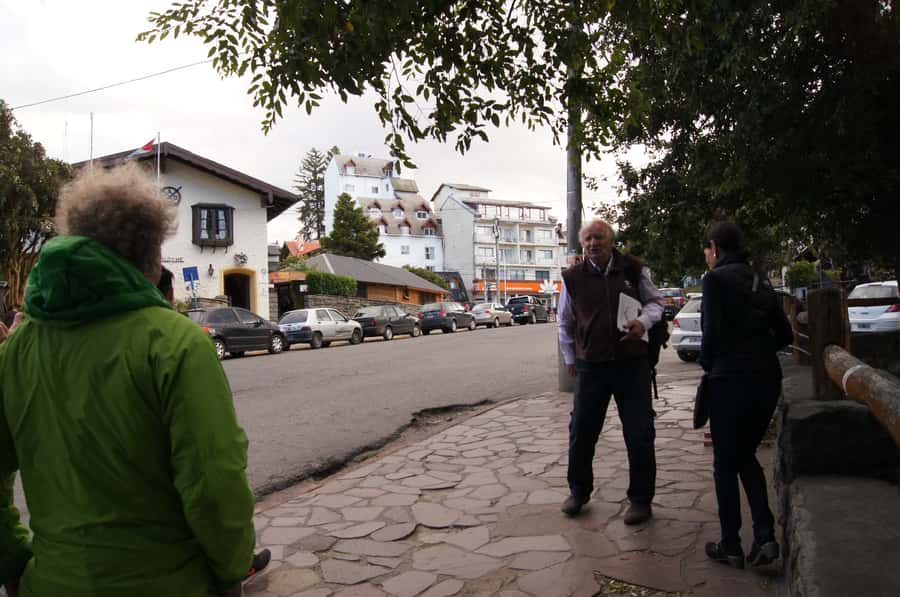
Meet by the door of the tourist information office in the square of Bariloche’s Civic Center. This is a practical starting point because the Civic Center is already one of the town’s main reference points, and it gives the guide a place to explain how Bariloche presents its own identity.
From here, the walk moves toward the German neighborhood. The distance is short, around 1 kilometer in total, but the route is broken into stops rather than treated as a simple stroll. You walk, pause for a story or image, then continue to another location that adds a piece to the larger picture.
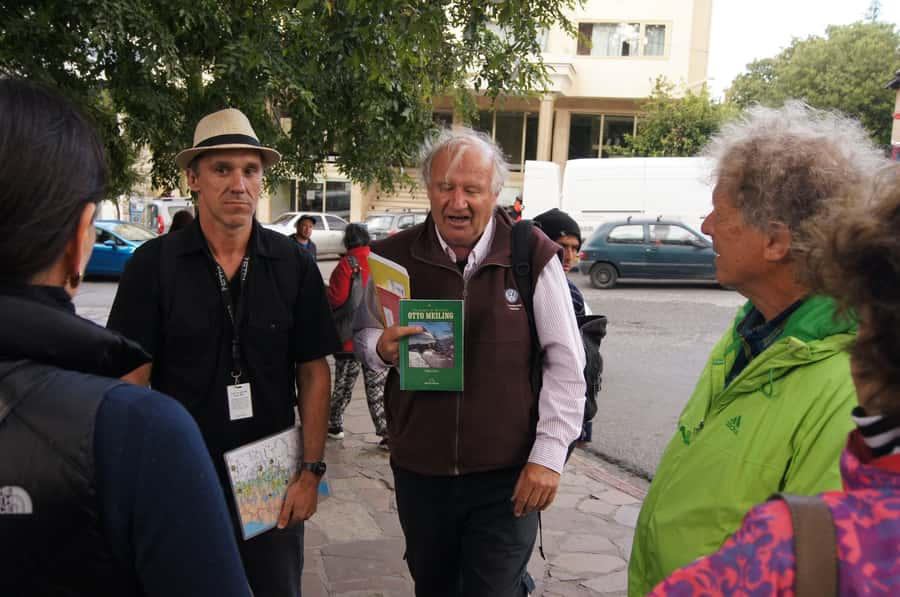
That rhythm is one of the tour’s strengths. You are not expected to absorb a long lecture while standing in one spot. Diego has been praised for keeping the group moving, changing locations often, and using old photographs to show how places looked before. This makes the history easier to follow, especially if you do not already know Bariloche.
The Civic Center also helps place German influence within the broader story of the city. You are not beginning in an isolated district with no connection to daily life. You are starting in the center, then seeing how the town’s institutions and neighborhoods fit together.
The Andean Club and National Park administration
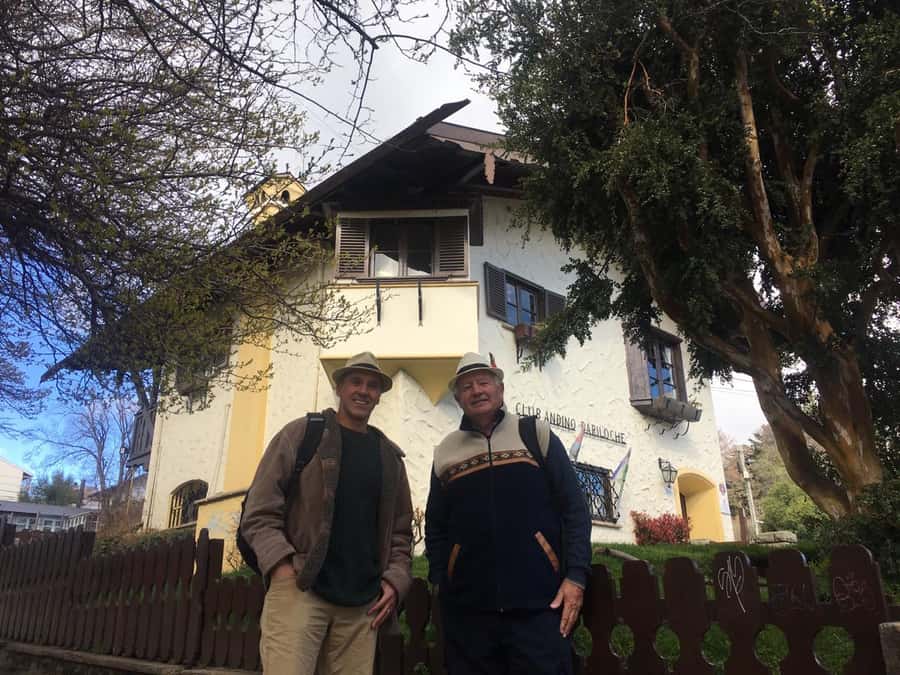
The route includes the Bariloche Andean Club and the administration of Nahuel Huapi National Park. These stops matter because they widen the subject beyond immigration alone.
The Andean Club points toward the outdoor culture that has long shaped Bariloche. The National Park administration connects the town to the organization and presentation of the surrounding protected area. The supplied details do not promise access inside every building, so you should expect to discuss these places from the route rather than assume an interior visit.
What makes this section valuable is the connection between people and place. German immigrants did not arrive in a blank setting. They became part of a growing town tied to mountaineering, tourism, public institutions, and the Nahuel Huapi area. Looking at these locations helps you see German influence as part of Bariloche’s civic development, not only as a matter of family ancestry.
This is also where the tour can be especially helpful if you have just arrived in town. You begin to understand why Bariloche’s public image combines Argentine identity with European visual references and an intense focus on the nearby mountains and lake.
The German School and the Sam Donaldson connection
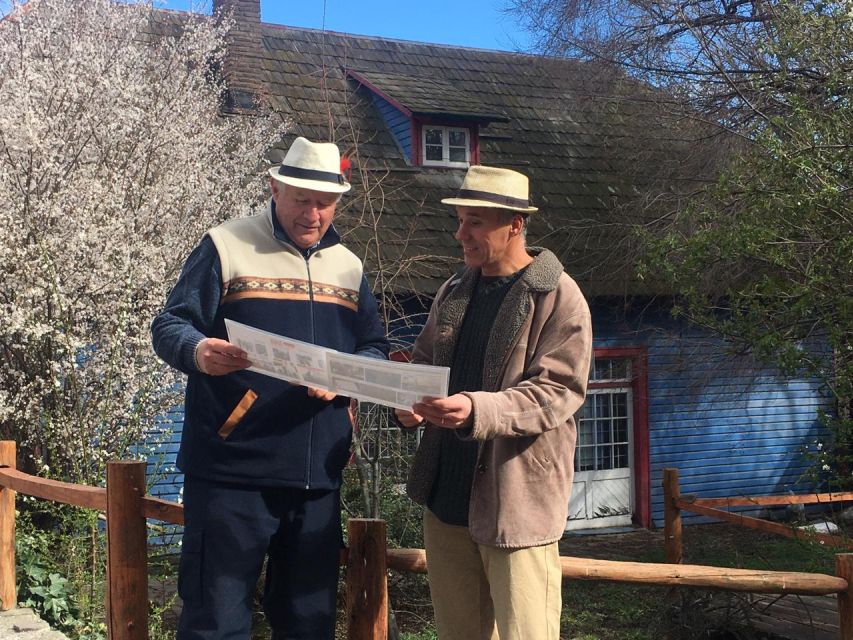
The German School is one of the most important stops because it brings the Priebke story into a real setting. The tour explains that Priebke was intercepted there by American journalist Sam Donaldson, whose investigation exposed that the former SS officer was living in Bariloche.
This is a difficult part of the walk, but it is handled within the wider timeline. You first hear about the earlier immigration waves, then reach the Nazi wave and the postwar presence. That sequence keeps the tour from unfairly treating every German family or institution in Bariloche as part of the Nazi story.
The school also shows how history can remain tied to ordinary places. A building used for education became linked to an international investigation and a major legal case. Seeing the location adds a sense of scale that a book or video cannot quite provide.
The tour does not treat the Priebke material as a cheap shock. The best descriptions of the experience point to a guide who explains sensitive information with care while keeping the story engaging. That balance is important here. You want clear facts, not gossip, but you also want the subject presented in a way that holds your attention.
Same city, a completely different kind of day:
- Bariloche: 7 Lakes & San Martin de Los Andes Road Trip
★ 4.5 · 624 reviews - Bariloche: Circuito Chico with optional Cerro Catedral
★ 4.5 · 316 reviews - San Martín de los Andes por 7 Lagos
★ 4.4 · 155 reviews - Circuito Chico
★ 4.5 · 146 reviews
Belgrano Square and the German neighborhood
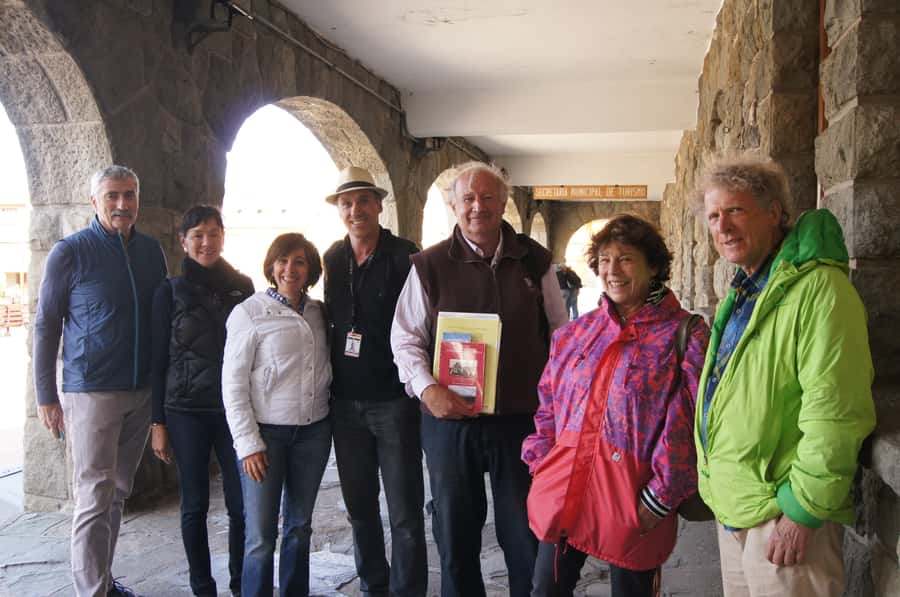
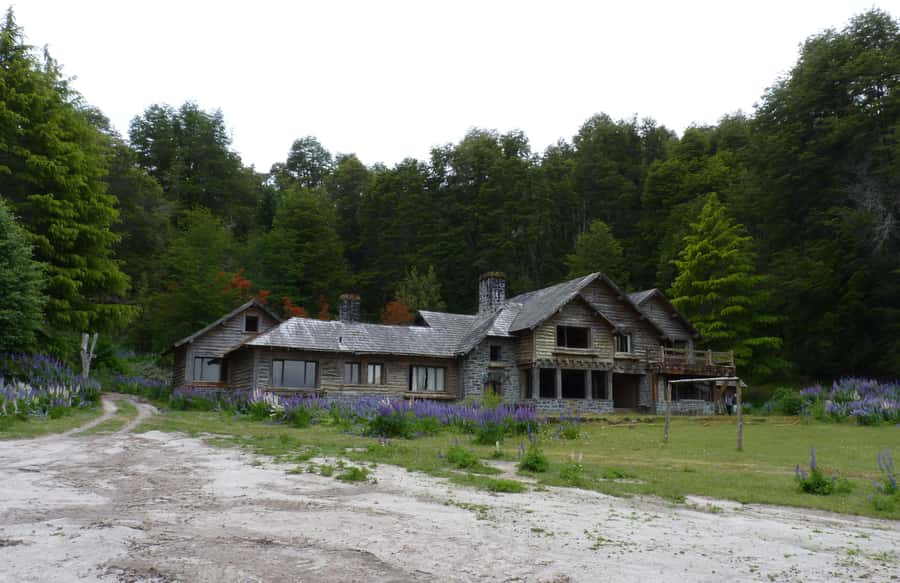
Belgrano Square and the surrounding streets provide the visual part of the tour. Here, you see different house styles and discuss their German origins. The architecture is not simply decoration. It becomes evidence of how immigrant communities expressed identity through homes, institutions, and public spaces.
You should not expect a large preserved German quarter in the style of a European old town. This is a working part of Bariloche, and the experience is a walk through selected sites rather than a museum visit. The reward comes from learning what to notice.
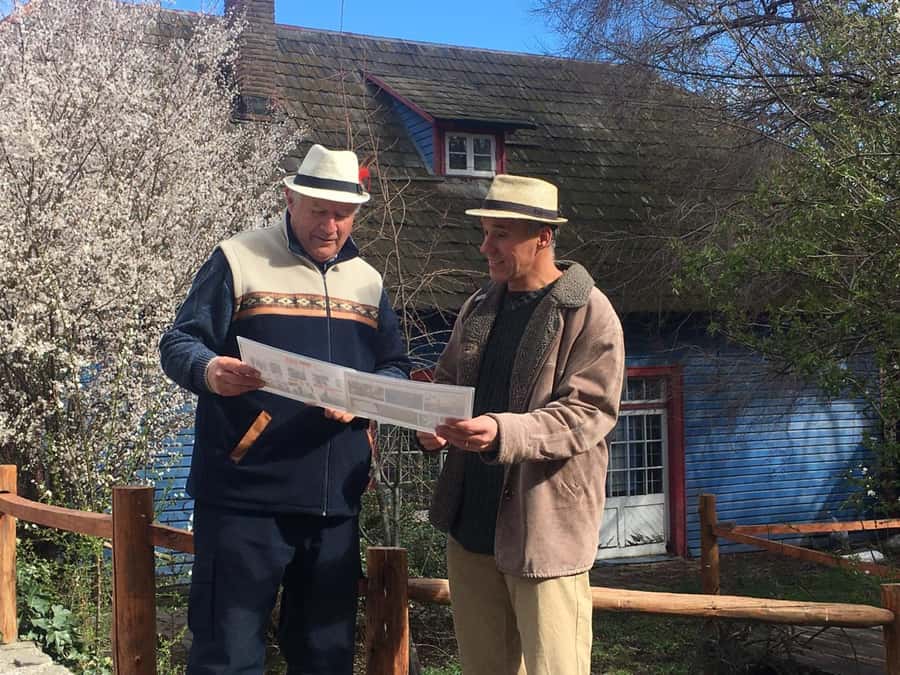
Look for changes in building style, the way homes relate to the street, and details that might otherwise pass without comment. The guide’s old images help link the present streets to earlier Bariloche. One useful feature of the walk is this contrast between dusty historical photographs and the buildings you see now.
Belgrano Square also breaks up the more serious subject matter. You have space to reset before the final section, and the route gives you a clearer feel for central Bariloche. Several people have found the tour a good activity between outdoor excursions because it adds local context without taking a full day.
Erich Priebke’s former home
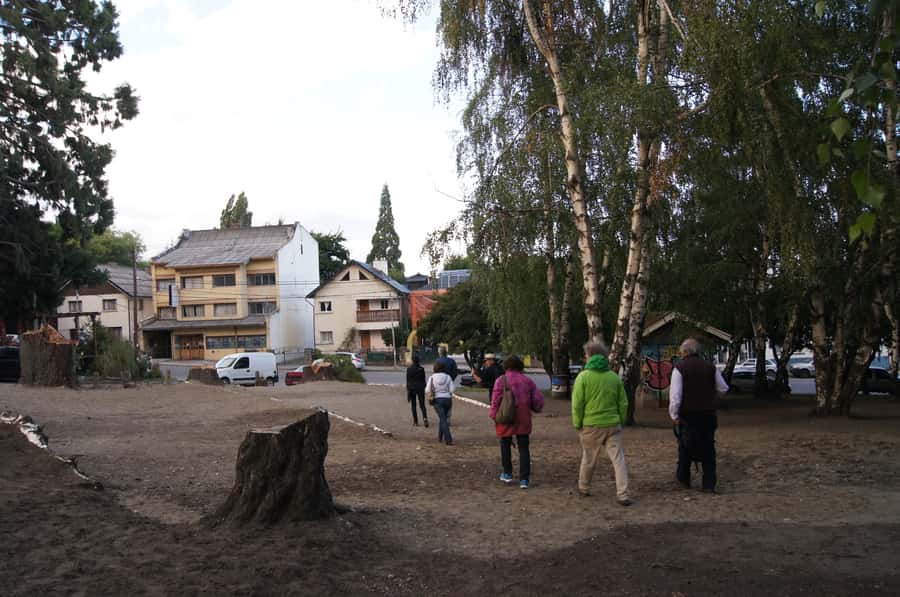
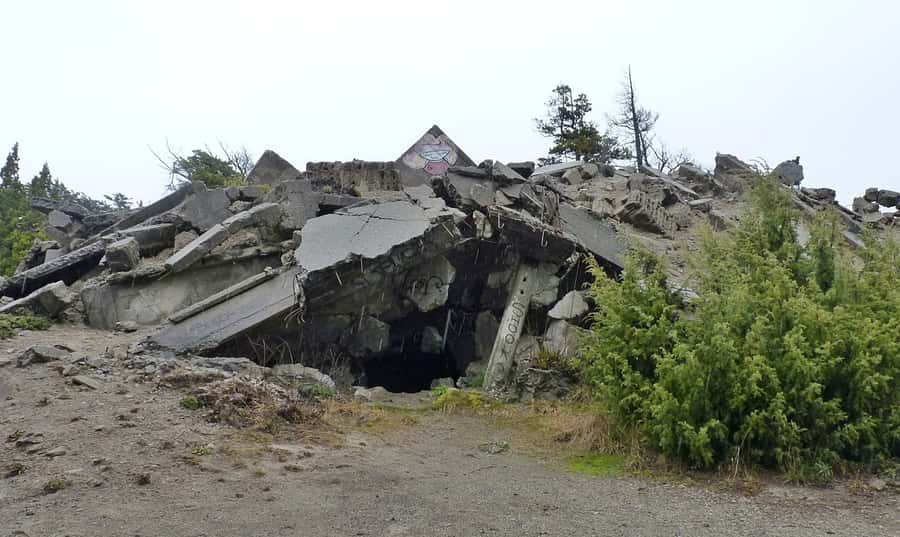
The former home of Erich Priebke is the tour’s most emotionally charged location. Priebke had lived in Bariloche before his extradition in 1994. The visit does not mean entering the house. It means seeing the place connected with the story and understanding how someone involved in Nazi crimes came to live openly in the city for years.
For me, this stop works best when treated as a question about memory and accountability. How does a town deal with a person’s public identity when his past is later revealed? What does it mean for a local community when international attention suddenly arrives? The tour gives you a basis for thinking about those issues without pretending that one house can answer them all.
This is also where the difference between fact and legend becomes important. Bariloche has long attracted stories about German fugitives and secret postwar activity. Some are based on real people and real events. Others have grown through repetition. The tour closes by addressing these theories and explaining the limits of what can be shown.
You may want to continue researching after the walk. One person described finishing the tour and immediately turning to online videos for more information. That is a good sign for a history experience: it gives you a starting point, not a pile of disconnected dates.
How Diego guides the experience
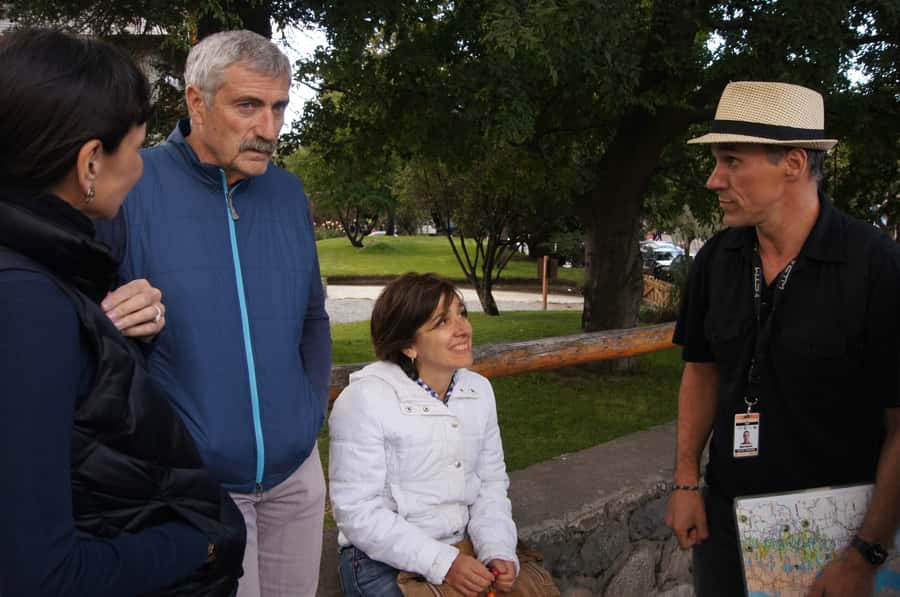
The guide can make or break a short history walk, and Diego receives the strongest praise in the available feedback. He is described as fluent in English and Spanish, well organized, friendly, and good at answering questions as they arise.
His storytelling style seems to be a major part of the appeal. He sometimes leaves a question or unresolved detail hanging while the group walks to the next stop. That simple technique gives the route a sense of forward motion. Instead of standing through a long speech, you follow the story from one location to another.
Diego has also dealt with practical problems in a helpful way. When one group was delayed by cancelled cars, he shared his location so the late arrivals could catch up. That does not guarantee the same arrangement every time, but it suggests a guide who pays attention to the group rather than simply starting a clock.
The experience may sometimes be bilingual even when you expect an English tour. That can extend the time spent at each stop and reduce the space for questions. On the other hand, the guide’s clear delivery has made the two-language format workable for many groups. If you want an entirely English presentation, confirm the language arrangement before booking.
One older assessment noted that the tour ran beyond the scheduled 90 minutes and that the guide continued answering questions afterward. This may be welcome if you enjoy history, but do not assume every departure will run long. The stated duration is 90 minutes.
Is $41 a fair price?
At $41 per person, this is not the cheapest way to spend an hour and a half in Bariloche. You are paying for a focused subject, a live guide, and the interpretation that connects several sites. There is no separate museum admission or major transport included because this is a walking tour.
The value depends on what you want from your visit. If you only want a quick orientation to the Civic Center, you can explore that area on your own. If you want to understand why German influence appears in Bariloche, why the Priebke story became possible, and how fact differs from local mythology, the price is easier to justify.
I would see it as a specialist history walk rather than a general city tour. Its strong score of 4.8 from 169 reviews reflects consistent satisfaction, particularly with the guide’s presentation and the subject matter. One person still felt it was slightly expensive, so the cost is worth weighing against your interest in history.
The tour is especially good value if you are already planning to visit Bariloche’s main center. You can combine it with your own sightseeing before or after, then spend 90 minutes seeing familiar streets through a more informed lens.
Walking conditions and practical tips
The distance is short, but do not read 1 kilometer as completely effortless. Parts of the route are uphill, and one assessment specifically flagged the incline. Wear shoes you can walk in comfortably and allow yourself enough time to reach the Civic Center square by the tourist information office.
The walk takes place outdoors, so dress for Bariloche’s conditions on the day. The supplied details do not state a minimum age, group size, or special accessibility arrangements. If hills or extended standing are a concern, ask the provider before booking.
The cancellation policy is forgiving: you can cancel up to 24 hours before the activity for a full refund. You can also reserve and pay later, which helps if your plans around weather and outdoor activities are still moving.
English and Spanish are available. Since the tour may be delivered in both languages for one group, ask how your chosen departure will operate if language time is important to you.
Who should book this walking tour?
I recommend it most to visitors who enjoy local history, difficult questions, and stories tied to specific buildings. It suits you if you want to understand Bariloche beyond chocolate shops, lake views, and outdoor sports.
It is also a smart choice early in your stay. The Civic Center, public institutions, school, square, and German neighborhood give you a useful introduction to the town’s development. You can then notice those connections during the rest of your visit.
You may want to skip it if you dislike historical discussion involving Nazi crimes, extradition, and unresolved public memory. This is not a light architecture walk with a few German details added for color. The darker chapter is central to the final part.
I would also think twice if steep walking is hard for you or if you need a strictly timed activity. The route is short, but uphill sections and bilingual explanations can affect the pace.
Should you book the German Immigration and History Walking Tour?
Book it if the story behind Bariloche interests you as much as the scenery. The strongest reasons are the clear three-wave framework, the real locations connected with Priebke, and Diego’s engaging way of carrying the story from one stop to the next.
Do not book it simply because you expect a general city orientation. This is a focused history tour, and its value comes from careful explanation rather than a long list of sights. At $41, it makes the most sense for curious visitors who want context, are comfortable with a serious subject, and can manage a modest uphill walk.
FAQ
Where does the tour begin?
The meeting point is Bariloche Civic Center square, by the door of the tourist information office.
How long is the walking tour?
The tour lasts 90 minutes and covers about 1 kilometer.
Which languages are available?
The live guide operates in English and Spanish.
What places are included on the route?
The walk includes the Civic Center, Bariloche Andean Club, Nahuel Huapi National Park administration, German School, Belgrano Square, and the house where Erich Priebke lived before his extradition.
Does the tour explain more than the Nazi presence in Bariloche?
Yes. It explains three main waves of German immigration to Argentina and Bariloche, then discusses the later Nazi presence and theories about German activity in Patagonia.
Can I cancel or pay later?
You can cancel up to 24 hours in advance for a full refund. You can also reserve your place and pay later.
Just added around Bariloche
- Road of the Seven Lakes from San Martin de los Andes★ 4.5 · 32 reviews
- Kayak paddling adventure around Bariloche★ 5.0 · 49 reviews
- OneWay Journey: from Bariloche, Argentina to Puerto Varas, Chile★ 4.0 · 52 reviews
- From Bariloche: San Martin de los Andes and 7 Lakes Circuit★ 4.6 · 22 reviews
- From Bariloche: Half-Day Circuito Chico Sightseeing Tour★ 4.3 · 9 reviews
- Crossing to Puerto Blest and Cascada de los Cántaros★ 4.4 · 5 reviews
- Chico Circuit and Cerro Campanario★ 4.6 · 48 reviews
- Bariloche: Tour to Circuito Chico + Optional: Arrayanes★ 4.2 · 3 reviews
Walking Tours, compared.
Nazis in Buenos Aires: a historical walking tour
Read our review →
La Docta Free Walking Tour “Córdoba La Antigua”.
Read our review →
Buenos Aires Walking Tour with Local Guide and Optional Rooftop
Read our review →
Browse the lists this tour appears in