Reviewed · BUENOS AIRES TOURS
Buenos Aires for curious people
Buenos Aires reveals itself best when you connect its grand buildings to the people and conflicts behind them. This three-hour walk starts near Bar Británico and Lezama Park, then moves through San Telmo and Puerto Madero before finishing at Plaza de Mayo and Casa Rosada. The focus is anthropology and lived history, not just dates and statues.
I like the way the route links subjects that are often treated separately: British interest in the Río de la Plata, Argentina’s African-descendant population, mass immigration, military rule, Evita and Perón, and the power of the US dollar. I also like the open discussion format, which gives you room to ask the questions that come up as the city unfolds around you.
The main consideration is pace. You cover many serious subjects in three hours, with frequent stops and walking between them. The San Telmo Market break helps, but this is not a relaxed sightseeing stroll. You will get more from it if you enjoy conversation and can manage several hours on foot.
In This Review
- Key points to know before you book
- Why this Buenos Aires walk is different
- Starting at Bar Británico and Lezama Park
- The Holy Trinity Church and the city’s many communities
- Club Atlético and the memory of the desaparecidos
- San Telmo, from San Pedro González Telmo to Plaza Dorrego
- A 20-minute pause at San Telmo Market
- From the Engineering Faculty to Puerto Madero
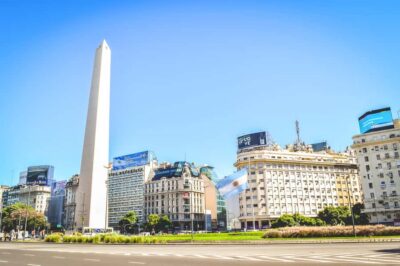
- Reaching Casa Rosada and Plaza de Mayo
- What the $30 price gives you
- Languages, group size, and practical comfort
- Who will get the most from this experience
- Should you book Buenos Aires for curious people?
- FAQ
- Where does the tour begin?
- Where does the tour finish?
- How long does the walking tour last?
- What languages are available?
- Are food and drinks included?
- Is the tour wheelchair accessible?
Key points to know before you book
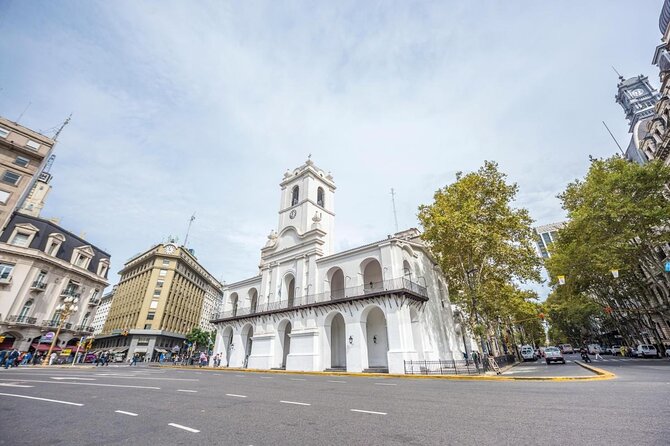
- A social history walk from Lezama Park to Casa Rosada: The route moves through the city’s oldest districts and ends at Argentina’s political center.
- Questions matter as much as landmarks: You are encouraged to discuss the first inhabitants, British invasions, immigration, race, dictatorship, and the economy.
- Guide Nicolás has led especially strong outings: He has explained Buenos Aires and Argentina in an engaging way, and private bookings may allow extra time for questions.
- San Telmo Market provides a useful pause: You get about 20 minutes to rest, browse, or buy something to eat, though food and drinks are not included.
- Small groups and private bookings are available: That can make difficult subjects easier to discuss and may give you more time with the guide.
- The route finishes at three useful central points: You can end at Museo Casa Rosada, Casa Rosada, or Plaza de Mayo.
Why this Buenos Aires walk is different
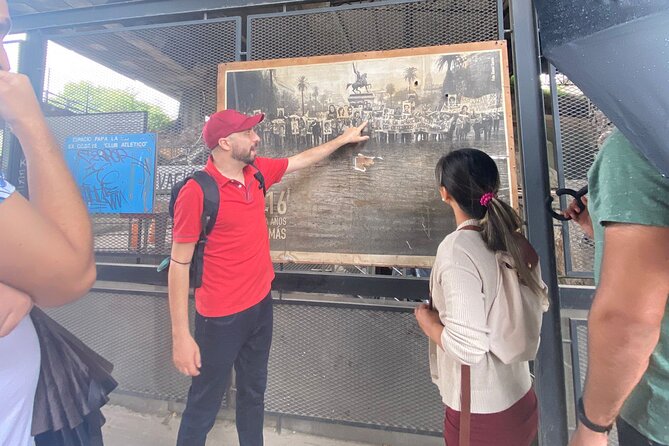
Many city walks give you a sequence of buildings, dates, and famous names. This one asks you to look at Buenos Aires as evidence. A church, a bridge, a market, or a government building becomes a way into a larger question about who controlled the city, who was pushed aside, and how Argentina became the country you see today.
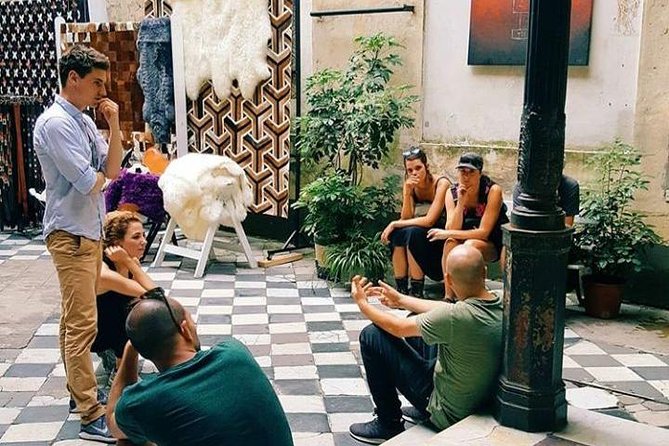
The guide is there to explain, but also to keep the conversation moving. You can ask why Britain wanted influence in Buenos Aires, what happened to the city’s African-descendant population, or why the US dollar has such weight in everyday economic life. These questions are useful because they connect the past to the city you are visiting now.
Nicolás is one guide associated with this experience. His approach has included everything from basic orientation to less familiar subjects, and he has led private outings that ended a little early because the group was small. That is not necessarily a problem. A smaller group can mean more direct answers and a better chance to shape the conversation around your interests.
The tradeoff is that the content is wide-ranging. You will not receive a full academic treatment of every subject. Instead, you get a guided framework for understanding Buenos Aires, with landmarks serving as prompts for discussion.
Other Buenos Aires days worth booking alongside this:
- Buenos Aires Hop-On Hop-Off Bus, Free Walking Tours & Discounts
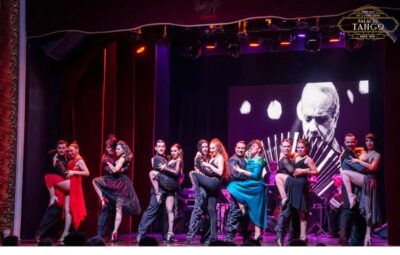
★ 4.5 · 2,218 reviews - Buenos Aires: Piazzolla Tango Show with Optional Dinner
★ 4.4 · 2,122 reviews - Buenos Aires: City Highlights Guided Tour with Transfer
★ 4.7 · 1,946 reviews
Starting at Bar Británico and Lezama Park
Meet by Bar Británico, a traditional starting point near Parque Lezama. From here, the route begins in one of the city’s most historic areas and quickly places Buenos Aires in a longer human story.
At Lezama Park, expect about 15 minutes of guided explanation. The discussion includes the city’s first inhabitants and the early roots of Buenos Aires. That matters because the city can appear entirely European at first glance, especially around its grand avenues and formal public buildings. This opening encourages you to question that surface impression.
The park is also a good place to begin a three-hour walk. You are not thrown straight into a dense block of monuments. Instead, the route starts with a broad look at how the city developed and who occupied these shores before later waves of settlement and immigration.
Bring water, sunscreen, and shoes you can trust. The route includes several short walks, and the pavement, weather, and amount of standing can vary.
The Holy Trinity Church and the city’s many communities
The Russian Orthodox Church of the Holy Trinity follows with roughly 10 minutes of sightseeing and discussion. Its presence offers a clear reminder that Buenos Aires was shaped by more than one European tradition.
The point is not simply to admire an unusual church. The stop fits the larger question of how Buenos Aires became a nation of immigrants. You get a visual example of the communities that helped shape the capital, along with a chance to consider how migration changed the city’s culture and public spaces.
Next comes Club Sueco Restaurante, another short walking stop of about 10 minutes. The route uses places connected with immigrant communities to make the subject more tangible. Rather than treating immigration as a single event, the walk presents it as something visible in institutions, buildings, food, and urban life.
This part of the tour may be especially useful if you are new to Argentina. It helps explain why Buenos Aires can feel familiar in one block and distinctly local in the next. Keep in mind that these are brief stops, so the guide’s explanation carries much of the value.
Club Atlético and the memory of the desaparecidos
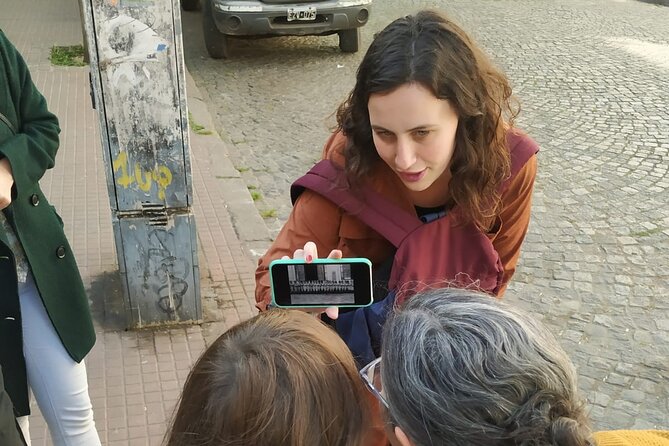
The visit to Espacio para la Memoria ex CCD Club Atlético brings the walk into one of Argentina’s most painful chapters. You spend about 10 minutes here discussing the desaparecidos, the people who were forcibly disappeared during the country’s military dictatorship.
This is not a light sightseeing subject, but it is essential to understanding modern Argentina. Memory remains part of public life, and the places connected to state violence cannot be separated from the country’s politics today. The stop gives you a chance to ask how Argentina remembers those who vanished and how that memory shapes the present.
The experience does not treat political history as a parade of presidents. It asks what happened to ordinary people and how power affected them. That human focus is one of the strongest reasons to choose this walk over a standard central-city orientation.
Give this section your attention. The pace is short, but the subject is serious. If you prefer tours that stay with one theme at length, you may find the broad itinerary moves on quickly.
Same city, a completely different kind of day:
- Buenos Aires: Hop-On Hop-Off City Bus Tour
★ 4.2 · 1,855 reviews - Buenos Aires Hop-On Hop-Off Bus and Exclusive Benefits
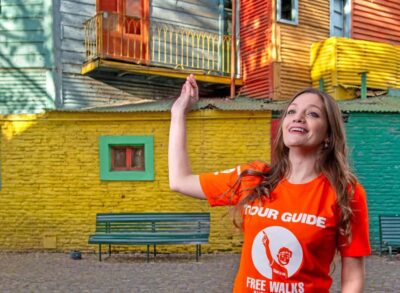
★ 4.4 · 1,714 reviews - Buenos Aires: La Boca Guided Walking Tour in English
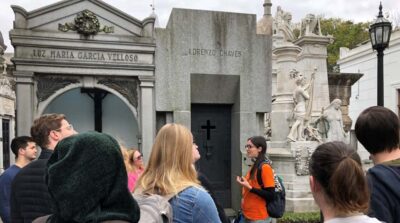
★ 4.8 · 1,587 reviews - Buenos Aires: La Recoleta Cemetery Guided Tour in English
★ 4.8 · 1,359 reviews
San Telmo, from San Pedro González Telmo to Plaza Dorrego
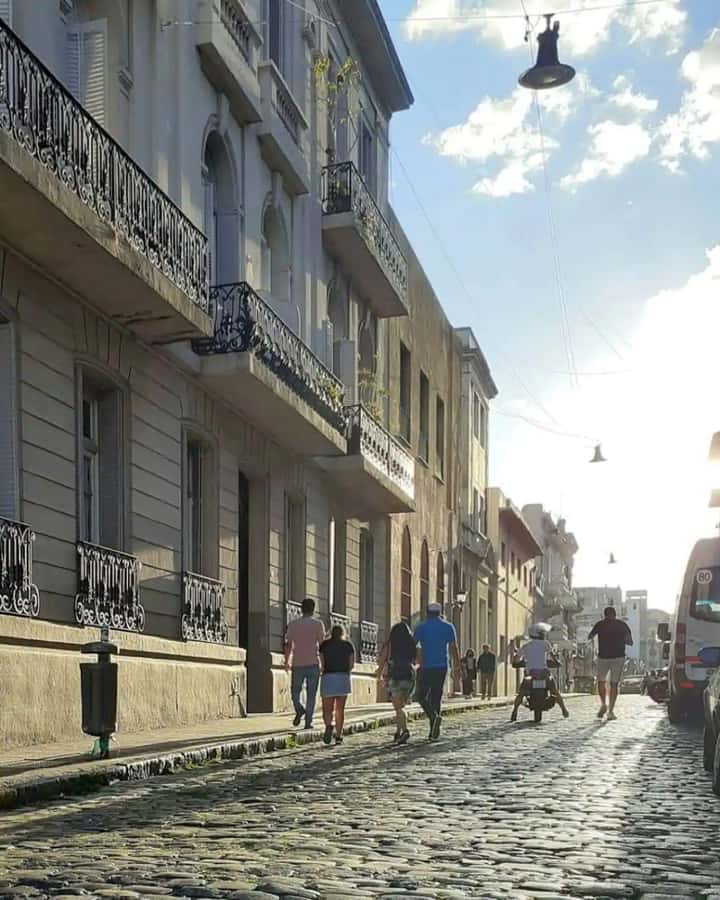
The Parroquia de San Pedro González Telmo is next, with about 10 minutes of guided walking and explanation. The church helps anchor the route in San Telmo, one of Buenos Aires’ best-known historic districts.
From there, you continue to Plaza Dorrego for a shorter five-minute stop. The square is closely tied to the character of San Telmo, and it gives the guide a place to explain how the area fits into the city’s older urban fabric.
These stops are less about entering every building and more about reading the neighborhood. You see how religious institutions, public squares, and older streets fit together. The guide can use the setting to connect colonial Buenos Aires with later changes brought by immigration, trade, and political power.
The limited time at Plaza Dorrego is worth noting. You should not expect a long pause for independent browsing or photography there. The route is designed to keep moving toward the market and the waterfront.
A 20-minute pause at San Telmo Market
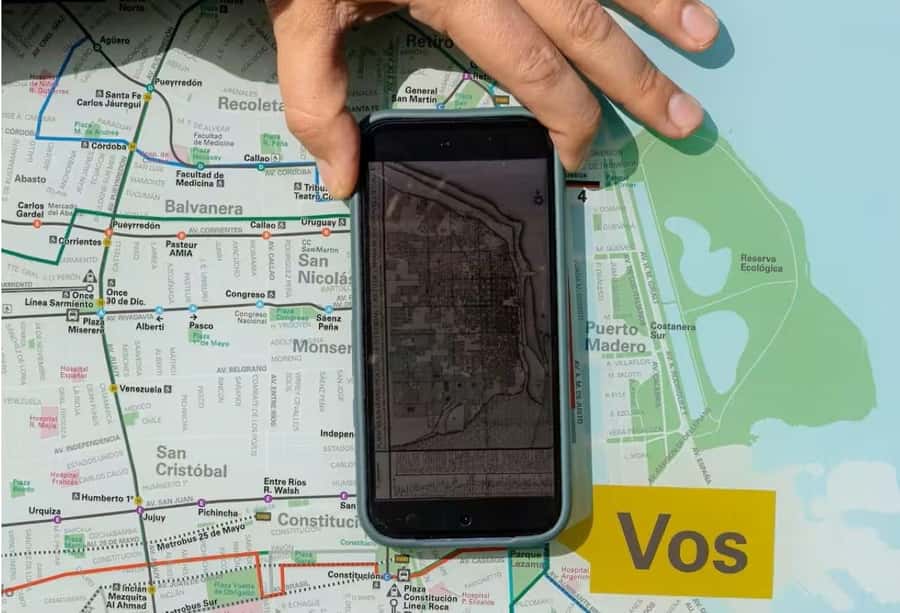
The San Telmo Market is the tour’s planned break, lasting about 20 minutes. This is your chance to sit, look around, buy food, or simply reset before the second half of the walk.
Meals and drinks are not included, so carry some Argentine pesos or another accepted payment method if you want to purchase something. The experience information does not specify what vendors or facilities will be available at your visit, so treat this as a useful pause rather than a promised tasting session.
Twenty minutes is enough to catch your breath, but not enough for a long market exploration. If you are hoping to browse every aisle, you will need to return on your own. I see the short break as a sensible choice because the tour covers a lot of ground and includes several heavy subjects.
The market also gives you a change of tone. After discussing forced disappearances and political memory, you can take in the everyday side of Buenos Aires before moving toward newer parts of the city.
From the Engineering Faculty to Puerto Madero
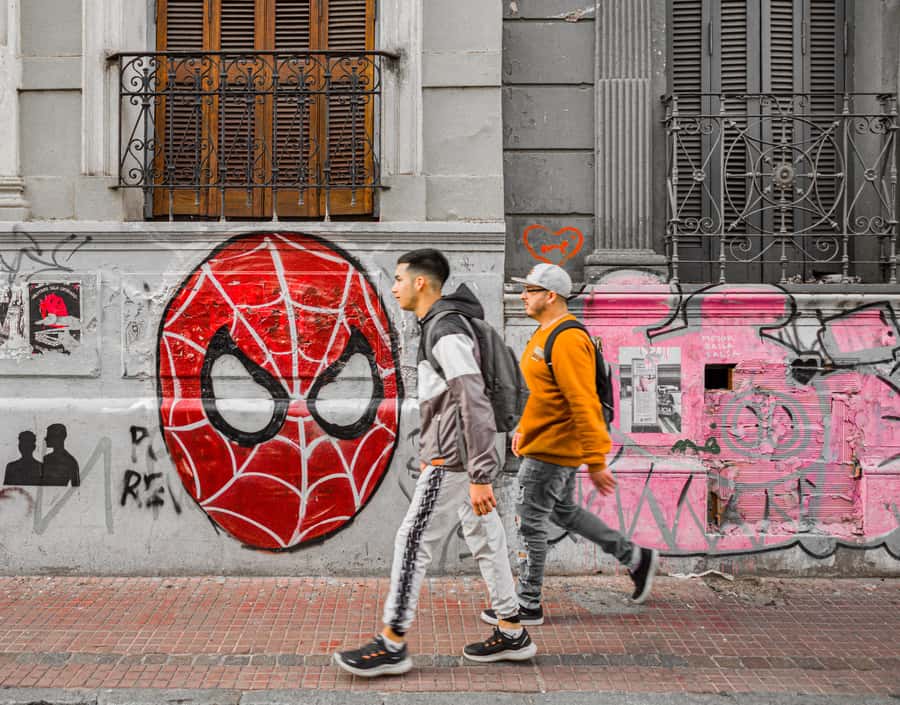
After the market, the route continues to Facultad de Ingeniería for about five minutes of guided sightseeing. This is a brief stop, but it helps shift the focus from older San Telmo toward institutions and the modern city.
The walk then reaches UCA Santa María de los Buenos Aires, with about 10 minutes of explanation. These locations help show the contrast between historic Buenos Aires and its newer civic and architectural settings. You are not simply walking in a straight line through one period. The route crosses different chapters of the city.
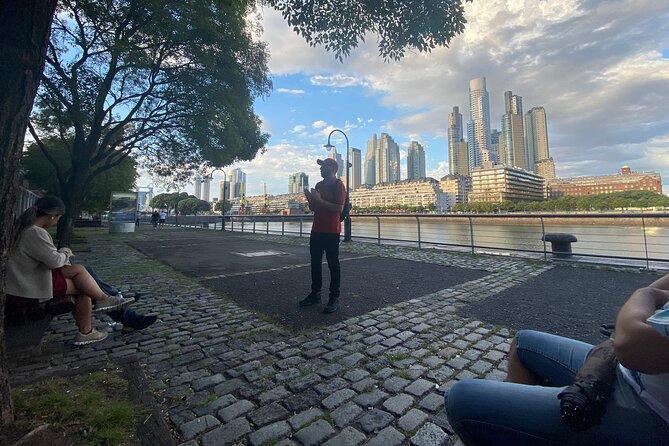
At Puente de la Mujer, the tour spends about 15 minutes. This bridge provides a strong visual change from the older streets around San Telmo. It is also a useful point for discussing Puerto Madero and the way Buenos Aires has continued to reshape its waterfront and public spaces.
The transition is one of the route’s clever features. You begin with early inhabitants and old neighborhood institutions, then move through immigration, dictatorship, and politics toward a more modern part of the capital. The city itself becomes a timeline.
Reaching Casa Rosada and Plaza de Mayo
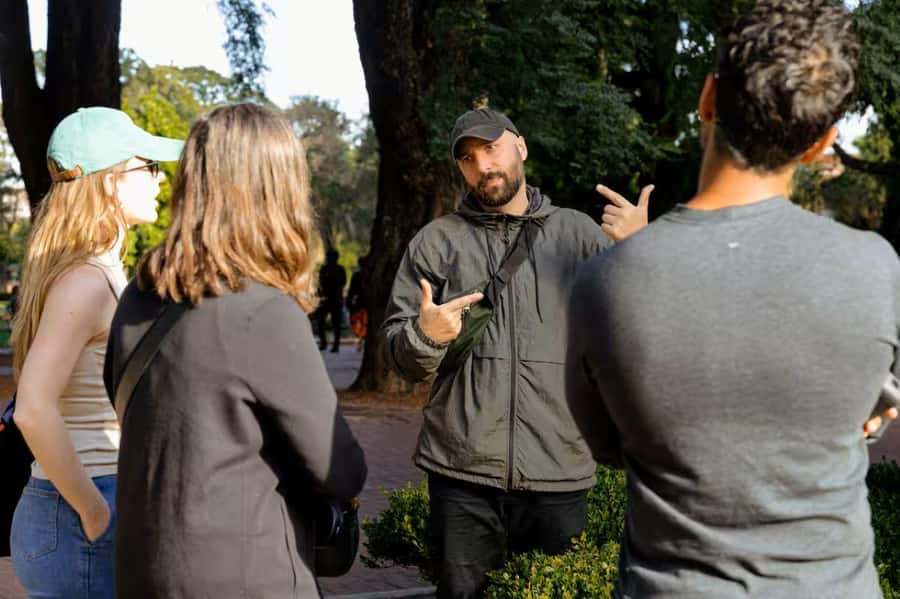
The walk ends at the political heart of Buenos Aires. You can finish at Museo Casa Rosada, Casa Rosada, or Plaza de Mayo, depending on the designated drop-off option.
Casa Rosada is the natural stage for discussion of Argentina’s political leaders. Here you can expect the guide to address Evita and Perón, along with the wider political story that has shaped the country. Their place in Argentine public life is too large to reduce to a single building or slogan, and the conversation format gives you room to ask what their legacy means.
Plaza de Mayo also connects the country’s political past with its memory of dictatorship. By the end of the walk, the central square is not just a photo stop. It becomes the place where many of the tour’s themes meet: leadership, protest, public memory, and national identity.
The three ending points are practical. If you want to visit the museum, you can continue there. If you simply need a central place to continue sightseeing, Casa Rosada or Plaza de Mayo puts you in a useful position for the rest of your day.
What the $30 price gives you
At $30 per person, the value depends on how much you want interpretation rather than transportation or included food. You receive a professional guide, historical context, and time for discussion over roughly three hours. You do not receive meals, drinks, or transport to the meeting point.
For a first day in Buenos Aires, I think the price is fair if you enjoy asking questions and want a framework for later exploring the city. A standard landmark tour may show you Casa Rosada and San Telmo, but this experience explains why those places matter.
The value is also stronger in a private or small-group setting. With fewer people, you have a better chance to ask about topics such as the African-descendant population, British invasions, the desaparecidos, or Argentina’s currency problems without waiting through a long line of questions.
The price is less attractive if you mainly want photographs, shopping time, or a gentle walk. The route includes several short explanations and serious political material. You are paying for the guide’s interpretation and conversation, not for admission tickets or entertainment.
Languages, group size, and practical comfort
The tour is offered in Spanish, French, English, and Portuguese. Check your preferred language when booking, since the quality of a discussion-based walk depends heavily on communicating easily with the guide.
Private and small-group options are available. A private outing can be useful if you have a strong interest in Argentine politics, immigration, urban history, or economic issues. It may also let you ask more follow-up questions. Nicolás has led a private version where the group had enough time to ask questions and finished before the full three-hour mark.
The activity is listed as wheelchair accessible, but the route still involves walking between multiple outdoor stops. If you use a wheelchair, confirm the exact meeting arrangements and route conditions before booking, especially because weather and street surfaces can vary.
Wear comfortable shoes and bring water. Sunscreen and a camera are sensible additions. Buenos Aires weather can change, so be ready for sun, wind, or rain. The guide will not provide meals or drinks, and the market break is only about 20 minutes.
You can cancel up to 24 hours before the activity for a full refund, and the reserve-now, pay-later option keeps your plans flexible. Those terms are useful if your Buenos Aires schedule is still shifting.
Who will get the most from this experience
I would choose this walk if you want more than a list of famous buildings. It suits you especially well if you enjoy:
- Political and social history
- Questions about immigration, race, and national identity
- Small-group conversation
- Walking through older neighborhoods
- Connecting Argentine history to present-day economic life
- A first introduction that leaves you with subjects to explore later
It may not suit you if you want a food tour, a bus-based overview, or a slow photography walk. The route covers a lot, and its most important moments involve discussion rather than grand visual attractions.
The tour also works well early in your stay. Afterward, you will have a better sense of what to look for when you visit San Telmo Market, Plaza de Mayo, Casa Rosada, or other parts of central Buenos Aires on your own.
Should you book Buenos Aires for curious people?
Book it if you want to understand the arguments and memories behind the city’s monuments. The walk’s strongest feature is its range: first inhabitants, British ambitions, African-descendant communities, immigration, Evita and Perón, dictatorship, and the dollar all enter the conversation.
I especially recommend it for curious first-time visitors who want a serious introduction without sitting in a classroom. Just bring water, wear good shoes, and expect to participate. If you prefer a shorter, lighter tour, choose a simpler central-city walk instead. At $30, this is good value for an open-minded visitor who wants Buenos Aires to make more sense, not merely look attractive.
FAQ
Where does the tour begin?
The meeting point is by Bar Británico, near Parque Lezama.
Where does the tour finish?
The experience offers three drop-off locations: Museo Casa Rosada, Casa Rosada, and Plaza de Mayo.
How long does the walking tour last?
The activity lasts three hours, including the scheduled stops and a 20-minute break at San Telmo Market.
What languages are available?
The tour is offered in Spanish, French, English, and Portuguese.
Are food and drinks included?
No. Meals and drinks are not included. You have a break at San Telmo Market, where you may have the opportunity to purchase something independently.
Is the tour wheelchair accessible?
Yes, the activity is listed as wheelchair accessible. It still involves walking between several outdoor stops, so you should confirm the route details when booking.
Just added around Buenos Aires
- Tango Show at El Querandi with optional Dinner★ 4.2 · 3 reviews
- Wine Tasting in Buenos Aires★ 4.2 · 4 reviews
- Walking Tour: Buenos Aires bookstores★ 4.3 · 12 reviews
- Velez Sarsfield Football Match★ 5.0 · 3 reviews
- Unique Tigre and Delta Private Day Cruise Navegation★ 5.0 · 3 reviews
- Private Underground Tango Immersion★ 5.0 · 31 reviews
- Tour Buenos Aires in one day on Electric Scooters★ 5.0 · 33 reviews
- Transfers from or to the airport In Argentina Your Best Choice★ 5.0 · 28 reviews
Buenos Aires Tours, compared.