Reviewed · BUENOS AIRES TOURS
Buenos Aires for curious people
Buenos Aires for Curious People is not a quick photo walk. It is a serious, lively look at how Buenos Aires was founded, how Argentina’s politics shaped the city, and why San Telmo still feels so layered. The route links Parque Lezama, Plaza Dorrego, Mercado San Telmo, Puente de la Mujer, and Casa Rosada, with several less obvious stops along the way.
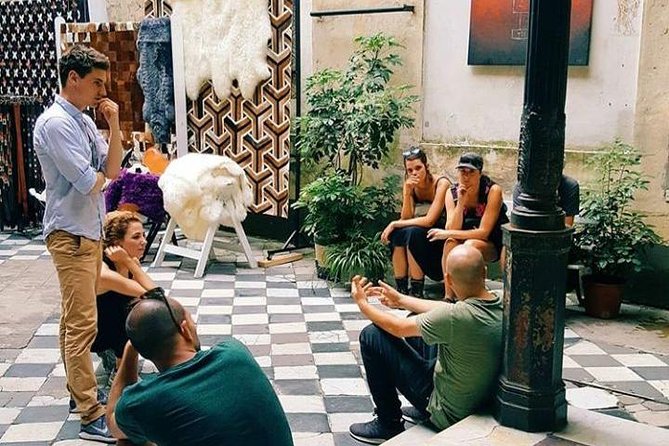
I like the maximum group size of eight, which gives you room to ask questions and hear the guide clearly. I also like the guides’ range of experience: Nicolás has worked in a history museum, Ignacio is a history professor, and the guides bring maps, old photographs, architecture, food, and current affairs into the discussion.
The main consideration is pace and subject matter. This is a walking tour with serious historical material, including Argentina’s years of dictatorship and political violence. One experience also points to a lack of structure when the group moved slowly, so this suits curious, reasonably mobile people more than anyone seeking a gentle, strictly timed stroll.
In This Review
- Key points to know before booking
- Why this walking tour feels different
- Bar Británico and the old edge of Buenos Aires
- Parque Lezama and the city’s first chapter
- Club Sueco and a lesser-seen side of San Telmo
- Memory Walk and Argentina’s painful recent past
- San Pedro González Telmo and colonial faith
- Plaza Dorrego, San Telmo’s main square
- Mercado San Telmo and immigrant Buenos Aires
- Puente de la Mujer and a change of visual mood
- Casa Rosada and the final political setting
- What $33 buys you
- Who will enjoy this route most
- Should you book Buenos Aires for Curious People?
- FAQ
- How long does the Buenos Aires for Curious People tour last?
- How much does the tour cost?
- How many people can join the tour?
- Where does the tour begin?
- Where does the tour end?
- Which neighborhoods and areas does the tour visit?
- Is admission included?
- Can I cancel for a full refund?
- What happens if bad weather cancels the tour?
Key points to know before booking
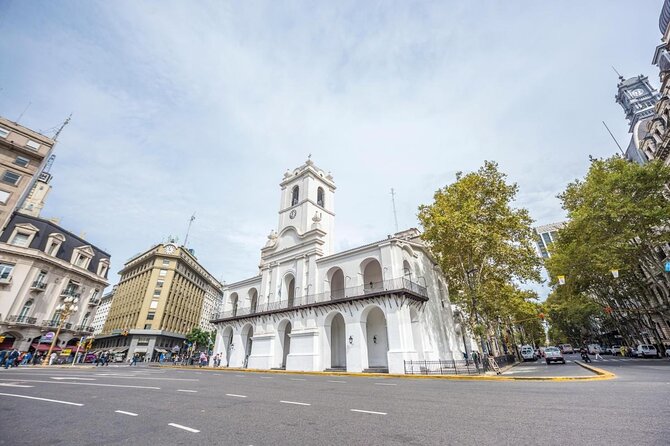
- A history-first route: Expect context about Argentina’s society, politics, economics, architecture, and major figures, not just landmark descriptions.
- San Telmo beyond the usual sights: The walk includes Parque Lezama, a former detention site, a colonial church, Plaza Dorrego, and the San Telmo market.
- A genuinely small group: With no more than eight people, questions and conversation are part of the experience.
- Several guides may lead it: Nicolás, Nico, Ignacio, Sophia, and Santiago have all been associated with the experience, so the exact style can vary.
- A useful city introduction: The 2 to 3 hour route ends at Casa Rosada, leaving you near major central sights.
- Good value at $33: You are paying for interpretation and local context, not admission tickets, since the listed stops are free except for any optional access connected with Casa Rosada.
Why this walking tour feels different
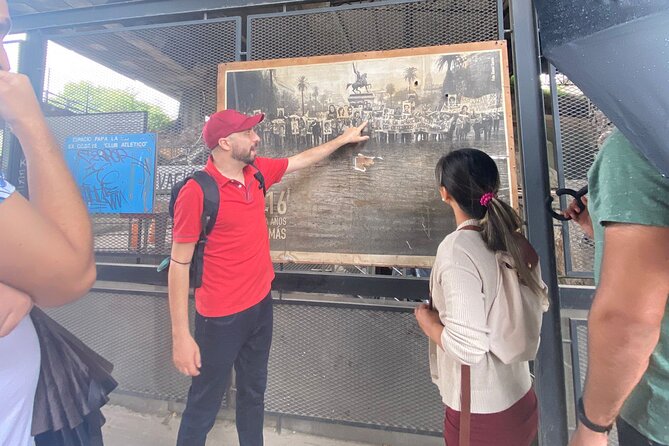
Many city walks in Buenos Aires move from one postcard view to the next. This one uses familiar places as doorways into harder questions: Who controlled the city? How did immigration shape its neighborhoods? Why do certain buildings, churches, and public squares carry such political weight?
That approach makes the tour a useful first or second activity in Buenos Aires. You see the city, but you also gain a framework for understanding it. Afterward, Casa Rosada is no longer just a pink presidential building, and San Telmo is more than cobbled streets and market stalls.
The guides seem comfortable with questions. Nicolás is described as having family roots in Buenos Aires going back at least three generations, while another account identifies him as a history museum employee. Ignacio is a history professor, and one session with Sophia included patient answers to a long list of questions. These details matter because the tour depends on explanation rather than spectacle.
English is clearly supported. One account specifically praised Nickolas’s excellent English, and another noted that a guide helped accommodate a couple with different Spanish abilities. You may also find a conversational style that leaves room for Spanish questions or discussion, depending on the group.
The published rating is 4.9 from 80 reviews, with 99 percent recommending the experience. Those numbers suggest a strong track record, but the best reason to book is more specific: this walk rewards attention. If you want a light introduction with little historical detail, it may feel too academic. If you want to understand the city’s past and present, that is its strength.
Other Buenos Aires days worth booking alongside this:
- Buenos Aires Hop-On Hop-Off Bus, Free Walking Tours & Discounts
★ 4.5 · 2,218 reviews - Buenos Aires: Piazzolla Tango Show with Optional Dinner
★ 4.4 · 2,122 reviews - Buenos Aires: City Highlights Guided Tour with Transfer
★ 4.7 · 1,946 reviews
Bar Británico and the old edge of Buenos Aires
The meeting point is Bar Británico at Brasil 399. The route includes about five minutes at this historic café area before moving toward Parque Lezama.
The bar provides an atmospheric start in the older part of Buenos Aires. You are not simply meeting beside a generic storefront. You begin in a setting connected to the city’s old-town character, then move into one of its most important public spaces.
The short stop means this is not a café tasting or a sit-down meal. Admission is free, and the value comes from the guide’s explanation of the surroundings. If you want coffee before the walk, plan around the meeting time rather than assuming the tour includes a café break here.
Parque Lezama and the city’s first chapter
Parque Lezama is described as the starting point and the place where the first fort was established in 1536. The tour allows about 30 minutes here, making it one of the longer early stops.
This is where the walk sets its historical scale. Buenos Aires can seem like a city of grand avenues and European-looking buildings, but Parque Lezama takes you back to the city’s earliest colonial story. The park becomes a useful reference point for understanding how the settlement developed.
I would pay close attention here, because the guide’s larger explanation begins to take shape. The tour is not only telling you what happened in one park. It is connecting the city’s founding, its old neighborhoods, and the people who later changed Argentina.
A practical note: the route is outdoors and requires walking between stops. The experience is described as suitable for most people, but it is still wise to consider your comfort with a 2 to 3 hour walk. A past group moved slowly because some participants needed frequent stops, which affected the route’s rhythm.
Club Sueco and a lesser-seen side of San Telmo
The Club Sueco Restaurante stop lasts about 10 minutes and includes the Swedish church, built in 1944. It is the sort of detail that separates this tour from a standard checklist.
A Swedish church in San Telmo points to the city’s immigrant communities and the way Buenos Aires absorbed people from many parts of Europe. The stop is brief, but it gives the guide a chance to discuss the city as more than a Spanish colonial capital.
You should not expect a major interior visit or an extended architectural inspection. The listed admission is free, and the stop is mainly about what the building reveals about the neighborhood and its residents.
Same city, a completely different kind of day:
- Buenos Aires: Hop-On Hop-Off City Bus Tour
★ 4.2 · 1,855 reviews - Buenos Aires Hop-On Hop-Off Bus and Exclusive Benefits
★ 4.4 · 1,714 reviews - Buenos Aires: La Boca Guided Walking Tour in English
★ 4.8 · 1,587 reviews - Buenos Aires: La Recoleta Cemetery Guided Tour in English
★ 4.8 · 1,359 reviews
Memory Walk and Argentina’s painful recent past
The Memory Walk marks a former clandestine center for detention, torture, and extermination that operated from 1976 to 1979. The stop lasts about 20 minutes.
This is the most emotionally difficult part of the route. It places the military dictatorship and Argentina’s recent political history directly into the streets you are walking through. The subject is not treated as a decorative aside. Accounts of the experience describe material that can be distressing as well as academically fascinating.
I value the inclusion of this stop because a city tour that only celebrates architecture and food gives you an incomplete picture of Buenos Aires. At the same time, you should book this walk ready for serious conversation. It may not suit children or anyone wanting a carefree afternoon, though the supplied information does not give a minimum age.
San Pedro González Telmo and colonial faith
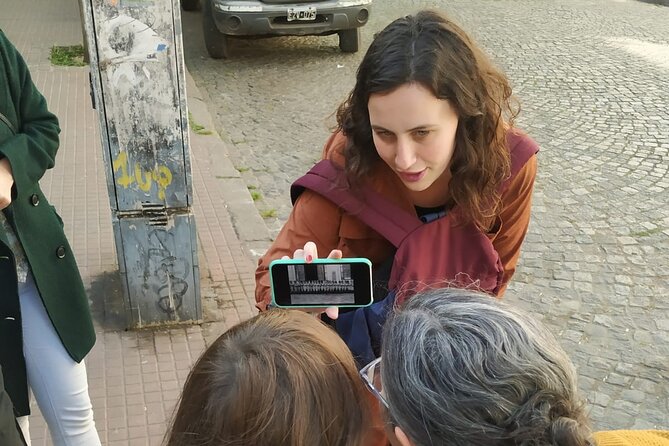
The Parroquia de San Pedro González Telmo is a colonial Catholic church, with about 15 minutes allocated to it. This stop shifts the focus from state power and dictatorship to religion, colonial society, and the physical fabric of old Buenos Aires.
The church helps you read San Telmo as a lived neighborhood rather than a preserved stage set. The guide can point out how colonial buildings, religious institutions, immigrant communities, and modern city life overlap in a small area.
Admission is listed as free. The schedule does not promise a private visit or a special religious service, so treat this as an exterior and contextual stop unless your guide explains otherwise.
Plaza Dorrego, San Telmo’s main square
Plaza Dorrego receives another 15 minutes. It is identified as the main square of the old town, and it is one of the clearest places to feel San Telmo’s public life.
Here, the guide’s storytelling should connect the square to the neighborhood’s changing identity. San Telmo is often associated with antiques, street activity, tango, and weekend markets, but this tour places those features inside a longer urban story.
The short timing keeps the route moving. You will get orientation and interpretation, not an hour to browse every stall or settle in at a café. If you want photographs or shopping time, save that for after the tour.
Mercado San Telmo and immigrant Buenos Aires
The Mercado San Telmo is given about 30 minutes, making it the longest stop on the San Telmo portion of the walk. The market was built by Italian immigrants, and that detail gives the visit a strong human angle.
A market tells you things a monument cannot. It shows how people ate, traded, worked, and built a community. The guide can use the building and its history to explain immigration and the way Buenos Aires developed through successive arrivals.
Food also enters the conversation here. One account praised a guide for including the food he loved, while other accounts describe suggestions for the rest of a visit. The tour does not advertise a meal or tasting, so bring money if you want to buy something, but do not count on food being included in the $33 price.
Thirty minutes is enough to get a feel for the market and hear its story. It is not enough for an unhurried meal, extensive shopping, and a full architectural study. That tradeoff is sensible for a walking overview.
Puente de la Mujer and a change of visual mood
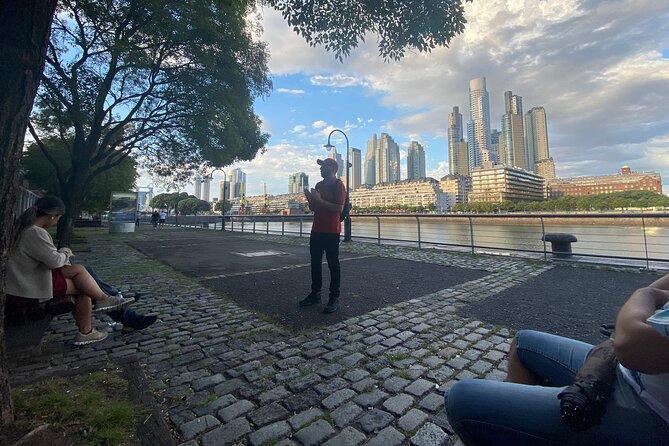
The route then reaches Puente de la Mujer, designed by Spanish architect and structural engineer Santiago Calatrava. The stop lasts about 15 minutes.
This bridge offers a sharp contrast with the colonial church, old square, and immigrant market. It brings you into a more recent Buenos Aires, where modern design and public space shape the city’s image.
The stop is short and the bridge is free to view. Its importance here is not only the photograph. It shows how the tour moves across different eras instead of treating San Telmo as the entire story. You get a sense of Buenos Aires as a city that keeps adding new layers to its old ones.
Casa Rosada and the final political setting
The walk ends at Casa Rosada on Balcarce 78, the president’s office. About 25 minutes are planned here, and admission is not included.
Ending at Casa Rosada is a strong choice. After hearing about the city’s founding, immigration, religion, political violence, and social change, you arrive at the building most closely tied to Argentina’s national government. The final stop gives the earlier stories a clear political setting.
Do not assume that the tour price includes entry inside Casa Rosada. The supplied details list admission as not included, so any interior access would need to be handled separately if available. Even from outside, the building provides a natural end point and leaves you in a central area for continuing your sightseeing.
The route’s endpoint is also practical. You do not finish back at the starting bar, so plan your next move from Casa Rosada rather than Parque Lezama. The tour is near public transportation, and the meeting and ending addresses are clearly provided.
What $33 buys you
At $33 per person, this is good value if you want a guide who can explain connections between places. You are not paying for entry tickets, a meal, or transport. You are paying for a small group, roughly 2 to 3 hours of walking, and a layer of interpretation that would be difficult to assemble from quick visits alone.
The value rises if you ask questions. Several accounts describe guides who answered questions about Argentine politics, economics, culture, food, and current challenges. That makes the price more worthwhile for people who want a conversation rather than a memorized speech.
The small group is important. With eight people or fewer, you can hear the guide, ask about a building you noticed, or request suggestions for the rest of your time in Buenos Aires. A larger group would make this kind of discussion harder.
Booking patterns also deserve attention. The experience is booked an average of 35 days in advance, so you should not leave it until the last day of a short visit if your schedule is fixed. Confirmation arrives at booking, and free cancellation is available up to 24 hours before the start time for a full refund. Changes or cancellations inside that window are not accepted for a refund.
The tour requires good weather. If poor weather cancels it, you are offered another date or a full refund. Service animals are allowed, and most people can participate, but the walking format and serious subject matter should guide your decision.
Who will enjoy this route most
I would choose this tour for a first visit when I wanted an intelligent orientation before exploring Buenos Aires alone. It is also a good fit for a repeat visitor who has seen the main landmarks but wants more context about San Telmo and Argentina’s political past.
You are likely to enjoy it if you:
- Like history, architecture, politics, and social questions.
- Prefer a small group to a large sightseeing procession.
- Want lesser-known stops alongside famous landmarks.
- Are comfortable walking for 2 to 3 hours.
- Like asking questions and discussing what you see.
- Want recommendations for food and further sightseeing.
I would think twice if you want a relaxed route with long café stops, lots of shopping time, or only cheerful subjects. The walk can be fascinating, but it includes detention, torture, extermination, dictatorship, and current political issues. The guide’s style also matters, and the exact guide may be Nicolás, Ignacio, Sophia, Santiago, or another member of the team.
Should you book Buenos Aires for Curious People?
Book it if you want to understand Buenos Aires rather than simply photograph it. The route combines major places such as Casa Rosada with details many city walks skip, including the Swedish church, the Memory Walk, and the immigrant-built San Telmo market.
At $33, the experience offers strong value for a small group and an informed guide. Just allow for walking, expect serious historical material, and remember that Casa Rosada admission is not included. For curious people who like to leave a tour with better questions than they started with, this is a smart choice.
FAQ
How long does the Buenos Aires for Curious People tour last?
The tour lasts approximately 2 to 3 hours.
How much does the tour cost?
The price is $33 per person.
How many people can join the tour?
The maximum group size is eight people.
Where does the tour begin?
It begins at Bar Británico, Brasil 399, C1154AAC, Buenos Aires.
Where does the tour end?
The tour ends at Casa Rosada, Balcarce 78, C1064AAC, Buenos Aires.
Which neighborhoods and areas does the tour visit?
The route includes the old town, Parque Lezama, San Telmo, the area around Puente de la Mujer, and Casa Rosada.
Is admission included?
The listed stops are free except Casa Rosada, where admission is not included.
Can I cancel for a full refund?
Yes. You can cancel at least 24 hours before the experience start time for a full refund. Cancellations or changes made less than 24 hours before the start time are not accepted for a refund.
What happens if bad weather cancels the tour?
Because the experience requires good weather, a cancellation caused by poor weather gives you the option of another date or a full refund.
Just added around Buenos Aires
- Tango Show at El Querandi with optional Dinner★ 4.2 · 3 reviews
- Wine Tasting in Buenos Aires★ 4.2 · 4 reviews
- Walking Tour: Buenos Aires bookstores★ 4.3 · 12 reviews
- Velez Sarsfield Football Match★ 5.0 · 3 reviews
- Unique Tigre and Delta Private Day Cruise Navegation★ 5.0 · 3 reviews
- Private Underground Tango Immersion★ 5.0 · 31 reviews
- Tour Buenos Aires in one day on Electric Scooters★ 5.0 · 33 reviews
- Transfers from or to the airport In Argentina Your Best Choice★ 5.0 · 28 reviews
Buenos Aires Tours, compared.