Reviewed · BUENOS AIRES TOURS
Buenos Aires: Panoramic Bus Tour
Buenos Aires packs grand avenues, immigrant neighborhoods, tango streets, modern docks, and famous football into one sprawling city. This three-hour panoramic bus tour gives you a useful first look, especially if you want the broad picture before exploring on foot.
I like the wide neighborhood coverage and the two planned photo stops at Plaza de Mayo and Caminito. I also like the live guiding in English, Portuguese, or Spanish, plus hotel pickup or a nearby meeting point. The tradeoff is a tight schedule: one verified booking described a bus of roughly 30 people, four stops, and waiting for the whole group.
In This Review
- Key points at a glance
- Why this bus tour works as a first look at Buenos Aires
- From San Nicolás to the Obelisk and Teatro Colón
- Plaza de Mayo and Monserrat in 30 minutes
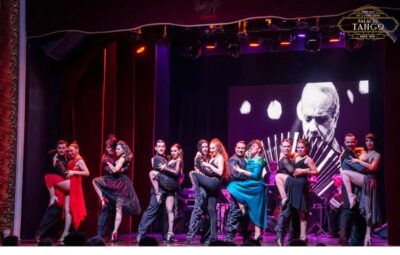
- San Telmo, old streets, and tango traditions
- La Boca and the Caminito photo stop
- Puerto Madero and the city’s modern face
- Retiro, Palermo, and Recoleta from the bus
- What the three-hour schedule feels like
- Who will get the most value from the $55 price
- Booking advice and final verdict
- FAQ
- How long does the Buenos Aires panoramic bus tour last?
- What languages are available?
- Which neighborhoods does the tour visit?
- Where are the photo stops?
- How long is the stop at Plaza de Mayo?
- How long is the stop at Caminito?
- Is hotel pickup included?
- What should I bring?
- Can people with mobility impairments join?
Key points at a glance
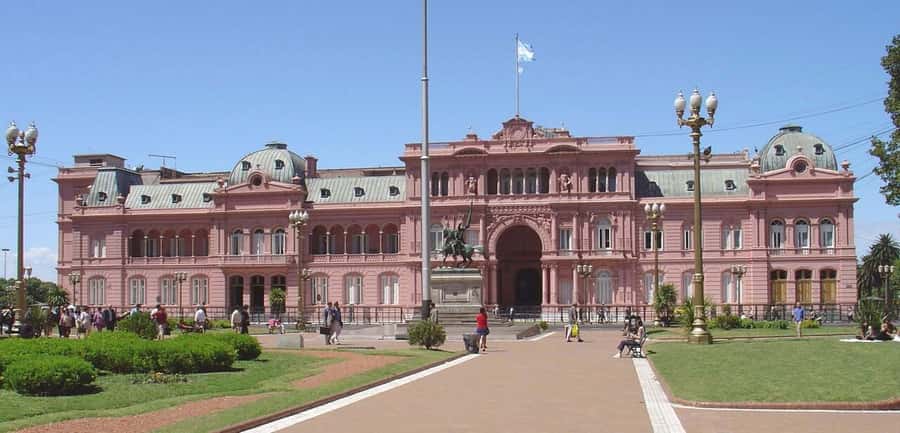
- Plaza de Mayo stop: Get about 30 minutes to see Buenos Aires’ main civic square, with the Casa Rosada, Cathedral, Cabildo, and Avenida de Mayo nearby.
- Caminito in La Boca: Walk through one of the city’s most recognizable streets, known for colorful homes, immigrant roots, tango, and Boca Juniors football.
- Nine major areas in three hours: The route covers San Nicolás, Monserrat, San Telmo, La Boca, Puerto Madero, Retiro, Palermo, and Recoleta, with additional coverage of the city center.
- Panoramic views: The bus is useful for seeing major sights such as the Teatro Colón, Obelisk, Planetarium, Recoleta Cemetery, and Puente de la Mujer without arranging several separate trips.
- Best for first-time orientation: You get context on the city’s customs, people, and past, then can return to the neighborhoods that catch your interest.
- Main limitation: This is a guided overview, not a flexible hop-on hop-off service. Your time at each stop is controlled by the group schedule.
Why this bus tour works as a first look at Buenos Aires
Buenos Aires can feel confusing at first. The neighborhoods are distinct, but they run into one another across a large urban area. A ride that links San Nicolás, Monserrat, San Telmo, La Boca, Puerto Madero, Retiro, Palermo, and Recoleta helps you understand the city’s shape quickly.
You will not get a long visit in every district. That is not the point. The bus lets you see how the formal city center differs from the old port areas, how the northern neighborhoods feel more polished, and how La Boca developed from working-class immigrant roots.
The live guide is an important part of the experience. A silent sightseeing bus would show you buildings, but it would miss the customs and history that give them meaning. The tour is offered in English, Portuguese, and Spanish, though the specific language arrangement depends on your booking.
The tour costs $55 per person for about three hours. That is fair if you value hotel pickup, a guide, and a quick introduction to several distant parts of the city. It is less attractive if your main goal is extended walking time or independent exploration. A public bus and self-guided route would cost less, while a hop-on hop-off service may give you more control over how long you stay.
Other Buenos Aires days worth booking alongside this:
- Buenos Aires Hop-On Hop-Off Bus, Free Walking Tours & Discounts
★ 4.5 · 2,218 reviews - Buenos Aires: Piazzolla Tango Show with Optional Dinner
★ 4.4 · 2,122 reviews - Buenos Aires: City Highlights Guided Tour with Transfer
★ 4.7 · 1,946 reviews
From San Nicolás to the Obelisk and Teatro Colón
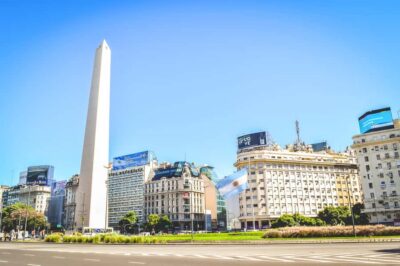
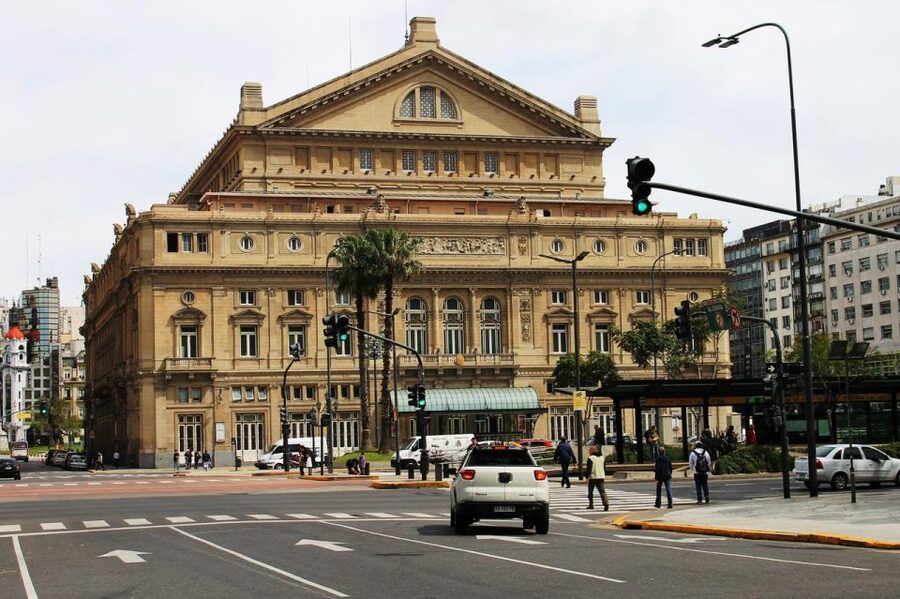
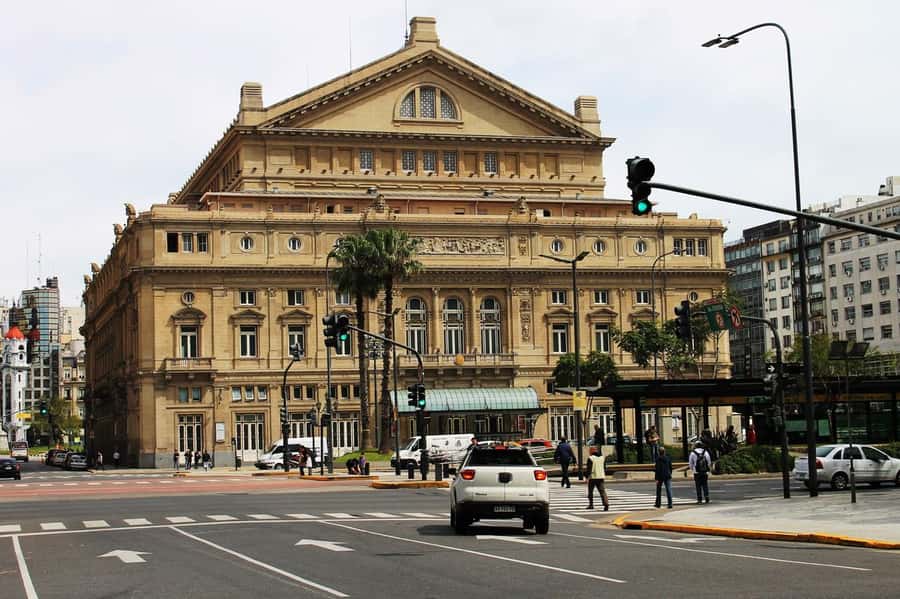
San Nicolás is the most central part of the route and one of the best places to begin understanding Buenos Aires’ grand urban style. The district includes the Obelisk, the Teatro Colón, and Corrientes Avenue, famous for its theaters, restaurants, and late-night energy.
The panoramic bus gives you a practical view of these landmarks without asking you to navigate busy central streets immediately. Look for the Obelisk, the city’s most familiar symbol, and the grand façade of the Colón Theatre. The tour finishes at the Obelisk, which is useful if you want to continue into the center afterward.
Corrientes Avenue adds a different note. It is not simply a road between sights. It is linked with theater, food, and the city’s habit of staying out late. Your guide can supply the context while you watch the avenue pass by.
This part of the tour is mostly a moving view rather than a long walking visit. Bring your camera, but do not expect time to enter the theater or explore the avenue in depth.
Plaza de Mayo and Monserrat in 30 minutes
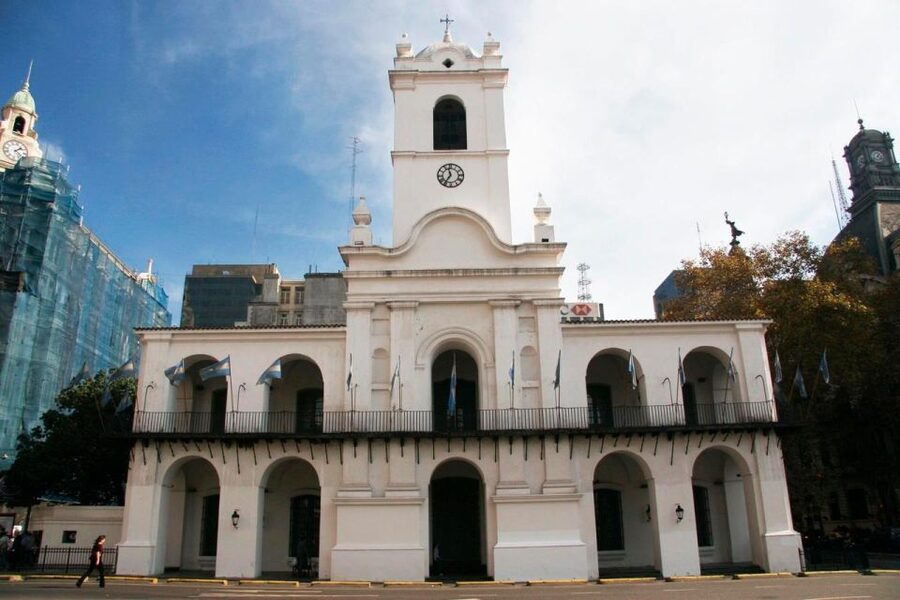
Monserrat is described as the oldest neighborhood in Buenos Aires, and Plaza de Mayo is its main stage. The square connects several of the city’s most important buildings: the Casa Rosada, the Cabildo, the Metropolitan Cathedral, and Avenida de Mayo.
The planned photo stop lasts about 30 minutes. That is enough for a brisk look and photographs, but not enough for a slow architectural study of every building. I suggest staying close to the guide and using the time well. Start with the square, then frame the Casa Rosada and Cathedral before wandering farther.
Plaza de Mayo matters because it links government, religion, colonial foundations, and public life in one place. The Cabildo recalls the early Spanish settlement, while the Casa Rosada remains the best-known seat of Argentina’s national government.
The guide also provides a walking explanation of Monserrat beyond the photo stop. This is one of the most useful portions of the trip for visitors who want historical context without booking a separate city-center tour.
San Telmo, old streets, and tango traditions
San Telmo is one of Buenos Aires’ oldest and most traditional neighborhoods. It forms part of the historic center and is connected with tango venues, Defensa Street, Lezama Park, and the Casa Mínima.
From the bus, you can see the area’s older character and hear how it differs from the formal center around Plaza de Mayo. The route does not promise a long market visit or a tango performance, so keep expectations in check. This is a passing introduction, not a full San Telmo outing.
That limitation can also be useful. If the neighborhood catches your attention, you will know where to return for a slower walk. Defensa Street and the old buildings deserve more time than a fixed bus schedule can provide.
Same city, a completely different kind of day:
- Buenos Aires: Hop-On Hop-Off City Bus Tour
★ 4.2 · 1,855 reviews - Buenos Aires Hop-On Hop-Off Bus and Exclusive Benefits
★ 4.4 · 1,714 reviews - Buenos Aires: La Boca Guided Walking Tour in English
★ 4.8 · 1,587 reviews - Buenos Aires: La Recoleta Cemetery Guided Tour in English
★ 4.8 · 1,359 reviews
La Boca and the Caminito photo stop
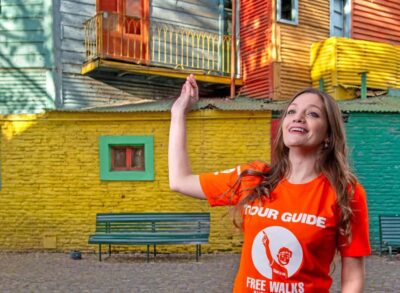
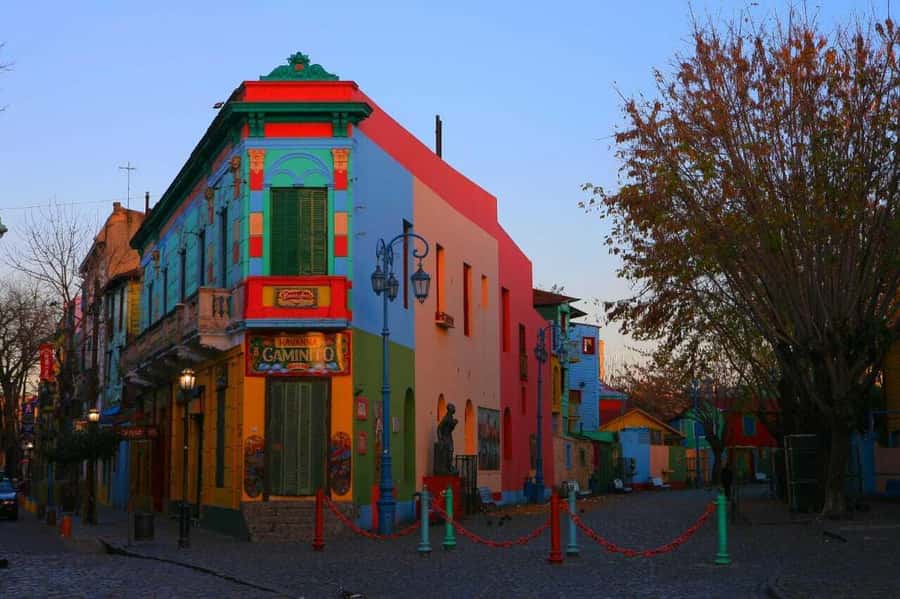
La Boca is the most visually distinctive stop. Caminito is known for bright colors, tango associations, tenement-style housing, and the strong presence of Boca Juniors football. The neighborhood grew as immigrants settled near work opportunities around the port, building homes from wood and sheet metal and using leftover shipyard paint to brighten the walls.
The tour includes a guided stop of about 30 minutes at Caminito. That is enough to walk, take photographs, and get a sense of the setting. It is not enough to explore every side street or spend a relaxed afternoon in the district.
I like this stop because it offers more than a pretty photograph. The colors have a practical story tied to working families, port labor, and reused materials. The football connection adds another part of local identity, especially around Boca Juniors.
Stay with the group and follow the guide’s instructions. The tour data specifically presents Caminito as the place to walk and take photos, not as an open-ended neighborhood stroll. If you want more time for La Boca, plan a separate visit rather than expecting the bus tour to provide it.
Puerto Madero and the city’s modern face
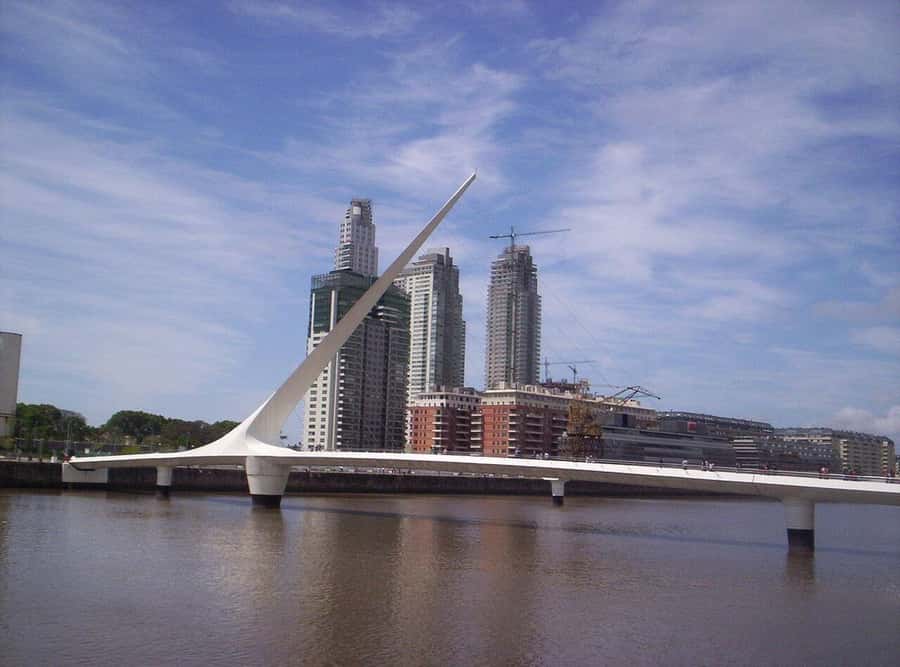
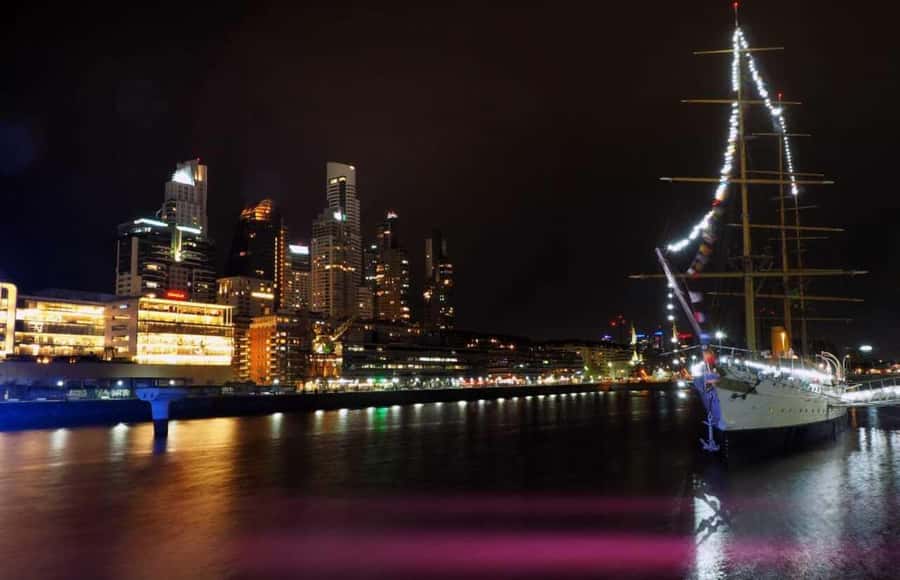
Puerto Madero provides a sharp change of mood. This former port district is now one of Buenos Aires’ most modern areas, with the Puente de la Mujer, the Costanera Sur Ecological Reserve, and a monument connected with tango among its principal sights.
The route helps you see the contrast between old San Telmo and newer Puerto Madero. That contrast is one reason a citywide tour has value. You are not only collecting landmarks. You are watching Buenos Aires shift from colonial streets and immigrant housing to modern waterfront development.
The tour is a guided drive through the district, not a reserve walk. If you want to spend time at the ecological reserve or cross the Women’s Bridge at your own pace, return later. For now, use the bus view to note the district’s clean lines and open waterfront setting.
Puerto Madero also honors important women in Argentine history through its street names and public references. Ask the guide for the details if that subject interests you.
Retiro, Palermo, and Recoleta from the bus
The northern part of the route covers three very different areas.
Retiro was a gateway for millions of immigrants during the nineteenth and twentieth centuries. It is now both a financial and residential district, with Plaza San Martín, Florida pedestrian street, the train station, and the Monumental Tower. From the bus, you receive a quick picture of the district’s role as an arrival point and transport center.
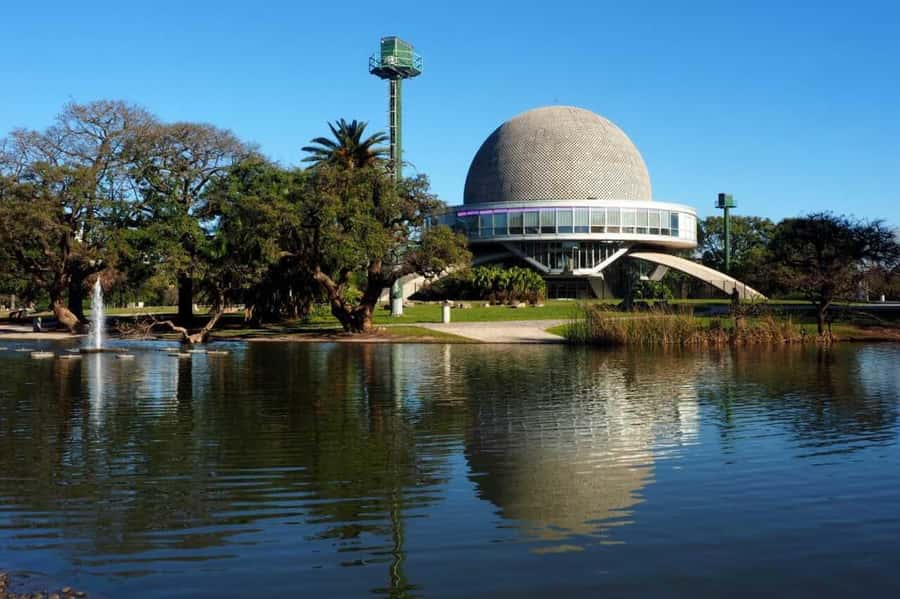
Palermo is the largest neighborhood in the city. The tour passes or explains attractions such as the Bosques de Palermo, Galileo Galilei Planetarium, Plaza Italia, MALBA Latin American Art Museum, and the Hippodrome. This is a broad area, and three hours cannot cover it in detail. Still, the overview helps you decide if parks, art, horses, or museums deserve a longer visit.
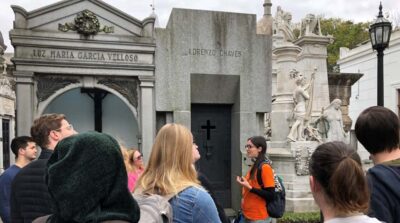
Recoleta is known for elegant streets and major cultural sights. The route includes the famous Recoleta Cemetery, the National Museum of Fine Arts, Carlos Thays Park, and the Law School. The cemetery is one of the city’s key stops, but this tour does not include a dedicated cemetery visit. You will see the area and learn about it from the guide rather than spending time among the tombs.
These neighborhoods are best viewed as a sampler. You will collect useful names and landmarks, then choose one or two for a later half-day visit.
What the three-hour schedule feels like
The listed route moves in a large loop through the city and finishes at the Obelisk. Pickup depends on your selected option. After booking, the local partner chooses the closest meeting location based on your hotel. If your accommodation is not within the pickup arrangement, you are directed to a nearby hotel, or you can select a meeting point if you are outside the service area.
That system is convenient, but confirm the meeting details before the morning of the tour. A nearby hotel may not be the same place as your own front door.
A three-hour city tour sounds generous until you divide it among nine major areas and two named photo stops. Much of your time is spent seeing sights from the bus. You should think of the excursion as a guided orientation with short walks, not as a collection of full neighborhood tours.
One verified booking described a coach of a little over 30 people. A group of that size can slow down the stops, especially when everyone must return to the bus together. Build in patience, and do not schedule an important timed attraction immediately afterward.
Who will get the most value from the $55 price
I would recommend this tour to a first-time visitor who wants to cover a lot of ground on the first day. It suits you especially well if you are staying in a central hotel, prefer a guide to explain what you see, or want an easy introduction before choosing where to return.
The price includes pickup from your hotel or a meeting point, a certified professional guide, the bus ride, and the Plaza de Mayo and Caminito photo stops. Those inclusions make the cost reasonable for visitors who would otherwise need to arrange transport between widely separated neighborhoods.
The value drops if you want freedom. You cannot simply leave the bus in Palermo, linger over lunch in San Telmo, or spend two hours at Recoleta Cemetery. A hop-on hop-off bus may suit you better if flexibility matters more than a live guide and fixed route.
The tour is not suitable for people with mobility impairments. Bring a passport or identity card, and a copy is accepted. Comfortable shoes are sensible for the two walking stops, though the experience remains primarily bus-based.
Booking advice and final verdict
This is a strong orientation tour, not a deep visit to Buenos Aires’ individual neighborhoods. The highest praise centers on the guide and the way the route introduces the city as a whole. That matches the tour’s real strength: you get history, local customs, major landmarks, and a clear sense of how the old and modern districts fit together.
Book it if you have limited time, want English, Portuguese, or Spanish guiding, and prefer a planned route with pickup. Skip it if you already know Buenos Aires, dislike group schedules, or want long, independent walks.
For most first-time visitors, I would use this tour early in the stay, then return on foot to the one or two areas that made you curious. That is where the $55 becomes useful: it helps you choose how to spend the rest of your time.
FAQ
How long does the Buenos Aires panoramic bus tour last?
The tour lasts approximately three hours.
What languages are available?
The live guide is available in English, Portuguese, and Spanish.
Which neighborhoods does the tour visit?
The route covers San Nicolás, Monserrat, San Telmo, La Boca, Puerto Madero, Retiro, Palermo, and Recoleta. The tour also includes the central city area around the Obelisk and Teatro Colón.
Where are the photo stops?
The planned photo stops are Plaza de Mayo in Monserrat and Caminito in La Boca.
How long is the stop at Plaza de Mayo?
The itinerary allows approximately 30 minutes for the Monserrat photo stop and guided visit.
How long is the stop at Caminito?
The itinerary allows approximately 30 minutes for the La Boca photo stop and guided visit.
Is hotel pickup included?
Pickup from your hotel or a meeting point is included. The local partner determines the closest meeting location based on your hotel. If you are outside the pickup area, you need to select a meeting point.
What should I bring?
Bring a passport or identity card. A copy is accepted.
Can people with mobility impairments join?
The activity is not suitable for people with mobility impairments.
Just added around Buenos Aires
- Tango Show at El Querandi with optional Dinner★ 4.2 · 3 reviews
- Wine Tasting in Buenos Aires★ 4.2 · 4 reviews
- Walking Tour: Buenos Aires bookstores★ 4.3 · 12 reviews
- Velez Sarsfield Football Match★ 5.0 · 3 reviews
- Unique Tigre and Delta Private Day Cruise Navegation★ 5.0 · 3 reviews
- Tour Buenos Aires in one day on Electric Scooters★ 5.0 · 33 reviews
- Private Underground Tango Immersion★ 5.0 · 31 reviews
- Experience The Essence of Buenos Aires in San Telmo★ 5.0 · 51 reviews
Buenos Aires Tours, compared.