Reviewed · BUENOS AIRES TOURS
From Colonialism to Eclecticism, Buenos Aires arquitectonica
Buenos Aires reveals its character through its buildings. On this three-hour walk, Juan Ignacio and Loli connect colonial facades, Brutalist concrete, grand theaters, government buildings, and the everyday rituals of Argentine life. You move from Plaza de Mayo to Teatro Colón, with plenty of stops to look up and ask questions.
I like the small group of no more than four people, which gives the tour a personal feel. I also like the mix of architecture and culture: you do not just study facades, you taste mate, try a traditional snack, and learn why mate matters in Argentina.
The main consideration is pace. This is a city walk through central Buenos Aires, with several outdoor stops, so comfortable shoes, sun protection, and a willingness to walk for three hours matter. The tour also does not include entry to Teatro Colón.
In This Review
- Key points at a glance
- Why this Buenos Aires architecture walk is different
- Starting at Plaza de Mayo
- Reconquista Street and the Banco Hipotecario facade
- The CCK and the story of a former post palace
- Corrientes Avenue, Gran Rex, and the Opera
- The Obelisk and the view from Diagonal Norte
- Plaza Lavalle and two contrasting public buildings
- Mate tasting and a small Argentine snack
- Ending at Teatro Colón
- What the $25 price gets you
- Who should book this walk
- Should you book From Colonialism to Eclecticism?
- FAQ
- Where does the walking tour start?
- How long does the tour last?
- What languages are available?
- How many people can join the group?
- Is Teatro Colón entry included?
- What food and drinks are included?
- Is lunch included?
- What should I bring?
- Can I cancel for a full refund?
Key points at a glance
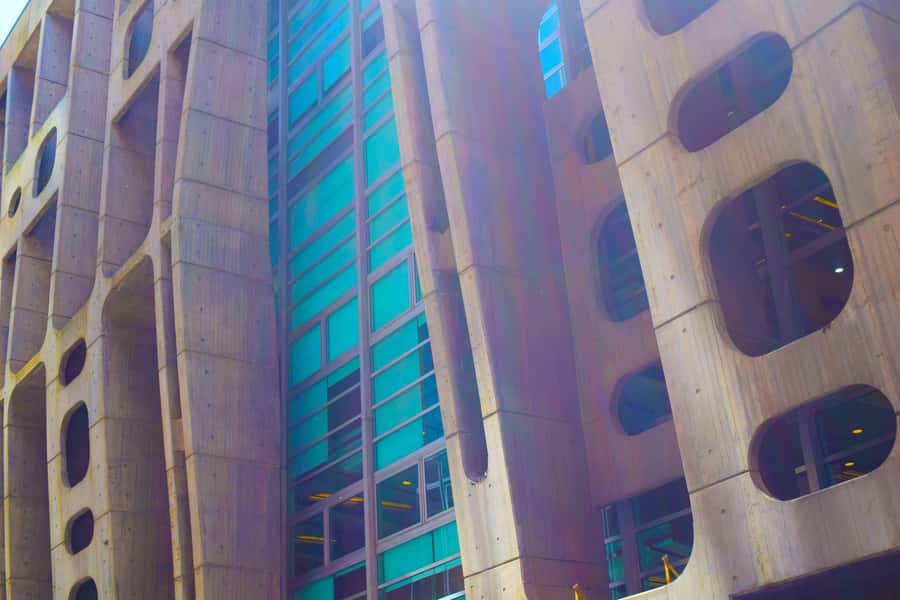
- Colonial and modern Buenos Aires in one walk: See the Cabildo, Metropolitan Cathedral, Casa Rosada, Banco Nación, Banco Hipotecario, CCK, and Teatro Colón.
- A rare look at Brutalism: Pause at Banco Hipotecario to examine one of Microcentro’s more unusual facades.
- Architecture with local context: Juan Ignacio focuses on architects and architectural periods, while Loli adds stories connected to Argentina and South America.
- Mate is part of the tour: Learn about its place in Argentine culture during a tasting, along with water and a traditional snack.
- A very small group: With a maximum of four participants, you can ask questions and request more attention to the styles that interest you.
- A useful central route: The walk links Plaza de Mayo, Corrientes Avenue, the Obelisk, Plaza Lavalle, and Teatro Colón.
Why this Buenos Aires architecture walk is different
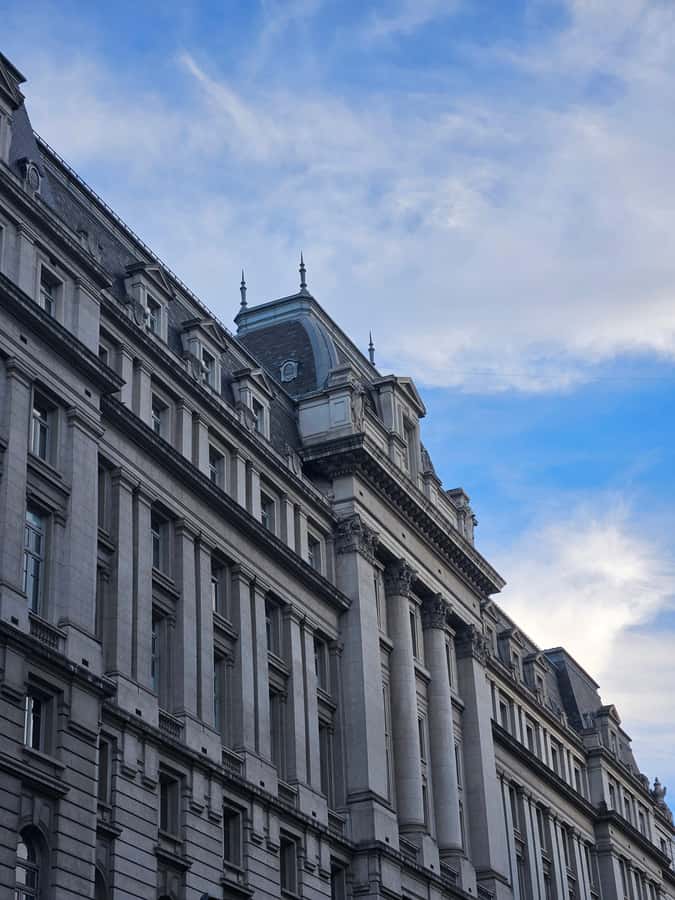
Many first visits to Buenos Aires focus on grand avenues, colorful neighborhoods, and famous squares. This walk takes a more focused approach: it treats the city as an open-air record of changing ideas, politics, commerce, and taste.
You begin at Plaza de Mayo, where several major buildings face one another. From there, the route moves through Microcentro, along Reconquista Street, past the CCK and onto Corrientes Avenue. It finishes near Teatro Colón after passing the Obelisk and Plaza Lavalle.
That route is useful because the buildings are not presented as isolated sights. You see how different periods sit next to each other. A colonial building can be followed by a severe Brutalist structure, then a theater designed for spectacle. The result is a clearer sense of how Buenos Aires developed over time.
The guides add another layer. Juan Ignacio is especially focused on architects, periods, and design details. Loli brings stories tied to South American culture. The supplied comments describe their approach as light and generous, with room for questions rather than a stiff lecture. That matters on an architecture walk, where the difference between a memorable tour and a list of dates is often the guide’s ability to explain what you are looking at.
Other Buenos Aires days worth booking alongside this:
- Buenos Aires Hop-On Hop-Off Bus, Free Walking Tours & Discounts
★ 4.5 · 2,218 reviews - Buenos Aires: Piazzolla Tango Show with Optional Dinner
★ 4.4 · 2,122 reviews - Buenos Aires: City Highlights Guided Tour with Transfer
★ 4.7 · 1,946 reviews
Starting at Plaza de Mayo
Meet at Bolívar 65, at the intersection of Bolívar and Avenida de Mayo, in Plaza de Mayo. This is a practical starting point because the square gathers several of the city’s most important buildings in one place.
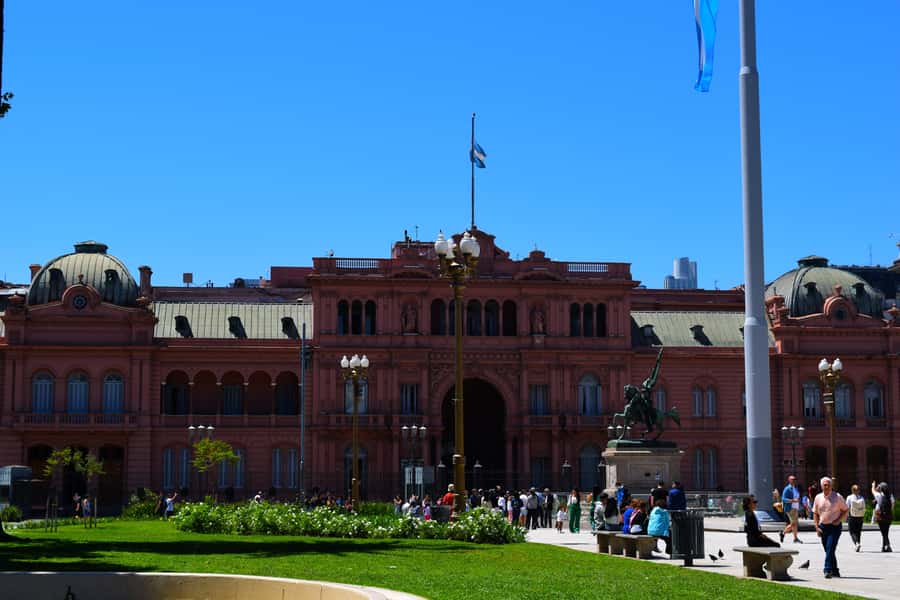
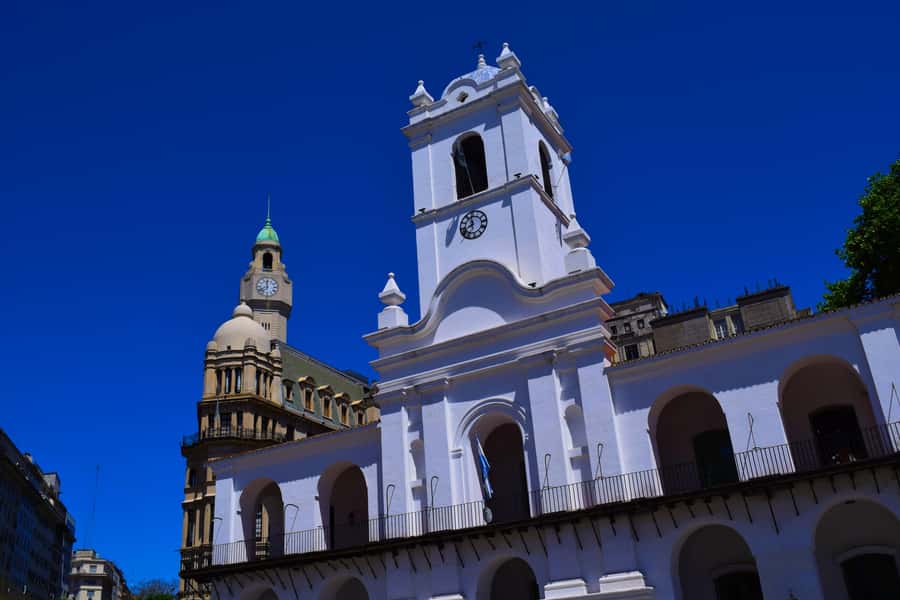
The first sights include the Cabildo, the Metropolitan Cathedral, Casa Rosada, and Banco Nación. Together, they offer a quick lesson in the layers of Buenos Aires architecture and public life.
The Cabildo gives you the colonial point of reference. The Metropolitan Cathedral adds an important religious building to the group, while Casa Rosada brings the country’s political center into view. Banco Nación completes the opening set with a major financial institution. You are not simply looking at pretty facades; you are seeing the close relationship between religion, government, colonial administration, and money.
Plaza de Mayo also gives the guide a natural place to explain the square’s role in Argentina’s political and social life. The tour later returns to that theme at the Obelisk and Plaza de la República, so the opening and middle sections work together.
Because this first part is outdoors, sunglasses, a hat, sunscreen, and comfortable clothing are sensible. Buenos Aires weather can make a sunny walk feel much longer than expected, even when the route itself is manageable.
Reconquista Street and the Banco Hipotecario facade
From Plaza de Mayo, the walk heads north through Reconquista Street. The route then pauses at the headquarters of Banco Hipotecario, where the Brutalist facade changes the mood completely.
Brutalism is often easier to understand in person than in a photograph. Large forms, exposed concrete, and a more forceful visual language can look severe, strange, or even unfriendly. That is part of the point. The stop gives you a chance to compare this building with the historic facades seen earlier.
I find this one of the most useful parts of the route for people who already know the main Buenos Aires sights. The Cabildo and Casa Rosada are obvious stops. Banco Hipotecario is less likely to appear in a standard first-time circuit, yet it helps explain how the city’s central district contains many different architectural periods.
The guides can also adjust the emphasis to your interests. If you care about modern architecture, you can ask for more attention to Brutalism and later design. If historic buildings or cultural traditions interest you more, the route can be shaped around those subjects instead.
The CCK and the story of a former post palace
Next comes the CCK, formerly the Palacio de Correos y Telégrafos, or Post and Telegraph Palace. The group stops to examine its facade and learn about the building’s past.
This is a good example of how the tour uses architecture to explain changing city functions. A post and telegraph palace reflects an era when communications depended on large public institutions and monumental civic buildings. Seeing it in the context of banks, government offices, theaters, and later cultural use helps you think about how a city reuses its major structures.
The stop is mainly an exterior look and historical explanation. Do not expect a long indoor visit here. The value comes from seeing the facade at street level and understanding why the building was made so prominent.
The CCK also breaks up the walk before the route reaches Corrientes Avenue. If you enjoy taking photographs, this is one of several places where the guide’s comments may help you notice details you would otherwise pass without a second look.
Same city, a completely different kind of day:
- Buenos Aires: Hop-On Hop-Off City Bus Tour
★ 4.2 · 1,855 reviews - Buenos Aires Hop-On Hop-Off Bus and Exclusive Benefits
★ 4.4 · 1,714 reviews - Buenos Aires: La Boca Guided Walking Tour in English
★ 4.8 · 1,587 reviews - Buenos Aires: La Recoleta Cemetery Guided Tour in English
★ 4.8 · 1,359 reviews
Corrientes Avenue, Gran Rex, and the Opera
The route then follows Corrientes Avenue, one of Buenos Aires’ key streets for nightlife, culture, and theater. This section has a different energy from Plaza de Mayo. Instead of focusing mainly on state and religious buildings, the walk turns toward performance and popular culture.
Two important theaters come into view: Gran Rex and the Opera. Both had their main period of glory in earlier decades and remain associated with shows and large public gatherings.
The guide explains how these buildings fit into the life of Corrientes Avenue. That context is more useful than simply snapping a photograph of a theater entrance. You learn why this street became tied to evening entertainment and why these theaters still matter in the city.
The route does not promise entry to either theater. The focus is on the architecture, the street setting, and the role of the venues. If you like theater design, this section should be a highlight. If you prefer interiors to exteriors, keep your expectations clear.
Corrientes Avenue also gives the tour a welcome change of scale. Earlier, you were studying individual facades around a square or a narrower street. Here, the buildings relate to a major urban artery and its cultural life.
The Obelisk and the view from Diagonal Norte
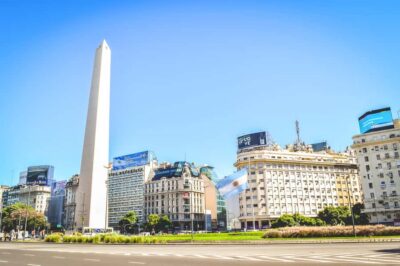
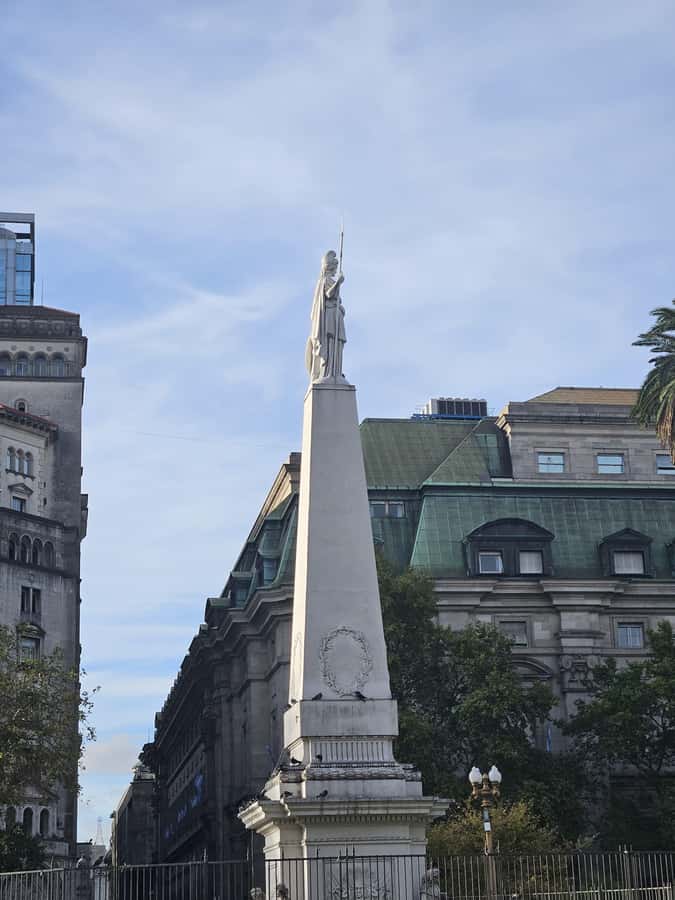
The first part of the walk reaches the Obelisk and Plaza de la República. This is one of Buenos Aires’ most recognizable sights, but the guide does more than use it as a photo backdrop.
You learn about the Obelisk’s importance in the country’s political and social life. Its location at the meeting of major avenues makes it a natural symbol of public gatherings, celebrations, and demonstrations.
A short pause at the Obelisk staircase provides a panoramic viewpoint toward the intersection of Avenida 9 de Julio and Corrientes. This is one of the clearest practical benefits of the route: you get a planned spot for views rather than trying to find your own position among the traffic and crowds.
The stop should appeal to photographers, but it is also helpful if you are still getting your bearings in central Buenos Aires. From this point, the scale of the avenues becomes easier to understand. You can see why the Obelisk is more than an isolated monument. It is tied to the movement and public life of the center.
The road crossings and city traffic are worth keeping in mind. This is an urban walking tour, not a quiet garden stroll. Stay with the group and wear shoes that can handle pavement for several hours.
Plaza Lavalle and two contrasting public buildings
The final section takes you toward Plaza Lavalle. Here, the tour looks at the Courts Palace and the Julio Argentino Roca School, located opposite one another.
The pairing gives you another useful comparison. The Courts Palace represents the legal and institutional side of the city, while the school brings education into the picture. The guide uses the buildings to continue the larger theme of public architecture and the way different institutions shape the center.
Plaza Lavalle also prepares you for the final stop at Teatro Colón. The surroundings shift from the political and commercial center toward one of Buenos Aires’ best-known cultural buildings.
This part of the route may be especially valuable if you like buildings that are still connected to daily civic life. Not every interesting structure is a palace or a theater. Courts and schools tell you how a city organizes public services, and they help broaden the tour beyond postcard sights.
Mate tasting and a small Argentine snack
Before finishing, you have a mate tasting and learn about the drink’s place in Argentine culture. Water and a traditional Argentine snack are included as well.
This is more than a refreshment break. Mate is tied to social customs and everyday life, so the tasting adds something that a strictly architectural tour would miss. You get a chance to ask about the tradition directly and connect the city’s buildings with the people who use them.
The snack is a small inclusion, not a substitute for lunch. Lunch is not included, and you should eat beforehand if you tend to get hungry during a three-hour walk.
The tasting also gives the group a relaxed moment near the end. The architecture discussion is balanced with a shared cultural activity, and the guides’ style appears to be conversational rather than formal. If you are curious about Argentine customs but do not want to book a separate food experience, this is a useful addition.
Ending at Teatro Colón
The walk finishes at Teatro Colón, one of the central city’s major cultural landmarks. The route gives you the outside context before offering the option to remain and take a guided interior visit.
Entry to Teatro Colón is not included in the $25 tour price. That separation is sensible because not everyone has the time or interest for an indoor visit, while others may want to continue with a more detailed look at the theater.
If you plan to take the guided visit inside, check the timing when you book the walking tour. The activity itself lasts about three hours, and the interior visit is an optional addition rather than part of the included route.
The ending is convenient for anyone planning more sightseeing in central Buenos Aires. The tour details also describe the activity as ending back at the meeting point, while the route information names Teatro Colón as the finish. Because those details conflict, confirm the exact end arrangement before booking.
What the $25 price gets you
At $25 per person, this is a strong value if you want a guide-led introduction to central Buenos Aires architecture rather than a simple list of famous sights.
The price includes a live English- or Spanish-speaking guide, water, a traditional snack, and mate tasting. The small group limit of four is important here. A large group can make architecture commentary hard to hear, while a group this size gives you a real chance to ask Juan Ignacio or Loli about a building, period, or detail that catches your eye.
You are paying for interpretation and local context, not admissions. The tour does not include lunch or entry to Teatro Colón, so budget separately if you want the indoor theater visit or a full meal afterward.
Free cancellation up to 24 hours before the activity and reserve-now, pay-later booking make it easier to fit into a changing Buenos Aires schedule. Still, the main value comes from the route and the guides, especially if you want buildings that go beyond the usual circuit.
Who should book this walk
I would recommend it to first-time visitors who want a strong orientation to central Buenos Aires, as well as repeat visitors who have already seen the main squares and want to notice more detail.
It suits people who enjoy architecture, urban history, theaters, public buildings, and local customs. It is also a good match if you prefer a small group and like being able to shape the conversation around your interests.
You may want a different experience if you dislike long outdoor walks, want extensive indoor access, or are looking mainly for food. The mate and snack are useful cultural additions, but this is not a food tour. It is also not a full interior tour of Teatro Colón.
Bring comfortable shoes, sunglasses, a hat, sunscreen, and comfortable clothes. The walk takes place in the city center, with several photo stops and pauses, but you should still expect three hours on foot.
Should you book From Colonialism to Eclecticism?
Book this tour if you want to understand why Buenos Aires can place colonial buildings, Brutalist banks, grand theaters, civic institutions, and modern cultural centers within the same central route.
The strongest reasons are the very small group, the ability to adjust the tour to your interests, and the combination of architecture with mate culture. Juan Ignacio’s focus on architects and periods, along with Loli’s South American stories, gives the walk a personal angle.
Skip it if you want a quick monument checklist or guaranteed interior visits. For curious walkers who like to look beyond the famous facade, the $25 price offers a thoughtful and unusually focused way to read Buenos Aires.
FAQ
Where does the walking tour start?
It starts in Plaza de Mayo at Bolívar 65, at the intersection of Bolívar and Avenida de Mayo.
How long does the tour last?
The walking tour lasts three hours. Starting times vary, so check availability when booking.
What languages are available?
The live guide is available in English and Spanish.
How many people can join the group?
The group is limited to four participants.
Is Teatro Colón entry included?
No. Entry to Teatro Colón is not included, but you have the option to stay there and take a guided visit inside.
What food and drinks are included?
The tour includes water, a traditional Argentine snack, and a mate tasting.
Is lunch included?
No. Lunch is not included.
What should I bring?
Bring comfortable shoes, sunglasses, a hat, sunscreen, and comfortable clothes.
Can I cancel for a full refund?
Yes. You can cancel up to 24 hours in advance for a full refund.
Just added around Buenos Aires
- Tango Show at El Querandi with optional Dinner★ 4.2 · 3 reviews
- Wine Tasting in Buenos Aires★ 4.2 · 4 reviews
- Walking Tour: Buenos Aires bookstores★ 4.3 · 12 reviews
- Velez Sarsfield Football Match★ 5.0 · 3 reviews
- Unique Tigre and Delta Private Day Cruise Navegation★ 5.0 · 3 reviews
- Tour Buenos Aires in one day on Electric Scooters★ 5.0 · 33 reviews
- Private Underground Tango Immersion★ 5.0 · 31 reviews
- Transfers from or to the airport In Argentina Your Best Choice★ 5.0 · 28 reviews
Buenos Aires Tours, compared.