
Reviewed · BUENOS AIRES TOURS
Buenos Aires Night Tour on Electric Scooter
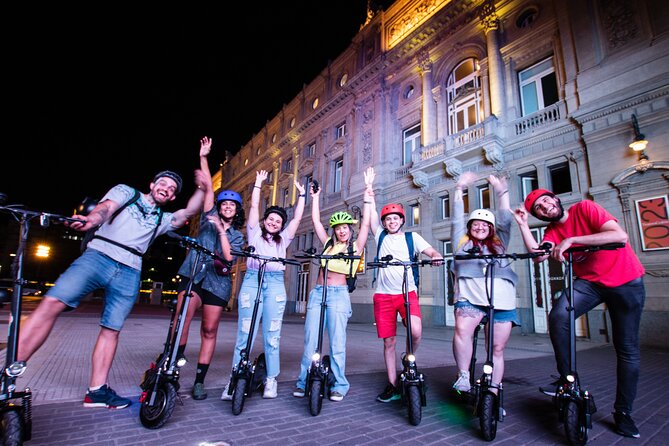
Buenos Aires looks different from an electric scooter after sunset. You glide from grand squares to the Obelisco, the Casa Rosada, and Puerto Madero, covering a good stretch of the city without the drag of a long walk. I like the small maximum group of nine and the lively mix of history, politics, football, and local drinking customs.
I also like the final Fernet time, when you prepare Branca Fernet with Coca-Cola beside the Puente de la Mujer. The main caution is simple: you need to ride a bicycle confidently before booking. One guest crashed into a metal fence after receiving only about 30 seconds of instruction, so this is not a lesson for a first-time scooter rider.
In This Review
- Key points to know before you roll
- Why an electric scooter suits Buenos Aires at night
- Plaza San Martín and Torre Monumental: Buenos Aires with European airs
- Malvinas memorial and Luna Park: memory, football, and old Buenos Aires
- Puente de la Mujer: the best pause of the evening
- Reserva Ecológica Costanera Sur: a quieter change of pace
- CCK and Banco Nación: culture and the memory of El Corralito
- The Obelisco and Casa Rosada: Buenos Aires on its biggest stage
- What the guide adds to the ride
- Price, group size, and what you receive for $44
- Who should book this Buenos Aires night tour
- Final call: a fun ride with one important condition
- FAQ
- How long does the Buenos Aires Night Tour on Electric Scooter last?
- What time does the tour begin?
- Where does the tour start and finish?
- Is Fernet included?
- Do I need previous scooter experience?
- Is a helmet provided?
- What happens if the weather is poor?
Key points to know before you roll
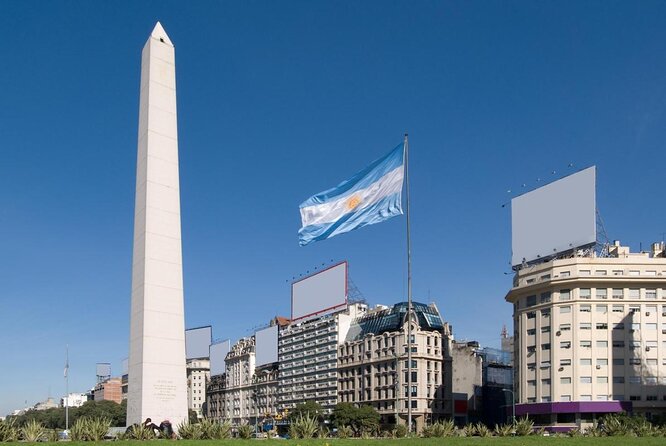
- A 7 pm city ride: The timing gives you Buenos Aires after dark, with the Obelisco, Casa Rosada, and Puerto Madero taking on a different mood.
- A compact group: The maximum is nine people, which should make it easier to hear the guide and keep the ride moving.
- A local drink lesson: Fernet with Coca-Cola is prepared at the Puente de la Mujer, with the drink included in the price.
- A serious riding requirement: You must know how to ride a bicycle and have basic balance skills.
- A broad city route: The stops cover Retiro, the waterfront, the ecological reserve area, the financial district, the Obelisco, and the Casa Rosada.
- A reasonable price for active sightseeing: At $44 per person, you are paying for equipment, a guide, a drink, and access to a compact evening route.
Why an electric scooter suits Buenos Aires at night
The clever idea here is not simply replacing a bus or walking with a scooter. It is the way the scooter links parts of central Buenos Aires that can feel separate on foot. You begin near Plaza General San Martín, move through the Retiro and downtown areas, reach Puerto Madero, then return to the starting venue.
The ride lasts about two to three hours, with roughly ten stops. Some are brief photo and explanation points, while others offer more time to take in the setting. That rhythm matters. You are not parked at one monument for an hour, but you also are not rushing past every sight without context.
The experience has a social tone. The guide brings together architecture, immigration, football, economic crises, public memory, and nightlife. That makes the route useful if you want more than a string of landmark photographs.
Still, a scooter changes the demands of sightseeing. You need to pay attention to balance, steering, braking, and the route around you. The operator supplies a helmet, but the helmet does not remove the need for basic riding ability. If you have never used an electric scooter, choose another way to see the city.
A few more Buenos Aires trips to weigh up
- Electric Scooter Tour: North Buenos Aires
★ 5.0 · 67 reviews - Tour Buenos Aires in one day on Electric Scooters
★ 5.0 · 33 reviews
Plaza San Martín and Torre Monumental: Buenos Aires with European airs
The first stop is Plaza General San Martín, with about 20 minutes for the guide to explain why Buenos Aires is often associated with European-looking streets, grand buildings, and formal public spaces. This is a good opening because it gives you a visual question to carry through the rest of the ride: how did Buenos Aires develop its particular character?
The next stop is Torre Monumental, with about 15 minutes. The themes here include migration, football, and the tower’s nickname, Little Ben. The combination is typical of this tour. You are not getting only architectural facts. The guide connects a landmark to the people who shaped the city and to the passions that dominate daily life.
Admission is not included at these stops, but the listed plan is a guided exterior visit rather than a promise of inside access. You should expect to look, listen, and continue riding.
Malvinas memorial and Luna Park: memory, football, and old Buenos Aires
At the Monumento a los Caídos en Malvinas, the tour turns toward the Falkland Islands conflict and Argentina’s continuing claim to the islands. The stop lasts about 20 minutes, giving the guide room to discuss a subject that remains politically and emotionally important in Argentina.
The itinerary also links the stop to D10S, a reference to Argentina’s football culture and one of its most famous figures. You should expect the guide to move between national identity, football, and public memory rather than treat the monument as an isolated object.
Luna Park receives only about five minutes, so think of it as a quick landmark stop. The venue represents a golden era in Argentina and has a long collection of stories and records attached to it. The short timing may frustrate anyone who wants a detailed visit, but it keeps the evening moving.
Puente de la Mujer: the best pause of the evening
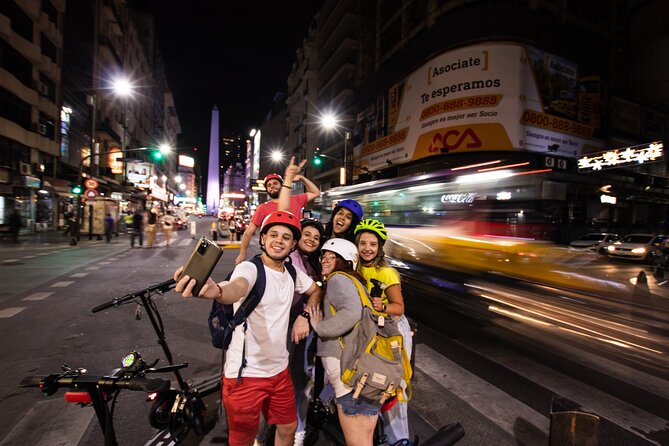
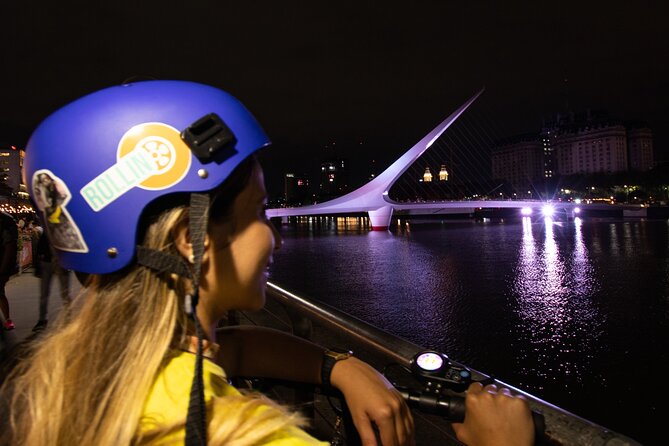
The Puente de la Mujer is the longest stop, at about 35 minutes, and it is where the tour’s most distinctive activity takes place. You learn about Santiago Calatrava’s design and the message behind the bridge’s form while looking across the Puerto Madero setting.
Then comes the practical lesson: how to prepare Fernet with Coca-Cola. Branca Fernet, an herbal amaro, is included with the tour, as is the Coca-Cola used to mix it. This is more than a free drink. It gives you a small piece of local social culture that you can repeat later in Buenos Aires, provided you remember the proportions you prefer.
The setting helps. The bridge is one of the city’s recognizable modern landmarks, and the stop gives you time to enjoy it instead of taking a quick photograph and moving on. The drink is alcoholic, so this is not a tasting for children or anyone avoiding alcohol.
This pause also explains why the tour feels different from a standard sightseeing circuit. You are not only receiving information. You are being shown a local habit and given a chance to share it with the group.
Same city, a completely different kind of day:
- Buenos Aires Hop-On Hop-Off Bus, Free Walking Tours & Discounts
★ 4.5 · 2,218 reviews - Buenos Aires: Piazzolla Tango Show with Optional Dinner
★ 4.4 · 2,122 reviews - Buenos Aires: City Highlights Guided Tour with Transfer
★ 4.7 · 1,946 reviews - Buenos Aires: Hop-On Hop-Off City Bus Tour
★ 4.2 · 1,855 reviews
Reserva Ecológica Costanera Sur: a quieter change of pace
The route then reaches Reserva Ecológica Costanera Sur for about 20 minutes. The experience describes it as an ecological miracle, and its place on the route provides a break from the monuments, traffic, and city buildings.
The stop is included, but the supplied information does not promise a separate nature walk or wildlife viewing. Keep your expectations to a guided visit connected to the evening scooter route. The value is the change in surroundings and the chance to see how close open ecological space is to central Buenos Aires.
Because this is a night tour, visibility will depend on the conditions and the exact pace of the group. The reserve is best treated as part of the wider city story, not as a dedicated nature excursion.
CCK and Banco Nación: culture and the memory of El Corralito
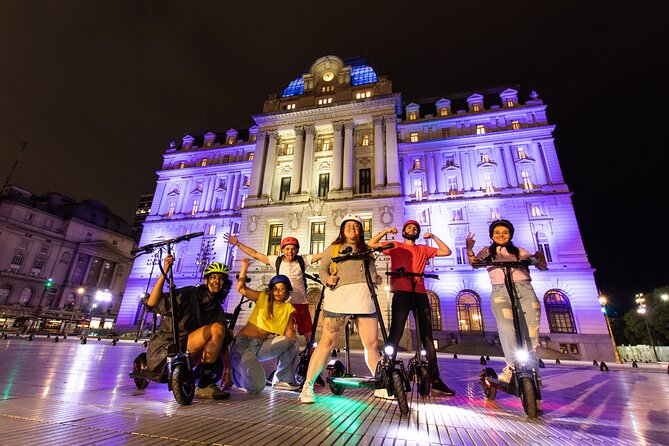
At the Centro Cultural Kirchner, the guide shifts toward Buenos Aires nightlife and cultural life. The point is that the city after dark is not only about dance venues, beer halls, bookshops, restaurants, and theaters. Cultural centers also play a major role, with changing programs and events.
The stop lasts about 15 minutes. Admission is not included, so you should not assume that the ride includes an indoor exhibition or performance. Instead, this is a quick introduction to the building and to the role of cultural centers in the city.
The Banco de la Nación Argentina brings a more difficult subject: El Corralito. The guide explains the government restriction that once prevented people from freely withdrawing their savings from banks. This is a useful stop because it connects a striking civic building with a financial crisis that affected ordinary life.
The subject may feel heavier than the Fernet lesson or the bridge photographs, but it gives the route substance. You are not being shown only postcard sights. You are also being given a short explanation of a major event in modern Argentine life.
The Obelisco and Casa Rosada: Buenos Aires on its biggest stage
The Obelisco gets about ten minutes. The guide presents it as more than a tall monument, describing it as a symbol, a witness, and a kind of heart for the city. The short stop should be enough for an explanation and photographs, though not for a long architectural study.
The Obelisco is also a useful marker of the route’s shift from waterfront and civic subjects to the central public spaces most visitors associate with Buenos Aires. After seeing it at night, you have a clearer sense of how the city organizes itself around major avenues and gathering points.
At Casa Rosada, the final scheduled stop, you spend about 20 minutes considering why the building is pink. The guide also prepares Fernet and serves a traditional alfajor, an Argentine filled cookie. This creates a second local food moment after the drink preparation at Puente de la Mujer.
The two Fernet references may sound repetitive, but they serve different purposes. At the bridge, the drink is tied to architecture and Puerto Madero. At Casa Rosada, it is part of a closing taste of Argentine everyday culture, accompanied by an alfajor.
What the guide adds to the ride
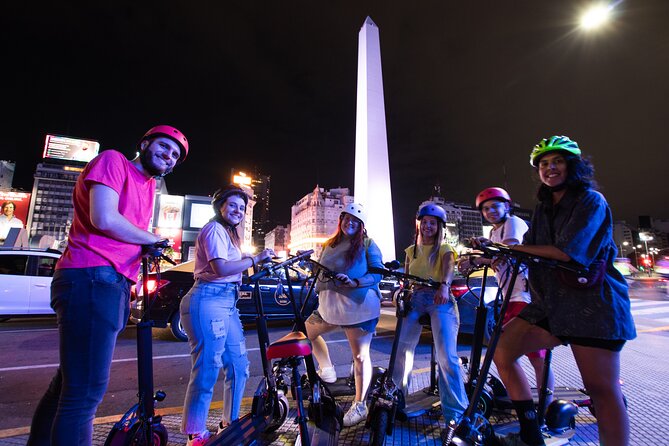
The guide is central to the quality of this experience. Cristian is praised for his friendly manner and for explaining Argentine culture, history, and politics with energy. His approach appears to fit the route well because the subjects jump from immigration to football, from Calatrava’s bridge to the banking crisis.
The strongest part of the guiding is the variety. You can ask about a landmark, then hear a connection to national identity or daily life. That is especially useful in Buenos Aires, where a building, monument, or plaza often carries political and cultural meaning beyond its appearance.
The tone is informal and playful. The promotional description promises an easygoing ride, local secrets, and practical recommendations for the rest of your stay. You should expect conversation and personality rather than a formal lecture.
Still, the guide cannot compensate for unsafe riding. If you are uncertain on a bicycle, the short instruction at the beginning may not be enough. The operator clearly places responsibility for handling the scooter with the person riding it, so take that warning seriously.
Price, group size, and what you receive for $44
At $44 per person, the price is fair if you want an active evening introduction to central Buenos Aires. You receive an electric scooter, a helmet, a guide, the Fernet and Coca-Cola, and an alfajor at the final stop.
The route also covers a lot of ground in two to three hours. You are paying for movement between districts as well as the explanations at each stop. A walking tour could offer more detail at fewer locations, while a bus route might cover more distance with less personal involvement.
The maximum group size is nine. That is small enough to feel more personal than a large coach outing, but it is still a group ride, not a private tour. The exact experience will depend on who joins and how comfortably everyone handles the scooters.
The tour is booked, on average, about 16 days ahead. That does not guarantee every date will sell out, but it is a useful sign to plan ahead if the 7 pm departure fits your schedule.
Who should book this Buenos Aires night tour
I would choose this for someone who can already ride a bicycle, enjoys a little motion, and wants a broad first look at Buenos Aires. It is particularly well suited to people who like history served in short, lively portions rather than long talks at one site.
It also works for couples or friends who want a relaxed evening activity with a local drink and a small group. The sunset and night setting, praised by one participant for its beautiful evening light, adds something that a daytime city circuit cannot provide.
I would not book it for anyone who has never ridden an electric scooter. I would also hesitate if your main goal is entering monuments or spending serious time inside cultural buildings. Most stops are exterior visits, and admission is generally not included.
The start and end point is Tres Sargentos 463 in central Buenos Aires, near Puerto Madero and public transportation. The tour begins at 7 pm and returns to the same venue, making it easy to continue your evening nearby.
Cancellation is free up to 24 hours before the start time. Poor weather can cancel the ride, in which case you are offered another date or a full refund. A minimum number of participants is also required, with the same choice of a new date, another experience, or a refund if the operator cancels.
Final call: a fun ride with one important condition
Book this tour if you can handle a bicycle, want to cover several central districts, and like your sightseeing with stories, football, politics, and Fernet. The route is broad, the group is limited to nine, and the final drink lesson gives the evening a clear local character.
Skip it if scooter riding is new to you or if you want a slow, detailed visit inside Buenos Aires landmarks. At $44, the value is good for an active overview and a social night out, but only when the riding requirement matches your ability.
FAQ
How long does the Buenos Aires Night Tour on Electric Scooter last?
The tour lasts approximately two to three hours.
What time does the tour begin?
The tour starts at 7:00 pm.
Where does the tour start and finish?
It starts and ends at Tres Sargentos 463, C1054ABC, Buenos Aires. The venue is in the downtown area, a short distance from Puerto Madero.
Is Fernet included?
Yes. Branca Fernet and Coca-Cola are included, and you learn how to prepare the drink during the tour. An alfajor is also served at Casa Rosada.
Do I need previous scooter experience?
You need to know how to ride a bicycle and have basic balance skills. The activity is not recommended if you do not know how to ride a bicycle.
Is a helmet provided?
Yes. The tour includes use of safety equipment, including a helmet.
What happens if the weather is poor?
The experience requires good weather. If it is canceled because of poor weather, you are offered another date or a full refund.
Just added around Buenos Aires
- Tango Show at El Querandi with optional Dinner★ 4.2 · 3 reviews
- Wine Tasting in Buenos Aires★ 4.2 · 4 reviews
- Walking Tour: Buenos Aires bookstores★ 4.3 · 12 reviews
- Velez Sarsfield Football Match★ 5.0 · 3 reviews
- Unique Tigre and Delta Private Day Cruise Navegation★ 5.0 · 3 reviews
- Private Underground Tango Immersion★ 5.0 · 31 reviews
- Tour Buenos Aires in one day on Electric Scooters★ 5.0 · 33 reviews
- Transfers from or to the airport In Argentina Your Best Choice★ 5.0 · 28 reviews
Buenos Aires Tours, compared.

Browse the lists this tour appears in