
Reviewed · CYCLING TOURS
Buenos Aires: North or South Buenos Aires Bike Tour
The smartest thing about this Buenos Aires bike tour is the choice of two very different city routes. The South Circuit takes you through San Telmo, La Boca, Puerto Madero, and Plaza de Mayo, while the North Circuit links Retiro, Recoleta, Palermo, and the city’s grand parks.
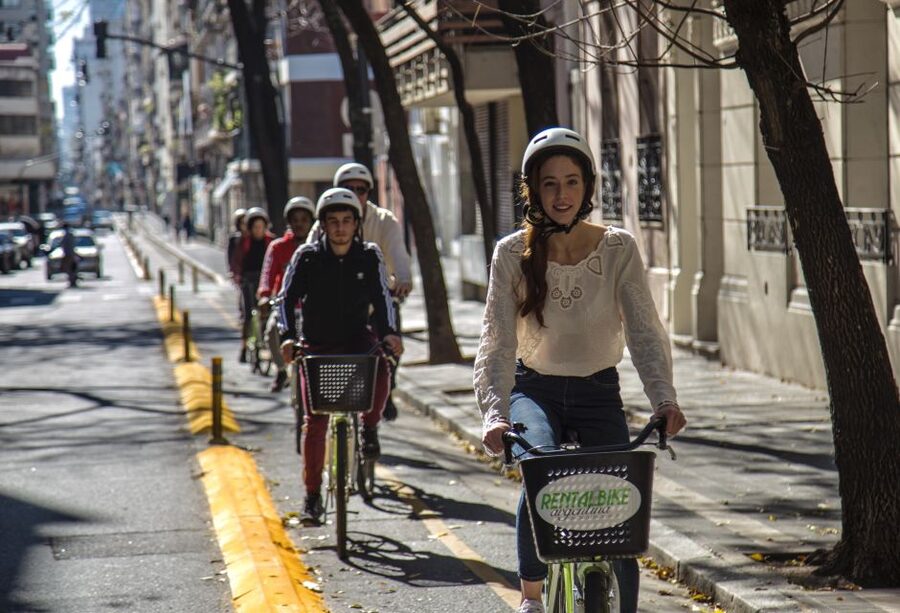
I like the small groups of up to eight people, which make it easier to hear the guide and adjust the pace. I also like the easy-to-ride cruiser bikes, baskets, helmets, and mostly bike-lane riding. The main consideration is traffic: you will ride alongside cars on some busy streets, especially on the North route, and four hours in the saddle still requires a fair level of comfort on a bike.
In This Review
- Key points to know before booking
- Why a bike is a smart way to see Buenos Aires
- The South Circuit: from San Telmo to the presidential palace
- La Boca and La Bombonera
- Puerto Madero and the riverfront reserve
- Plaza de Mayo and the city’s political center
- The North Circuit: palaces, Recoleta, and Palermo parks
- Recoleta without entering the cemetery
- Floralis Genérica and the Palermo parks
- Congress Square on the return
- Guides, pace, and group size
- Bikes, traffic, weather, and comfort
- Is the $38 price good value?
- Which circuit should you choose?
- Should you book this Buenos Aires bike tour?
- FAQ
- How long does the Buenos Aires bike tour last?
- Can I choose between a North and South route?
- What does the South Circuit include?
- What does the North Circuit include?
- Does the tour enter Recoleta Cemetery?
- Is the Ecological Reserve always open during the South Circuit?
- What is included with the bike rental?
Key points to know before booking
- Choose South for color and city origins: San Telmo, La Boca, Caminito, Puerto Madero, the Ecological Reserve, and Plaza de Mayo make this the more varied route.
- Choose North for architecture and parks: Retiro, Recoleta, Palermo, the Rose Garden, and Floralis Genérica offer a calmer look at Buenos Aires.
- Expect strong guides: Ana, Santiago, Pilar, Florencia, Flo, Dilson, and others are praised for clear English, local stories, history, and useful food and tango tips.
- Plan for real city riding: Most of the route uses bike lanes, but a few sections place you on open roads with traffic.
- Allow four hours, plus energy: The pace is generally relaxed, but the North Circuit covers more distance because its sights are farther from the starting point.
- Bring your own water bottle: Water refills are available, but the operator specifically asks you to bring a reusable bottle.
Why a bike is a smart way to see Buenos Aires
Buenos Aires is broad, flat, and spread across many distinct neighborhoods. Walking lets you notice details, but you will cover only a small part of the city in four hours. A taxi gets you from sight to sight, but it skips the gradual change from one district to the next.
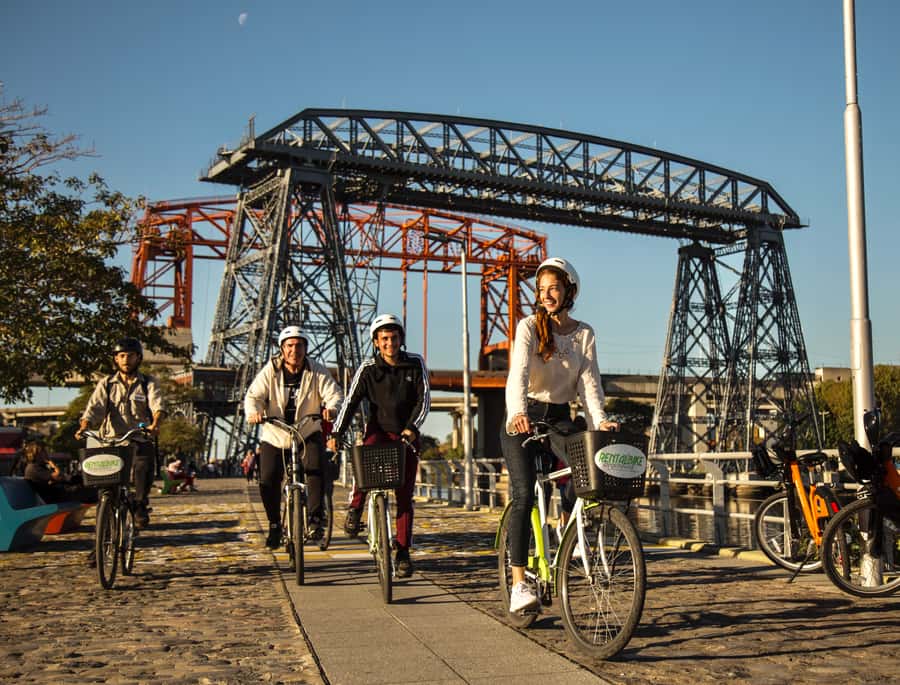
A bicycle gives you a useful middle ground. You move far enough to connect the city’s major areas, yet slowly enough to see street life, parks, façades, monuments, and local corners along the way. I especially like this format for a first day in Buenos Aires, since it gives you a working map of the city and helps you decide where to return later.
The tour begins at Rental Bike Argentina on Chile 1145 in the Montserrat area, though the precise meeting point can vary with the booking option. Arrive 15 minutes early. The maximum wait is 10 minutes, after which the group leaves without a refund.
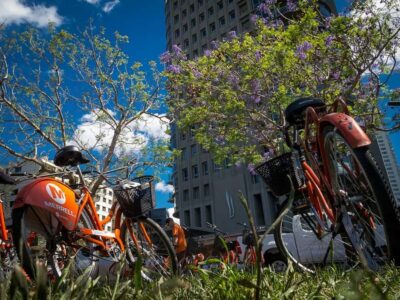
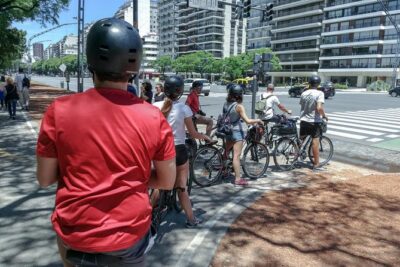
Before riding, you receive safety instructions and a helmet. The bike comes with a bell and basket, and there is a water-refilling machine at the shop. The bicycles are cruiser-style, and the pace is intended to be manageable rather than athletic.
A few more Buenos Aires trips to weigh up
- Buenos Aires: Full Day Bike Tour with Lunch
★ 4.9 · 152 reviews - Buenos Aires Bike Tour: North Districts, Recoleta and Palermo
★ 4.5 · 91 reviews - Buenos Aires in a Day – All Inclusive Bike Tour
★ 5.0 · 89 reviews
The South Circuit: from San Telmo to the presidential palace
The South Circuit is the stronger choice if you want Buenos Aires in bold colors and big contrasts. It begins in San Telmo, the old quarter, where the city’s early immigrant neighborhoods, tango culture, and older streets provide the opening chapter.
At Parque Lezama, the guide explains the city’s first foundation, waves of immigration, and the development of tango. This is a useful early stop because it gives context to what you see later in San Telmo and La Boca. You are not simply passing through colorful streets. You are learning how port life, migration, and working-class culture shaped the city.
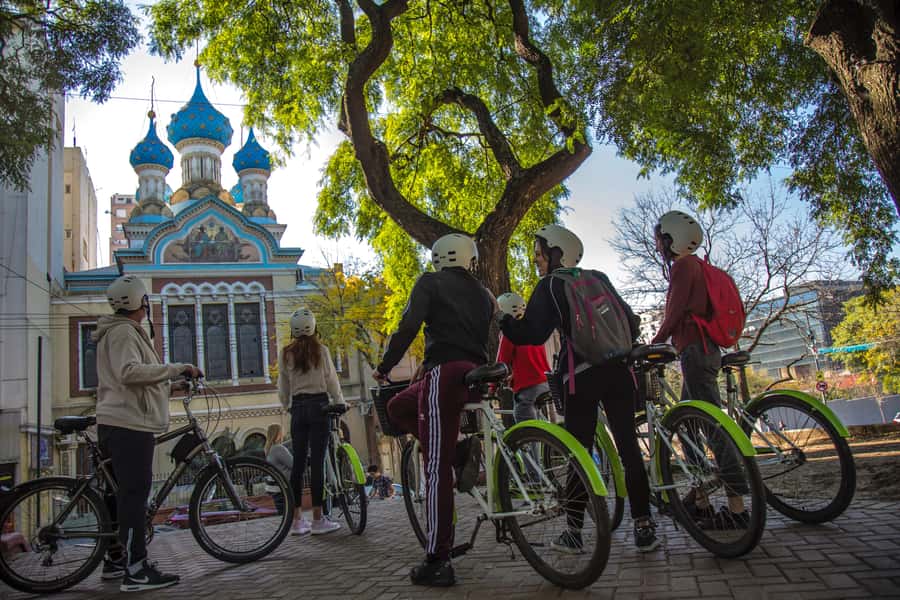
The route also passes the Russian Orthodox Church of the Holy Trinity. Its distinctive domes make it a quick but worthwhile photo stop, and it adds another reminder of the many communities that helped form Buenos Aires.
La Boca and La Bombonera
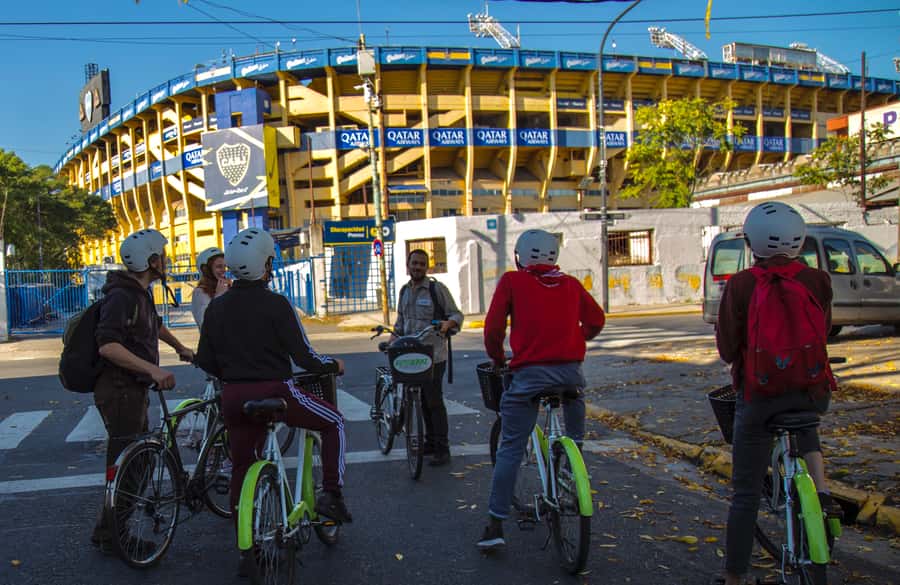
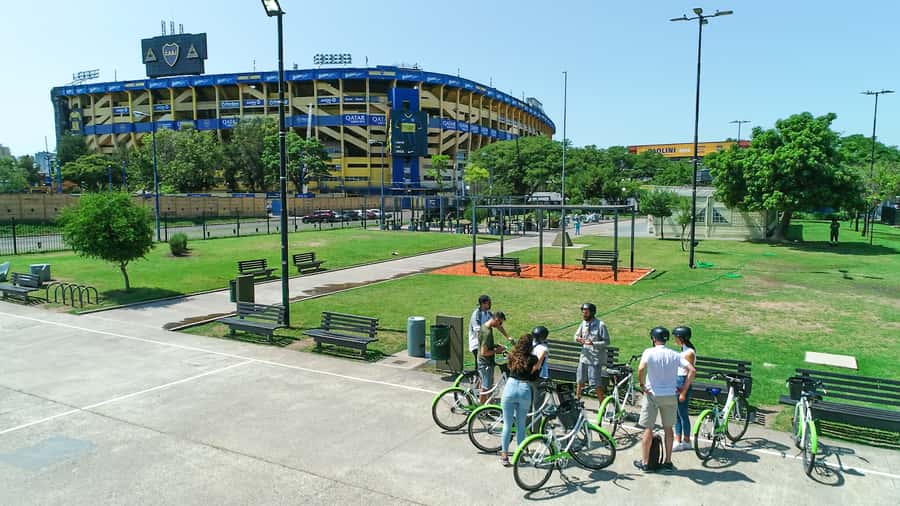
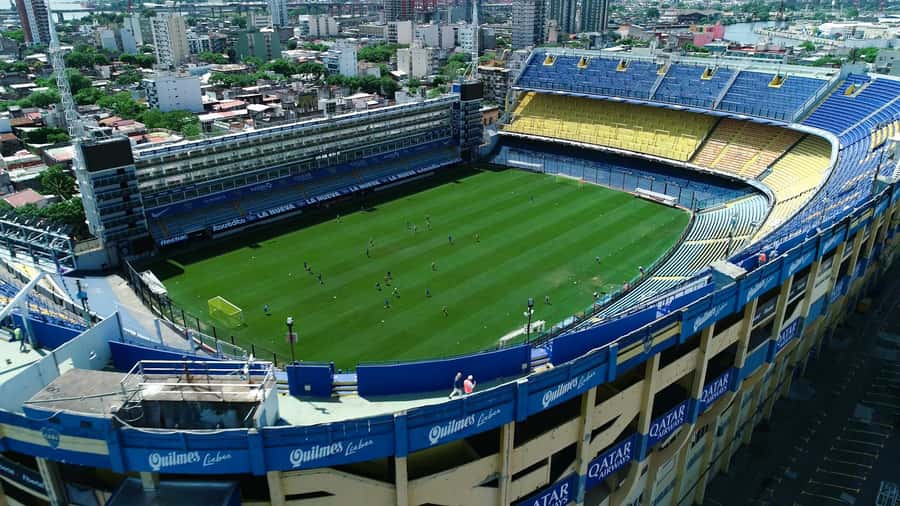
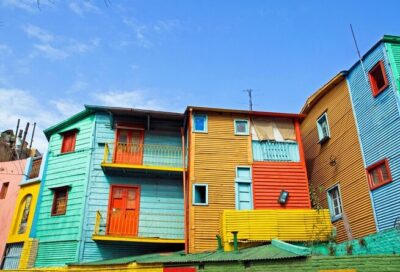
From San Telmo, the ride continues toward La Boca, one of the most recognizable districts in Buenos Aires. La Boca is known for its painted buildings, art, tango associations, and strong neighborhood identity. The route takes you to La Bombonera, the famous football stadium and a symbol of local passion.
The stop at the stadium is brief, around 10 minutes, so you should not expect a full stadium visit as part of the standard tour. One person was able to tailor a private outing and add a Boca stadium tour, but that was possible because the group consisted of just one participant. Treat La Bombonera as a guided exterior stop unless your guide confirms something different.
Next comes Caminito, the colorful pedestrian area that grew from Buenos Aires’ former port district into a center for local artists. You get time to look around on foot, which is important here. Riding past Caminito would miss the point, since the painted walls, art, performers, and small details reward a slower look.
The free time is still limited. I would not plan to shop at length or linger over a meal during this tour. If Caminito grabs you, make a note to return later. Bring some Argentine pesos if you want to buy small pieces of street art or souvenirs.
Puerto Madero and the riverfront reserve
After La Boca, the route changes mood. Puerto Madero was once a harbor area and is now Buenos Aires’ most modern district, with a newer skyline and broad waterfront spaces. The contrast with San Telmo and La Boca is part of what makes the South Circuit work so well.
You also stop near the Fuente de las Nereidas, created by Argentine sculptor Lola Mora. The fountain offers an opportunity to discuss local art and public monuments before the route heads toward the Ecological Reserve.
The Reserva Ecológica Costanera Sur covers about 865 acres between the city and the Río de la Plata. It brings nature into a route otherwise dominated by streets, buildings, and monuments. You may see wildlife and open spaces, and the reserve gives you a break from traffic and architecture.
There is one important catch: the reserve is closed on Mondays, and access can also be affected by bad weather or conditions after heavy rain. The tour may pass through or adjust the route, but you should not assume the reserve portion will always be available. One participant had the cycling section changed after rain the previous day.
Same city, a completely different kind of day:
- Buenos Aires Hop-On Hop-Off Bus, Free Walking Tours & Discounts
★ 4.5 · 2,218 reviews - Buenos Aires: Piazzolla Tango Show with Optional Dinner
★ 4.4 · 2,122 reviews - Buenos Aires: City Highlights Guided Tour with Transfer
★ 4.7 · 1,946 reviews - Buenos Aires: Hop-On Hop-Off City Bus Tour
★ 4.2 · 1,855 reviews
Plaza de Mayo and the city’s political center
The South Circuit finishes with the historic core around Plaza de Mayo. This is where Buenos Aires was definitively founded in 1580, and it remains the city’s main political and civic stage.
You see the Casa Rosada, the presidential offices, with its famous pink façade. The guide also explains the Old Cabildo, once the city hall, and the Metropolitan Cathedral, associated with Pope Francis, who served there before becoming pope.
The Centro Cultural Kirchner may also appear along this stretch, adding a modern cultural building to the older civic landmarks. Plaza de Mayo is a strong ending because the guide can connect the city’s colonial beginnings, national politics, religion, and public life in one compact area.
The South route covers a lot, but the major stops are not long museum visits. Think of it as a moving introduction with selected photo stops and short walks. I like it for first-time visitors who want to see several sides of Buenos Aires in one morning or afternoon.
The North Circuit: palaces, Recoleta, and Palermo parks
The North Circuit offers a different Buenos Aires. Instead of port neighborhoods and political origins, you get late 19th-century architecture, elegant public spaces, museums, monuments, and the leafy areas around Recoleta and Palermo.
The route begins through the downtown business district before reaching Retiro and Plaza San Martín. This part of the city reflects the wealth and ambition of Buenos Aires during the Belle Époque, when grand buildings and European-inspired design reshaped the capital.
At Plaza San Martín, expect stops connected with Argentina’s national story, including the Monument to the Fallen in the Malvinas. The route passes the Kavanagh Building, the Basilica del Santísimo Sacramento, and the Torre Monumental. These are short stops or pass-bys, so you get a broad architectural survey rather than detailed interior visits.
The Kavanagh Building is especially useful for understanding the city’s mix of monumental and modern design. The Torre Monumental, formerly linked with the British community in Buenos Aires, gives the area another layer of cultural history. Your guide supplies the meaning behind these buildings, which is far more useful than simply collecting photographs.
Recoleta without entering the cemetery
The route continues to Recoleta, one of the city’s best-known districts. It is associated with its cemetery, cafés, museums, ice cream shops, and elegant streets.
The tour does not enter Recoleta Cemetery. This is an important limitation if the cemetery is high on your list. The itinerary may include a guided look at the cemetery area or a pass-by, but you should plan a separate visit if you want to see the famous tombs and mausoleums inside.
You also pass the Israeli Embassy area and the former home of General José de San Martín. These stops help broaden the route beyond postcard sights, connecting national figures, public memory, and modern Buenos Aires.
Floralis Genérica and the Palermo parks
One of the North Circuit’s best photo stops is Floralis Genérica, the huge metal flower sculpture. You get a break and some free time here, making it easier to take photographs and hear the guide’s explanation without trying to keep your bicycle moving.
The route then heads into Palermo, passing the Planetario Galileo Galilei and the open spaces around Tres de Febrero Park. The Rose Garden, known as Paseo El Rosedal, is one of the most pleasant portions of the route. One North Circuit participant specifically valued the time to wander around the park.
This is where the North Circuit feels less like a checklist of monuments and more like a look at how residents use the city. Palermo’s parks offer space, shade, paths, and a slower rhythm after the traffic and formal architecture of downtown and Retiro.
The trade-off is distance. Palermo lies farther from the Montserrat starting point, so the North route involves more riding than the South route. Some riders also find the North route includes busier roads. If you are a cautious cyclist, tell the guide about your comfort level at the start.
Congress Square on the return
The final major stop is Plaza del Congreso, beside the grand building that houses Argentina’s legislative power. It is a fitting return point after the North Circuit’s focus on monuments, government, and civic architecture.
The square can be especially attractive late in the day, and the listed stop may include sunset views depending on the departure time. By this point, you have crossed several central neighborhoods and seen how Buenos Aires shifts from office towers to palaces, from busy avenues to parks, and back to a formal public square.
Guides, pace, and group size
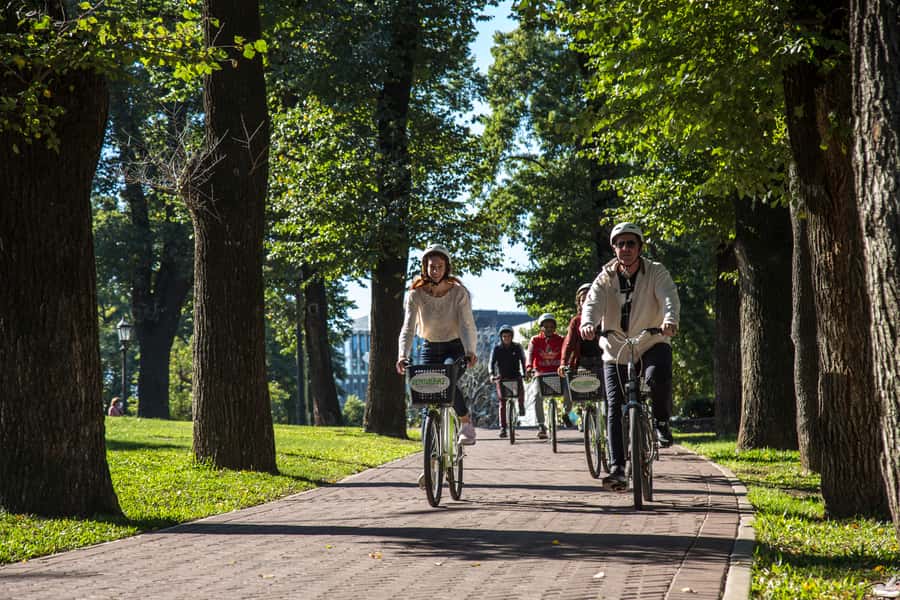
The strongest part of this experience is the guiding. Guides including Ana, Santiago, Pilar, Florencia, Flo, Dilson, Martina, and others are praised for clear English, warm manners, local stories, and the ability to adjust the pace to the group.
That matters on a bike tour. A guide who talks only about dates and buildings can make four hours feel long. Here, the best guiding includes cultural details, explanations of how neighborhoods developed, personal recommendations for restaurants and tango, and small curiosities about statues and buildings.
The bilingual format is Spanish and English. If the group includes both languages, explanations may take a little longer, but the limited group size helps. A group can be as small as two people, and some departures may feel almost private. With up to eight riders, you still get a more personal experience than on a large coach tour.
The pace is generally relaxed. Guides have adjusted to mixed abilities, stayed at the back of the group when needed, and handled route changes caused by rain or city protests. That said, you need to be comfortable riding for four hours, stopping, starting, and sharing some streets with cars.
Bikes, traffic, weather, and comfort
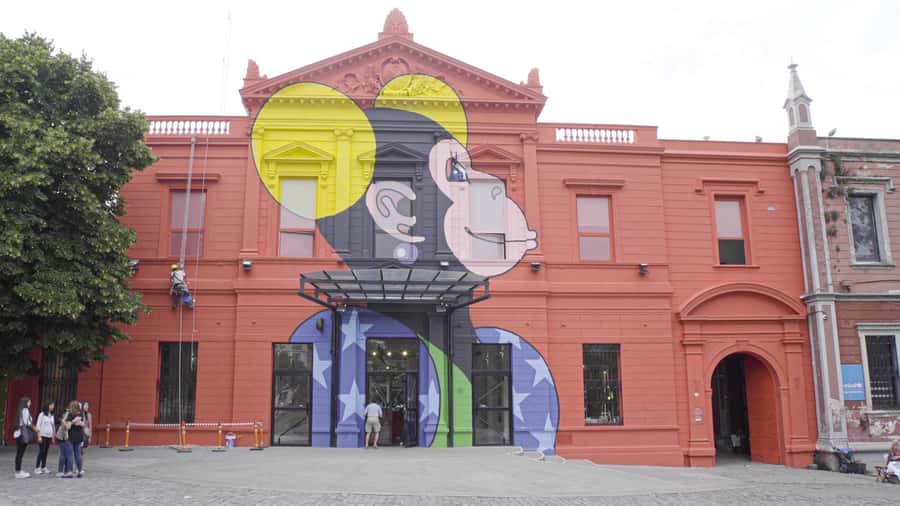
The cruiser bikes are described as comfortable and easy to ride. Baskets are useful for carrying a water bottle or small personal items, and helmets are provided. Most of the cycling takes place in bike lanes, though not every street offers that protection.
You should expect a few blocks on open roads. This is a city ride, not a protected park circuit. Buenos Aires is flat, which helps, but heavy traffic can make some stretches less relaxed, particularly on the North Circuit. I would choose the South route if you are less confident in traffic and want a route with a little less distance.
Wear comfortable shoes and weather-appropriate clothing. In winter, bring extra layers because the ride can feel chilly even if the day begins pleasantly. The tour may operate in light to moderate rain, and guides have supplied ponchos when conditions changed.
Heavy rain, strong winds, or a weather alert can lead to suspension before or during the ride. The operator may reschedule in that situation. The Ecological Reserve is also subject to its own closures, especially on Mondays.
The minimum age is 12, and riders must be at least 1.50 meters tall. The experience is not suitable for pregnant people, people with mobility, back, heart, respiratory, or seizure conditions, people with recent surgery, visually impaired people, or anyone over 118 kilograms. Tips for guides are not included.
Is the $38 price good value?
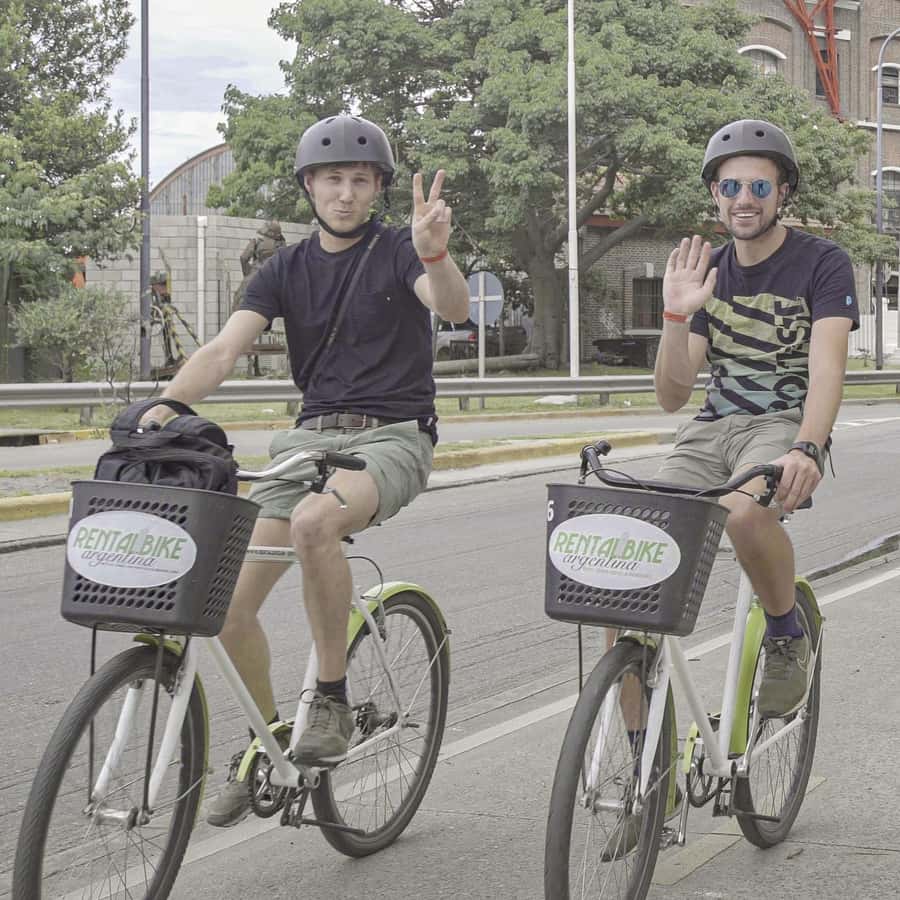
At $38 per person for four hours, I consider this a good-value introduction to Buenos Aires, especially if you are new to the city. You receive a bike, helmet, basket, bell, bilingual guide, and a route connecting districts that would take much longer to visit on foot.
The value is highest when you use the tour as an orientation rather than trying to treat it as a series of full attractions. You will see the outside of major buildings, hear their stories, and receive time at selected stops. You will not get extended visits inside museums, the Recoleta Cemetery, or La Bombonera on the standard route.
The small group helps justify the cost. You can ask questions, hear the guide, and sometimes benefit from a route adjusted to the group’s interests or ability. If you have only one day in Buenos Aires, the tour also saves you the trouble of piecing together several neighborhoods by taxi or public transport.
Free cancellation is available up to 24 hours before the start, and you can reserve now and pay later. Check the available start times before booking, since the exact meeting point may vary by option.
Which circuit should you choose?
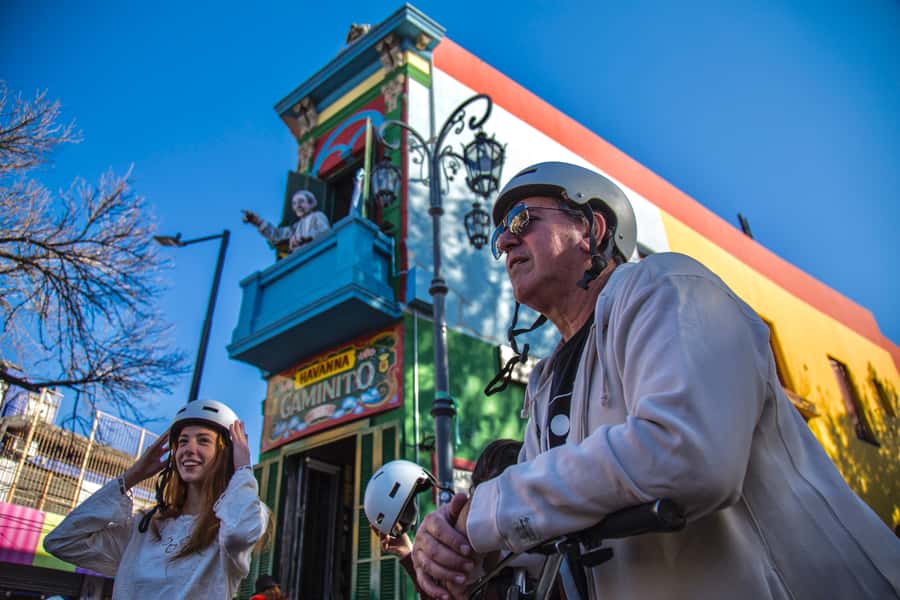
Choose the South Circuit if you want:
- San Telmo and the city’s early immigrant culture
- Tango connections and old-quarter streets
- La Boca, Caminito, and La Bombonera
- Puerto Madero and the Ecological Reserve
- Plaza de Mayo, Casa Rosada, the Cabildo, and the Cathedral
Choose the North Circuit if you want:
- Retiro’s grand buildings and Plaza San Martín
- Belle Époque architecture and monuments
- Recoleta’s cafés and cultural setting
- Floralis Genérica and Palermo
- Tres de Febrero Park, the Rose Garden, and the Planetarium
If you have enough time and enjoy cycling, doing both routes gives you a fuller picture. The South route feels more historic, colorful, and tied to the port. The North route feels more formal, spacious, and park-oriented.
Should you book this Buenos Aires bike tour?
I would book it early in a Buenos Aires visit, especially if you like history, city design, and active sightseeing. The South Circuit is my pick for the widest mix of neighborhoods and iconic stops. The North Circuit is better if grand architecture, Recoleta, and Palermo matter most to you.
Skip it if you dislike riding near traffic, have a medical condition that makes four hours of cycling unsuitable, or want long indoor visits at individual sights. Also skip the South route on a Monday if the Ecological Reserve is essential to your plans.
For most visitors who are comfortable on a bicycle, the tour offers a practical way to get your bearings fast. Bring water, arrive early, wear layers, and treat the guide’s restaurant and tango suggestions as part of the value. At $38, it is a sensible introduction to a very large city.
FAQ
How long does the Buenos Aires bike tour last?
The tour lasts four hours, including riding, guided stops, photo opportunities, and short periods of free time.
Can I choose between a North and South route?
Yes. You can choose the South Circuit or the North Circuit when booking. The two routes cover different neighborhoods and sights.
What does the South Circuit include?
The South Circuit includes San Telmo, Parque Lezama, La Boca, La Bombonera, Caminito, Puerto Madero, the Fuente de las Nereidas, the Ecological Reserve, Plaza de Mayo, Casa Rosada, the Cabildo, and the Metropolitan Cathedral.
What does the North Circuit include?
The North Circuit includes downtown Buenos Aires, Retiro, Plaza San Martín, the Monument to the Fallen in the Malvinas, the Kavanagh Building, the Basilica del Santísimo Sacramento, Torre Monumental, Recoleta, Floralis Genérica, Palermo, the Planetarium, the Rose Garden, and Plaza del Congreso.
Does the tour enter Recoleta Cemetery?
No. The North Circuit does not enter Recoleta Cemetery. You should plan a separate visit if you want to explore the cemetery inside.
Is the Ecological Reserve always open during the South Circuit?
No. The Ecological Reserve is closed on Mondays and can be affected by bad weather or wet conditions. The route may be changed if the reserve is unavailable.
What is included with the bike rental?
The tour includes a cruiser bike, bell, basket, helmet, bilingual Spanish and English guide, and access to a water-refilling machine. Bring your own reusable water bottle.
Just added around Buenos Aires
- Tango Show at El Querandi with optional Dinner★ 4.2 · 3 reviews
- Wine Tasting in Buenos Aires★ 4.2 · 4 reviews
- Walking Tour: Buenos Aires bookstores★ 4.3 · 12 reviews
- Velez Sarsfield Football Match★ 5.0 · 3 reviews
- Unique Tigre and Delta Private Day Cruise Navegation★ 5.0 · 3 reviews
- Tour Buenos Aires in one day on Electric Scooters★ 5.0 · 33 reviews
- Private Underground Tango Immersion★ 5.0 · 31 reviews
- Transfers from or to the airport In Argentina Your Best Choice★ 5.0 · 28 reviews
Cycling Tours, compared.
Buenos Aires Bike Tour: North Districts, Recoleta and Palermo
Read our review →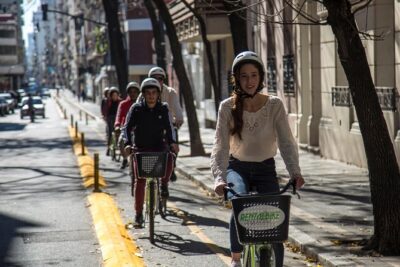
Buenos Aires Bike Tour: San Telmo and La Boca Districts
Read our review →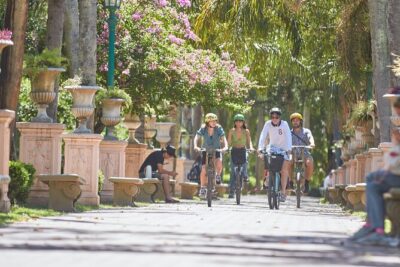
Private Off the Beaten Path: Hidden Urban Art Bike Tour
Read our review →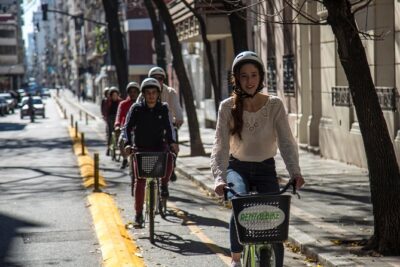
Cultural Experience by Bike around Palermo and Recoleta Max 6 ppl
Read our review →Browse the lists this tour appears in