
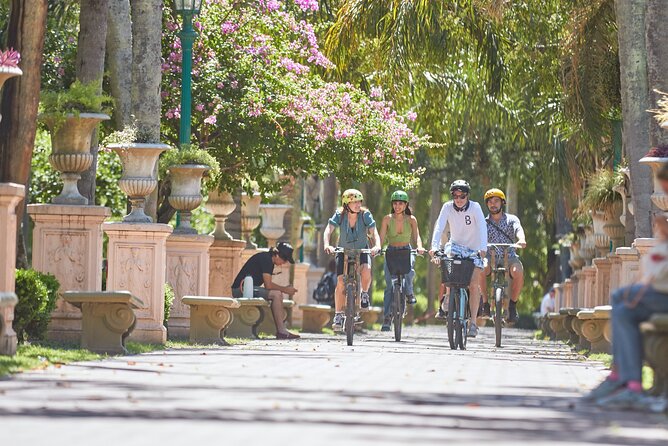
Reviewed · CYCLING TOURS
Private Off the Beaten Path: Hidden Urban Art Bike Tour
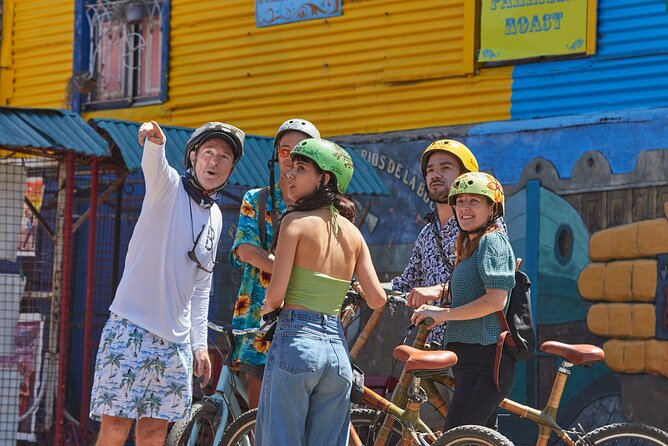
Buenos Aires reveals a different face when you pedal south from San Telmo. This private bike tour takes you through La Boca and Barracas, where murals, mosaics, political art, football symbols, and working-class streets tell stories that polished sightseeing routes often miss.
I like the mix of serious street-art context and casual city riding. I also like the small human touches: empanadas, bottled water, a coffee or yerba mate stop, and guides such as Raymond and Daniel who have offered useful tips for the rest of a stay. The main drawback is simple: you need to feel comfortable cycling in city traffic and less-touristed neighborhoods.
In This Review
- Key points to know before booking
- Why this bike tour shows a more useful Buenos Aires
- Starting in San Telmo with a short riding lesson
- Pasaje Lanín and the art of changing a street
- Barracas and Alfredo Segatori’s giant mural
- La Boca beyond the postcard version
- Art collectives, design, and a former ice cream factory
- What the guides add to the ride
- The practical side: price, bikes, and effort
- Who should book this experience
- Should you book the Hidden Urban Art Bike Tour?
- FAQ
- How long does the Hidden Urban Art Bike Tour last?
- Where does the tour begin?
- Where does the tour end?
- Is this a private tour?
- What neighborhoods does the route visit?
- Do I need to be an experienced cyclist?
- Is an e-bike available?
- What is included in the price?
- Does the tour operate in bad weather?
- What is the cancellation policy?
Key points to know before booking
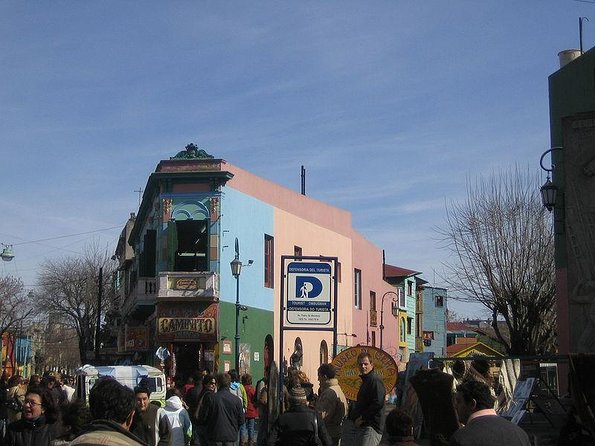
- See La Boca beyond Caminito: The route includes famous colorful streets but also quieter corners and local murals.
- Ride through Barracas: Pasaje Lanín and Alfredo Segatori’s enormous mural are major stops.
- Expect more than pretty walls: Art opens the door to discussions about Argentine politics, soccer, religion, community life, and neighborhood change.
- This is a private outing: Only your group takes part, so the pace and conversation can feel personal.
- Plan for a moderate ride: You receive a bike and helmet, while an e-bike is available for an extra fee.
- Bring weather-ready clothing: The tour runs in all weather, and the route includes riding, walking, and outdoor stops.
Why this bike tour shows a more useful Buenos Aires
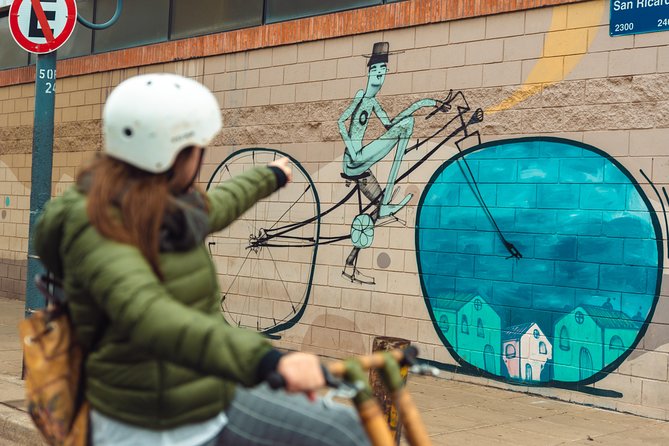
Many first-time visits to Buenos Aires focus on grand avenues, historic cafés, Recoleta, tango, and the brightly painted Caminito. Those places have their place, but they can leave you with a polished, partial picture of the city.
This ride points your handlebars toward the inner south. You move between San Telmo, La Boca, and Barracas, three areas with strong working-class and immigrant connections. The streets are not simply backdrops for photographs. They help explain how art has been used to mark identity, honor local figures, express political ideas, and bring attention to community life.
I especially like the way the tour uses art as a starting point rather than an end point. A stencil can lead to a talk about public space. A football mural can open a conversation about Boca Juniors. A neighborhood wall can reveal something about memory, local pride, or social change.
The four-hour length gives you enough time to cover ground without turning the outing into a race. You make about eight stops, though the listed route groups several of them within La Boca and Barracas. At each pause, you can get off the bike, walk around, take pictures, and listen.
A few more Buenos Aires trips to weigh up
- Buenos Aires: North or South Buenos Aires Bike Tour
★ 4.7 · 719 reviews - Buenos Aires: Full Day Bike Tour with Lunch
★ 4.9 · 152 reviews - Buenos Aires Bike Tour: North Districts, Recoleta and Palermo
★ 4.5 · 91 reviews
Starting in San Telmo with a short riding lesson
You meet at Balcarce 1016 in San Telmo in the early afternoon. San Telmo is one of Buenos Aires’s oldest areas, so it is a fitting place to begin a ride focused on how the city has changed and who has shaped it.
The opening orientation takes about 20 minutes. You get your bicycle and helmet, receive urban riding advice, and hear how the route will work. That briefing matters because this is not a park ride. You need a moderate level of fitness and a good level of comfort riding in an urban setting.
The company describes its work as a way to build a cultural bridge between visitors and the city. That idea comes through in the route. The point is not simply to tick off walls. Your guide helps you read the city through its people, art, neighborhoods, and everyday customs.
The ride is private, which is a real advantage here. A guide can spend more time on the subjects that interest you, adjust the pace for your group, and answer questions without a large cluster of cyclists waiting behind you.
Standard bicycles are included. An e-bike can be added for an extra fee if you prefer assistance, though the supplied information does not specify the extra cost. Since the ride lasts about four hours, an e-bike may be useful for anyone who is fit enough for cycling but less confident about sustained urban riding.
Pasaje Lanín and the art of changing a street
One of the most rewarding stops is Calle Lanín in Barracas. This short street was once described as grey and neglected. Artist Marino Santa Maria helped bring it to life, and its decorated façades later earned recognition as a site of cultural interest from UNESCO.
The appeal here is different from that of a single huge mural. Lanín is about the way art can affect a whole street. Mosaics and painted façades make the route feel domestic and local rather than staged for a sightseeing crowd.
You get about 15 minutes at the stop. That is enough to walk, look closely, and photograph the patterns, but it is not a long art-school lecture. If you like design details, this is one of the places where you will want to slow down and inspect the work rather than simply take a wide shot.
The tour’s focus on collectives also adds useful context. You may hear about groups such as Red Sudakas and Triangulo Dorado, along with artists including Pum Pum, Mart, Pol Corona, and Martin Ron. The exact artists you discuss can depend on the guide and the route that day, but the range shows how varied Buenos Aires street art can be.
Barracas and Alfredo Segatori’s giant mural
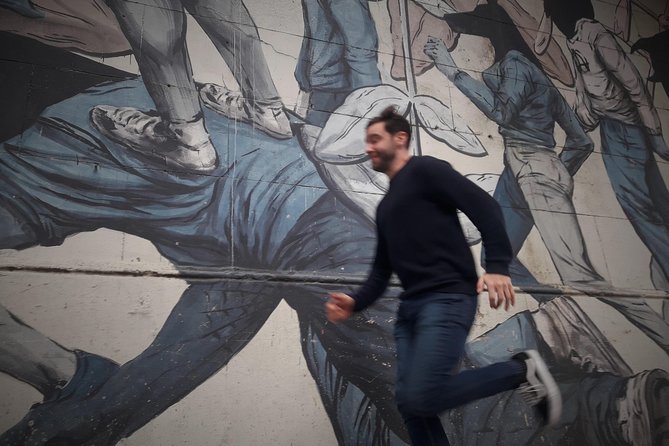
The Barracas stop brings you to El Regreso de Quinquela, painted by Alfredo Segatori, also known as Pelado. The work stretches across three buildings and is presented as the world’s largest street mural in the tour description. The local stop information places it in a more specific frame, noting that it was once the longest mural painted by one person and is now the longest in Argentina.
That difference in wording does not change the reason to see it. The scale is the point. A small stencil asks you to lean in. Segatori’s work asks you to look up, step back, and take in the relationship between the mural and the buildings around it.
This stop lasts about 10 minutes, so your guide will likely focus on the artwork’s subject, maker, and place in Barracas rather than offering a long formal tour. The mural also helps explain why this neighborhood is worth visiting by bicycle. You can connect several art sites in a short period, something that is harder on foot and less personal from a vehicle.
You also see a collaborative mural linked to the Styles Street Art Convention. Together with the works by local artists, it gives you a quick lesson in different scales and styles, from detailed painted scenes to graphic public statements.
Same city, a completely different kind of day:
- Buenos Aires Hop-On Hop-Off Bus, Free Walking Tours & Discounts
★ 4.5 · 2,218 reviews - Buenos Aires: Piazzolla Tango Show with Optional Dinner
★ 4.4 · 2,122 reviews - Buenos Aires: City Highlights Guided Tour with Transfer
★ 4.7 · 1,946 reviews - Buenos Aires: Hop-On Hop-Off City Bus Tour
★ 4.2 · 1,855 reviews
La Boca beyond the postcard version
The La Boca section takes about 45 minutes, followed by roughly 90 minutes around Caminito and the surrounding area. This is the busiest and most recognizable part of the route, but the tour does not treat it as the whole story.
La Boca grew from a working-class and Italian background and is closely tied to Boca Juniors football club. Its brightly painted buildings and port-side identity have made it one of the city’s most photographed areas. Your guide explains how it became such a popular stop while also taking you to art beyond the standard postcard views.
The route includes several murals around the original neighborhood, including work connected with the COLOR BA festival. You may also take part in a Stealth Stencil stop, an interactive detail that gives the street-art theme a hands-on edge. The supplied information does not spell out exactly how that activity works, so expect an art-focused stop rather than a formal workshop.
This is also where you sample yerba mate, the herbal drink closely tied to Argentine daily life. The stop matters because it shifts the experience from looking at local culture to sharing one of its familiar rituals. Coffee or tea is also included, along with snacks and bottled water.
Caminito itself can feel more commercial and crowded than the side streets. That is the honest tradeoff. You get the famous color and cultural history, but the quietest moments come in the backstreets and less obvious corners around it. The guide’s local knowledge is most useful here, helping you separate the long-running neighborhood character from the areas shaped mainly for sightseeing.
Art collectives, design, and a former ice cream factory
The route also reaches parts of Buenos Aires’s contemporary design district. Two named stops are the Metropolitan Design Center and the Cooperativa Vieytes.
The Metropolitan Design Center represents the city’s modern design side. It gives the tour a change of rhythm after the painted walls and historic neighborhood streets. Instead of looking only at outdoor art, you get a glimpse of how design functions in a formal creative setting.
Cooperativa Vieytes is particularly unusual. It occupies a former ice cream factory and is decorated with a symbolic mural. The building’s earlier use and current collective purpose make it a good example of how old urban spaces can take on new roles.
These stops help keep the tour from becoming a simple mural checklist. You see independent art, neighborhood decoration, organized creative work, and design institutions within the same half-day. For you, that means a broader picture of Buenos Aires culture, even if you have little previous interest in street art.
The company itself describes its structure as a flat, bossless organization built around a social purpose. You do not need to agree with its business model to appreciate the tour’s emphasis on cultural exchange. The experience is clearly designed to create conversation, not just provide transportation between photo stops.
What the guides add to the ride
The strongest part of this experience is the guide’s role. Raymond and Daniel are two guides connected with particularly positive experiences, and both have been described as bringing more than basic directions and artist names.
Raymond has been praised for connecting street art with history, soccer, religion, politics, and local culture. He also offered practical suggestions for the rest of a Buenos Aires visit. Daniel has been described as especially strong on the history of working-class neighborhoods and as having local connections that can add an unexpected personal angle to the ride.
You should not assume that every departure will have Raymond or Daniel. Guides vary, and one account describes a relatively new guide who was still very well informed. The private format gives any guide more room to respond to your questions, which is valuable on a subject as open-ended as public art.
The conversations can range widely. One experience included discussion of how the brain responds to art as well as Argentine politics. That may appeal to you if you enjoy thoughtful discussion. If you prefer a tightly scripted tour with short facts and constant movement, the open conversation may feel less predictable.
The practical side: price, bikes, and effort
At $115 per person, this is not the cheapest way to see Buenos Aires. It is also not just a bicycle rental. The price includes a four-hour private route, bicycle, helmet, English or Spanish-speaking guide, local taxes, bottled water, snacks, and a coffee or yerba mate stop.
The value depends on how you like to explore. For a private group, the cost buys a guided look at several neighborhoods that would take more planning to connect on your own. You are also paying for interpretation, route knowledge, and the ability to ask questions as you go.
Bike condition may be the one practical weak point. One account noted that the bicycles could use more maintenance, though they still worked well enough for the ride. That is worth keeping in mind if you are particular about equipment. Ask about an e-bike if you want extra help, but remember that it costs more.
You should be comfortable riding near traffic and entering non-touristy areas. The route is described as mostly away from heavy traffic in places, but that does not turn it into a traffic-free outing. Wear clothes suited to the weather, since the tour runs in all conditions. Closed, comfortable shoes and sun protection are sensible choices, though those specific items are not required by the operator.
The tour begins and ends at the same San Telmo address. It operates near public transportation, and service animals are allowed. Since the route lasts about four hours and includes stops on foot, you should be ready for a moderate physical outing rather than a passive sightseeing trip.
Who should book this experience
I would choose this tour early in a Buenos Aires visit if you want a fast sense of the city’s neighborhoods and creative life. Several people have found the guide’s later recommendations useful, so the timing can help you shape the rest of your stay.
It suits you if you:
- Enjoy street art, public design, photography, or urban culture.
- Want to see La Boca and Barracas beyond the most familiar stops.
- Like connecting art with politics, football, history, and community life.
- Prefer a private outing with room for conversation.
- Can ride comfortably in an urban setting for several hours.
- Are happy to trade polished sightseeing routes for less familiar streets.
It may not suit you if you dislike cycling, want a fully predictable route, or prefer Buenos Aires sights that stay close to the city’s grand central areas. The route includes popular Caminito, but much of its appeal comes from the less-touristy sections around it.
Free cancellation is available if you cancel at least 24 hours before the start time. The experience is often reserved about 20 days ahead, so you should not leave it until the last moment if your schedule is fixed.
Should you book the Hidden Urban Art Bike Tour?
Book it if you want Buenos Aires to make more sense through its walls, side streets, artists, and working-class neighborhoods. The best parts are the variety of art, the time in La Boca and Barracas, the private guide, and the chance to connect public murals with real city issues.
The price is fair for a four-hour private experience with food, drinks, equipment, and a guide, but the bike requirement is not minor. I would put this near the start of your trip, choose the e-bike if you are unsure about the physical effort, and go in ready for both famous sights and rougher edges.
If you can ride with confidence and want a side of Buenos Aires that a standard city tour often misses, this is a strong choice.
FAQ
How long does the Hidden Urban Art Bike Tour last?
The tour lasts approximately four hours, with several riding sections, about eight stops, breaks to walk, and time for photos.
Where does the tour begin?
It begins at Balcarce 1016 in the San Telmo neighborhood of Buenos Aires.
Where does the tour end?
The tour ends back at the San Telmo meeting point.
Is this a private tour?
Yes. Only your group participates in the activity.
What neighborhoods does the route visit?
The route travels from San Telmo toward La Boca and Barracas, including Caminito, Calle Lanín, and other local streets.
Do I need to be an experienced cyclist?
You need a moderate level of physical fitness and a good level of comfort with biking in an urban setting. The tour is not described as a beginner-only ride.
Is an e-bike available?
Yes. An e-bike is available as an optional upgrade for an extra fee.
What is included in the price?
The price includes local taxes, bicycle use, a helmet, an English or Spanish-speaking guide, bottled water, snacks, and a coffee or yerba mate stop.
Does the tour operate in bad weather?
Yes. It operates in all weather conditions, so you should dress appropriately.
What is the cancellation policy?
You can cancel at least 24 hours before the start time for a full refund. Cancellations or changes made less than 24 hours before the start time are not accepted for a refund.
Just added around Buenos Aires
- Wine Tasting in Buenos Aires★ 4.2 · 4 reviews
- Tango Show at El Querandi with optional Dinner★ 4.2 · 3 reviews
- Walking Tour: Buenos Aires bookstores★ 4.3 · 12 reviews
- Velez Sarsfield Football Match★ 5.0 · 3 reviews
- Unique Tigre and Delta Private Day Cruise Navegation★ 5.0 · 3 reviews
- Tour Buenos Aires in one day on Electric Scooters★ 5.0 · 33 reviews
- Private Underground Tango Immersion★ 5.0 · 31 reviews
- Experience The Essence of Buenos Aires in San Telmo★ 5.0 · 51 reviews
Cycling Tours, compared.
Buenos Aires Bike Tour: North Districts, Recoleta and Palermo
Read our review →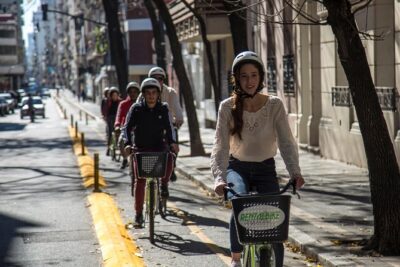
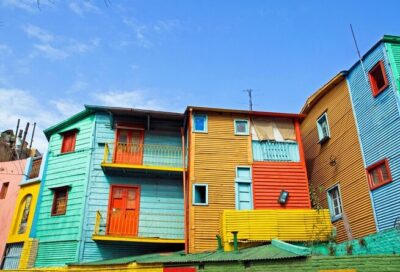
Buenos Aires Bike Tour: San Telmo and La Boca Districts
Read our review →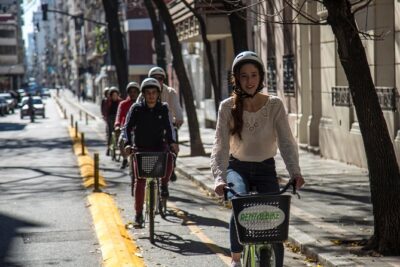
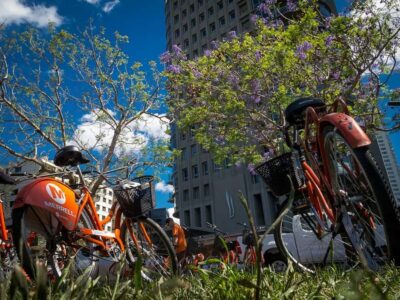
Cultural Experience by Bike around Palermo and Recoleta Max 6 ppl
Read our review →Browse the lists this tour appears in