
Reviewed · SAN TELMO WALKS
Buenos Aires: San Telmo and Market Guided Walking Tour
San Telmo gives you Buenos Aires in a compact, walkable package: colonial churches, old collective houses, comic-strip characters, tango, food, and the famous Sunday fair. This two-hour walk with an English-speaking guide is a good way to see how the city grew from its early Spanish foundations into the mixed, energetic place it is today.
I especially like the Mafalda and Clemente sculptures, which connect everyday Argentine humor with the streets around them. I also like the stop at Mercado San Telmo, where architecture and food come together under one roof. The main drawback is group size. One group had more than 30 people, and another found the narrow streets hard to manage with so many walkers.
In This Review
- What makes this walk worth your time
- Starting at San Ignacio and tracing old Buenos Aires
- San Telmo’s 19th-century houses and immigrant story
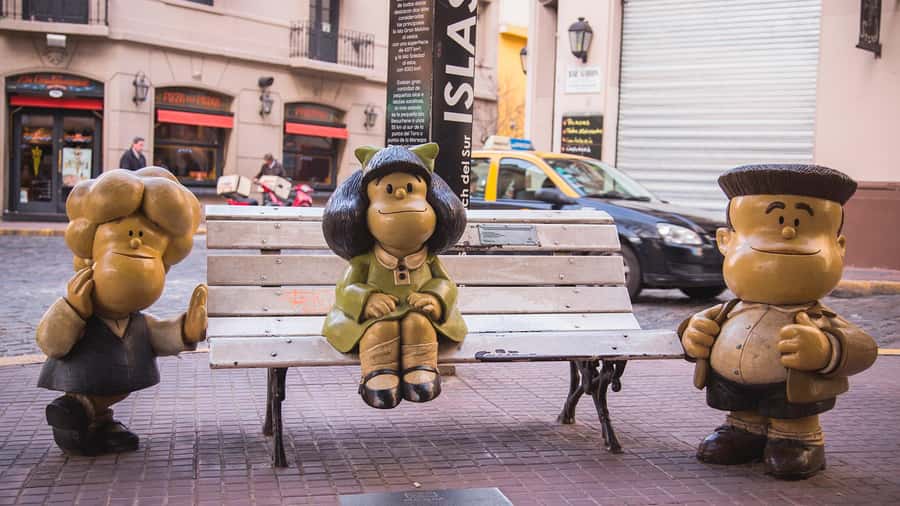
- Meeting Mafalda and Clemente on the Paseo de la Historieta
- Inside Mercado San Telmo
- Sunday at the Feria de San Telmo
- Tango, street art, and the neighborhood’s modern character
- What the guides add to the experience
- Is $13 good value for two hours?
- Who should book this San Telmo walk?
- Practical tips before you go
- Should you book it?
- FAQ
- How long is the San Telmo walking tour?
- What language is the tour conducted in?
- Where does the tour begin?
- How do I identify the guide?
- Where does the tour finish?
- Does the tour visit Mercado San Telmo?
- Does the tour include the Mafalda statue?
- Is the Sunday street fair part of the tour?
- What happens if it rains?
What makes this walk worth your time
- A clear story of Buenos Aires: You learn about the city’s foundation, colonial buildings, immigration, and the changes that shaped modern Buenos Aires.
- Comic characters in real streets: Mafalda and Clemente turn a history walk into something playful and distinctly Argentine.
- The San Telmo Market: You get time to see the traditional indoor market and learn why it matters to the neighborhood.
- Sunday fair atmosphere: If your tour runs on Sunday, the route takes you through music, art, stalls, and the crowded Feria de San Telmo.
- Strong local guiding: Juan, Santiago, and Jorge have each led highly praised walks, with humor, clear explanations, and good answers to questions.
- A low-cost introduction: At $13, this is an inexpensive way to get your bearings before exploring San Telmo on your own.
Starting at San Ignacio and tracing old Buenos Aires
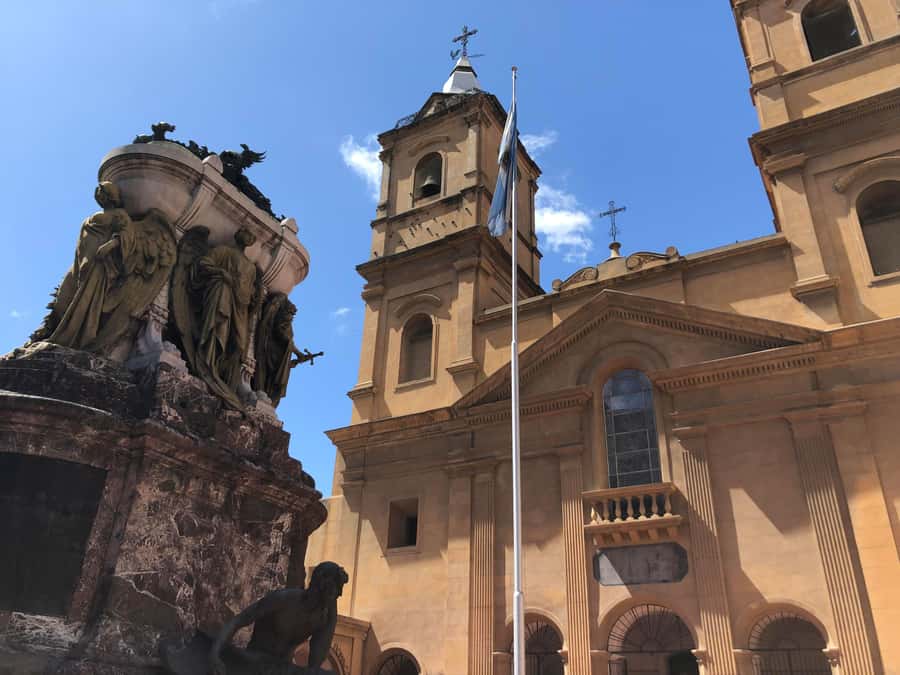
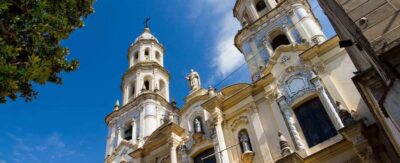
The walk begins at Parroquia San Ignacio de Loyola, an important starting point for a tour about the early city. From here, your guide introduces the foundation of Buenos Aires and the colonial forces that shaped its first streets and institutions.
This opening matters because San Telmo can look like a pleasant collection of old facades if you do not know what you are seeing. A guide gives those buildings a timeline. You start to understand the difference between the colonial past, the 19th century, and the modern city layered over both.
The tour then reaches Iglesia y Convento de San Francisco. This is one of the route’s strongest historic stops, especially if you enjoy architecture and religious buildings. The guided explanation helps connect the church and convent to the larger story of Buenos Aires rather than treating them as a quick photo stop.
You should expect to spend much of the walk outdoors, moving between landmarks rather than entering every building. The tour lasts two hours, so the pace is designed for a broad introduction, not a long study of one church or architectural detail.
More san telmo walks in Buenos Aires:
- San Telmo: Historical Guided Tour with Street Food & Drinks
★ 5.0 · 87 reviews - Buenos Aires Bike Tour: San Telmo and La Boca Districts
★ 4.5 · 74 reviews - BA Flavors Food Tour in San Telmo and Boca With Local Guide
★ 5.0 · 67 reviews
San Telmo’s 19th-century houses and immigrant story
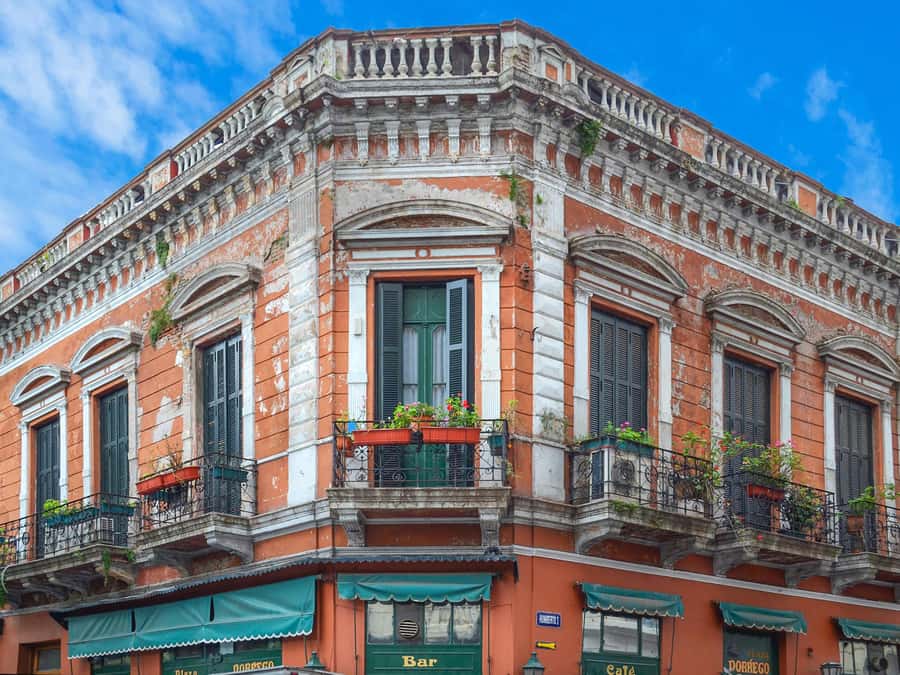
San Telmo is known for its cobblestone streets and 19th-century facades, but the best part of the walk is learning what those buildings reveal about city life. Your guide points out the traditional collective houses, where many people lived together in connected homes around shared spaces.
These structures help explain the neighborhood’s changing population and the role of immigration in local culture. Buenos Aires did not develop from one single tradition. Spanish colonial roots, later immigration, working neighborhoods, food customs, art, and popular entertainment all left marks on San Telmo.
I like this section because it turns architecture into social history. Instead of simply hearing that a building is old, you learn how the neighborhood functioned and why its design mattered. Look up as you walk. The facades are one of the easiest details to miss when the street fair, traffic, and other pedestrians compete for your attention.
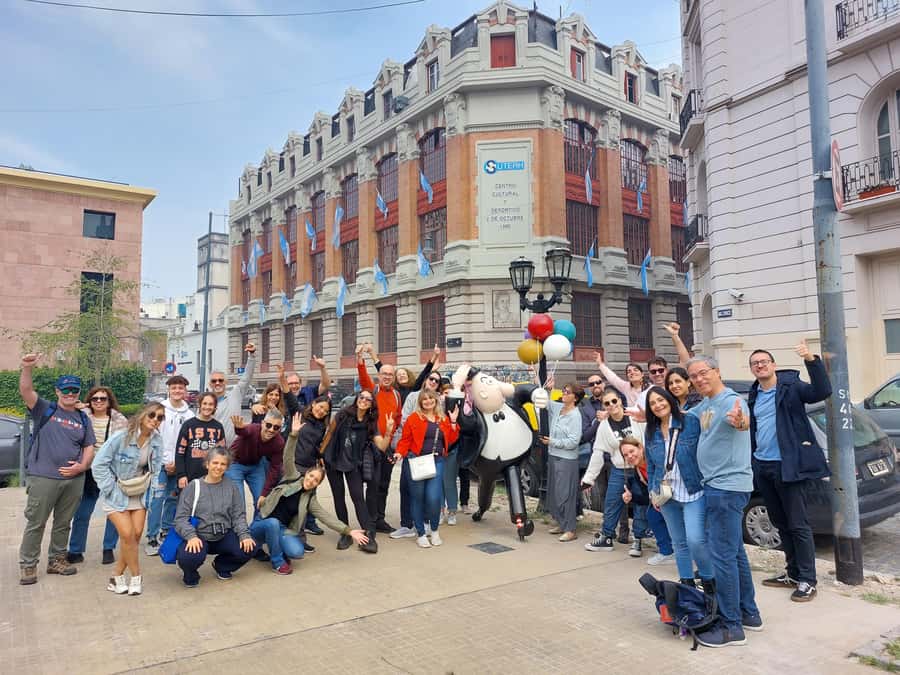
The narrow streets also create the tour’s main practical issue. A large English-language group can spread out quickly, especially when the guide stops to explain a doorway, statue, or street corner. One group found the size awkward in the tight lanes, while another group of more than 30 people still felt the guide kept everyone together and spoke clearly.
Stay near the guide at each stop, and do not assume you will hear everything from the back. If you prefer a quiet, slow architectural walk, the group format may test your patience. If you want a lively introduction and do not mind a crowd, the tradeoff is easier to accept.
Meeting Mafalda and Clemente on the Paseo de la Historieta
The stop at Clemente on the Paseo de la Historieta brings a lighter tone to the route. Clemente is one of Argentina’s well-known comic-strip characters, and the sculpture forms part of a public art trail devoted to local cartoon figures.
Soon after, you reach the Mafalda statue, one of San Telmo’s most recognizable photo stops. Mafalda is a beloved Argentine comic character, and her presence on the street gives you a quick connection to the country’s modern popular culture.
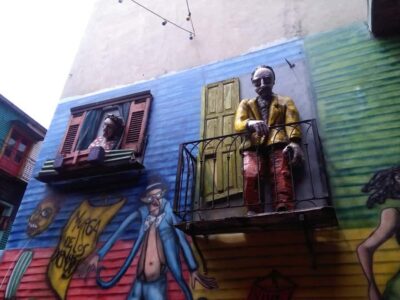
These sculptures are more than decorative stops. They show how Buenos Aires places literature, cartoons, and social commentary into ordinary public spaces. You are not only looking at old churches and houses. You are also seeing the city’s sense of humor and its affection for characters known across generations.
The Mafalda stop can be popular, so your time there may feel brief if the group needs to keep moving. Still, it is a useful break from the historical material and a fun place for a photograph. The route may also include cartoon-style sculptures and murals along the way, adding color and personality to the older streets.
If you are traveling alone, this kind of stop is helpful. You have an easy landmark for your own later walk, and the shared photo moment gives the tour a friendly rhythm without requiring a formal activity.
Inside Mercado San Telmo
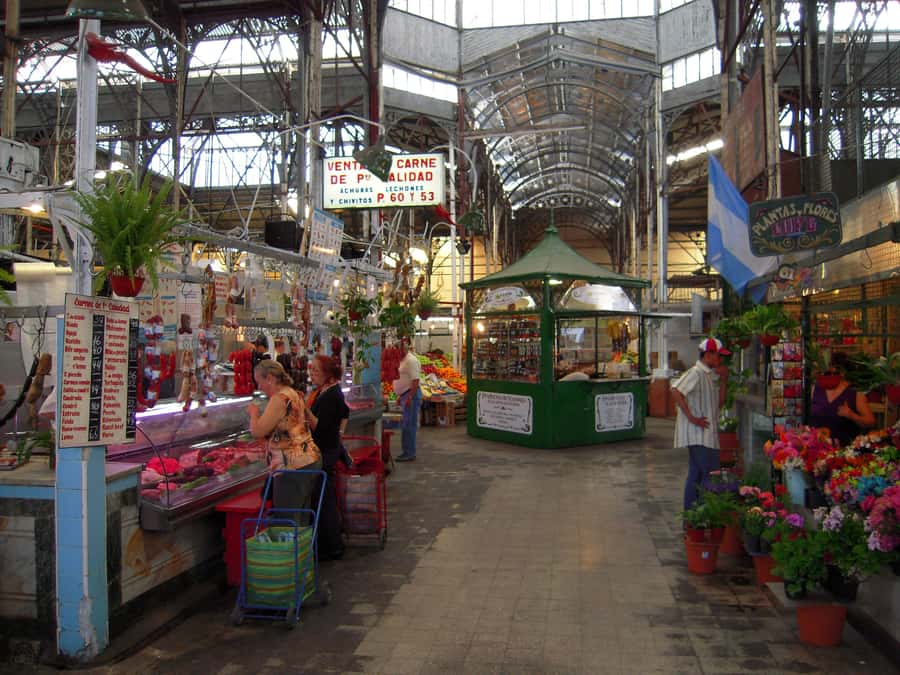
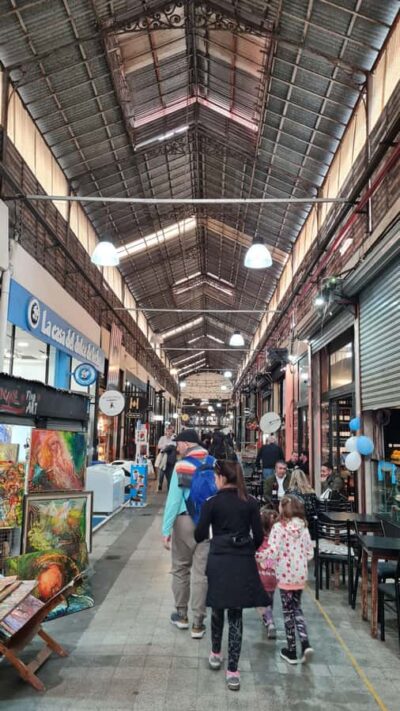
Mercado San Telmo is one of the most useful stops on the tour because it combines food, local life, and an old indoor setting. Your guide explains the market while you look at stalls and traditional Argentine offerings.
The market is a good place to understand how food fits into the neighborhood. You might find the chance to sample traditional Argentine cuisine, though the activity information does not promise a meal or tasting as part of the $13 price. Plan to buy anything you want to eat separately.
Give yourself time to look beyond the first row of stalls. Notice the building itself, the mix of food and other market activity, and the way the space contrasts with the open-air fair outside. This contrast is one of the walk’s strongest features: San Telmo is both a historic district and a functioning part of Buenos Aires.
The market can be crowded, particularly on Sunday. Keep your belongings close and remain aware of where the group is going. Your guide may pause in a spot where everyone can hear, but the market’s noise makes this a place where standing near the front pays off.
For food-focused visitors, this is a useful introduction rather than a full culinary tour. You receive context and a chance to browse, but two hours does not leave room for a long series of tastings. I would treat the market as a starting point, then return later if you want to eat at a slower pace.
Same city, a completely different kind of day:
- Buenos Aires Hop-On Hop-Off Bus, Free Walking Tours & Discounts
★ 4.5 · 2,218 reviews - Buenos Aires: Piazzolla Tango Show with Optional Dinner
★ 4.4 · 2,122 reviews - Buenos Aires: City Highlights Guided Tour with Transfer
★ 4.7 · 1,946 reviews - Buenos Aires: Hop-On Hop-Off City Bus Tour
★ 4.2 · 1,855 reviews
Sunday at the Feria de San Telmo
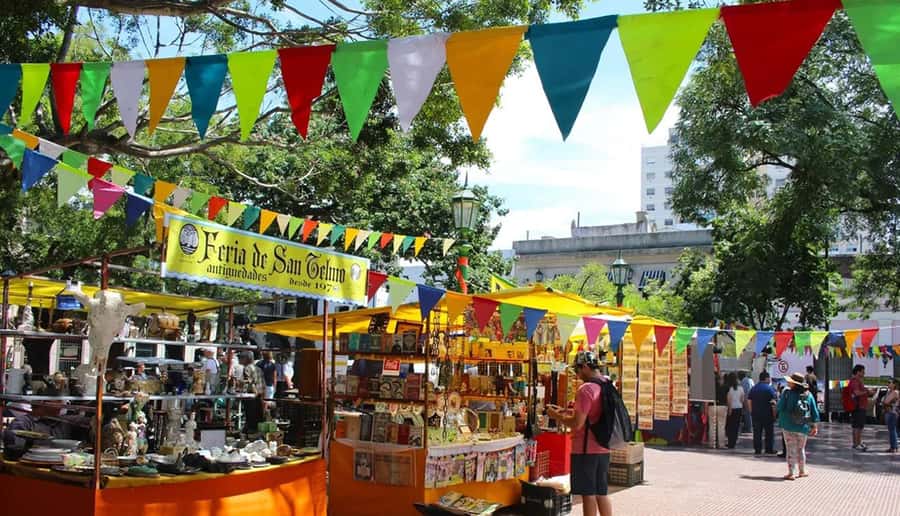
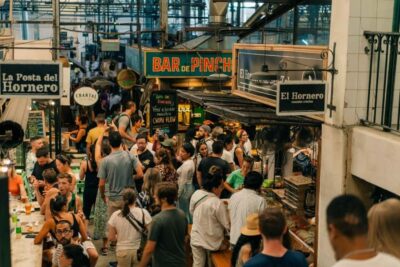
The Sunday street fair is the route’s most energetic section. Stalls, art, music, and local culture fill the streets, creating a very different mood from the churches and facades at the start.
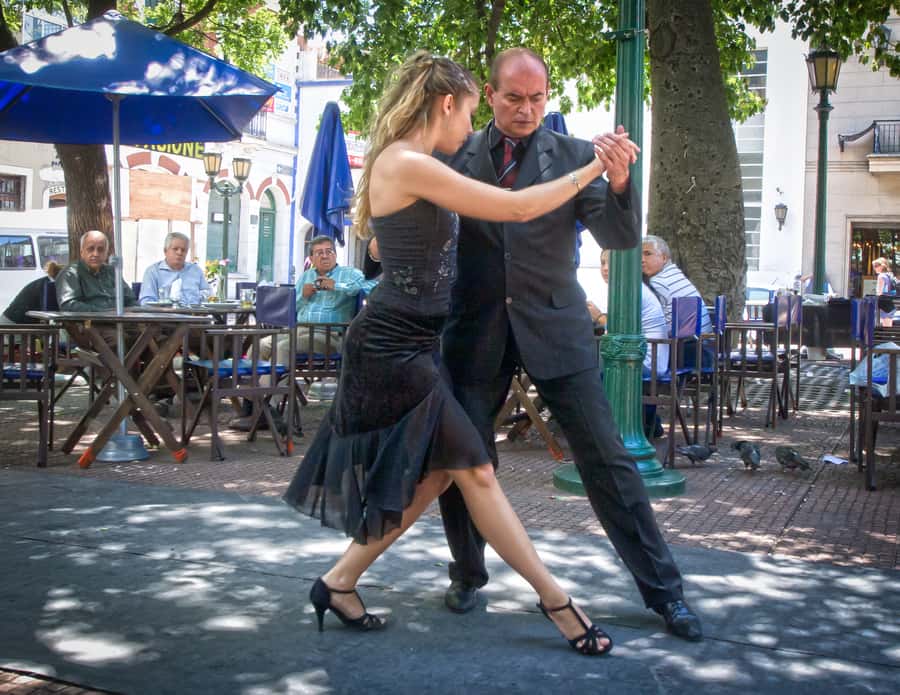
The fair can feel chaotic, which is part of its appeal and part of its challenge. One person described it as an excellent way to get an insider view of the market, while another enjoyed ending near San Telmo Square and watching tango dancers. You should expect crowds, noise, and plenty to look at in several directions at once.
A guide is especially useful here. It is easy to walk past an interesting stall without knowing its place in the neighborhood, or to lose the group while stopping for a photograph. Your guide provides a route through the activity and explains how the fair fits into San Telmo’s identity.
The fair is most relevant if your walk takes place on Sunday. The advertised highlights focus on the Sunday event, but the tour details do not state that every departure operates on that day. Check the available starting time and date before booking if the fair is your main reason for going.
Do not expect a calm museum experience. This is a street scene, and rain will not automatically cancel the activity. Wear shoes suited to cobblestones and dress for the weather. Since the walk operates rain or shine, a light rain layer can make a big difference.
Tango, street art, and the neighborhood’s modern character
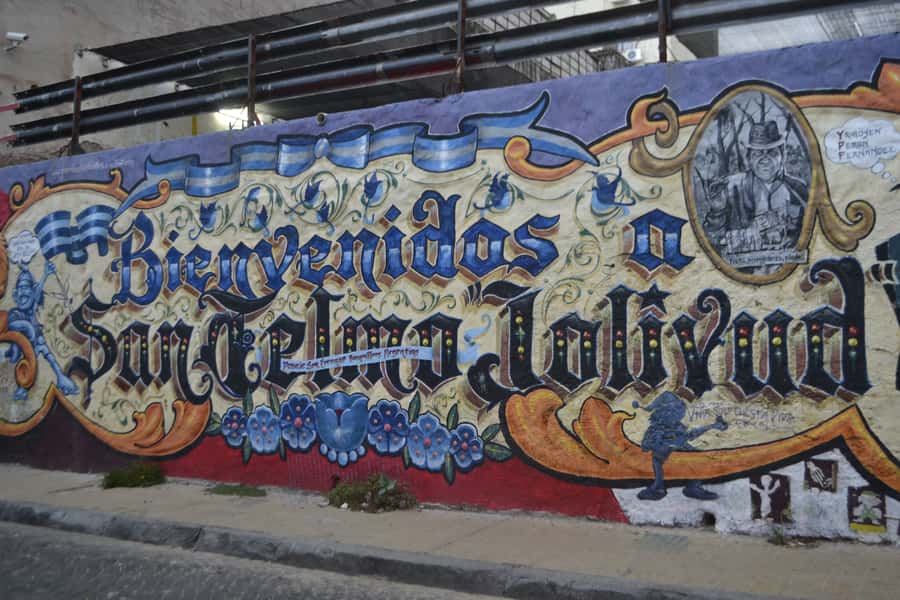
The tour finishes in San Telmo, giving you a useful base for continuing on your own. The ending area can also put you near tango performances in San Telmo Square, depending on the day and timing. Tango is not listed as a guaranteed part of the tour, so consider it a possible bonus rather than a promised show.
The final stretch brings together the walk’s main themes. You have seen religious architecture, shared housing, immigrant influence, comic characters, food, and public celebration. That combination explains why San Telmo feels different from a standard old-town district.
I like tours that show both grand history and ordinary culture, and this one does that at a sensible pace. You are not confined to a single church or museum. You keep moving through the neighborhood where the history happened, with modern art and daily commerce right beside older buildings.
The route is also useful early in a Buenos Aires visit. After two hours, you will have landmarks to revisit, a better sense of the neighborhood’s layout, and some background for choosing where to eat or browse. If you take it near the start of your stay, you can return to Mercado San Telmo or the fair with more confidence.
What the guides add to the experience
The guides are a major part of the walk’s appeal. Juan is praised for combining humor, kindness, and strong explanations of the area’s history, architecture, and art. He has also led a graffiti walk, so you may find his style especially useful if you enjoy the connection between old buildings and newer street art.
Santiago is described as warm, friendly, and able to answer questions about both San Telmo and Argentine history. Jorge is noted for giving detailed explanations that made the walk especially engaging. These names reflect guides who have led the tour, but you should not assume you will receive a particular guide on your chosen date.
The English-language format is a practical advantage. You can ask questions and follow the historical explanations without relying on a translation app. Several groups were large, yet the guide was still able to project their voice and keep the group moving.
Large groups do change the feel of the tour. You may spend a little time waiting for everyone to gather, and the back of the group may have trouble hearing in the market or on a busy street. The upside is that a larger group can create an easy social setting, especially if you are exploring Buenos Aires alone.
Is $13 good value for two hours?
At $13 per person, the tour offers strong value if you want orientation, history, and a guided route through San Telmo. The price includes an English-speaking guide for two hours, and the route covers several distinct sights rather than one isolated attraction.
You are paying for interpretation and organization more than admission tickets. The listed inclusions do not promise food, drinks, or entry to special interiors. Budget extra if you want to sample Argentine food at the market.
The low price also makes the tour easy to use as a first look. You can decide later which parts deserve more of your time. If you already know San Telmo well, or prefer to wander without a group, the value is less clear. In that case, the tour’s historical explanations may be the main reason to book.
You can cancel up to 24 hours before the activity for a full refund, and you can reserve now while paying later. Those terms are useful when your Buenos Aires plans are still shifting, but the weather policy remains important: the walk runs rain or shine.
Who should book this San Telmo walk?
I would choose this tour if you want a compact introduction to Buenos Aires and enjoy learning while walking. It suits first-time visitors, solo travelers, couples, and anyone who wants a local guide to explain details that are easy to overlook.
It is especially useful for people interested in:
- Colonial churches and 19th-century architecture
- Argentine history and immigration
- Public art, cartoons, and street murals
- Food markets and neighborhood culture
- Sunday fairs and tango atmosphere
- A low-cost way to get oriented
Families may enjoy Mafalda and Clemente more than a purely architectural tour. Food lovers will appreciate Mercado San Telmo, but should not mistake this for a dedicated tasting tour.
You may want another option if you dislike crowds, have difficulty walking on cobblestones, or need a very quiet pace. The route covers narrow streets and operates outdoors in all weather. A large group can also make close listening harder at busy points.
Practical tips before you go
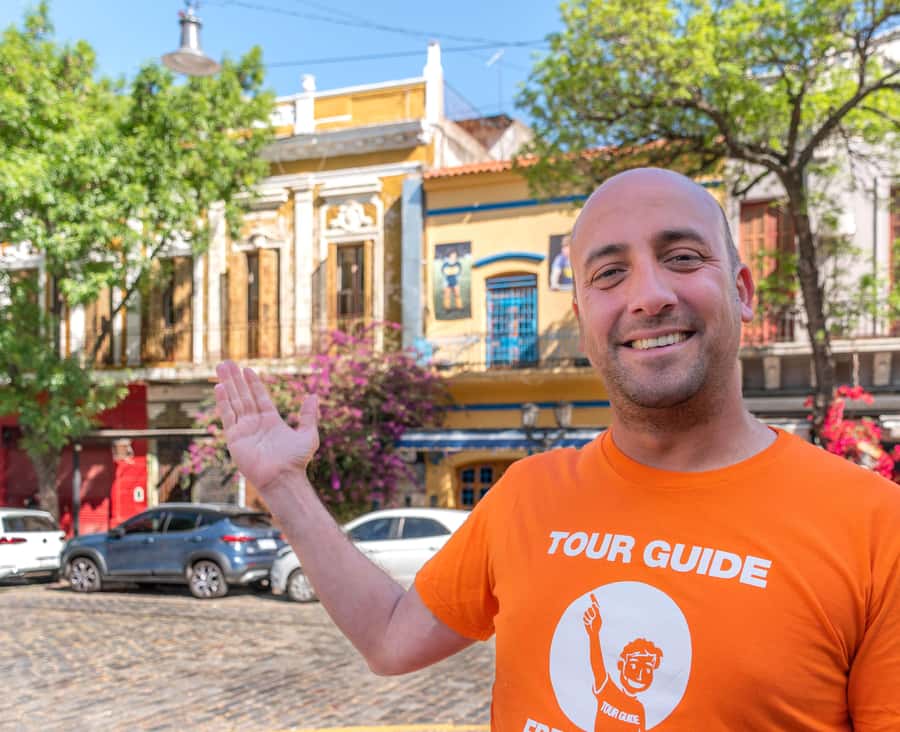
Find the meeting point at Parroquia San Ignacio de Loyola and look for the guide wearing an orange T-shirt or holding an orange umbrella. That color is the key way to identify the group.
Check the starting time before booking, since the activity lasts two hours and availability varies. If the Sunday fair matters to you, confirm that your selected date lines up with the fair rather than assuming every departure includes it.
Wear comfortable walking shoes. San Telmo’s cobblestones, crowded market, and narrow streets make practical footwear more useful than stylish footwear. Bring weather protection because the tour continues in rain.
Stay close to the guide, especially at the market and street fair. If you stand near the front during explanations, you are more likely to hear the details that make the buildings, sculptures, and food stalls meaningful.
Should you book it?
Yes, if you want an inexpensive, well-organized introduction to San Telmo with more substance than a self-guided stroll. The mix of churches, old houses, Mafalda, Clemente, the market, and the Sunday fair gives you a rounded look at the neighborhood in only two hours.
Book with realistic expectations. This is not a private walk, a full food tour, or a guaranteed tango performance. The group may be large, and the fair can be crowded. But with guides such as Juan, Santiago, or Jorge, you get a lively account of San Telmo’s past and present, plus a useful map in your head for exploring on your own afterward.
FAQ
How long is the San Telmo walking tour?
The tour lasts two hours.
What language is the tour conducted in?
The tour is conducted in English with a live English-speaking guide.
Where does the tour begin?
The meeting point is Parroquia San Ignacio de Loyola.
How do I identify the guide?
The guide wears an orange T-shirt or carries an orange umbrella.
Where does the tour finish?
The walk finishes in San Telmo.
Does the tour visit Mercado San Telmo?
Yes. Mercado San Telmo is one of the guided stops.
Does the tour include the Mafalda statue?
Yes. The route includes a guided visit to the Mafalda statue.
Is the Sunday street fair part of the tour?
The tour highlights the Sunday street fair, but you should check the date and starting time to confirm that your selected departure matches the fair.
What happens if it rains?
The tour operates rain or shine.
More Walking Tours in Buenos Aires
- Buenos Aires: La Boca Guided Walking Tour in English
★ 4.8 · 1,587 reviews - Nazis in Buenos Aires: a historical walking tour
★ 4.9 · 193 reviews - Buenos Aires: Personalized 2 to 8-Hour Private Walking Tour
★ 4.7 · 149 reviews - Buenos Aires Walking Tour with Local Guide and Optional Rooftop
★ 4.5 · 87 reviews
Just added around Buenos Aires
- Tango Show at El Querandi with optional Dinner★ 4.2 · 3 reviews
- Wine Tasting in Buenos Aires★ 4.2 · 4 reviews
- Walking Tour: Buenos Aires bookstores★ 4.3 · 12 reviews
- Velez Sarsfield Football Match★ 5.0 · 3 reviews
- Unique Tigre and Delta Private Day Cruise Navegation★ 5.0 · 3 reviews
- Private Underground Tango Immersion★ 5.0 · 31 reviews
- Tour Buenos Aires in one day on Electric Scooters★ 5.0 · 33 reviews
- Transfers from or to the airport In Argentina Your Best Choice★ 5.0 · 28 reviews
San Telmo Walks, compared.
Historical Guided Tour with Street Food & Drinks
Read our review →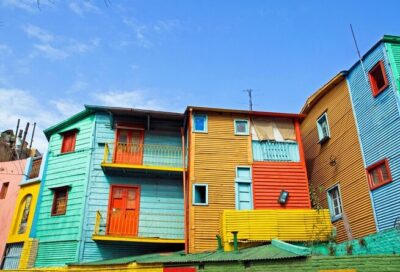
Buenos Aires Bike Tour: San Telmo and La Boca Districts
Read our review →
BA Flavors Food Tour in San Telmo and Boca With Local Guide
Read our review →
Experience The Essence of Buenos Aires in San Telmo
Read our review →
Browse the lists this tour appears in