
Reviewed · WALKING TOURS
Nazis in Buenos Aires: a historical walking tour
Buenos Aires carries its wartime story in plain sight. On this walking tour, you connect a Nazi meeting at Luna Park, Adolf Eichmann’s reported coffee stop, the former Israeli Embassy site, and other central landmarks to the larger question of how Nazi war criminals reached Argentina after 1945.
I like the way Max builds the subject step by step, using photographs and graphics instead of simply pointing at buildings. I also like the careful tone: the tour treats the links between Argentina, Perón, Nazi fugitives, and the Jewish community as matters to examine, not easy slogans. The main drawback is that this is a serious, discussion-heavy walk, and its political and Holocaust material may not suit young children or anyone seeking a light sightseeing stroll.
In This Review
- Key points at a glance
- What this Buenos Aires history walk is really about
- Starting beside the Juana Azurduy Monument
- Luna Park and the power of a public crowd
- ABC Restaurant and the Eichmann trail
- The National Museum of Arms and Argentina after 1945
- Palacio San Martín and questions of government policy
- The Italian Circle and the story of organized communities
- The Israeli Embassy memorial and the weight of the ending
- How Max teaches the subject
- Price, walking conditions, and who should book
- Should you book Nazis in Buenos Aires?
- FAQ
- Where does the tour start?
- Where does the tour end?
- How long does the walking tour last?
- What language is the tour in?
- How much does the tour cost?
- Is entry to Luna Park included?
- Are other attraction tickets included?
- Is the tour suitable for children?
- Is the walk wheelchair accessible?
- What should I bring?
Key points at a glance
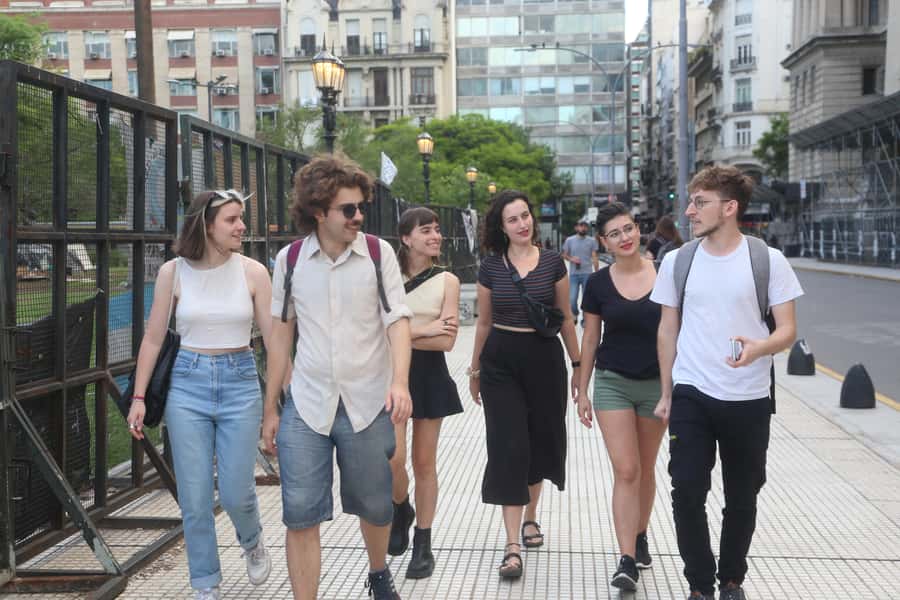
- Adolf Eichmann’s Buenos Aires story: Learn how the former Nazi official was identified and captured, with a city location as part of the story.
- Luna Park’s 15,000-seat Nazi gathering: See the still-operating stadium connected with one of the tour’s most striking episodes.
- The former Israeli Embassy memorial: End with the site of the worst terrorist attack in Latin America.
- A wider Argentine history lesson: The route links wartime migration, Perón-era politics, Jewish life, and neo-Nazi violence.
- A guide who teaches, not just narrates: Max is a University of Buenos Aires history teacher who presents evidence, images, and room for questions.
- A practical central-city walk: The route passes through Recoleta, Retiro, and Microcentro over roughly two and a half hours.
What this Buenos Aires history walk is really about
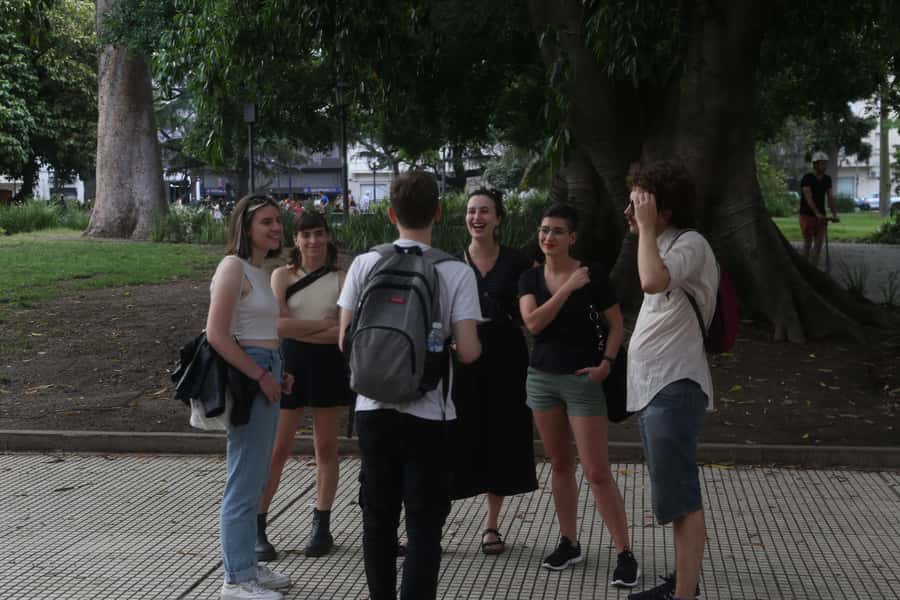
The title may suggest a hunt for dramatic Nazi secrets. The better way to view it is as a guided examination of a disputed chapter in Argentine history.
After World War II, Nazi war criminals and other European collaborators made their way to South America. Argentina became one of the countries associated with that movement. The important questions are not only who arrived, but also what Argentine officials knew, what they may have encouraged, and how later governments and communities dealt with the consequences.
Max places those questions within Argentina’s own political story. You hear about Juan Domingo Perón, one of the most important political figures of twentieth-century Argentina, and the arguments surrounding his presidency. You also learn about the Jewish community in Buenos Aires, the second largest Jewish community in the Americas, and how events in Argentina affected it.
I appreciate that the tour does not reduce the subject to a simple good-versus-evil tale. The strongest parts are likely to be the points where Max separates documented fact, political interpretation, and claims that remain disputed. That approach matters with a subject often distorted by rumor and sensational headlines.
You should have a basic grasp of World War II and the Holocaust before joining. You do not need specialist training, though. Max explains the background and welcomes questions about Nazism, Judaism, the war, or Argentine history.
A few more Buenos Aires trips to weigh up
- San Telmo: Historical Guided Tour with Street Food & Drinks
★ 5.0 · 87 reviews - Buenos Aires: La Boca Art and History Walking Tour
★ 4.8 · 55 reviews - Recoleta Cemetery – Small Group Tour of History & Secrets
★ 5.0 · 53 reviews
Starting beside the Juana Azurduy Monument
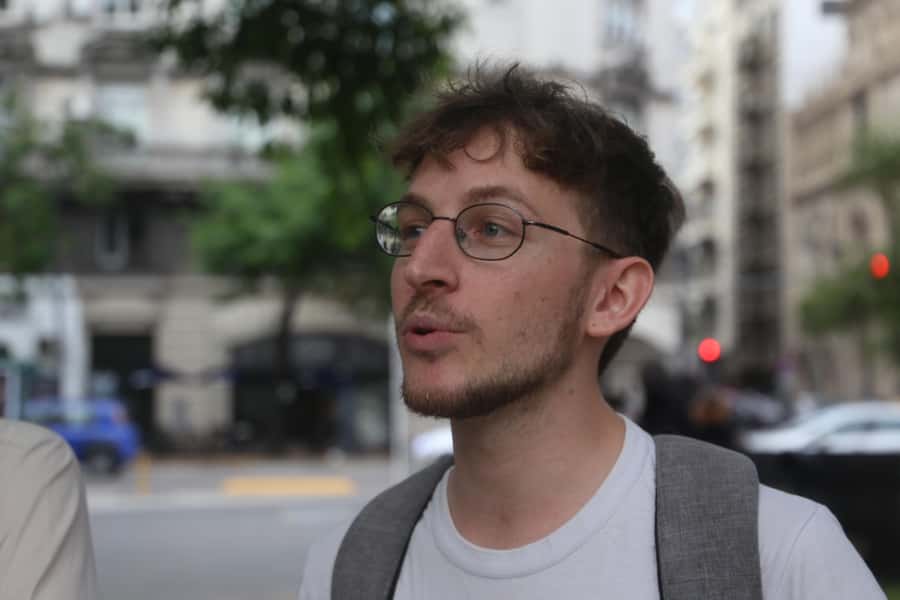
The walk begins a few meters from the Monument to Juana Azurduy, near the benches facing Palacio Libertad, formerly known as the CCK. Max wears a black cap, which gives you a simple way to find him in this busy central area.
This opening location puts you near the boundary of several key parts of central Buenos Aires. The route later moves through Microcentro, Retiro, and Recoleta, so the first meeting point is useful for a walk that deals with national power, foreign diplomacy, public gatherings, and memory.
Max reportedly starts by setting the scene before moving into the individual locations. That is a smart choice. Without the political and wartime background, the buildings along the route would be easy to see as disconnected curiosities.
The meeting point is outdoors, so arrive ready to walk. Comfortable shoes and water are sensible. A ten-minute pause is built into the tour for a restroom break.
Luna Park and the power of a public crowd
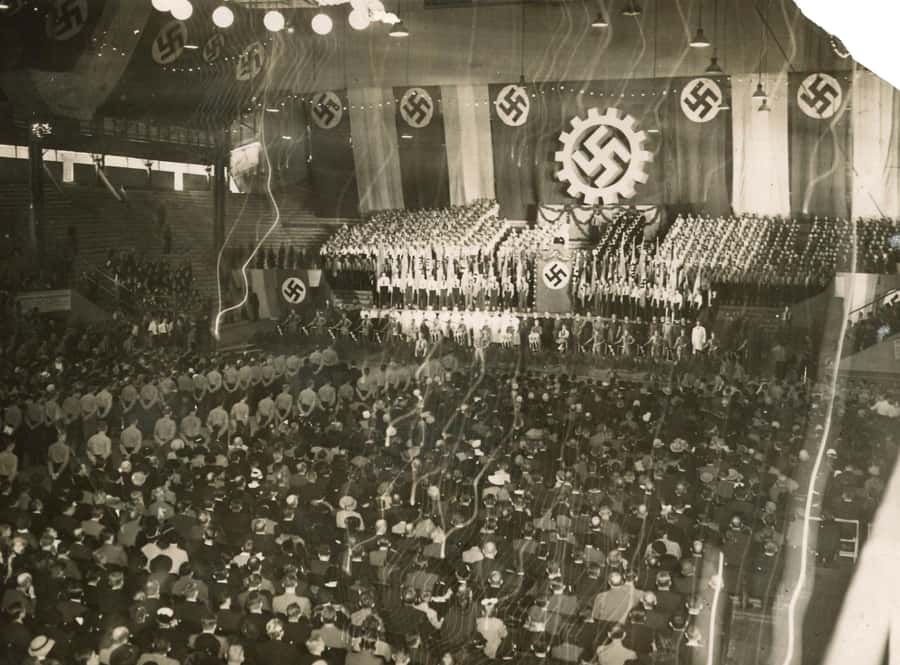
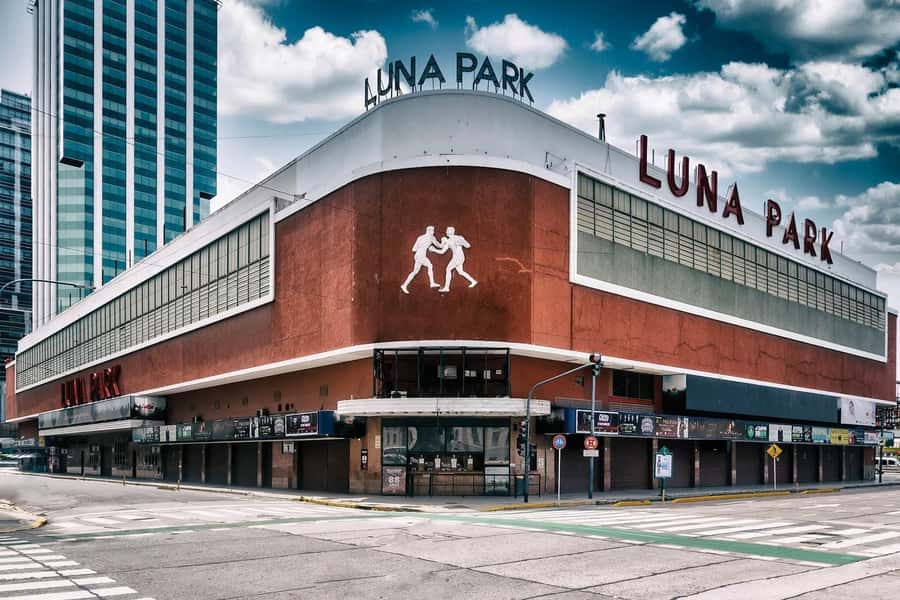
The first major stop is Luna Park Stadium, with about 20 minutes devoted to the site. This still-operating venue is associated with a Nazi meeting attended by as many as 15,000 people.
That number gives the story its force. A gathering of this size was not a private meeting held in a back room. It raises questions about public politics, open sympathies, organized communities, and the degree to which fascist ideas could appear in the public life of Buenos Aires.
You should expect the guide to use the stadium as a backdrop rather than as a standard arena tour. Entry to Luna Park is not included, so do not book this experience expecting an interior stadium visit. The value comes from hearing what happened there while standing at the location itself.
This is one of the stops where Max’s visual material helps. Historic photographs and other graphics can make a modern building easier to read. You are not just hearing a date and a name. You are being asked to picture the audience, the politics, and the message that such a mass event sent.
ABC Restaurant and the Eichmann trail
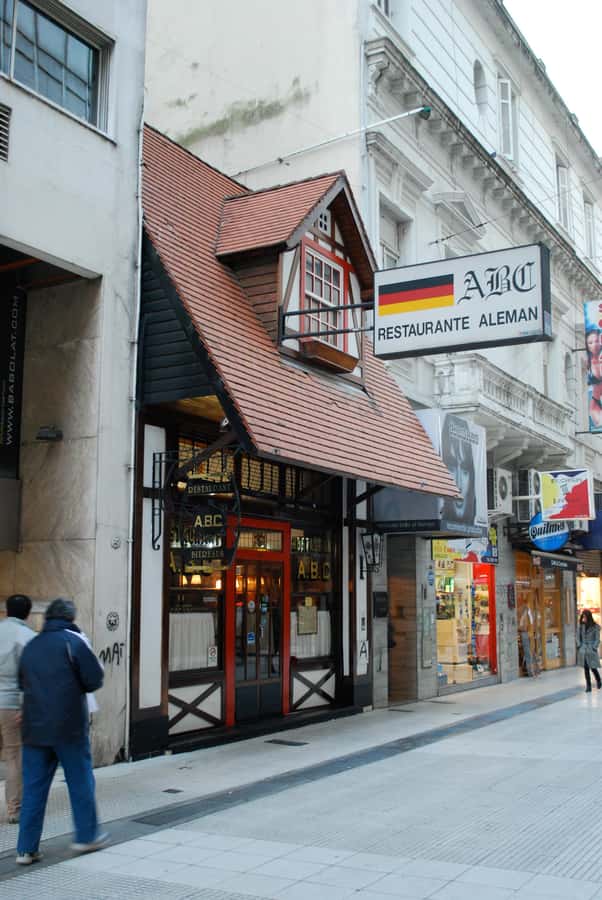
The next stop is ABC Restaurant, also scheduled for about 20 minutes. It is tied to the story of Adolf Eichmann sitting down for coffee in Buenos Aires.
Eichmann was a major organizer of the Nazi deportation of Jews during the Holocaust. His postwar life in Argentina, his identification, and his capture form one of the most spy-like parts of the walk. The story has the pace of a thriller, but the guide’s job here is to keep it rooted in evidence rather than movie-style drama.
A coffee stop may sound like a small detail. In fact, it helps turn a distant historical figure into a person moving through an ordinary city. Eichmann was not only a name in a courtroom or a photograph from the war. He lived in a real urban setting, and the route helps you consider how that was possible.
I would pay close attention to the chain of identification. The tour is not simply about saying Eichmann was in Buenos Aires. It examines how people connected information, recognized him, and acted on it. That process is central to understanding why his capture became such a major international event.
The restaurant stop also shows the walk’s method. It moves between large public history and small everyday details. One stop deals with a 15,000-seat gathering. Another asks you to think about a man sitting with a cup of coffee.
Same city, a completely different kind of day:
- Buenos Aires Hop-On Hop-Off Bus, Free Walking Tours & Discounts
★ 4.5 · 2,218 reviews - Buenos Aires: Piazzolla Tango Show with Optional Dinner
★ 4.4 · 2,122 reviews - Buenos Aires: City Highlights Guided Tour with Transfer
★ 4.7 · 1,946 reviews - Buenos Aires: Hop-On Hop-Off City Bus Tour
★ 4.2 · 1,855 reviews
The National Museum of Arms and Argentina after 1945
The Museo de Armas de La Nación, also known as the Tte. Gral. Pablo Riccheri National Museum of Arms, receives another 20-minute stop.
The provided details do not promise an included museum admission, and the tour’s main focus is the historical setting and discussion. I would treat this as a place where the guide connects military culture, state power, and Argentina’s postwar direction rather than as a separate museum visit.
This section is useful because the Nazi migration story did not happen in isolation. It belongs to the complicated international world that followed 1945, when governments, military figures, intelligence services, refugees, and fugitives moved through shifting political networks.
The museum setting gives Max a chance to widen the frame. You learn more about the Argentine context surrounding the arrivals and about the debates that grew around Perón. If you are mainly interested in escape routes and Nazi fugitives, this portion may feel less direct. If you want to understand why Argentina enters the story at all, it adds necessary background.
One strength of the walk is that Max is willing to acknowledge uncertainty. He has been described as careful about his sources and ready to say when something is not known for sure. That habit is especially valuable here, where legends and political claims can easily blur into accepted fact.
Palacio San Martín and questions of government policy
At Palacio San Martín, the group spends about 20 minutes considering Argentina’s international and political setting.
The central question returns here: did Argentine authorities know about the arrival of Nazi war criminals, or did parts of the government actively support it? The tour presents this as a disputed debate, not a settled one-line answer.
That distinction is important for you as a listener. A guide can make the topic sound simple by blaming one leader or one administration for everything. Max instead connects policy, ideology, immigration, foreign relations, and the political climate after the war.
This is also where Perón’s role receives more attention. You hear about the arguments surrounding his presidency and how his government is linked to the broader story. The tour does not treat Perón as a footnote, because his political importance is essential to understanding twentieth-century Argentina.
The palace itself provides a fitting backdrop for questions about official decisions. You are close to the buildings and institutions associated with national power, while discussing actions that often took place through paperwork, contacts, and quiet policy rather than public speeches.
For visitors who already know the basic Nazi escape story, this may be one of the most rewarding sections. It shifts the focus from individual fugitives to the machinery and politics that allowed people to settle, hide, or pass through the country.
The Italian Circle and the story of organized communities
The Italian Circle of Buenos Aires is the fifth main stop, again with about 20 minutes for explanation.
Here the walk continues its examination of immigrant networks, political associations, and the communities that shaped Buenos Aires. The Italian connection is part of a wider story about how European identities and organizations operated in Argentina before and after World War II.
I would not expect this stop to provide a single dramatic reveal. Its value is cumulative. It helps you understand that Buenos Aires was connected to Europe through people, clubs, institutions, and political loyalties. Those links could support ordinary social life, but they could also help ideas and individuals move across borders.
The tour also returns to the Jewish community in Buenos Aires. You learn about its place in the city and the pressures created by Argentina’s wartime and postwar history. This keeps the experience from becoming a tour only about Nazi criminals. The people targeted by Nazism, and the community that carried on afterward, remain part of the central story.
That balance is one of the walk’s best features. It deals with perpetrators, government policy, public memory, and the Jewish community rather than treating the subject as a collection of notorious names.
The Israeli Embassy memorial and the weight of the ending
The route is described as ending at Plaza Embajada de Israel, the memorial site of the former Israeli Embassy. This is the site connected with the 1992 bombing, described for the tour as the worst terrorist attack in Latin American history.
The final stop brings the history forward from World War II and the early postwar years into more recent Argentine memory. It shows that the story does not end when Nazi fugitives arrived, disappeared into civilian life, or faced legal action. Questions about antisemitism, political violence, international conflict, and public memory continued long afterward.
I find this a powerful way to close a historical walk because it prevents the past from feeling safely finished. The subject remains connected to the city around you and to the way Buenos Aires remembers violence.
The final section can be emotionally heavy, particularly in light of current global events. You should allow yourself a little time afterward rather than planning a rushed appointment immediately after the tour.
There is one practical inconsistency in the published meeting information: the route details name Plaza Embajada de Israel as the finish, while another note says the activity ends back at the meeting point. Confirm the exact endpoint when you book or when Max meets the group.
How Max teaches the subject
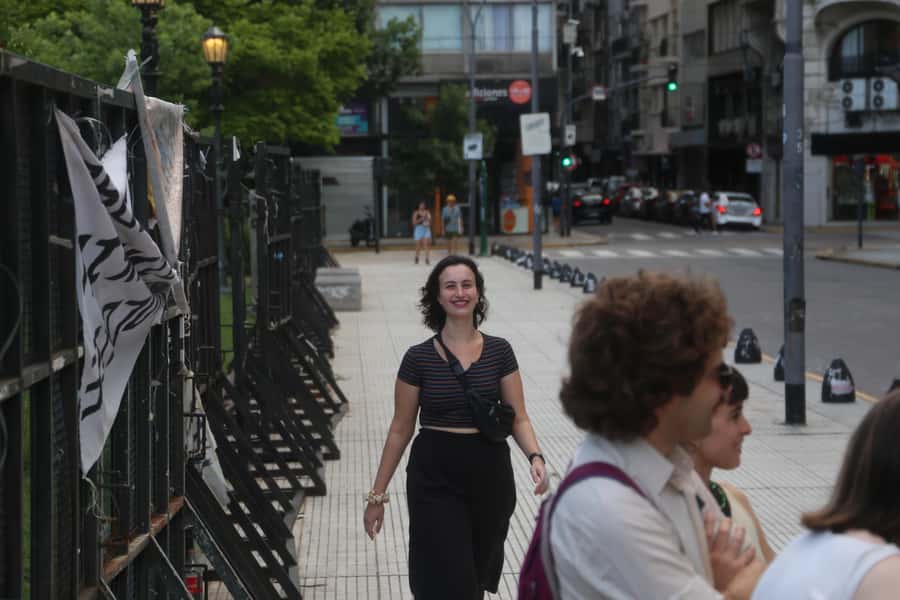
Max is identified as a history teacher from the University of Buenos Aires, and that background shapes the experience. His approach is closer to a moving seminar than a quick city tour, though the setting remains informal and accessible.
You can expect questions, answers, historical images, and a steady effort to explain the evidence behind each claim. The guide is praised for being friendly and authoritative without turning the walk into a lecture that leaves no room for discussion.
English is the tour language. Max can answer questions about the Holocaust, Judaism, Nazism, World War II, and Argentine politics. A 14-year-old with a parent has taken the tour successfully, but the official guidance says it is not suitable for children under 10.
The pace appears to be carefully planned. Each main location receives about 20 minutes, and the full experience lasts around two and a half hours, although the included-services wording also refers to a two-hour walk. Plan your schedule around the longer time.
This is not a walk built around constant movement. Much of the value comes from stopping, listening, asking questions, and looking at supporting material. If you prefer a rapid route with short facts and many photo stops, you may find the format slow. If you like history explained with context, the time is well used.
Price, walking conditions, and who should book
At $25 per person, I consider this a strong value for a specialist tour led by a university history teacher. You are paying for preparation, interpretation, and access to a carefully connected story, not for entry tickets or transport.
The price is especially fair if you want a subject beyond the usual Buenos Aires circuit. Many city walks focus on architecture, food, tango, or famous political landmarks. This one uses familiar districts to explain a difficult and less visible part of the city’s past.
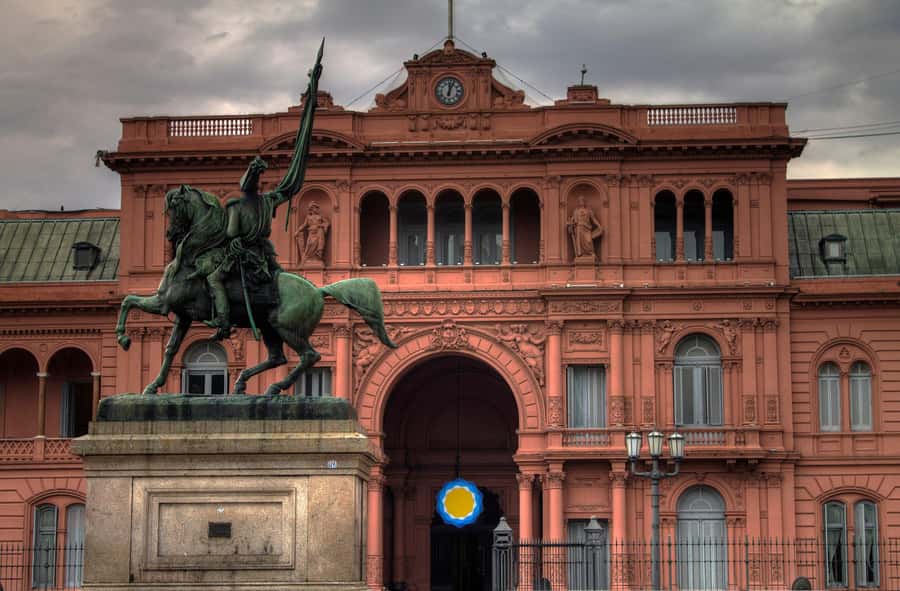
The trade-off is that some things are not included. Entry to Casa Rosada, Libertad Synagogue, and Luna Park Stadium is not covered. The route is on foot, is not suitable for wheelchair users, and requires comfortable shoes.
I would recommend it most strongly to:
- People with a real interest in World War II, the Holocaust, or twentieth-century politics
- Visitors who want to understand Argentina beyond its postcard sights
- History students, teachers, and curious adults who enjoy questions without simple answers
- Anyone interested in the Jewish history of Buenos Aires
- Visitors comfortable with serious material and a discussion-led format
I would choose another activity if you are traveling with children under 10, have limited walking ability, or want a relaxed introduction to Buenos Aires. This subject also deserves a respectful frame of mind. It includes terrorism, Nazi crimes, antisemitism, and political violence.
Free cancellation is available up to 24 hours before the start for a full refund, and you can reserve while paying later. Those terms are useful if your Buenos Aires schedule is still changing.
Should you book Nazis in Buenos Aires?
Book it if you want a thoughtful account of how European fascism, Nazi fugitives, Argentine politics, Jewish life, and later violence meet in one city. Max’s strength is his careful, evidence-based teaching and his willingness to explain uncertainty instead of forcing every issue into a neat answer.
The best reason to go is not one sensational stop. It is the way the route connects a stadium crowd, a coffee table, government buildings, immigrant institutions, and a memorial into one historical argument.
Skip it if you want a general city orientation or a light afternoon walk. For the right audience, though, this is one of the most focused ways to examine Buenos Aires’ difficult modern history while standing in the places where parts of it unfolded.
FAQ
Where does the tour start?
It starts a few meters from the Monument to Juana Azurduy, by the benches facing Palacio Libertad, formerly known as the CCK. Max wears a black cap.
Where does the tour end?
The route information identifies Plaza Embajada de Israel as the ending point. Another meeting note says the activity ends back at the meeting point, so confirm the final endpoint when booking.
How long does the walking tour last?
The stated duration is about two and a half hours. The included-services information also refers to a two-hour walking tour, so allow at least two and a half hours in your schedule.
What language is the tour in?
The live tour is conducted in English.
How much does the tour cost?
The price is $25 per person.
Is entry to Luna Park included?
No. Entry to Luna Park Stadium is not included.
Are other attraction tickets included?
No. Entry to Casa Rosada and Libertad Synagogue is also not included.
Is the tour suitable for children?
It is not suitable for children under 10. A 14-year-old has taken the tour with a parent.
Is the walk wheelchair accessible?
The activity is listed as not suitable for wheelchair users.
What should I bring?
Bring comfortable shoes and water. The tour includes a ten-minute pause to use the restroom.
Just added around Buenos Aires
- Tango Show at El Querandi with optional Dinner★ 4.2 · 3 reviews
- Wine Tasting in Buenos Aires★ 4.2 · 4 reviews
- Walking Tour: Buenos Aires bookstores★ 4.3 · 12 reviews
- Velez Sarsfield Football Match★ 5.0 · 3 reviews
- Unique Tigre and Delta Private Day Cruise Navegation★ 5.0 · 3 reviews
- Tour Buenos Aires in one day on Electric Scooters★ 5.0 · 33 reviews
- Private Underground Tango Immersion★ 5.0 · 31 reviews
- Transfers from or to the airport In Argentina Your Best Choice★ 5.0 · 28 reviews
Walking Tours, compared.
La Docta Free Walking Tour “Córdoba La Antigua”.
Read our review →
Buenos Aires Walking Tour with Local Guide and Optional Rooftop
Read our review →
Browse the lists this tour appears in