
Reviewed · LA BOCA & CAMINITO WALKS
Buenos Aires: Montserrat, San Telmo, La Boca, and Puerto …
Buenos Aires reveals itself in layers on this four-hour tour. You begin at the Metropolitan Cathedral and trace the city from colonial power centers to immigrant streets, football country, and a rebuilt waterfront. The route covers Monserrat, San Telmo, La Boca, and Puerto Madero, four districts with very different personalities.
I like the way the tour pairs major sights with small details: the city’s oldest bookstore, church, and pharmacy, the smallest house, and the statue of Mafalda. I also like the efficient plan, with about an hour in each neighborhood and only two short transfers.
The main consideration is pace. You cover a lot of ground in four hours, and parts of the experience are walking-heavy. Café Tortoni depends on availability, meals are not included, and the tour is not suitable for wheelchair users.
In This Review
- Key points at a glance
- Why this route gives you a useful first look at Buenos Aires
- Plaza de Mayo and the power center of Monserrat
- Calle Defensa and San Telmo’s old street life
- La Boca, Boca Juniors, and the colors of Caminito
- Puerto Madero and the modern riverfront
- How the four-hour pace feels
- Who will get the most from this tour
- Is this Buenos Aires tour worth booking?
- FAQ
- Where does the tour start?
- Where does the tour finish?
- How long does the experience last?
- Which neighborhoods are included?
- Is Café Tortoni visit guaranteed?
- Are meals and drinks included?
- Which languages are available?
- Is the tour suitable for wheelchair users?
Key points at a glance
- Start at the Metropolitan Cathedral: Begin beside Plaza de Mayo, the political and historic heart of Buenos Aires.
- Walk through old Monserrat: See the oldest bookstore, church, pharmacy, and the city’s first two-story building.
- Follow Calle Defensa in San Telmo: Find Mafalda, the smallest house, Plaza Dorrego, and the 1897 San Telmo Market.
- Enter La Boca’s football and tango world: Visit the area around Boca Juniors Stadium and the colorful Caminito street.
- Finish beside the river: See Puente de la Mujer, the frigate Sarmiento, and the corvette Uruguay in Puerto Madero.
- Choose your guide language: Live guiding is offered in English, Spanish, and Portuguese.
Why this route gives you a useful first look at Buenos Aires
This is not a single-neighborhood stroll. It is a quick but carefully shaped introduction to how Buenos Aires grew: from colonial administration, to port commerce and immigration, to modern redevelopment.
You start in the old civic center, move south through San Telmo, continue to La Boca, and finish in Puerto Madero. That sequence matters. It lets you see the city change from grand government buildings to older low-rise streets, colorful working-class traditions, and a modern district of towers and restaurants.
I would choose this tour early in a Buenos Aires stay if you want a broad sense of the city before exploring individual neighborhoods on your own. The guide provides the connections between places that can otherwise feel scattered on a map.
The tour costs $100 per person. That is not a low-cost walking tour, so the value depends on how much you want in one morning or afternoon. You are paying for a live guide, neighborhood-to-neighborhood transportation, historical explanation, and access to a route that would take more planning to assemble yourself.
The price makes more sense for a first visit, a short stay, or anyone who prefers a guide to explain the city while moving between districts. If you already know Buenos Aires well, the pace and repeated sightseeing may feel less worthwhile.
More san telmo walks in Buenos Aires:
- Buenos Aires: San Telmo and Market Guided Walking Tour
★ 4.8 · 102 reviews - San Telmo: Historical Guided Tour with Street Food & Drinks
★ 5.0 · 87 reviews - Buenos Aires Bike Tour: San Telmo and La Boca Districts
★ 4.5 · 74 reviews
Plaza de Mayo and the power center of Monserrat
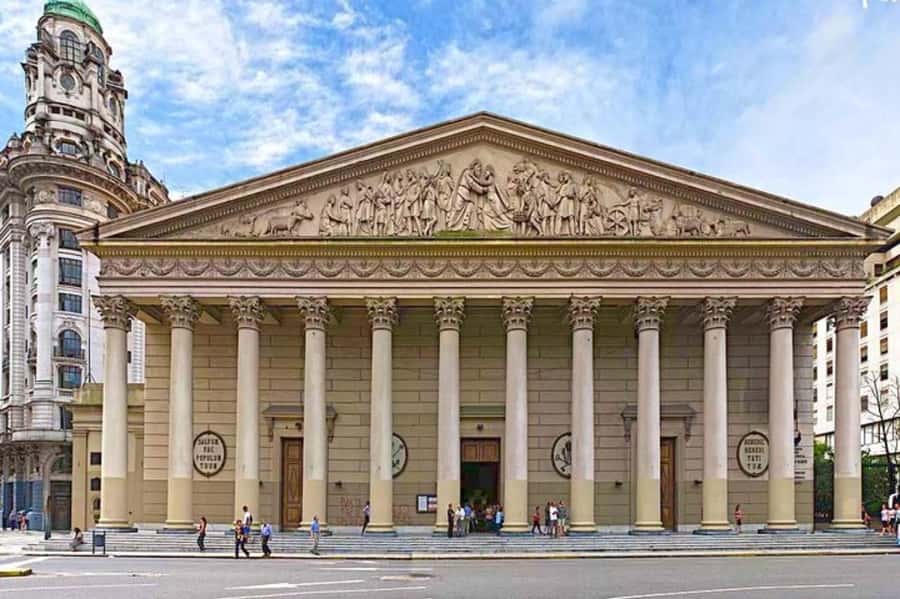
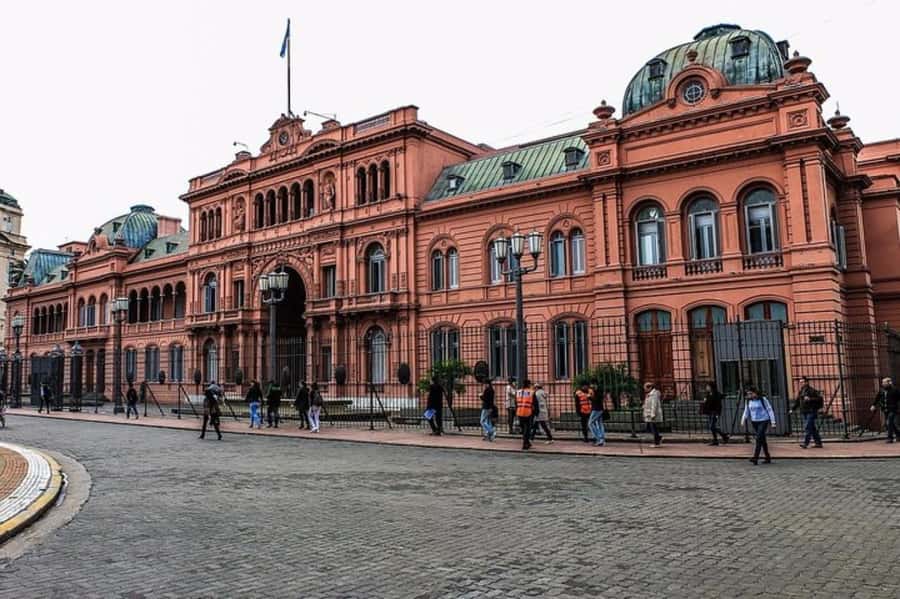
Meet at the Metropolitan Cathedral, beside Plaza de Mayo. This is the oldest and most important public square in the city, surrounded by the Casa Rosada, the Cabildo, the cathedral, and government ministries connected with the economy and defense.
You get a strong opening lesson here. Plaza de Mayo is not just a photo stop. It is the city’s civic stage, where the executive, religious, and colonial authorities sit close together. From this square, your guide can help you read Buenos Aires as a capital shaped by politics and public life.
Monserrat also gives you a chance to look beyond the grand facades. The tour includes the city’s oldest bookstore, church, and pharmacy, as well as its first two-story building. These stops are useful because they make the city’s age feel concrete. Instead of only hearing dates, you see modest places that have survived beside major public buildings.
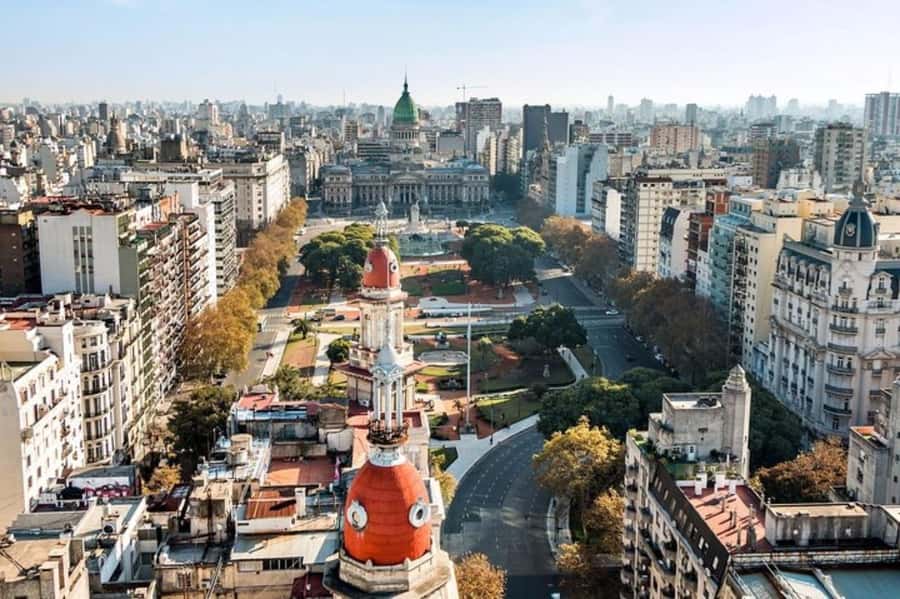
The route then reaches Avenida de Mayo, the first boulevard in Buenos Aires and the first avenue in South America. It links the National Congress with Casa Rosada, connecting the legislative and executive centers.
Café Tortoni sits along this avenue. It is described as the oldest café in Argentina and South America, and it is one of the route’s most appealing cultural stops. Do keep the qualification in mind: the visit depends on availability. You should treat it as a possible highlight, not a guaranteed seated café visit.
The Monserrat section lasts about an hour. That is enough time for an overview, but not for a slow inspection of every building. Wear shoes you can walk in comfortably and expect the guide to keep the group moving.
Calle Defensa and San Telmo’s old street life
From Monserrat, the route continues along Calle Defensa into San Telmo, Buenos Aires’ second-oldest neighborhood. This is one of the most characterful parts of the tour because the street itself becomes the main attraction.
Look for the statue of Mafalda, the beloved Argentine comic character and a major piece of the country’s popular culture. The stop adds a lighter touch to a route filled with government buildings, churches, and old institutions. It also gives you a natural photo opportunity along the walk.
The guide also points out the smallest house in the city. The supplied information does not give its dimensions or a full architectural description, so expect a quick landmark rather than a formal museum visit. Its value comes from the story attached to it and from seeing how tightly packed older Buenos Aires could be.
As you walk, you hear stories connected with sailors, immigrants, slaves, and local urban legends. These subjects help explain San Telmo as more than a pretty historic quarter. Its identity grew from movement, work, trade, and people arriving from elsewhere.
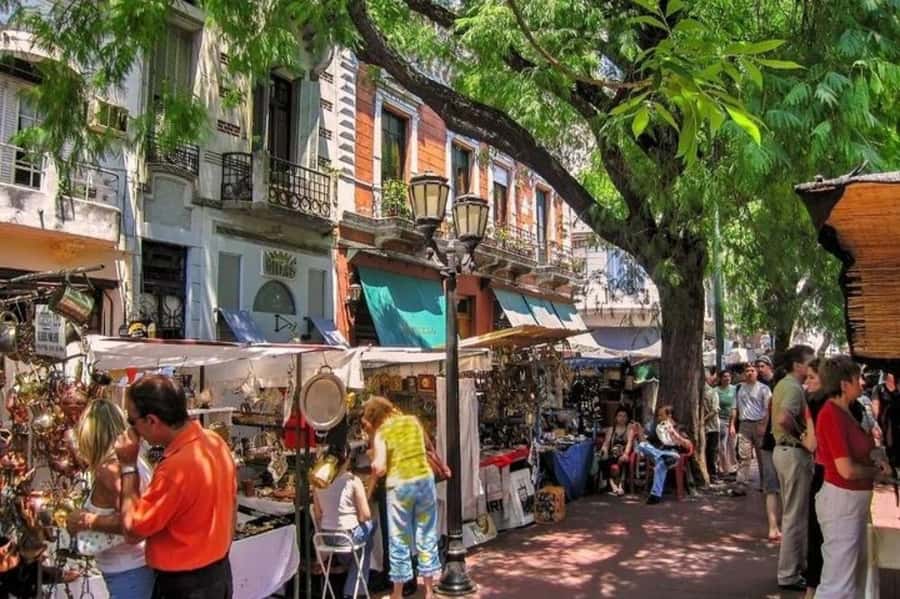
The San Telmo Market is another important stop. It opened in 1897 and now brings together antique shops, small restaurants, and traditional fruit and vegetable stalls. You can look at the market as both a historic building and a working neighborhood space.
I like this part of the route because it allows different kinds of sightseeing. You can focus on architecture, local characters, food stalls, antiques, or the guide’s stories. The drawback is time. An hour is enough to enter the market and get a feel for it, but not enough for a relaxed meal or serious browsing.
The tour continues toward Plaza Dorrego, the city’s second-oldest square. Nearby, you see Ezeiza’s house and the French Passage, a particularly photogenic corner. This area is also suitable for a meal, but food is not part of the tour. If you want to eat here, you need to balance that choice against the scheduled route.
La Boca, Boca Juniors, and the colors of Caminito
After San Telmo, a transfer of about 10 minutes takes you to La Boca. The short ride is helpful because it saves your legs and keeps the tour focused on the city’s major districts.
La Boca is closely linked with Boca Juniors, one of Argentina’s best-known football clubs. The tour includes the iconic Boca Juniors Stadium and gives you context for the club’s place in local culture. Even if you do not follow football, the stop helps explain why this neighborhood has such a strong identity.
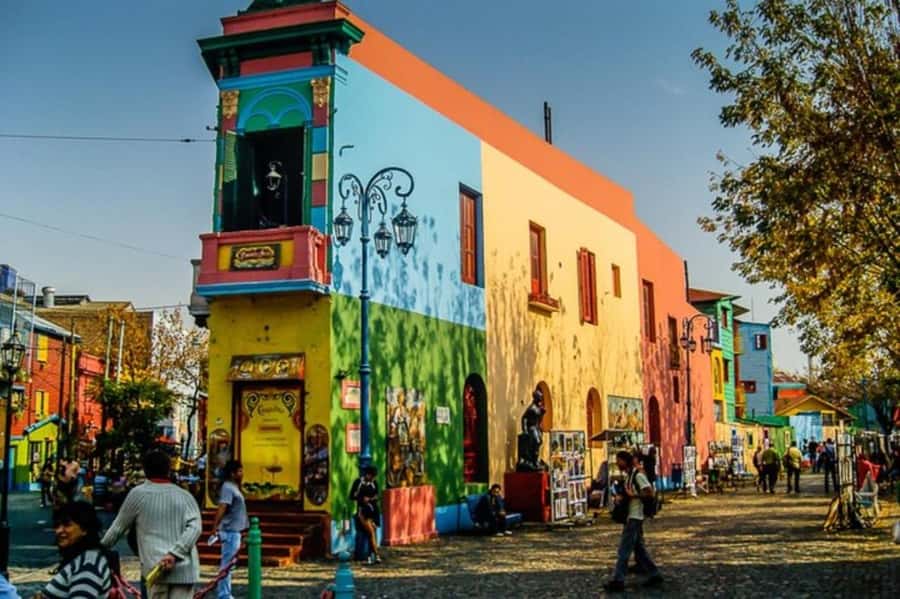
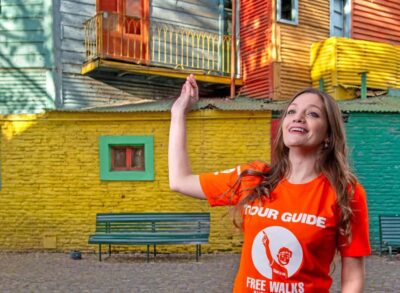
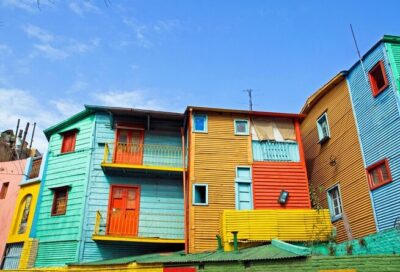
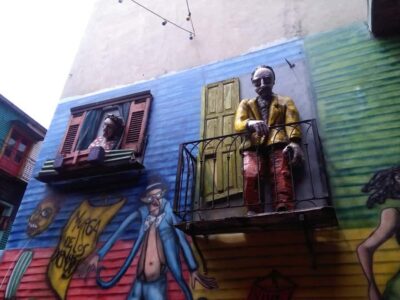
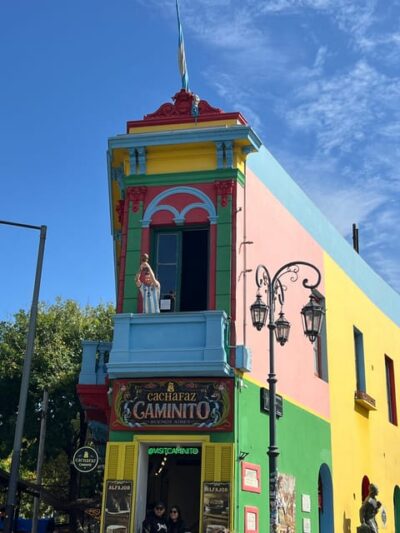
The route also takes you to Caminito, the famous open-air museum street. Caminito is known for its bold colors, street art, souvenirs, and traditional restaurants where you may see tango dancers. It is one of the most recognizable scenes in Buenos Aires, but it is also a place where you should keep your expectations realistic.
Caminito is designed for atmosphere and photographs. You will not get a quiet picture of everyday residential Buenos Aires here. Instead, you get a concentrated version of La Boca’s public face, built around color, tango, football, and visitor activity.
The neighborhood is identified as the birthplace of tango, which gives the music and dance displays extra meaning. The tour does not include a separate tango performance, and no meal is included, but you may see dancers in the restaurants along the street.
I like the contrast between San Telmo and La Boca. San Telmo feels older and more layered, while La Boca presents a louder, more theatrical side of the city. Together, they show how Buenos Aires can be both reflective and exuberant within a short distance.
The La Boca visit lasts about an hour. Stay close to the guide and follow the group’s timing. The information provided does not promise entry inside the stadium, so think of this as a guided visit to the stadium area rather than a full match-day or museum experience.
More la boca & caminito walks in Buenos Aires:
- Buenos Aires: La Boca Guided Walking Tour in English
★ 4.8 · 1,587 reviews - Buenos Aires: Navigation from Pto. Madero to La Boca
★ 4.1 · 147 reviews - Buenos Aires: La Boca Art and History Walking Tour
★ 4.8 · 55 reviews - La Boca and City Center Bike Tour
★ 5.0 · 54 reviews
Puerto Madero and the modern riverfront
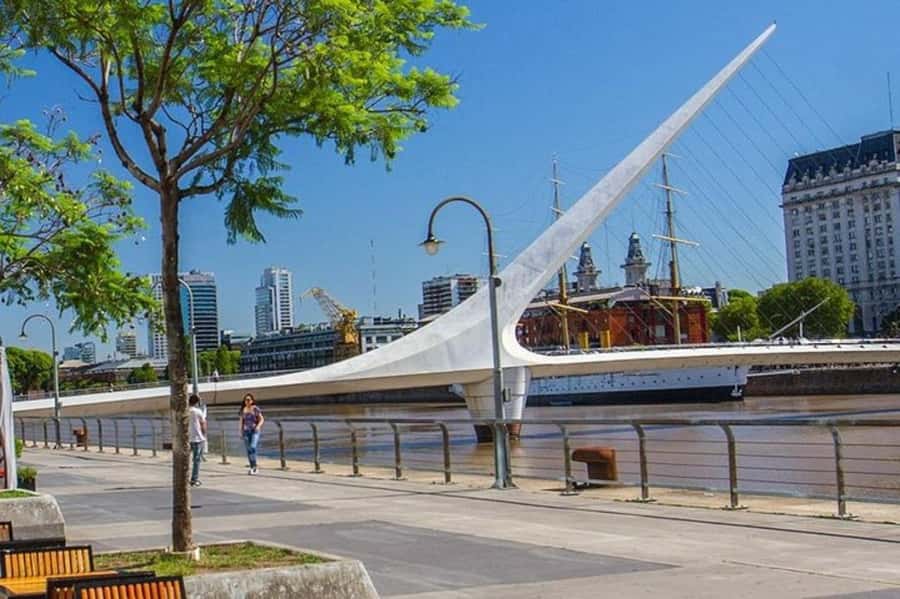
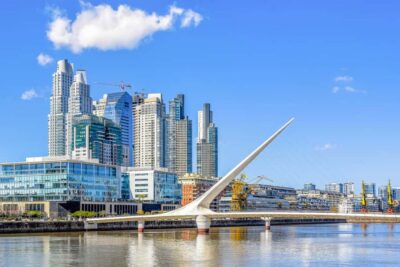
A second transfer, also about 10 minutes, brings you to Puerto Madero. The district began as an abandoned port project and later became a modern area of skyscrapers, restaurants, bars, and riverside paths.
This final stop changes the mood again. After the old streets of Monserrat and San Telmo and the colorful intensity of La Boca, Puerto Madero offers open space and contemporary architecture. The contrast helps you understand how Buenos Aires has tried to reuse its waterfront and reshape its city center.
The main architectural stop is Puente de la Mujer, designed by Santiago Calatrava. The bridge’s sweeping form makes it one of the easiest modern landmarks in the city to recognize, and the tour finishes here.
You can also see two historic naval vessels, the frigate Sarmiento and the corvette Uruguay. They add an older maritime note to the modern district. The provided details do not promise a guided interior visit, so expect to see these vessels as part of the Puerto Madero sightseeing section.
Finishing at Puente de la Mujer is practical. You end beside a clear landmark in a district with restaurants and bars, giving you options after the tour. Since the experience does not include food or drinks, you can decide for yourself how long to stay and where to eat.
The Puerto Madero section lasts around an hour. It is less about dense historic detail and more about architecture, waterfront views, ships, and the city’s modern direction.
How the four-hour pace feels
The schedule divides the experience into four one-hour neighborhood stops, with two 10-minute transfers. That structure keeps the route moving and prevents one district from taking over the whole afternoon.
You should expect a mix of walking, standing, listening, sightseeing, and brief transport. The route begins at the Metropolitan Cathedral and finishes at Puente de la Mujer, rather than returning you to the starting point.
This matters when planning the rest of your day. You need comfortable shoes, weather-appropriate clothing, and a little flexibility around Café Tortoni. Check the forecast before leaving, since much of the experience takes place outdoors.
The tour is offered with live guides in English, Spanish, and Portuguese. Two named members of the team connected with the experience are Alejandra, also referred to as Ale, and Sebastian. Alejandra is specifically associated with the guiding, while Sebastian helped make sure the day ran smoothly. If you are booking in English, confirm the available language and start time before paying.
There are only three published ratings, all at the highest level, so the rating is a small sample rather than a complete record. Still, the strongest praise points to the guide’s friendly delivery, clear amount of information, and ability to make the neighborhoods easy to understand. That is exactly what this itinerary needs, since the route contains a lot of stops in limited time.
Who will get the most from this tour
I would recommend this experience to first-time visitors who want orientation without spending a full day on a single museum or district. It also suits people with limited time in Buenos Aires, since you can see four major areas in one organized outing.
It is a good fit if you enjoy history presented through streets, landmarks, stories, and local symbols. The combination of Plaza de Mayo, Mafalda, Boca Juniors, tango, old ships, and Calatrava’s bridge gives you a wide sample of the city’s culture.
Families and mixed-interest groups may also like the variety. A football fan can focus on Boca Juniors, a design enthusiast can watch for Puente de la Mujer, and someone interested in old urban life can spend more attention on San Telmo.
I would hesitate to recommend it to anyone seeking a slow, in-depth walking experience. You will not have unlimited time at the market, Caminito, Café Tortoni, or the waterfront. It is also a poor match for wheelchair users, as the experience is specifically listed as not suitable for them.
Bring money for personal purchases, meals, and drinks. None of those costs are included, and the tour passes through places where stopping for food may be tempting.
Is this Buenos Aires tour worth booking?
Book it if you want a lively four-hour introduction to the city and value a guide who can connect major landmarks with small local stories. The best parts are the range of neighborhoods, the efficient short transfers, the San Telmo details, and the chance to finish at Puente de la Mujer after seeing a very different side of Buenos Aires in La Boca.
Think twice if you prefer slow travel, guaranteed entry to every named attraction, or a food-focused experience. Café Tortoni is subject to availability, meals are extra, and the route’s broad coverage means each stop receives only about an hour.
At $100 per person, this is a convenience-and-context purchase rather than a bargain walk. For a first visit, especially with only a short stay, I think the mix of historic streets, football culture, tango, and modern architecture can justify the cost. The strongest reason to book is the guide: a friendly, well-prepared person such as Alejandra can turn a fast route into a coherent story of Buenos Aires.
FAQ
Where does the tour start?
The tour starts at the Metropolitan Cathedral of Buenos Aires.
Where does the tour finish?
The tour finishes at Puente de la Mujer in Puerto Madero.
How long does the experience last?
The tour lasts four hours.
Which neighborhoods are included?
The route includes Monserrat, San Telmo, La Boca, and Puerto Madero.
Is Café Tortoni visit guaranteed?
No. A visit to Café Tortoni depends on availability.
Are meals and drinks included?
No. Meals, drinks, and personal purchases are not included.
Which languages are available?
The live tour guide service is available in English, Spanish, and Portuguese.
Is the tour suitable for wheelchair users?
No. The experience is listed as not suitable for wheelchair users.
Just added around Buenos Aires
- Tango Show at El Querandi with optional Dinner★ 4.2 · 3 reviews
- Wine Tasting in Buenos Aires★ 4.2 · 4 reviews
- Walking Tour: Buenos Aires bookstores★ 4.3 · 12 reviews
- Velez Sarsfield Football Match★ 5.0 · 3 reviews
- Unique Tigre and Delta Private Day Cruise Navegation★ 5.0 · 3 reviews
- Tour Buenos Aires in one day on Electric Scooters★ 5.0 · 33 reviews
- Private Underground Tango Immersion★ 5.0 · 31 reviews
- Experience The Essence of Buenos Aires in San Telmo★ 5.0 · 51 reviews
La Boca & Caminito Walks, compared.
Buenos Aires Bike Tour: San Telmo and La Boca Districts
Read our review →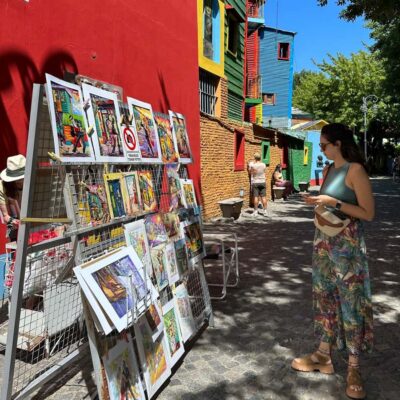
Walking Tour of San Telmo and La Boca with local food
Read our review →Browse the lists this tour appears in