
Reviewed · LA BOCA & CAMINITO WALKS
La Boca Out off the Beaten Track
La Boca’s best stories begin where the tourist colors thin out. With local guide Paola De Luca, you explore immigrant tenements, harbor warehouses, social-issue murals, an old fire station, and streets most visitors miss before ending at Caminito.
I like the personal connection Paola brings as someone who grew up in La Boca, and I like that coffee in an 1882 cafe is included. The main consideration is pace: 150 minutes covers a lot, so you should expect a walking tour with several stops rather than long visits at each one.
In This Review
- Key points to know before booking
- Why this La Boca walk feels different
- Starting beside the harbor and immigrant railway
- Entering a former conventillo
- Argentina’s first volunteer fire station
- Murals, old newspapers, and Boca’s political past
- Boca Juniors and the Salesian Church
- A local artist’s house and the art of La Boca
- Caminito, tango, and fileteado at the finish
- Coffee at an 1882 Notable Cafe
- What the $35 price gets you
- Who should book this experience
- Should you book La Boca Out off the Beaten Track?
- FAQ
- Where does the tour begin?
- Where does the tour finish?
- How long does the experience last?
- What languages are available?
- How large is the group?
- Is coffee included?
- Is food included?
- Is entry to the fire station included?
- Is entry to the conventillo included?
- Is the Quinquela Museum ticket included?
- Can I cancel the booking?
- Who should not book this activity?
Key points to know before booking
- Local perspective: Paola grew up as a neighbor of La Boca and connects family memories with the neighborhood’s past.
- Beyond Caminito: The walk reaches murals, harbor spaces, immigrant houses, and old buildings away from the busiest tourist streets.
- Rare interior visits: Entry to a former corrugated-metal conventillo and Argentina’s first volunteer firefighter station is included.
- Two major local passions: You see Boca Juniors’ stadium from outside and visit the Salesian Church, both important to the neighborhood’s identity.
- Coffee with history: The experience ends with coffee at a Notable Cafe dating from 1882.
- Small-group format: The group is limited to 10 people, with guiding in English or Spanish.
Why this La Boca walk feels different
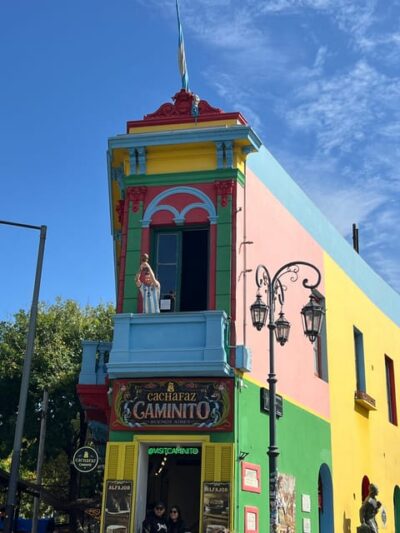
Most first visits to La Boca begin and end around Caminito. That famous strip is worth seeing, with its painted facades, tango poses, and fileteado lettering, but it tells only one part of the story.
This tour starts near Martín Rodríguez and Avenida Don Pedro de Mendoza, close to the old waterfront. From there, Paola puts the bright colors into context. La Boca was shaped by immigrants, labor, mutual-aid groups, artists, political movements, religion, and football. You do not simply look at painted walls. You learn why the neighborhood developed the way it did.
That difference matters. A mural can be attractive on its own, but the social subjects behind it give the image weight. A corrugated-metal house can look like a photo stop, but learning that these conventillos sheltered newly arrived immigrants changes how you read the building.
Paola’s background is a central part of the experience. She spent her childhood and youth in La Boca, and her connection to the area lets her combine facts with personal recollections. That is especially useful in a neighborhood where official history and local memory often sit side by side.
The group size is capped at 10. That is small enough for questions and conversation without making the walk feel like a private tour. The guiding is offered in English and Spanish, and one booking describes Paola’s English as excellent. Another notes that she remained attentive to the group’s comfort during intense heat, a helpful detail if you visit in summer.
More la boca & caminito walks in Buenos Aires:
- Buenos Aires: La Boca Guided Walking Tour in English
★ 4.8 · 1,587 reviews - Buenos Aires: Navigation from Pto. Madero to La Boca
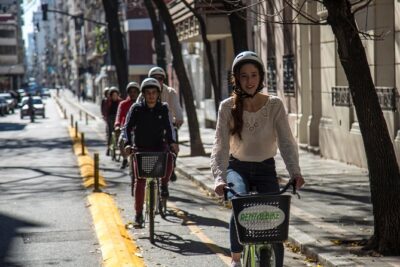
★ 4.1 · 147 reviews - Buenos Aires Bike Tour: San Telmo and La Boca Districts
★ 4.5 · 74 reviews
Starting beside the harbor and immigrant railway
The meeting point is the corner of Pedro de Mendoza and Martin Rodriguez in La Boca. The experience both begins and ends in the neighborhood, so you do not spend your limited tour time commuting from central Buenos Aires.
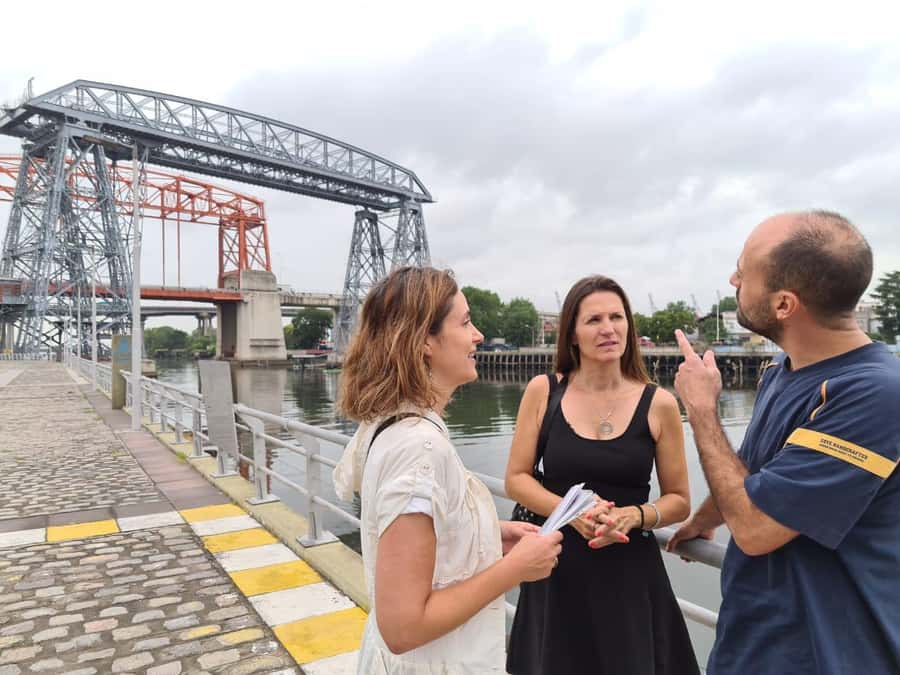
The first section looks at the harbor, warehouses, and a picturesque train station connected with the arrival of large numbers of immigrants. This gives the tour a useful starting point. La Boca was not created as a polished tourist quarter. Its character grew from people arriving, finding work, forming communities, and building lives near the water.
The harbor setting also helps explain the mix of cultures associated with the area. You may notice how the old industrial surroundings differ from the carefully painted streets of Caminito. That contrast is one of the tour’s strengths. You see both the working neighborhood and the image that later became famous.
The railway stop adds another layer to the story. It represents movement into the district, while the harbor represents movement through it. Paola uses these places to explain Buenos Aires as a city shaped by immigration, rather than presenting La Boca as a collection of colorful houses.
You should wear comfortable shoes. The tour lasts two and a half hours, and the route includes outdoor walking between several sites. The supplied details do not specify the total walking distance or the amount of seating, so anyone who needs frequent rest should ask before booking.
Entering a former conventillo
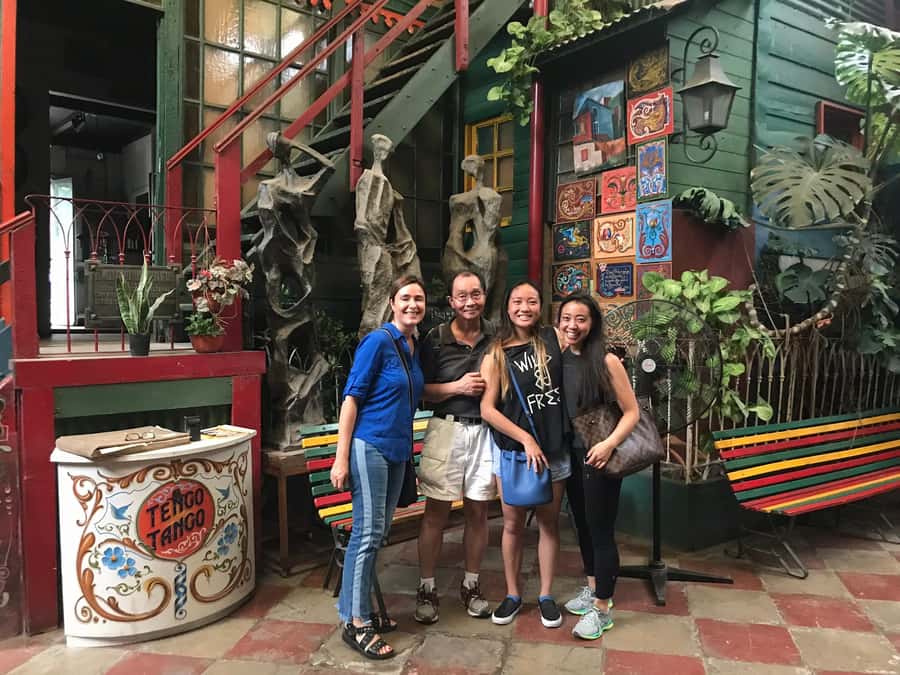
One of the most useful stops is the interior of a corrugated-metal-clad conventillo. These tenement houses once provided shelter for immigrants. The building now functions as a Cultural Centre, allowing you to see more than an exterior wall.
The visit helps explain how people lived in crowded, shared housing while establishing themselves in a new country. The point is not simply architectural. The conventillo represents the social conditions that shaped La Boca’s music, politics, neighborhoods, and close community networks.
I like this stop because it turns an abstract idea into a place you can enter. From the street, corrugated metal may look like a design feature. Inside, it becomes evidence of practical, low-cost housing and a district built by people making do with limited resources.
The visit is included in the $35 price. That improves the value, since the tour offers access to a building you might otherwise pass without understanding. The Cultural Centre setting also means the experience is not presented as a frozen relic. It remains part of the neighborhood’s cultural life.
The visit may be brief because the full walk also includes the fire station, murals, religious buildings, football, and Caminito. If you want a long architectural inspection, this may feel too short. If you want a clear introduction to immigrant housing, it is one of the most meaningful stops.
Argentina’s first volunteer fire station
La Boca’s mutual-assistance groups grew from the needs of a community that had to rely on itself. The tour visits the first Volunteer Firefighter Station created in Argentina, with entrance included.
This is an unusually specific piece of national history. Rather than treating the district only as a place of art and football, the stop shows how residents organized to protect one another. The fire station reflects the practical side of community life, especially in a dense working area where fires could cause serious damage.
The interior visit adds value. You are not simply told that La Boca developed strong local associations. You get to enter one of the institutions that helped make that possible.
The information provided does not promise a particular vehicle, exhibit, or length of time inside the station, so keep your expectations focused on the site and its role in local history. Paola’s guidance is the main reason this stop matters.
Same city, a completely different kind of day:
- Buenos Aires Hop-On Hop-Off Bus, Free Walking Tours & Discounts
★ 4.5 · 2,218 reviews - Buenos Aires: Piazzolla Tango Show with Optional Dinner
★ 4.4 · 2,122 reviews - Buenos Aires: City Highlights Guided Tour with Transfer
★ 4.7 · 1,946 reviews - Buenos Aires: Hop-On Hop-Off City Bus Tour
★ 4.2 · 1,855 reviews
Murals, old newspapers, and Boca’s political past
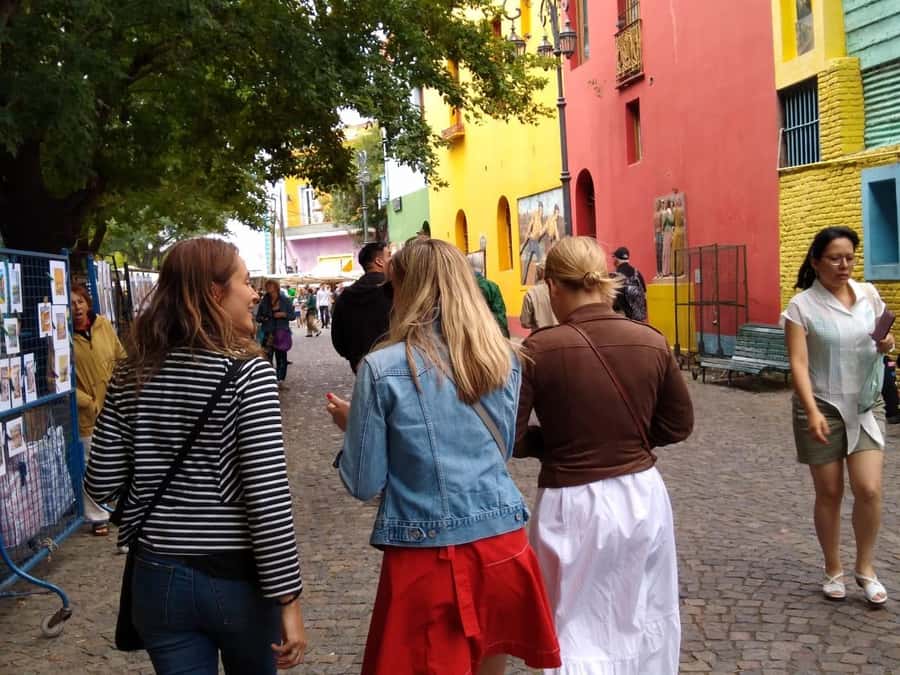
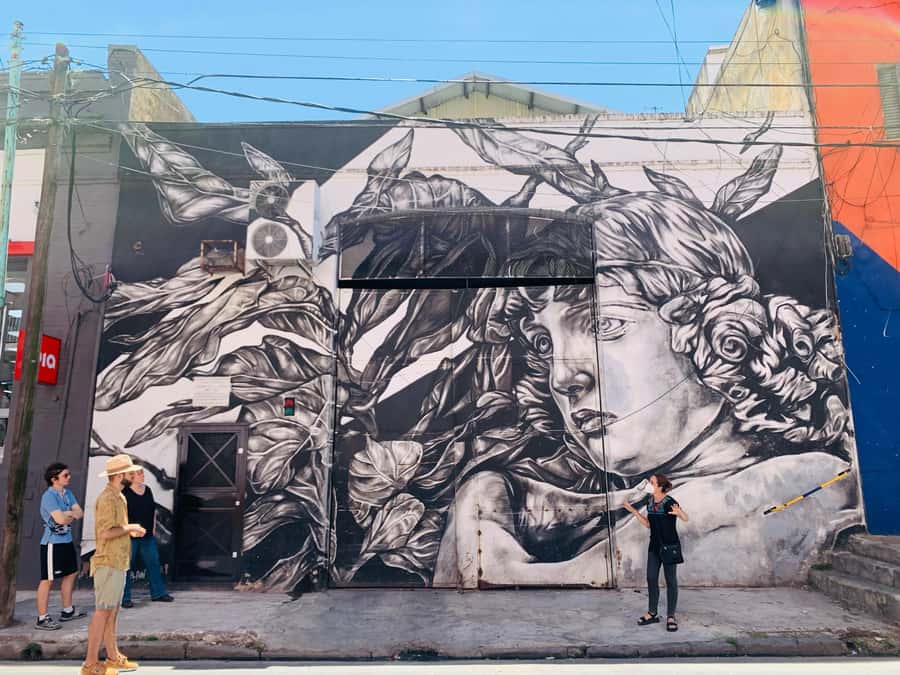
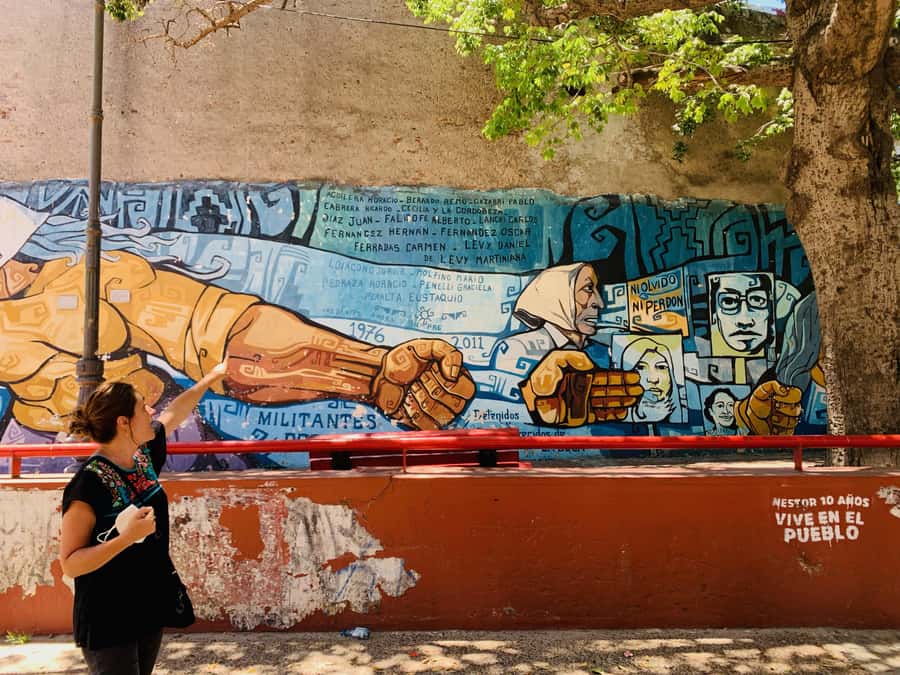
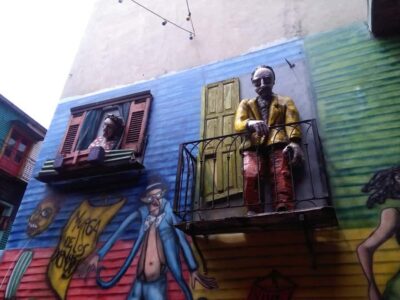
The walk reaches large murals that reflect different social issues. These works add a modern voice to the neighborhood, but they also connect with La Boca’s long record of political and cultural activity.
Paola explains the background behind the paintings, so you can read them as more than colorful decoration. This was one of the most praised parts of her guiding. She makes the history behind the artwork clear, which is useful if you normally pass murals without knowing what they represent.
The route also includes old buildings that once housed anarchist newspapers and bordellos in the early 20th century. Those details show a less polished side of La Boca. The area was shaped by strong political opinions, working-class life, nightlife, and people living outside the respectable center of Buenos Aires.
You should appreciate the frankness of this section. La Boca’s identity is not only about tango, bright facades, and football shirts. It also includes conflict, poverty, political organizing, and social change. Paola’s role is to connect these subjects without turning the walk into a dry lecture.
Boca Juniors and the Salesian Church
Two local institutions receive special attention: Boca Juniors and the Salesian Church. You see the Boca Juniors Stadium from outside, rather than entering for a stadium tour.
For football fans, even an exterior view can be important. Boca Juniors is not a detached sports attraction in this neighborhood. The club is part of local identity, and Paola explains the passion around it in the context of La Boca itself.
You should book this experience for the social and cultural story, not for stadium access. If your priority is a stadium interior, museum visit, or match-day experience, you will need a separate plan. Here, football is one part of a broader walk.
The Salesian Church represents another refuge for communities that had arrived without firm roots. Its presence helps show how religion supported neighborhood life alongside mutual-aid associations, family networks, and football.
The pairing works well. Boca Juniors speaks to modern local identity and collective passion. The church points to an earlier source of support and belonging. Together they help you understand why La Boca can feel intensely attached to its institutions.
A local artist’s house and the art of La Boca
The tour includes a visit to a typical Boca house belonging to friends of Paola who are important local artists. One account also describes meeting a local artist in his home. This is a personal, limited-access element, not a standard museum stop.
Because the exact host and format can depend on availability, you should treat this as a special possibility within the experience rather than expecting a formal studio tour. The important point is the contact with a real neighborhood home and the people connected with La Boca’s artistic life.
That personal link is one of the clearest differences between this walk and a general city sightseeing route. You are not only looking at finished art in public spaces. You get some sense of how artists and residents relate to the area today.
The tour can also include the Museo de Bellas Artes de La Boca, associated with Benito Quinquela Martín. Part of the building was his home. The museum ticket is not included, so admission costs extra if you choose to enter.
Quinquela Martín is especially relevant here because he is closely associated with the visual identity of La Boca. If you enjoy painting, local art, or the way artists shape a neighborhood’s public image, consider adding the museum. If you are watching your budget or want to stay with the group route, the exterior and Paola’s explanation may be enough.
Caminito, tango, and fileteado at the finish
The walk ends in Caminito, La Boca’s best-known tourist area. This is where you find tango and fileteado in every corner, along with the painted facades that appear in so many Buenos Aires photographs.
Arriving here at the end is smart. You first learn about the neighborhood’s people and institutions, then see the polished public image that most visitors encounter first. Caminito becomes easier to understand once you know the immigrant, artistic, and working-class stories behind it.
The tradeoff is that Caminito is more commercial and crowded in character than the quieter streets earlier in the route. If you want uninterrupted photography or a calm visit, the final section may feel busy. If you want to see tango imagery, decorative lettering, and the classic La Boca scene, it delivers.
Do not confuse this tour with a tango performance or a meal. Tango appears as part of the neighborhood’s culture, but no performance or food is listed as included.
Coffee at an 1882 Notable Cafe
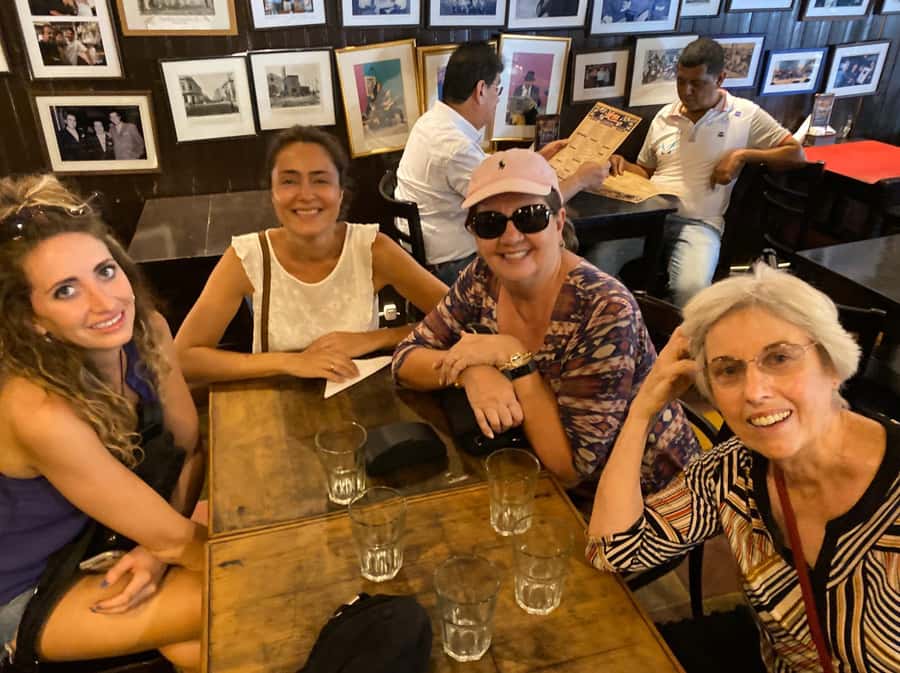
The experience finishes with coffee in an old Notable Cafe dating from 1882. Coffee is included, while food is not.
This is more than a convenient refreshment. In Buenos Aires, historic cafes are part of the city’s social fabric, and the setting gives the walk a quiet closing point after the outdoor route. It also gives you time to ask Paola questions or sort through the many layers of La Boca.
The provided details do not name the cafe, so you should not book this expecting a particular famous venue by name. You can expect a historic cafe setting and included coffee, but not a full snack or meal.
At $35 per person, the coffee is a small part of the value. The stronger case for the price is the combination of included access to the conventillo and fire station, a small group, bilingual guiding, personal neighborhood knowledge, and a route that goes beyond the standard Caminito circuit.
What the $35 price gets you
The price is reasonable if you want interpretation rather than a simple photo walk. You receive a 150-minute guided experience, entry to two distinctive sites, and coffee at the end.
The value becomes stronger for first-time visitors who want La Boca explained in context. You would pay separately for a museum if you choose to enter the Quinquela Museum, and food is not included, but the main route does not require you to keep paying at each stop.
The tour also has a flexible booking policy. You can cancel up to 24 hours in advance for a full refund, and you can reserve now and pay later. Starting times vary, so check availability before arranging the rest of your day.
There are a few practical limits. Jewelry, alcohol, and drugs are not allowed. Electric wheelchairs are not suitable for the activity, and the experience is not suitable for people over 95. The supplied details do not provide broader accessibility information, so contact the provider if you need specific support.
Who should book this experience
I would choose this walk if you want a local guide, social history, murals, immigrant stories, and a look inside places you cannot understand from the street alone.
It suits curious first-time visitors, art lovers, people interested in migration and neighborhood life, and football fans who want to understand Boca Juniors as part of La Boca rather than as an isolated attraction. It also works well if you have only part of a day and want the neighborhood to be your main focus.
Paola’s style appears especially suited to people who like questions and conversation. Her ability to explain the club, the murals, and Buenos Aires as an immigrant city is central to the experience. Her personal connection makes the walk feel close to the neighborhood rather than detached from it.
I would hesitate if you mainly want a food tour, a stadium interior, a long museum visit, or a formal tango show. Those are not the focus here. You should also think carefully about the walking time and outdoor heat if mobility or hot weather is a concern.
Should you book La Boca Out off the Beaten Track?
Book it if you want to see why La Boca matters, not just what it looks like. The strongest features are Paola De Luca’s local connection, the conventillo and fire station interiors, the mural explanations, and the gradual move from working waterfront to Caminito.
At $35, it offers good value for a small group and includes more access than a standard street walk. I would leave room after the tour if you want to visit the Quinquela Museum, eat, or explore Caminito at your own pace. For a deeper, more human introduction to La Boca, this is a strong choice.
FAQ
Where does the tour begin?
It begins at the corner of Pedro de Mendoza and Martin Rodriguez in La Boca, Buenos Aires.
Where does the tour finish?
It finishes in Caminito, also in La Boca.
How long does the experience last?
The full experience lasts 150 minutes, or two and a half hours.
What languages are available?
The live guide offers the experience in English and Spanish.
How large is the group?
The group is limited to 10 participants.
Is coffee included?
Yes. Coffee at a Notable Cafe is included.
Is food included?
No. Food is not included.
Is entry to the fire station included?
Yes. Entrance to Argentina’s first Volunteer Firefighter Station is included.
Is entry to the conventillo included?
Yes. Entrance to the former corrugated-metal-clad conventillo, now a Cultural Centre, is included.
Is the Quinquela Museum ticket included?
No. If you choose to visit the Museo de Bellas Artes de La Boca, the entrance ticket is extra.
Can I cancel the booking?
You can cancel up to 24 hours in advance for a full refund. You can also reserve now and pay later.
Who should not book this activity?
The experience is not suitable for people over 95. Electric wheelchairs are not suitable, and jewelry, alcohol, and drugs are not allowed.
Just added around Buenos Aires
- Tango Show at El Querandi with optional Dinner★ 4.2 · 3 reviews
- Wine Tasting in Buenos Aires★ 4.2 · 4 reviews
- Walking Tour: Buenos Aires bookstores★ 4.3 · 12 reviews
- Velez Sarsfield Football Match★ 5.0 · 3 reviews
- Unique Tigre and Delta Private Day Cruise Navegation★ 5.0 · 3 reviews
- Private Underground Tango Immersion★ 5.0 · 31 reviews
- Tour Buenos Aires in one day on Electric Scooters★ 5.0 · 33 reviews
- Transfers from or to the airport In Argentina Your Best Choice★ 5.0 · 28 reviews
La Boca & Caminito Walks, compared.

Buenos Aires Bike Tour: San Telmo and La Boca Districts
Read our review →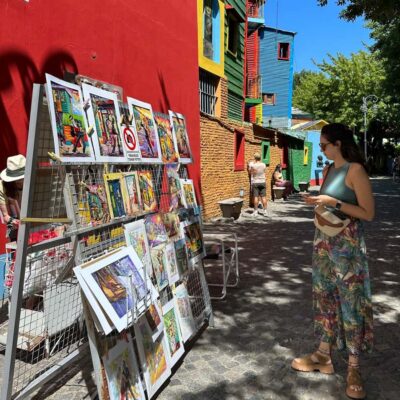
Walking Tour of San Telmo and La Boca with local food
Read our review →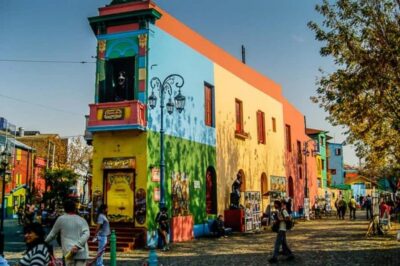
Browse the lists this tour appears in