
Reviewed · LA BOCA & CAMINITO WALKS
Buenos Aires: La Boca Art and History Walking Tour
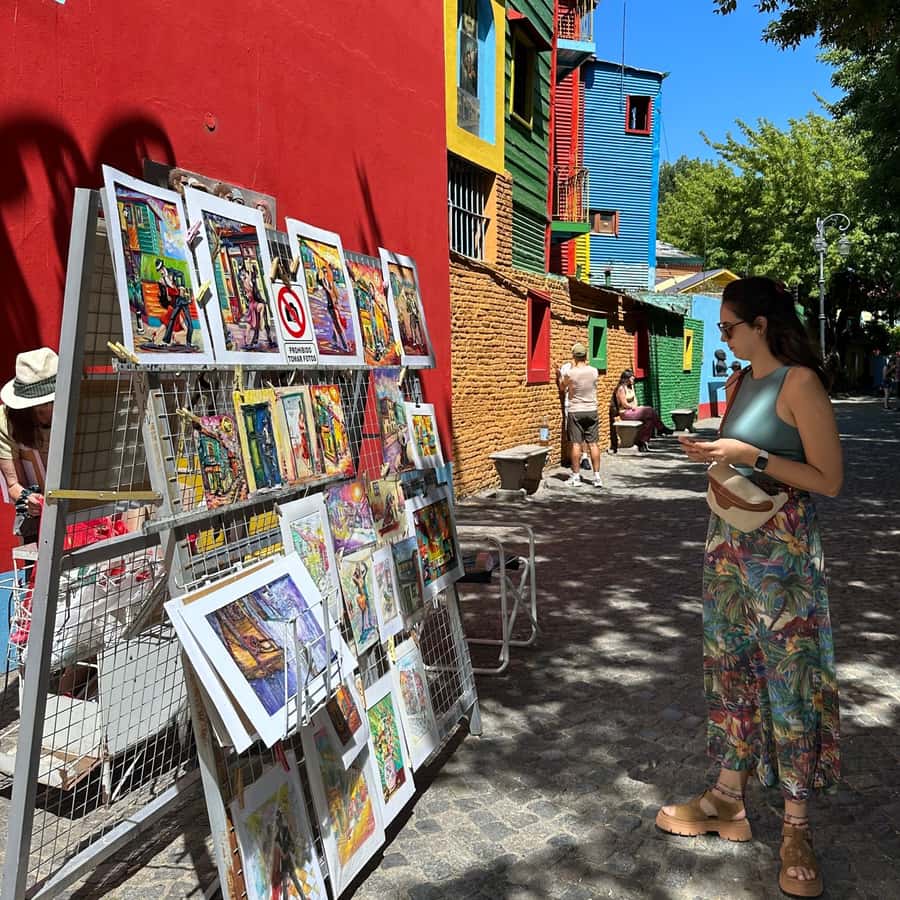
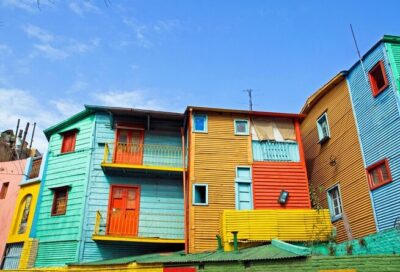
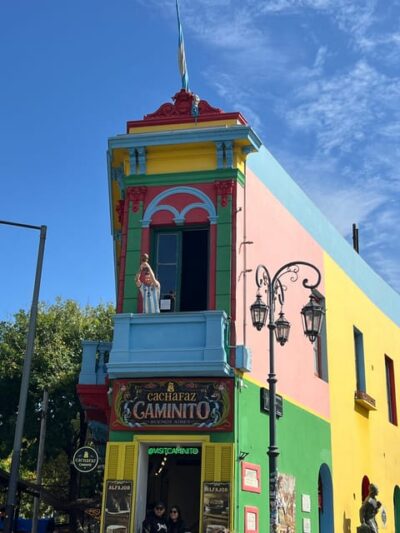
La Boca is more than a row of brightly painted houses. This 150-minute walk explains how dockworkers, immigrants, artists, tango, and Boca Juniors football shaped one of Buenos Aires’ most famous neighborhoods. The focus on painter Benito Quinquela Martín gives the walk a useful thread, linking street color to local identity and the Riachuelo art movement.
I like the mix of art and social history, which gives you more than a quick photo stop. I also like the balance between the Benito Quinquela Martín Museum, a look at the Conventillo El Rincon de Lucia, and football at La Bombonera. The main consideration is that the stadium stop is for photographs and sightseeing, not a match or stadium tour, and the booking must be made at least 24 hours ahead.
In This Review
- Key points
- Starting beside the Benito Quinquela statue
- La Boca beyond the painted façades
- Benito Quinquela Martín and the Riachuelo art movement
- Conventillo El Rincon de Lucia
- La Bombonera and the force of Argentine football
- Tango, movement, and the street atmosphere
- What the two included extras are worth
- A practical look at the 150-minute route
- The guides make the difference
- What this tour does not include
- Who should book this La Boca walk
- Should you book it?
- FAQ
- How long does the La Boca Art and History Walking Tour last?
- Where does the tour begin?
- Where does the tour finish?
- Is La Bombonera included?
- What museums are visited?
- Which languages are available?
- What is included in the price?
- Can I cancel or pay later?
Key points
- Benito Quinquela Martín shapes the story: Learn how one La Boca artist influenced the neighborhood’s public image and artistic life.
- La Bombonera is a photo stop: You get a look at Boca Juniors’ famous football ground, but not an interior stadium visit.
- The walk connects immigration and working-class life: La Boca’s streets make more sense when you understand who built the community.
- Two extras are included: Your booking includes two of three options: museum entry, wine tasting, or dulce de leche tasting.
- Language choice is useful: Tours operate in Spanish, English, and Portuguese, with guides such as Facundo, Laura, Dani, and Frani praised for clear storytelling.
- The route is compact: It begins at the Benito Quinquela statue on Avenida Don Pedro de Mendoza and finishes nearby at number 1835.
Starting beside the Benito Quinquela statue
Your meeting point is the Benito Quinquela statue at Avenida Don Pedro de Mendoza 1921. The tour finishes at number 1835 on the same avenue, so this is a compact outing rather than a long cross-city walk.
That arrangement is handy if you are fitting La Boca into a larger Buenos Aires day. You do not need hotel pickup, and you should arrange your own way to the statue. Keep your passport or ID card with you, as it is listed among the items to bring.
The guide begins by placing La Boca in its working-class setting. This matters because the neighborhood’s painted façades can make it look like a simple open-air attraction. The walk gives you a fuller picture, connecting the color, art, immigration, and football rather than treating them as separate sights.
The tour is available in Spanish, English, and Portuguese. Named guides who have led this experience include Facundo, Juan, Rafa, Laura, Dani, Frani, Francisco, Loli, Ludmila, and Danielle. The strongest pattern across the guiding is clear explanation, friendly conversation, and a good command of La Boca’s past. Facundo was noted for excellent English, while Juan has also spoken Italian.
More la boca & caminito walks in Buenos Aires:
- Buenos Aires: La Boca Guided Walking Tour in English
★ 4.8 · 1,587 reviews - Buenos Aires: Navigation from Pto. Madero to La Boca
★ 4.1 · 147 reviews - Buenos Aires Bike Tour: San Telmo and La Boca Districts
★ 4.5 · 74 reviews
La Boca beyond the painted façades
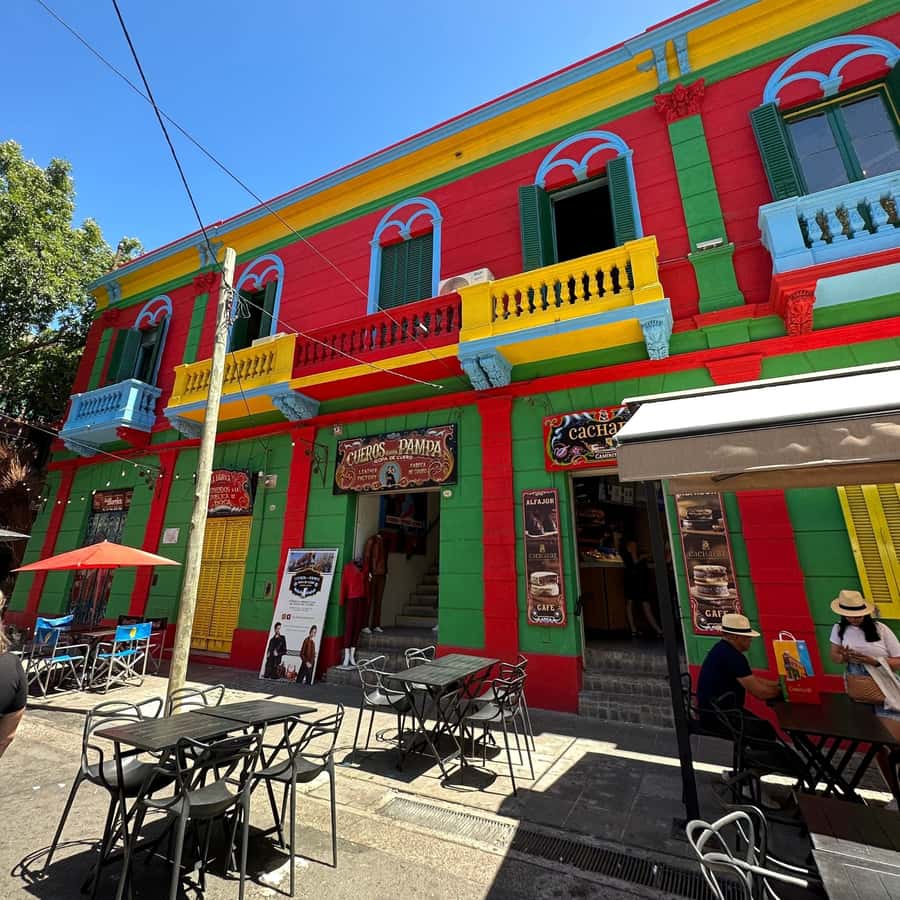
La Boca is known for its colorful houses, tango, and football, but this walk asks you to look at what lies behind that image. You hear about immigration and the neighborhood’s working-class roots, then see how those forces shaped its art and public life.
That context is the reason to book a guided walk instead of simply arriving with a camera. On your own, you can photograph the colorful streets. With a guide, you can connect the houses, the people who lived there, the port-related working life, and the artists who turned local scenes into a recognizable style.
The tour also explores the social meaning of La Boca. This is not presented as a polished historic center. The neighborhood has a strong public identity, but it also has contrasts. You should expect a sightseeing route centered on specific landmarks and cultural points, not an exhaustive survey of every street.
Guides such as Rafa have helped visitors find the meeting point and have mixed stories about local people, places, and soccer into the walk. That practical contact is useful at the start, particularly if you are unfamiliar with Buenos Aires’ southern neighborhoods.
Benito Quinquela Martín and the Riachuelo art movement
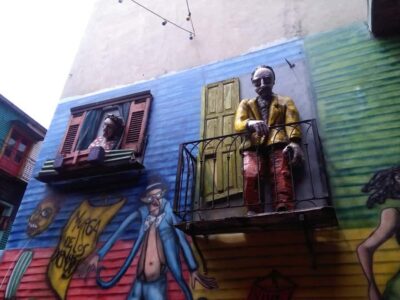
Benito Quinquela Martín is the central figure of the walk. The tour looks at his impact on La Boca and explains the Riachuelo art movement, giving you a clearer sense of why this part of Buenos Aires has such a strong visual identity.
The artist’s importance here is not limited to paintings hanging inside a museum. The tour presents him as part of the neighborhood’s wider cultural and social story. That helps explain why La Boca’s color feels tied to local pride rather than being only a decorative feature for visitors.
The Benito Quinquela Martín Museum is one of the main stops. You receive a guided visit and, depending on the option assigned to your booking, museum admission may be one of your two included extras. Check the exact combination when you book, since the package offers two of three choices: museum entry, free wine tasting, and dulce de leche tasting.
This museum stop gives the walk a needed change of pace. You spend part of the tour outside, reading the neighborhood through its streets and landmarks, then get a more focused look at the art connected to La Boca. If you care about painting or Argentine culture, this is likely the most valuable stop.
Conventillo El Rincon de Lucia
The visit to Museo Conventillo El Rincon de Lucia adds a domestic and community angle. A conventillo is tied to the immigrant and working-class story of Buenos Aires, so this stop supports the broader explanation of how La Boca developed.
You receive a guided visit rather than merely passing the building. That makes the stop useful for understanding the social setting behind the neighborhood’s famous appearance. The colorful exterior is the easy part to notice. The conventillo visit points you toward the people and living conditions connected with that image.
The available information does not promise a long museum session, so expect this to be one part of a moving walking route. The full experience lasts 150 minutes, and time is shared among the neighborhood walk, the football stop, the conventillo, the museum, and the included food or drink options.
A few more Buenos Aires trips to weigh up
- Nazis in Buenos Aires: a historical walking tour
★ 4.9 · 193 reviews - San Telmo: Historical Guided Tour with Street Food & Drinks
★ 5.0 · 87 reviews - Recoleta Cemetery – Small Group Tour of History & Secrets
★ 5.0 · 53 reviews - Buenos Aires: Historic Buenos Aires Landmarks & Icons Tour
★ 4.9 · 37 reviews
La Bombonera and the force of Argentine football
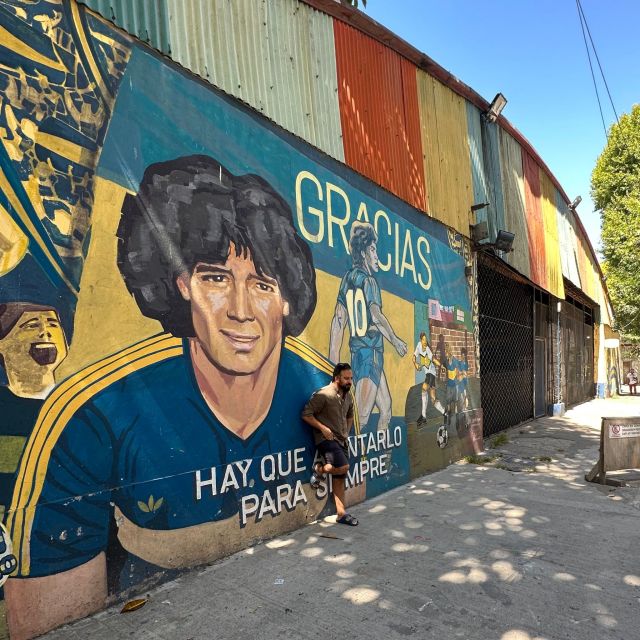
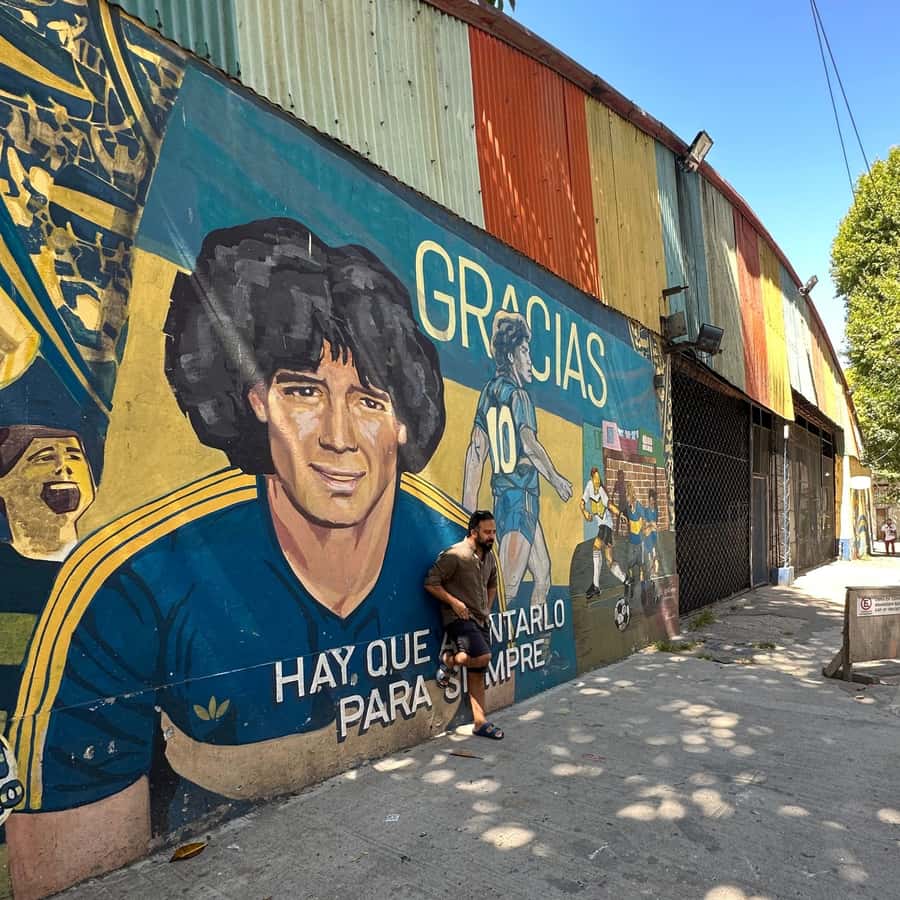
La Bombonera, home of Boca Juniors, provides the football chapter. You stop for photographs and sightseeing, so you can see the stadium from the tour route and hear about the passion surrounding the club.
This is an important distinction: the experience does not include a match, ticket, or interior stadium tour. If you want access inside La Bombonera, you will need a separate arrangement. Here, football is part of the neighborhood’s identity and the guide’s storytelling.
The football material also helps keep the walk from becoming purely an art tour. You move between the visual culture of Quinquela Martín, the community story of the conventillo, and the emotional pull of Boca Juniors. That range is one of the tour’s strengths.
A guide with good local stories can make this stop much more than a stadium photograph. Sarah specifically found Rafa helpful with football information, while Francisco was praised for keeping the history of Boca and Argentina well timed and engaging. The precise discussion will vary by guide, but football is a planned part of the route.
Tango, movement, and the street atmosphere
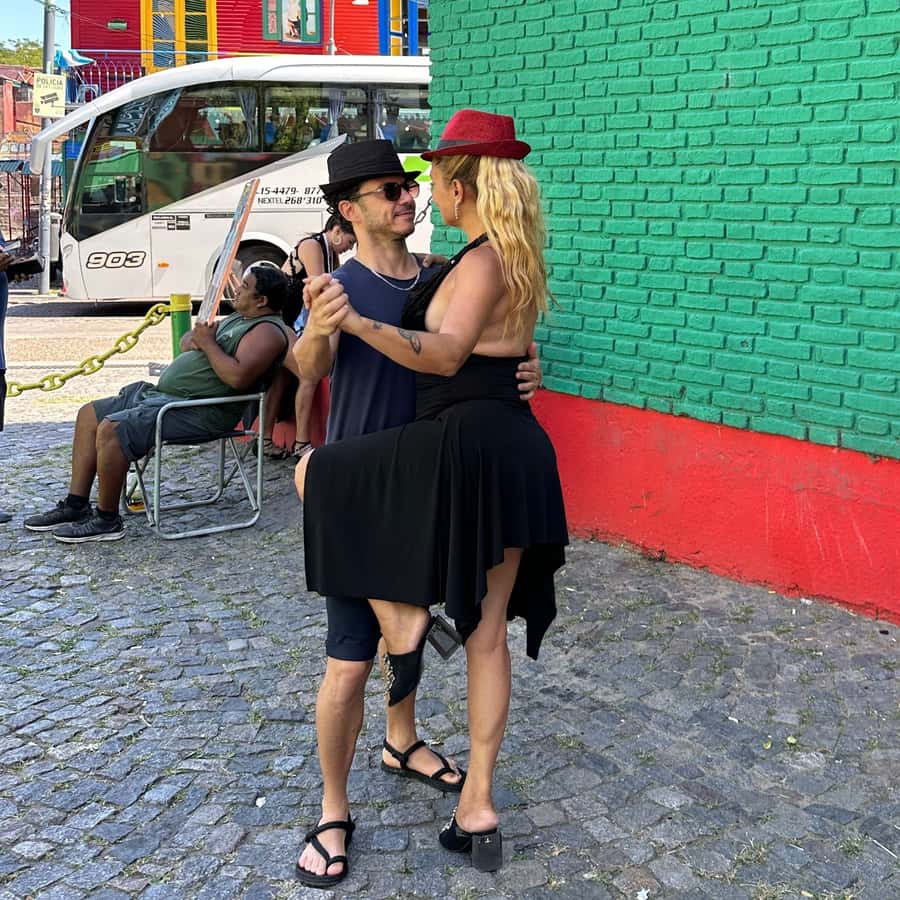
Tango is one of the tour’s stated themes, with attention to the motion and passion of the dance. The experience is not described as a full tango show or dance class, so you should treat tango as part of the neighborhood’s cultural interpretation rather than a separate performance.
That approach suits La Boca. The tour is designed to show how art, public space, music, and local identity meet in the streets. You may encounter tango-related points of interest as you walk, but the confirmed program is a guided sightseeing route rather than a ticketed stage production.
I like this part of the tour because it widens the story. La Boca is often reduced to color and soccer. Tango adds another layer, helping you see the neighborhood as a place associated with movement, performance, and strong public feeling.
What the two included extras are worth
The price is $46 per person. That is not the cheapest way to see La Boca, especially if you only want a short walk and a few photographs. The value improves if you want a guide in your language, the museum visit, and a structured explanation of the neighborhood’s art and social background.
Two of three extras are included:
- Benito Quinquela Martín Museum entry fee
- Free wine tasting
- Dulce de leche tasting
Because only two are included, you should confirm which combination applies to your booking. The information does not specify that you can choose all three, so do not assume the museum admission and both tastings are part of the same package.
The food and drink options add a small local flavor to the walk. They are not the main reason to book, but they can make the 150-minute route feel more varied. For me, the museum entry is the strongest possible inclusion if you are interested in Quinquela Martín and the Riachuelo art movement. The wine or dulce de leche tasting may matter more if you want a lighter cultural outing.
A practical look at the 150-minute route
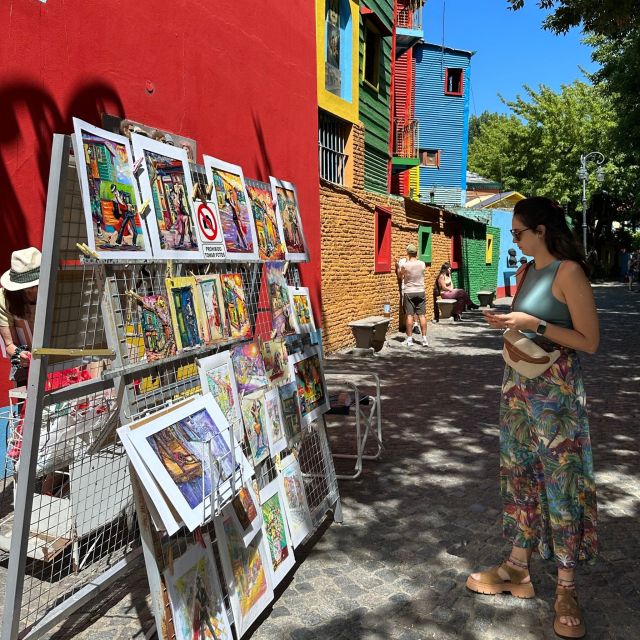
The schedule is long enough to give La Boca some context without taking over your day. You walk through La Boca, stop at La Bombonera for photographs, visit Museo Conventillo El Rincon de Lucia, and spend time at the Benito Quinquela Martín Museum before finishing near the original meeting point.
You should wear comfortable shoes and be ready to walk for two and a half hours. The tour is listed as wheelchair accessible, which is useful information when planning, though the exact ease of each street and entrance is not described. If access is important for you, contact Experience Baires before booking to confirm the route details.
The starting and finishing points are close together, but hotel transportation is not included. Plan your arrival carefully, and allow time to locate the Benito Quinquela statue at Avenida Don Pedro de Mendoza 1921. Rafa’s help with meeting-point directions shows why keeping the provider’s contact details handy is sensible.
Solo visitors must confirm availability directly with Experience Baires before or after booking. The provider asks you to use email or WhatsApp to ensure the tour operates on your chosen date. All bookings must be scheduled at least 24 hours in advance.
The guides make the difference
This tour depends heavily on the guide. La Boca has plenty to look at, but its story can easily become a string of disconnected facts. The best guides give the walk shape, explain unfamiliar references, and adjust the pace of information to the group.
The guide team has included Laura, who brought a strong interest in local art and history; Dani, who helped explain La Boca clearly; Frani, who connected the neighborhood to Argentina as a whole; and Loli, who had a strong command of La Boca and Buenos Aires. Francisco was especially effective at timing his information and keeping the group engaged.
That is a useful sign for English-speaking visitors. Several guides have been praised for clear English, including Facundo and Laura. Portuguese and Spanish are also available, so you can choose the language that lets you absorb the most detail.
The tone seems friendly rather than formal. One guide was described as feeling like a companion on a walk, which is the right mood for La Boca. You are not sitting through a lecture. You are moving through streets, stopping at landmarks, and asking questions as the neighborhood unfolds.
What this tour does not include
It is worth keeping the limits clear before you pay $46. You do not receive hotel pickup or drop-off. You also do not receive a football match ticket or a full La Bombonera stadium tour.
The program does not promise a complete tango performance, a cooking class, or a large food tour. The included tasting options are limited to wine or dulce de leche, with only two of the three listed additions included in total.
The tour also focuses on La Boca rather than offering a broad overview of all Buenos Aires. You will learn about the neighborhood’s role in immigration, art, and football, but you should not expect detailed coverage of every major sight in the city.
These limits are not flaws if you book for the right reason. This is a compact cultural walk with a strong local focus. It works best as a first look at La Boca, followed by independent time if you want more photographs, shopping, or additional museum visits.
Who should book this La Boca walk
I would choose this tour if you want someone to explain the neighborhood instead of simply pointing out its colorful buildings. It suits first-time visitors to Buenos Aires, art lovers, football fans, and anyone interested in immigration and working-class urban history.
It is also a good choice if you prefer a small cultural experience that fits into half a day. The guide-led route gives you a clear plan, while the nearby start and finish make it easier to combine with another Buenos Aires activity.
Families and mixed-interest groups may appreciate the variety. One person can focus on Quinquela Martín, another on Boca Juniors, and someone else on tango, food, or the neighborhood’s social story.
I would hesitate if your main goal is a stadium interior visit or a full tango show. I would also hesitate if you want an unstructured stroll with no fixed schedule. The value here comes from the guide’s interpretation and the planned stops.
Should you book it?
Book this tour if you want La Boca explained through art, immigration, and football, not just photographed. The Benito Quinquela Martín Museum and the visit to Museo Conventillo El Rincon de Lucia give the walk substance, while La Bombonera and tango keep it connected to the neighborhood’s popular culture.
At $46, it is fair value when your booking includes museum admission and one tasting, particularly if you secure an excellent English, Spanish, or Portuguese-speaking guide. Confirm which two extras are included, check availability at least 24 hours ahead, and remember that solo bookings require direct confirmation.
Skip it if you want only quick photographs or an inside look at La Bombonera. Choose it if you want a friendly, story-led introduction to the soul of La Boca.
FAQ
How long does the La Boca Art and History Walking Tour last?
The tour lasts 150 minutes, or two and a half hours.
Where does the tour begin?
You meet the guide at the Benito Quinquela statue at Avenida Don Pedro de Mendoza 1921.
Where does the tour finish?
The tour finishes at Avenida Don Pedro de Mendoza 1835, close to the starting area.
Is La Bombonera included?
Yes. La Bombonera is included as a sightseeing and photo stop. The tour information does not include a match ticket or an interior stadium visit.
What museums are visited?
The route includes Museo Conventillo El Rincon de Lucia and the Benito Quinquela Martín Museum, both with a guided visit.
Which languages are available?
The live tour guide is available in Spanish, English, and Portuguese.
What is included in the price?
The price includes the walking tour, a guide, and two of three options: Benito Quinquela Martín Museum entry, a free wine tasting, or a dulce de leche tasting.
Can I cancel or pay later?
You can cancel up to 24 hours before the tour for a full refund, and you can reserve now and pay later. Solo visitors should confirm availability with Experience Baires, and all bookings must be scheduled at least 24 hours in advance.
More Walking Tours in Buenos Aires
- Buenos Aires Hop-On Hop-Off Bus, Free Walking Tours & Discounts
★ 4.5 · 2,218 reviews - Buenos Aires: Personalized 2 to 8-Hour Private Walking Tour
★ 4.7 · 149 reviews - Buenos Aires: San Telmo and Market Guided Walking Tour
★ 4.8 · 102 reviews - Buenos Aires Walking Tour with Local Guide and Optional Rooftop
★ 4.5 · 87 reviews
Just added around Buenos Aires
- Tango Show at El Querandi with optional Dinner★ 4.2 · 3 reviews
- Wine Tasting in Buenos Aires★ 4.2 · 4 reviews
- Walking Tour: Buenos Aires bookstores★ 4.3 · 12 reviews
- Velez Sarsfield Football Match★ 5.0 · 3 reviews
- Unique Tigre and Delta Private Day Cruise Navegation★ 5.0 · 3 reviews
- Private Underground Tango Immersion★ 5.0 · 31 reviews
- Tour Buenos Aires in one day on Electric Scooters★ 5.0 · 33 reviews
- Transfers from or to the airport In Argentina Your Best Choice★ 5.0 · 28 reviews
La Boca & Caminito Walks, compared.
Buenos Aires Bike Tour: San Telmo and La Boca Districts
Read our review →
Walking Tour of San Telmo and La Boca with local food
Read our review →
Browse the lists this tour appears in