
Reviewed · HISTORICAL TOURS
El Calafate History Museum Tour
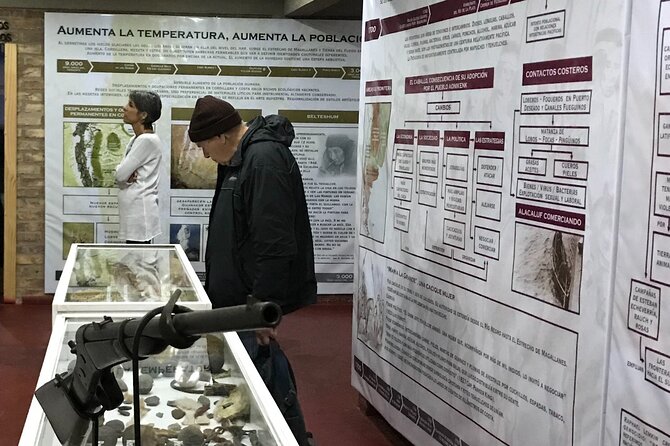
El Calafate’s Historical Interpretation Center packs 100 million years of Patagonia into a small, easy-to-visit museum. You move from dinosaurs and extinct mega-mammals to glaciers, ecological change, and the Tehuelche people, using fossils, bone displays, graphics, and video to connect the pieces.
I like two things right away: the subject matter reaches far beyond glaciers, and the museum works well for families because children can see real bones and fossils rather than only reading dates on a wall. I also like the flexible opening hours, from 10 a.m. to 8 p.m., which make this a useful stop before or after a day outside.
The main consideration is size. A full visit is usually about two hours, but the center is described as small, so you should not expect a huge national museum. One practical tip is to read the displays carefully. The only detailed comment available gave the museum four stars and favored reading over relying on audio aids.
In This Review
- Key points to know before you go
- Why this museum adds something to El Calafate
- Entering the Historical Interpretation Center
- From dinosaurs to extinct mega-mammals
- Glaciers and the Pleistocene story
- Understanding the Tehuelche connection
- How long should you allow?
- Is the $15 price good value?
- The practical route from town
- Who will get the most from this experience?
- What I would improve before booking
- Should you book the El Calafate History Museum Tour?
- FAQ
- How much does the El Calafate History Museum Tour cost?
- How long does the museum visit take?
- What are the museum’s opening hours?
- Are translation options available?
- Is transportation included?
- Can children visit the museum?
Key points to know before you go
- A 100-million-year timeline: The exhibits cover dinosaur life, extinct mega-mammals, glacial change, and human history in Southern Patagonia.
- A compact museum visit: Plan on about two hours, though the stated experience length can range from one to four hours.
- A good rainy-day or rest-day choice: The center is open daily from 10 a.m. to 8 p.m.
- Multilingual access: Translation options are available in Spanish, French, English, Italian, and Portuguese.
- A central El Calafate stop: The museum is about seven blocks from Libertador Avenue, with public transportation nearby.
- Simple pricing: At $15 per person, admission, taxes, fees, and handling charges are included, but transport, parking, food, and drinks are extra.
Why this museum adds something to El Calafate
Most people come to El Calafate for glaciers, boat trips, and wide-open Patagonian scenery. Those sights are powerful, but they show only the latest chapter of the area’s story. At the Historical Interpretation Center, you get a longer view, one that begins long before the first human communities and long before modern ice fields took shape.
That change in scale is the museum’s main strength. Instead of seeing Patagonia as a backdrop for outdoor activities, you begin to understand it as a place shaped by ancient animals, shifting climates, moving ice, and human adaptation.
I find that useful before visiting the region’s natural attractions. A glacier is more than blue ice at the edge of a lake. It is part of a process that has changed the area over vast stretches of time. The museum gives you the basic framework for noticing that process when you are back outside.
A few more El Calafate trips to weigh up
- Buenos Aires: Tickets to Boca Juniors Museum & Stadium
★ 4.5 · 581 reviews - Buenos Aires: River Plate and Boca Juniors Museum Tour
★ 4.5 · 72 reviews - River Plate Monumental Stadium and Museum Guided Tour
★ 4.5 · 39 reviews
Entering the Historical Interpretation Center
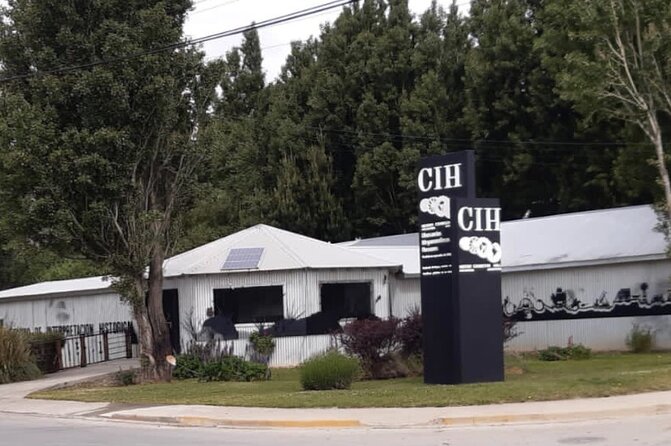
The main stop is the El Calafate Historical Interpretation Center, also called the Interpretation Center CALAFATE. It is located roughly seven blocks from Libertador Avenue, so it can fit into a walk through town. Public transportation is nearby, and transportation to the center is not included in the price.
The center is open every day from 10 a.m. to 8 p.m. That broad schedule matters in El Calafate, where weather and outdoor plans can shift. You can use the museum as a morning activity, a late-afternoon visit, or a backup plan when you would rather stay indoors.
The supplied start time is 10 a.m., but the visit itself is available during opening hours. If you want the most flexibility, confirm the exact entry arrangement when booking. The museum is a private activity for your group, although it may be operated by a multilingual guide.
Do not expect a large guided circuit with a fixed set of timed stops. The point is to move through the center at your own pace, taking in the displays in order. The passage of time acts as the organizing idea, linking geological change with animal life and human culture.
From dinosaurs to extinct mega-mammals
The oldest part of the story focuses on dinosaurs and other creatures that once lived in Southern Patagonia. You can see skeletons, bones, and fossils connected to animals that are no longer part of the region’s world.
That is especially valuable for families. A child may not remember every geological date, but a large fossil or bone assembly gives the past physical weight. Adults get a clearer picture of how different ancient Patagonia was from the place you see today.
The displays are not presented as a single dinosaur attraction. Dinosaurs are one part of a wider account of change. The museum also covers mega-mammals and other extinct species unique to the area, helping you understand that Patagonia’s unusual animal life did not begin with modern guanacos, pumas, and birds.
Since the center is compact, the exhibits may feel more like an introduction than a specialist collection. If you already have strong training in paleontology, you may want more depth. For most people, though, the combination of bones, graphics, and explanatory material provides a useful first look at the region’s ancient past.
Glaciers and the Pleistocene story
The next major thread is the ice. The center explains the glacier process and the ecological changes of the Pleistocene, a period when cold conditions shaped both the land and the life that occupied it.
This section gives your later glacier visits more meaning. Instead of treating the ice as a static object, you can think about how it affects valleys, water, habitats, and the movement of animals. The museum’s graphics and videos help make processes that are difficult to picture easier to follow.
You will not get the same visual impact here as you would on a boat near a glacier. That is not the purpose. The museum supplies the background that an outdoor excursion often cannot provide, especially when a guide has limited time to explain millions of years of change.
The displays are also a reminder that climate shifts have happened before, but that fact does not make modern environmental concerns simple or interchangeable. The center’s role is to explain the area’s past and ecological transformations, not to replace a specialist climate presentation.
Same city, a completely different kind of day:
- El Calafate: Perito Moreno Glacier & Optional Boat Cruise
★ 4.7 · 2,586 reviews - From El Calafate: Full-Day Tour to El Chaltén
★ 4.4 · 926 reviews - El Calafate: Perito Moreno Glacier Trekking Tour and Cruise
★ 4.8 · 805 reviews - From El Calafate: Torres del Paine Full Day Tour
★ 4.6 · 434 reviews
Understanding the Tehuelche connection
The museum also connects the Pleistocene story with Tehuelche culture. That link is important because the history of Southern Patagonia is not only a story of fossils and ice.
By placing human culture within the wider history of the region, the center gives you a better sense of continuity. The land has changed, animals have disappeared, and people have developed ways of living within this demanding setting.
This part may be especially useful if your time in El Calafate is centered almost entirely on outdoor attractions. A glacier excursion can show you the physical setting, while the museum helps you consider the people and cultures connected to it.
The available information does not identify individual guides or promise a particular named host. It does say the activity may be operated by a multilingual guide, with translation options in Spanish, French, English, Italian, and Portuguese. If language support matters to you, check which option is available for your visit rather than assuming every format will be offered at all times.
How long should you allow?
The visit is generally described as taking about two hours. The total experience may last from one to four hours, so you have room to adjust your pace.
If you read every panel, watch the videos, and stop at the bone displays, two hours is a sensible target. A faster visit could work in about an hour, especially if you want only a broad introduction. A slower visit could approach four hours, but the center’s small size may limit how much additional material you can absorb.
The advice to read rather than rely on audio aids is worth taking seriously. Bring enough time for the written material. If you are visiting with children, you may want to move in shorter stretches and use the fossils and skeletons as natural stopping points.
The museum has no minimum age. Children must be accompanied by an adult, and most people can participate. Service animals are allowed.
Is the $15 price good value?
At $15 per person, the museum is priced as a modest educational activity rather than a major day tour. Admission is included, along with taxes, fees, and handling charges.
The value depends on how you use it. If you spend only 30 minutes inside, the price may feel less appealing. If you give the museum its intended two hours and use it to understand the region before visiting glaciers or other natural sites, it becomes a reasonable addition to an El Calafate stay.
There are extra costs to keep in mind. Parking is not included and is payable at check-in if applicable. Food and drinks are also extra, including snacks, coffee, tea, and non-alcoholic beverages. Souvenir photos can be purchased, and transportation to and from the attraction is not included.
This is not a package with hotel pickup, a meal, or a long guided excursion. You are paying for entry and the museum experience itself. That simplicity is useful if you already have your own plans in town.
The practical route from town
The center is about seven blocks from Libertador Avenue. For many people, that makes it a straightforward walk, though the information provided does not give exact walking time or road conditions.
Because transport is not included, plan the visit as an independent stop unless your booking arrangements state otherwise. Public transportation is nearby, which gives you another option.
The long opening window makes timing easy. You can visit before a scheduled outing, after returning to town, or on a day when outdoor plans are not practical. I would avoid squeezing it into a rushed gap. The museum’s written explanations are part of the experience, and the available comment specifically favors reading closely.
Confirmation is received at booking. Free cancellation is available if you cancel at least 24 hours before the local start time. Changes or cancellations made within 24 hours are not accepted for a refund.
Who will get the most from this experience?
This center is a strong fit for families, especially those who want an educational activity that does not require a full day. The fossils and animal remains give younger visitors something concrete to look at, while adults can follow the geological and cultural story.
It also suits anyone who wants context before seeing glaciers. If you prefer to know how a place came to look the way it does, the museum gives you useful preparation without demanding a major time commitment.
History and paleontology enthusiasts should enjoy the subject, but expectations matter. This is a small center, not a vast collection. You will get a focused overview rather than an exhaustive academic treatment.
It is also a sensible choice for a flexible town day. The center is open daily, accepts visitors throughout its opening hours, and offers several language options. Since no minimum age is required and most people can participate, it is easy to add to a mixed-age itinerary.
What I would improve before booking
The main weakness is the limited detail about the exact format of the visit. The center may be operated by a multilingual guide, but no guide names or fixed guiding schedule are provided. If you are hoping for a personal lecture throughout the museum, confirm that point first.
The description also leaves some uncertainty around the one-to-four-hour duration. Two hours is the clearest practical estimate, but your pace and interest will determine the final length.
Audio support may not be the best way to experience the exhibits. The available four-star assessment specifically recommends reading more than using hearing aids. I would plan to spend time with the written explanations and avoid assuming an audio system will carry the whole visit.
These are not serious problems if you view the center as a compact interpretation museum. They matter mainly if you expect a large collection, a highly structured tour, or extensive personal guiding.
Should you book the El Calafate History Museum Tour?
Book it if you want to understand more than the postcard view of El Calafate. At $15, the center offers a clear introduction to dinosaurs, extinct mega-mammals, glaciers, Pleistocene ecology, and Tehuelche culture, with enough flexibility to fit around other plans.
I would especially recommend it for families, first-time visitors, and anyone with a free morning or afternoon in town. Give yourself about two hours, read the displays, and treat the museum as preparation for the glaciers rather than a replacement for them.
Skip it if your schedule is packed, you dislike museum reading, or you want a large paleontology collection. For everyone else, this is a practical, fairly priced way to put Southern Patagonia’s modern sights into a much longer story.
FAQ
How much does the El Calafate History Museum Tour cost?
The price is $15 per person. Admission, taxes, fees, and handling charges are included.
How long does the museum visit take?
The visit usually takes about two hours. The stated experience length can range from one to four hours, depending on your pace and interest.
What are the museum’s opening hours?
The Historical Interpretation Center is open every day from 10 a.m. to 8 p.m.
Are translation options available?
Yes. Translation options are available in Spanish, French, English, Italian, and Portuguese. The activity may also be operated by a multilingual guide.
Is transportation included?
No. Transportation to and from the attraction is not included. The center is about seven blocks from Libertador Avenue and is near public transportation.
Can children visit the museum?
Yes. There is no minimum age, but children must be accompanied by an adult. Most people can participate, and service animals are allowed.
Just added around El Calafate
- El Calafate: Gourmet Navigation Upsala & Spegazzini Glaciers★ 3.9 · 8 reviews
- Safari Experience – Wildlife & Steppe★ 5.0 · 40 reviews
- Perito Moreno Glacier Experience with Boat Navigation !!★ 5.0 · 41 reviews
- Ride Experience – Canyons & Mounts★ 5.0 · 33 reviews
- Perito Moreno Full Day Minitrekking with Transfer and Walkways★ 4.5 · 54 reviews
- Perito Moreno Glacier Big Ice Tour from El Calafate★ 4.5 · 30 reviews
- Navigation All glaciers★ 4.5 · 45 reviews
- 13-Day Best of Patagonia Tour from El Calafate to Ushuaia: Los Glaciares, Torres del Paine and Tierra del Fuego National Parks★ 4.5 · 39 reviews
Historical Tours, compared.

Nazis in Buenos Aires: a historical walking tour
Read our review →

Historical Guided Tour with Street Food & Drinks
Read our review →
Recoleta Cemetery – Small Group Tour of History & Secrets
Read our review →
Browse the lists this tour appears in