
Reviewed · HISTORICAL TOURS
Buenos Aires: Historic Buenos Aires Landmarks & Icons Tour
Buenos Aires packs some of Argentina’s biggest political, religious, and civic landmarks into one walk around Plaza de Mayo. You’ll see Casa Rosada, the Metropolitan Cathedral, the Cabildo, the Bicentennial Museum, and several grand public buildings while your guide explains how the city took shape.
I like the strong mix of famous sights and less obvious stops, especially the Garay Monument and Manzana de las Luces. I also like the price: $20 for 150 minutes gives you a useful first look at the historic center without tying up half your day. The main drawback is that this is a walking tour in Spanish, with a good deal of time on foot and no provision for wheelchairs or people with mobility limits.
In This Review
- Key points
- Why Plaza de Mayo makes such a good starting point
- The former convent and the city’s changing center
- Casa Rosada and the political heart of Argentina
- The Bicentennial Museum’s presidential relics
- The Metropolitan Cathedral and Argentina’s religious story
- The Cabildo and the city before independence
- Manzana de las Luces and the route beyond the square
- What the 150-minute schedule feels like
- What Miguel adds to the experience
- Is $20 good value?
- Who should book this walk?
- Booking flexibility and practical details
- Should you book the Buenos Aires landmarks tour?
- FAQ
- Where does the tour begin?
- How long does the tour last?
- What language is the tour in?
- What landmarks are included?
- Is hotel pickup included?
- Are food and drinks included?
- What should I bring?
- Is the tour suitable for wheelchair users?
- Can I cancel for a refund?
Key points
- Miguel brings the city’s story to life: His explanations, flexibility, and friendly manner receive especially high praise.
- Plaza de Mayo is the tour’s open-air classroom: Casa Rosada, the Cathedral, the Cabildo, and the Bank of the Argentine Nation all gather around this important square.
- You see more than the standard postcard stops: The former convent, the old post office palace, Manzana de las Luces, and Comic Strip Plaza add useful local context.
- The 150-minute route is well suited to a first afternoon: It covers a lot without requiring a full day.
- The tour is conducted in Spanish: Miguel has adapted for at least one English-speaking booking, but you should confirm language arrangements before reserving.
- Come prepared for outdoor walking: Comfortable shoes, water, a hat, and sunscreen matter, particularly on a hot day.
Why Plaza de Mayo makes such a good starting point
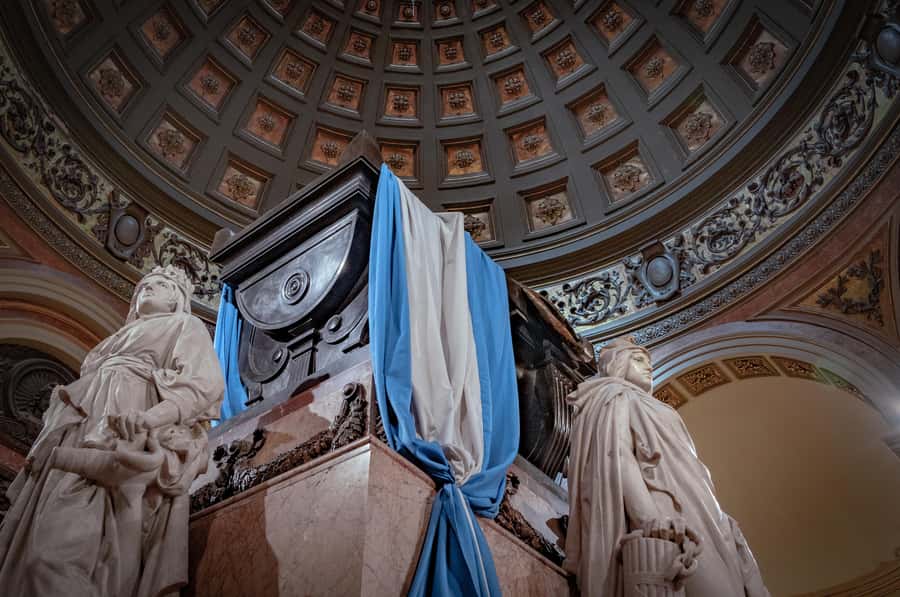
Meet your guide near the flagpole at Plaza de Mayo. This is the right place to begin because several of Buenos Aires’ most important buildings face the square, allowing you to understand the city through its politics, faith, government, and public life in one compact area.
You will not simply walk from one photo stop to another. The value here is the connection between the buildings. Casa Rosada represents national government, the Cathedral represents the city’s Catholic tradition, the Cabildo recalls colonial administration, and the square itself has long been a key gathering place.
The setting is also practical. You can quickly get your bearings in central Buenos Aires before deciding which buildings deserve a longer independent visit later.
A few more Buenos Aires trips to weigh up
- Nazis in Buenos Aires: a historical walking tour
★ 4.9 · 193 reviews - San Telmo: Historical Guided Tour with Street Food & Drinks
★ 5.0 · 87 reviews - Buenos Aires: La Boca Art and History Walking Tour
★ 4.8 · 55 reviews
The former convent and the city’s changing center
The tour begins at the Central Bank of the Argentine Republic, a building that once housed the San Ramón Nonato Convent. That change of use gives you a useful glimpse into Buenos Aires’ layered past. A financial institution occupies a site with religious origins, and the building’s earlier purpose helps explain how much the center has changed over time.
This is a good early stop because it moves beyond the usual highlights. You are not only looking at a famous government façade. You are being shown how older institutions were absorbed into the growing city.
The route then reaches the Cultural Center, formerly the grand central post office palace. The site is also linked with the second founding of Buenos Aires and is marked by the Garay Monument. From here, you get a notable view toward the historic center.
Allow yourself a moment for photographs, but pay attention to the guide’s explanation of the place. The view matters because it helps you see the center as a connected district rather than a series of separate buildings.
Casa Rosada and the political heart of Argentina
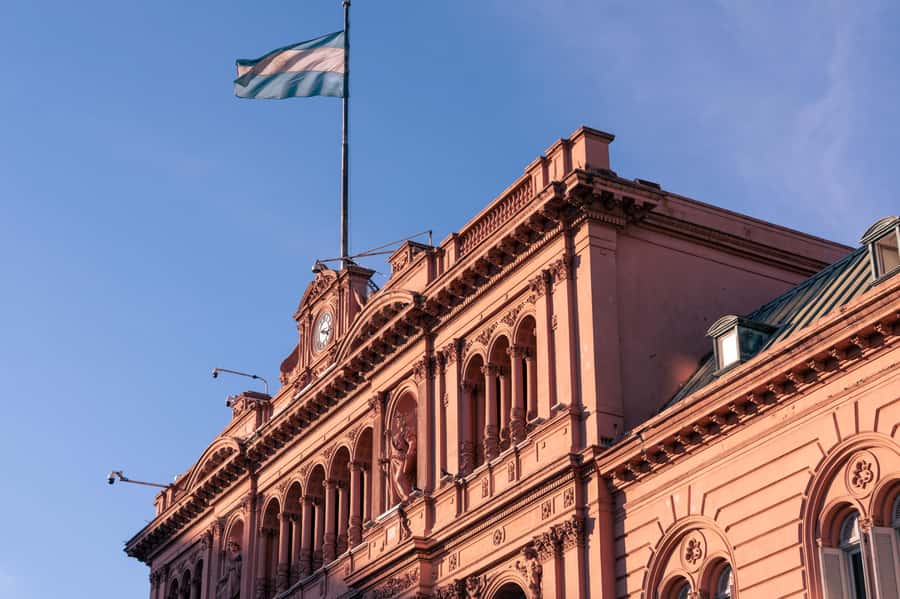
Casa Rosada is the tour’s most recognizable stop. The pink government palace is an obvious photo subject, but the guide gives it more meaning by placing it within the story of Argentina’s national government and Plaza de Mayo.
The scheduled stop is about 10 minutes, so expect a focused explanation and a photo opportunity rather than a long interior visit. You should not book this tour expecting a full tour of every room inside Casa Rosada. Its role here is to anchor the walk and provide context for the surrounding buildings.
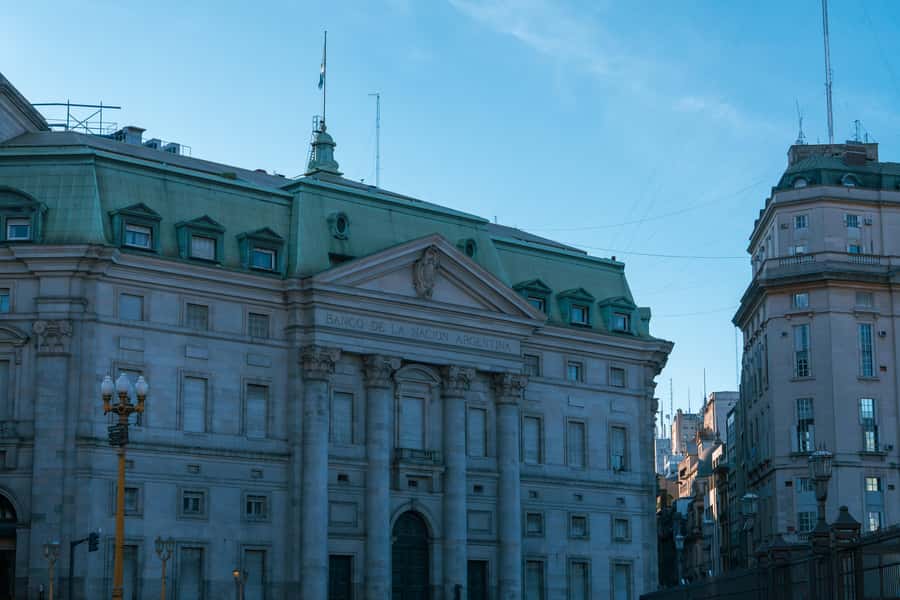
The Bank of the Argentine Nation adds another striking façade to the route. Together, Casa Rosada, the bank, and the square show the scale of the institutions gathered in this part of town. I like this sequence because it lets you compare political and financial power through architecture, without requiring a separate cross-city journey.
If you enjoy civic history, this part will likely be the strongest section of the walk. If you prefer markets, food, or neighborhood life, the route may feel formal, since much of the focus is on public buildings and national symbols.
The Bicentennial Museum’s presidential relics
The Bicentennial Museum is scheduled for about 20 minutes. It houses objects connected with past presidents and includes notable artworks, giving the outdoor walk an indoor pause.
This stop adds value because it supplies physical objects to support the stories you hear in the square. Buildings can tell you where power operated, but museum pieces can show how that power was remembered and presented.
You should still keep your expectations realistic. Twenty minutes is enough for a guided introduction and a look at selected displays, not a slow museum visit. If the museum interests you greatly, consider returning on your own if opening arrangements allow. The tour gives you a foundation, then helps you decide where to spend more time later.
Same city, a completely different kind of day:
- Buenos Aires Hop-On Hop-Off Bus, Free Walking Tours & Discounts
★ 4.5 · 2,218 reviews - Buenos Aires: Piazzolla Tango Show with Optional Dinner
★ 4.4 · 2,122 reviews - Buenos Aires: City Highlights Guided Tour with Transfer
★ 4.7 · 1,946 reviews - Buenos Aires: Hop-On Hop-Off City Bus Tour
★ 4.2 · 1,855 reviews
The Metropolitan Cathedral and Argentina’s religious story
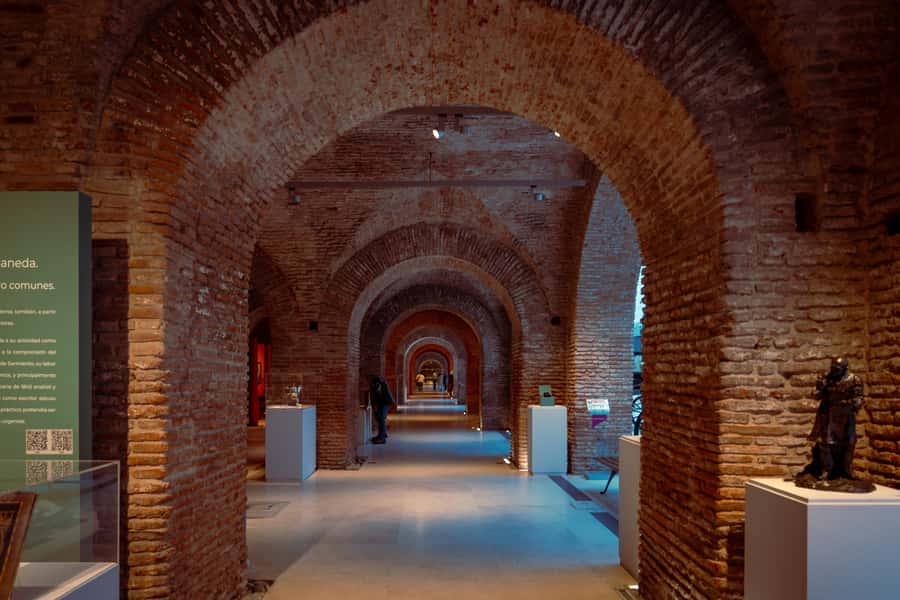
The Buenos Aires Metropolitan Cathedral receives about 20 minutes, including a visit, guided explanation, and sightseeing. Its location beside Plaza de Mayo makes it one of the easiest major buildings to add to a central-city walk.
The Cathedral matters for more than its façade. It is one of the city’s major religious landmarks, and its presence beside government buildings shows how closely civic and religious life developed around the square.
This is one of the places where Miguel’s style can make a difference. Several bookings praise his clear explanations, patience, and ability to adjust to questions. One visitor with limited Spanish found that he adapted well enough to make the history easy to follow. The tour is officially Spanish-language, though, so do not assume English guiding is included simply because Miguel helped one English-speaking booking.
The Cathedral is also a useful shelter from the visual overload of the square. After several large façades and monuments, an interior visit changes the pace and gives you a quieter setting for the next part of the tour.
The Cabildo and the city before independence
The Cabildo of Buenos Aires is another 20-minute visit. This building served as an important center of colonial administration and now functions as a museum devoted to the city and the nation.
I find the Cabildo especially useful for first-time visitors because it connects Buenos Aires with the period before modern Argentina took shape. Casa Rosada can make the city’s political story feel very current, while the Cabildo pushes you further back into the colonial period.
Expect a concise guided look rather than an entire museum afternoon. The schedule gives you enough time to understand why the building matters, see key areas, and ask a few questions. You will need to save detailed browsing for another visit.
The stop also works well beside the Cathedral. These buildings sit close together, but they represent different kinds of authority. The tour’s strength is in making those contrasts clear instead of treating the square as a collection of pretty façades.
Manzana de las Luces and the route beyond the square
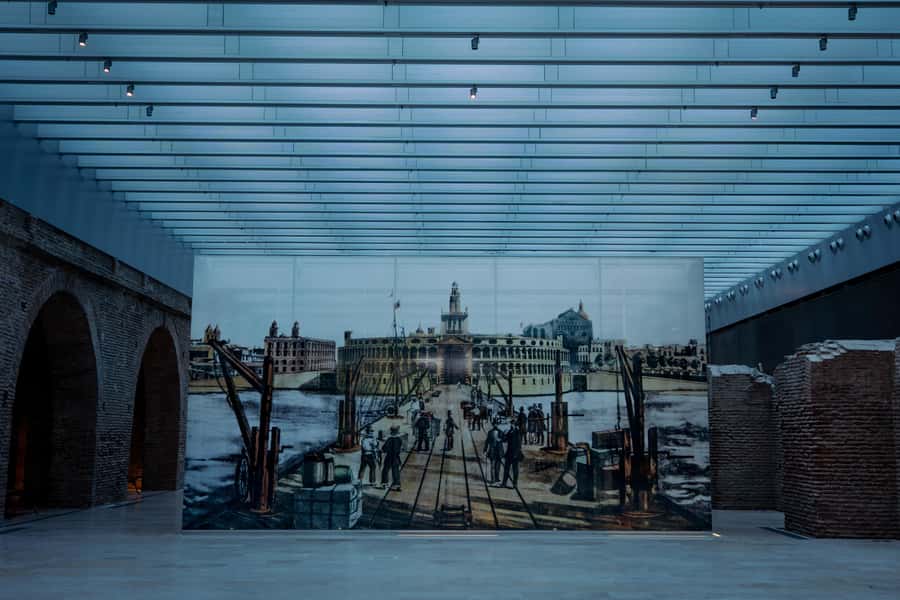
Manzana de las Luces is the final named stop in the detailed route and receives around 20 minutes. Its name refers to the Block of Enlightenment, and the site is associated with older educational and religious institutions in Buenos Aires.
The attraction is less about one single postcard view and more about the feeling of an older urban block shaped by learning, faith, and public life. It gives the tour a useful change of tone after the national symbols around Plaza de Mayo.
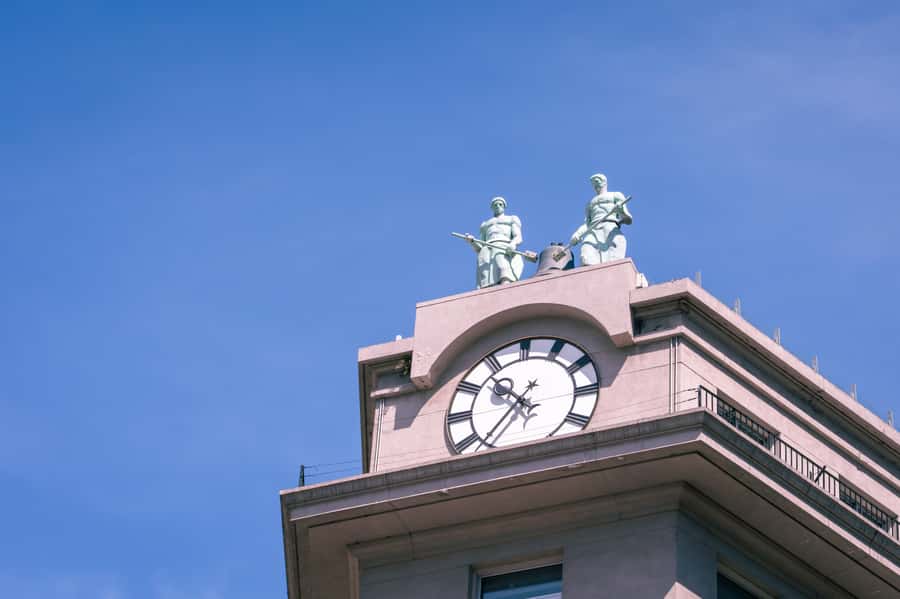
The broader route also includes the City Legislature, known for its mixed architectural styles and tall clock. The Ministry of Defense building adds a sense of scale, with views across the central area, while the National Customs House and Comic Strip Plaza bring the walk toward its conclusion.
These later stops are important because they widen your picture of Buenos Aires. You are not left with only Casa Rosada and the Cathedral. You also see working civic buildings, administrative landmarks, and public spaces with a lighter cultural angle.
The Comic Strip Plaza is a particularly different ending. After churches, museums, banks, and ministries, a space connected with Argentine comic culture gives the route a more playful final note.
What the 150-minute schedule feels like
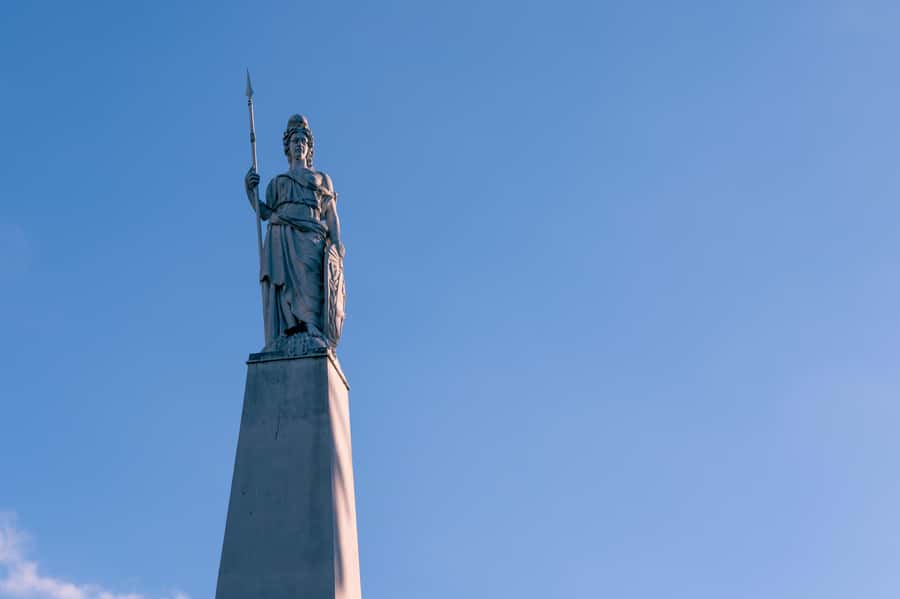
The advertised duration is 150 minutes, or two and a half hours. The listed stops account for roughly 100 minutes, leaving the rest for walking, transitions, explanations, and questions.
That pacing is sensible for a central walking tour. You get enough time at the main sights to understand them without spending an entire day in one district. Still, this is not a leisurely photography walk. Several stops are short, and you may need to keep moving to stay with the group.
I would choose this experience early in your Buenos Aires visit. It can give you a mental map of the center, help you spot buildings you want to revisit, and provide background before you explore on your own.
The route takes place outdoors for much of its duration. A weather forecast check is worthwhile, and you should wear shoes that can handle substantial walking. Carry water, especially in warm weather, and bring a hat and sunscreen.
What Miguel adds to the experience
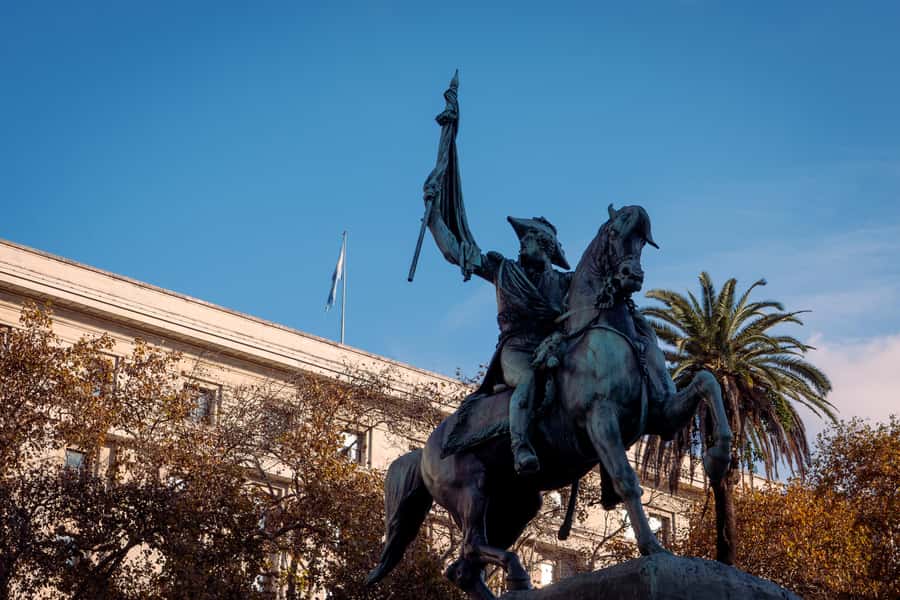
The guide is Miguel, and his role is one of the clearest reasons to consider this tour. He is praised for strong command of Buenos Aires history, clear explanations, kindness, flexibility, and attention to questions.
One useful detail is that he sometimes goes beyond the most obvious route or shows places that other guides may not include. That suggests the walk is not limited to reciting dates beside Casa Rosada. You may get extra context about buildings and city customs along the way.
He has also demonstrated a friendly, personal touch, including showing one booking how to drink mate. Do not book solely expecting a mate demonstration, since it is not listed as a guaranteed feature. Still, it hints at a guide who connects formal history with everyday Argentine culture.
The language point deserves care. The official language is Spanish. One booking was accidentally made in Spanish rather than English, and Miguel provided the tour in English for that group. That is encouraging, but it does not establish English as a standard option. If you need English, ask before paying.
Is $20 good value?
At $20 per person, this is a strong-value introduction to central Buenos Aires. You receive 150 minutes with a live guide and see several of the city’s major landmarks, plus buildings and public spaces you might otherwise pass without understanding.
The value is greatest if you want context. A self-guided walk through Plaza de Mayo is easy enough, but you may not know why the old convent matters, what the Garay Monument marks, or how the Cathedral, Cabildo, and Casa Rosada fit together.
The price does not include food, drinks, hotel pickup, or hotel drop-off. That is normal for a central walking tour, and meeting in Plaza de Mayo keeps the cost down. Plan your own route to the flagpole and arrange something to eat before or after the walk.
For a visitor with only a short stay, the tour offers an efficient use of time. For a history-minded visitor, it can also prevent the common mistake of seeing the center only as a photo backdrop.
Who should book this walk?
I would recommend it to first-time visitors, architecture fans, history enthusiasts, and anyone who wants a guided introduction before exploring central Buenos Aires alone.
It also suits people who like asking questions. Miguel’s flexibility and willingness to adapt are repeatedly praised, and that is more useful than a rigid speech when you want to understand a particular building or period.
The tour is less suitable if you want a food-focused experience, a broad neighborhood tour, or a slow museum visit. It is also not suitable for wheelchair users or people with mobility impairments, and the amount of walking may be tiring if you are not prepared.
Spanish speakers should find the language arrangement straightforward. English speakers should confirm the language in advance. The route’s content is strong enough to justify booking, but only if you can follow the guide comfortably.
Booking flexibility and practical details
You can cancel up to 24 hours before the start for a full refund, and you can reserve now and pay later. That is useful when your Buenos Aires plans depend on weather or changing arrival times.
Because the tour is outdoors, poor weather could affect your enjoyment. Wear suitable clothing and bring water. Comfortable walking shoes are not optional advice here, since the route covers several blocks and includes multiple stops.
Meet near the flagpole at Plaza de Mayo, not at your hotel. Give yourself enough time to find the guide and arrive ready to walk. The tour does not include transport, meals, or drinks.
Should you book the Buenos Aires landmarks tour?
Book it if you want a compact, affordable introduction to Buenos Aires’ historic center and you are comfortable walking and listening in Spanish. Miguel’s clear explanations, personal manner, and local knowledge give the tour more substance than a quick photo circuit.
I would be especially inclined to choose it near the start of a Buenos Aires stay. You will see Casa Rosada, the Cabildo, the Cathedral, and the Bicentennial Museum, then gain enough context to revisit the places that catch your interest.
Skip it if you need wheelchair access, dislike outdoor walking, or require guaranteed English guiding without confirming it first. For everyone else, $20 buys a well-focused look at the city’s political, religious, and cultural center.
FAQ
Where does the tour begin?
Meet your guide near the flagpole at Plaza de Mayo.
How long does the tour last?
The tour lasts 150 minutes, or two and a half hours.
What language is the tour in?
The listed tour language is Spanish. Miguel adapted one booking into English, but you should confirm English availability before reserving.
What landmarks are included?
The route includes Casa Rosada, the Garay Monument, the Bicentennial Museum, the Buenos Aires Metropolitan Cathedral, the Cabildo of Buenos Aires, and Manzana de las Luces. It also covers other central landmarks, including the Bank of the Argentine Nation, the City Legislature, the Ministry of Defense, the National Customs House, and Comic Strip Plaza.
Is hotel pickup included?
No. You must make your own way to Plaza de Mayo, and hotel drop-off is not included.
Are food and drinks included?
No. Food and drinks are not included.
What should I bring?
Bring comfortable walking shoes, a hat, sunscreen, and water. Check the forecast and dress for outdoor conditions.
Is the tour suitable for wheelchair users?
No. The experience is not suitable for wheelchair users or people with mobility impairments.
Can I cancel for a refund?
Yes. You can cancel up to 24 hours in advance for a full refund. You can also reserve now and pay later.
Just added around Buenos Aires
- Tango Show at El Querandi with optional Dinner★ 4.2 · 3 reviews
- Wine Tasting in Buenos Aires★ 4.2 · 4 reviews
- Walking Tour: Buenos Aires bookstores★ 4.3 · 12 reviews
- Velez Sarsfield Football Match★ 5.0 · 3 reviews
- Unique Tigre and Delta Private Day Cruise Navegation★ 5.0 · 3 reviews
- Tour Buenos Aires in one day on Electric Scooters★ 5.0 · 33 reviews
- Private Underground Tango Immersion★ 5.0 · 31 reviews
- Transfers from or to the airport In Argentina Your Best Choice★ 5.0 · 28 reviews
Historical Tours, compared.
Nazis in Buenos Aires: a historical walking tour
Read our review →
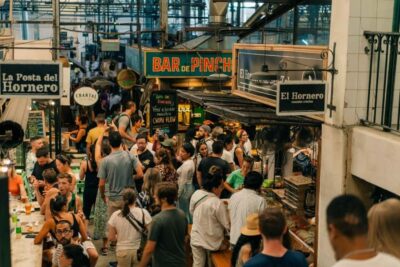
Historical Guided Tour with Street Food & Drinks
Read our review →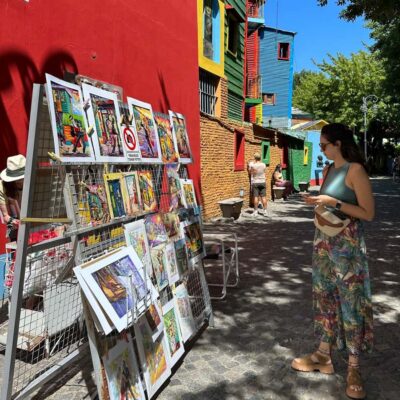
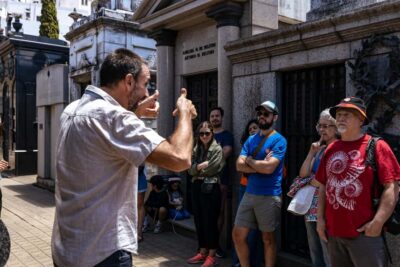
Recoleta Cemetery – Small Group Tour of History & Secrets
Read our review →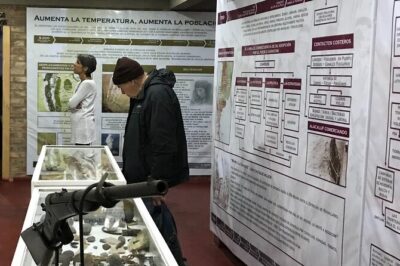
Browse the lists this tour appears in