
Reviewed · RECOLETA CEMETERY TOURS
Recoleta Cemetery – Small Group Tour of History & Secrets
Recoleta Cemetery is less a quiet graveyard than a stone-built chapter book of Buenos Aires. Behind its gates, you’ll find grand mausoleums, family feuds carved into marble, unsettling legends, and the much-visited tomb of Evita Perón. The tour brings those stories together instead of leaving you to guess what the statues and names mean.
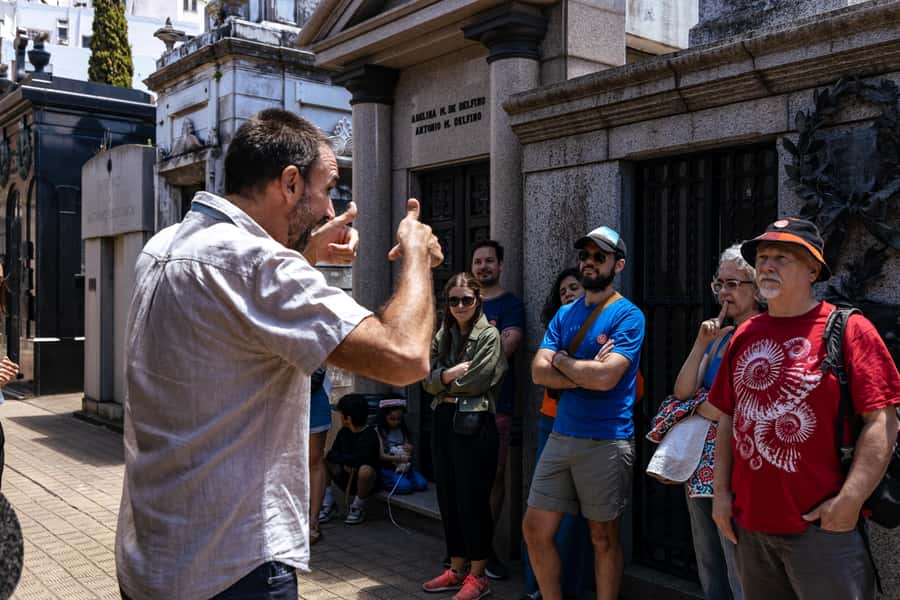
I especially like the small group limit of 15, which gives you room to ask questions, and the way the tour connects cemetery stories to the wider history of Buenos Aires and Argentina. I also like the practical care shown by guides such as Esteban Nigro, who has found shady spots in hot weather, supplied umbrellas during rain, and sent clear meeting instructions by WhatsApp.
The main drawback is simple: the 22,600 Argentine peso entrance ticket is not included in the $49 tour price. You also spend 150 minutes walking and standing, so comfortable shoes and sensible expectations matter.
In This Review
- Key points to know before you book
- Why Recoleta Cemetery works best with a guide
- Meeting at Plazoleta Chabuca Granda
- Inside the cemetery: marble, ambition, and family memory
- The stories that give the monuments a pulse
- Evita Perón’s tomb and the politics of memory
- What the 150-minute pace feels like
- The guide makes the difference
- Is $49 good value when the ticket costs extra?
- Who should take this cemetery tour?
- Should you book Recoleta Cemetery: Small Group Tour of History & Secrets?
- FAQ
- Where does the Recoleta Cemetery tour meet?
- How long does the tour last?
- Is the cemetery entrance fee included?
- Is Evita Perón’s tomb included?
- What language is the tour conducted in?
- Can I cancel the booking or pay later?
Key points to know before you book
- Evita Perón’s family mausoleum: Visit the cemetery’s most sought-after tomb and learn why it draws such steady attention.
- Stories carved in marble: Hear about a bitter couple, a woman said to have been buried alive, and other unsettling tales.
- European artistic influence: See mausoleums commissioned by wealthy Argentine families and designed in styles imported from Europe.
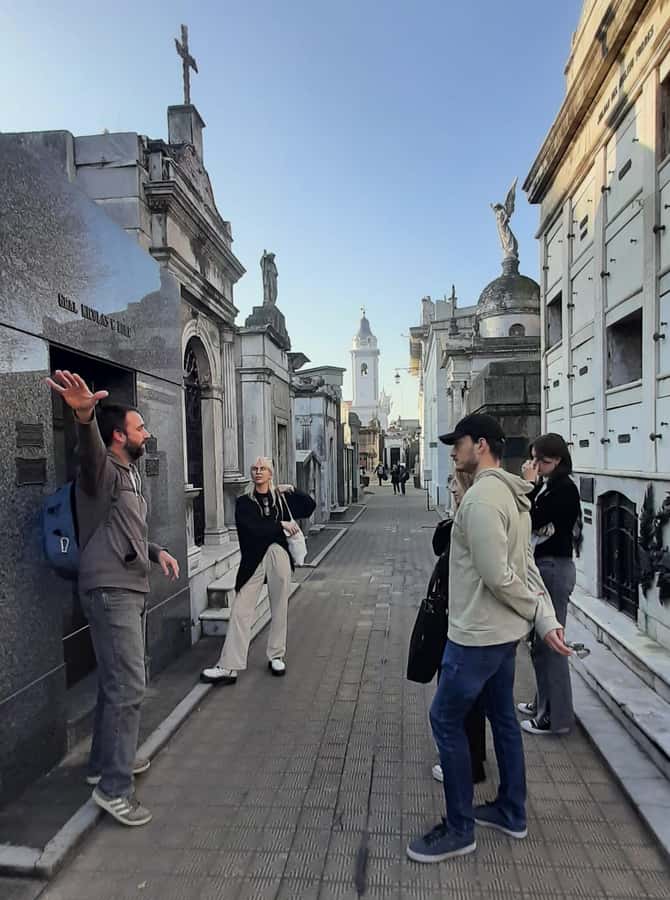
- A genuinely small group: The tour never exceeds 15 people, with some departures forming groups of only four to six.
- Strong English storytelling: Esteban Nigro is praised for clear English, humor, historical detail, and an easy welcome for questions.
- Outdoor planning matters: The cemetery ticket costs extra, and shade, rain protection, comfortable shoes, and respectful behavior all affect your visit.
Why Recoleta Cemetery works best with a guide
You can walk into Recoleta Cemetery on your own, but the names and monuments do not explain themselves. A printed map may help you locate a few famous tombs, yet it gives little sense of the people, politics, religion, family rivalries, and social ambition behind the stone.
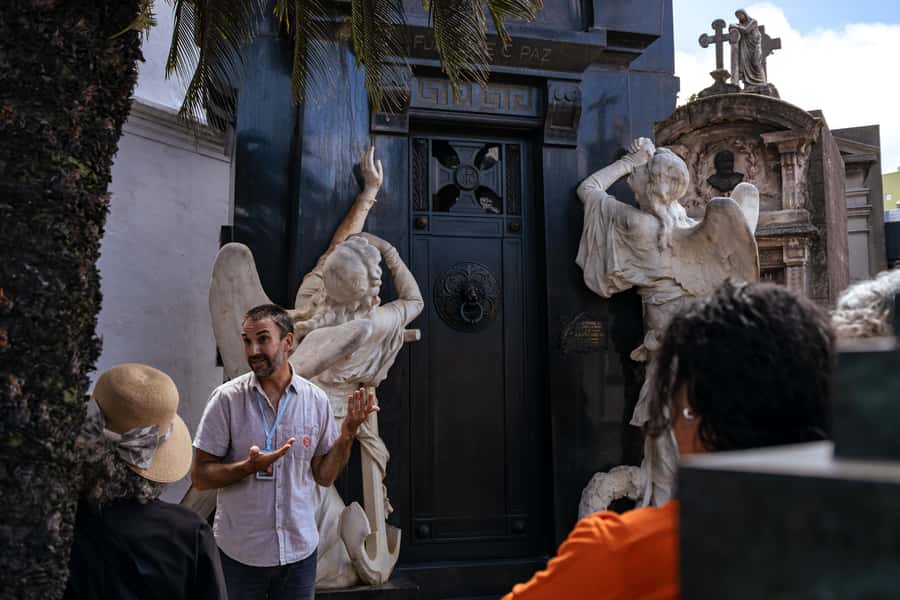
That is where this tour earns its price. You are not simply shown a mausoleum and told who is buried there. You get the story around it, along with clues about the architecture and sculpture. The cemetery becomes a record of how Argentina’s elite lived, competed, worshipped, and wanted to be remembered.
The experience focuses on storytelling rather than a dry list of dates. Esteban Nigro is repeatedly praised for his clear English, strong voice, humor, and ability to invite questions without losing the group’s pace. Other feedback names Ivana and Sebastian as guides, so the exact guide may vary, but the experience is presented in English.
I find the connection to Buenos Aires especially useful. Recoleta Cemetery is not treated as an isolated attraction. The people buried there help explain the city’s political life, class structure, cultural habits, and relationship with Europe. If you have only a loose grasp of Argentine history, this gives you a readable way in.
More recoleta cemetery tours in Buenos Aires:
- Buenos Aires: La Recoleta Cemetery Guided Tour in English
★ 4.8 · 1,359 reviews - Buenos Aires Bike Tour: North Districts, Recoleta and Palermo
★ 4.5 · 91 reviews - Buenos Aires: Recoleta and Retiro Tip Based Walking Tour
★ 4.7 · 50 reviews
Meeting at Plazoleta Chabuca Granda
The tour begins outside the cemetery at Plazoleta Chabuca Granda, near the La Biela bar at Avenida Presidente Manuel Quintana 596. If you arrive by taxi or Uber, telling the driver you are going to La Biela should make the location easier to find.
The meeting point is worth taking seriously. You do not meet inside the cemetery gates, and the instructions specifically direct you to the outside meeting area. The guide wears a blue cap so you can identify him more easily, and advance WhatsApp communication may provide the final directions and reminders.
Give yourself enough time to arrive without rushing. Recoleta is a popular part of Buenos Aires, and finding the correct side of the cemetery is less stressful when you are not racing the start time. Once the group gathers, the guide leads you into the cemetery for the main 2.5-hour walk.
Inside the cemetery: marble, ambition, and family memory
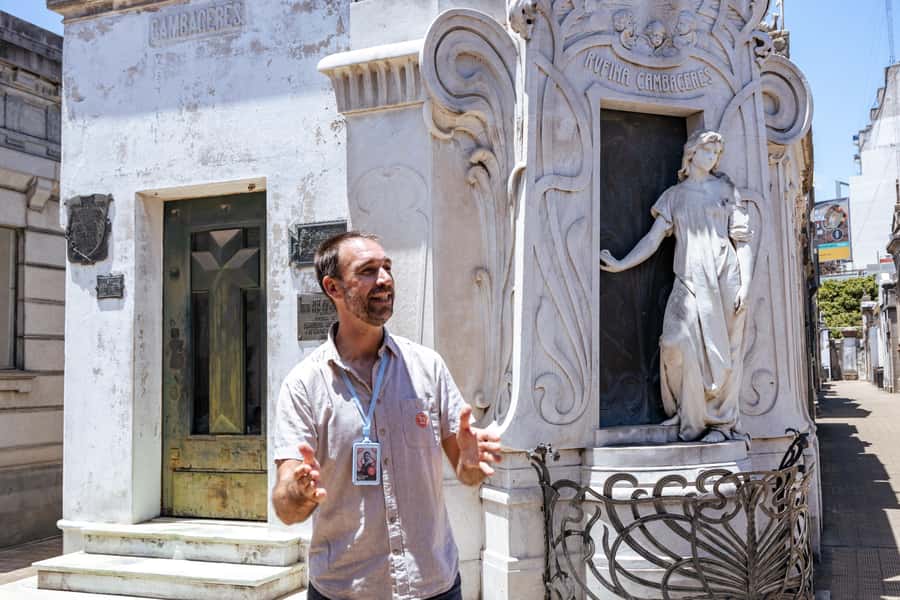
Recoleta Cemetery dates to the nineteenth century, and the tour places you in the world of the 1880s, when Buenos Aires families with money and influence commissioned imposing monuments for the dead. These were not modest markers tucked into a lawn. They were carefully planned family spaces, often built to project status long after the owners were gone.
The mausoleums reflect European artistic tastes and craftsmanship. You can expect attention to facades, statues, reliefs, metalwork, and the way each structure presents the family name. The tour explains how these imported styles fit the ambitions of Argentina’s wealthiest families.
This is one of the strongest reasons to take the guided walk. Without context, the cemetery can feel like a maze of similar stone buildings. With the guide, you begin to notice how the structures differ and what those differences may say about power, faith, grief, and social rank.
The setting also produces an interesting contrast. The cemetery is an active place of mourning, yet it is filled with art and public curiosity. You are there to learn, but people may also be visiting family graves. That requires a calm tone and some restraint. Photography is allowed, but you should keep it discreet and avoid treating the site like a theatrical backdrop.
The stories that give the monuments a pulse
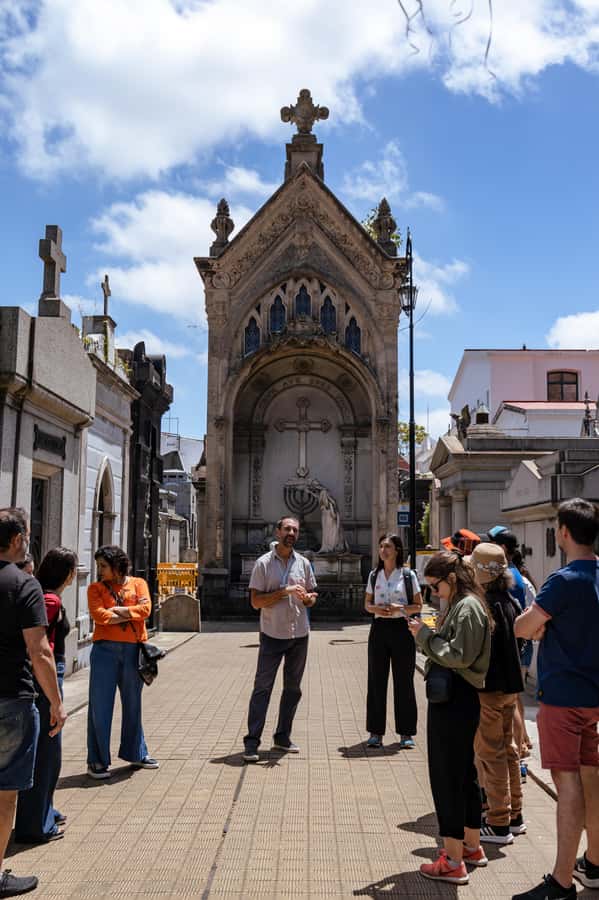
The tour’s central appeal is the human drama behind the marble. One featured story concerns a couple whose bitterness was recorded in stone for eternity. That kind of tale makes the cemetery feel personal rather than grand only for grandness’s sake.
You also hear the haunting legend of a woman said to have been buried alive. The story adds a darker edge, but the guide places these legends alongside history, art, and cultural context. That balance matters. You get the eerie material many people hope for from a cemetery tour without losing the larger picture.
Expect a mix of documented lives and local legends. A good guide helps you understand the difference, and the feedback about Esteban points to an approach that welcomes questions and supplies context rather than rushing from one dramatic anecdote to the next.
The stories also make the tour accessible to families. One family specifically praised the way the guide explained the subject so a child could follow along. Still, parents should remember that the setting includes death, burial, and ghostly legends. Children who enjoy history and mystery may be absorbed; sensitive children may prefer a gentler attraction.
A few more Buenos Aires trips to weigh up
- Nazis in Buenos Aires: a historical walking tour
★ 4.9 · 193 reviews - San Telmo: Historical Guided Tour with Street Food & Drinks
★ 5.0 · 87 reviews - Buenos Aires: La Boca Art and History Walking Tour
★ 4.8 · 55 reviews - Buenos Aires: Historic Buenos Aires Landmarks & Icons Tour
★ 4.9 · 37 reviews
Evita Perón’s tomb and the politics of memory
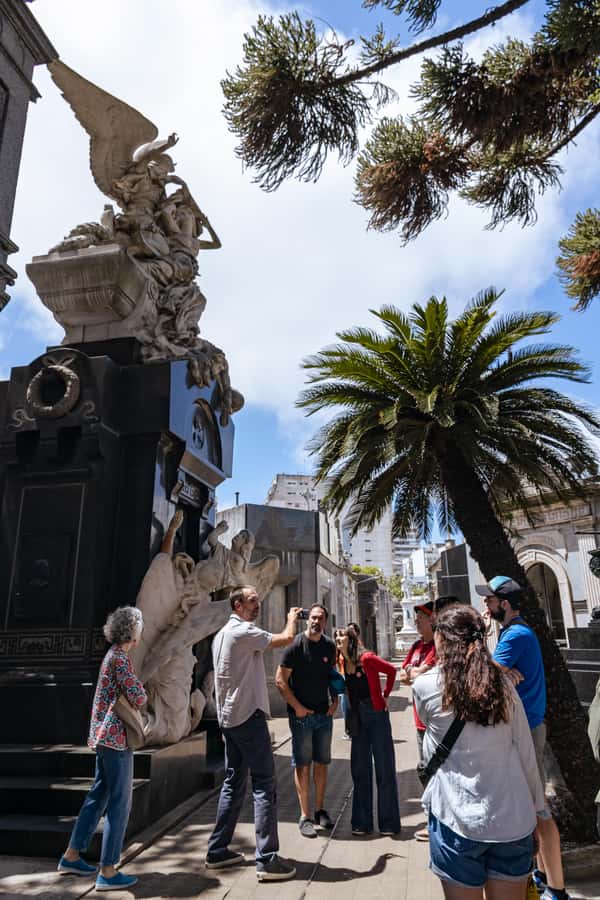
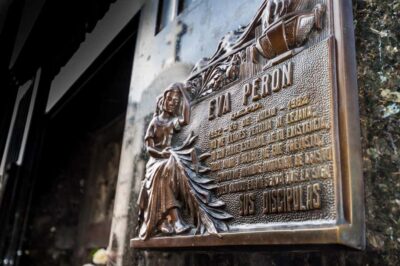
Evita Perón’s final resting place is the cemetery’s best-known stop. Her mausoleum is one of the most visited, and the tour includes it rather than leaving you to search through the lanes alone.
The value here is not just seeing a famous name. Evita remains an important figure in Argentine public life, and her tomb gives the guide a chance to explain why one burial place can carry so much political and emotional weight. You learn about her place in the country’s story while also seeing how a family mausoleum functions within Recoleta’s private architecture.
Expect this stop to attract extra attention. It is likely to be the point many people recognize from photographs, so the guide’s explanation helps turn a quick look into a more meaningful part of the visit. If you want a tour devoted only to Evita, this is not that experience. Her tomb is one part of a wider walk through the cemetery’s art, families, legends, and history.
What the 150-minute pace feels like
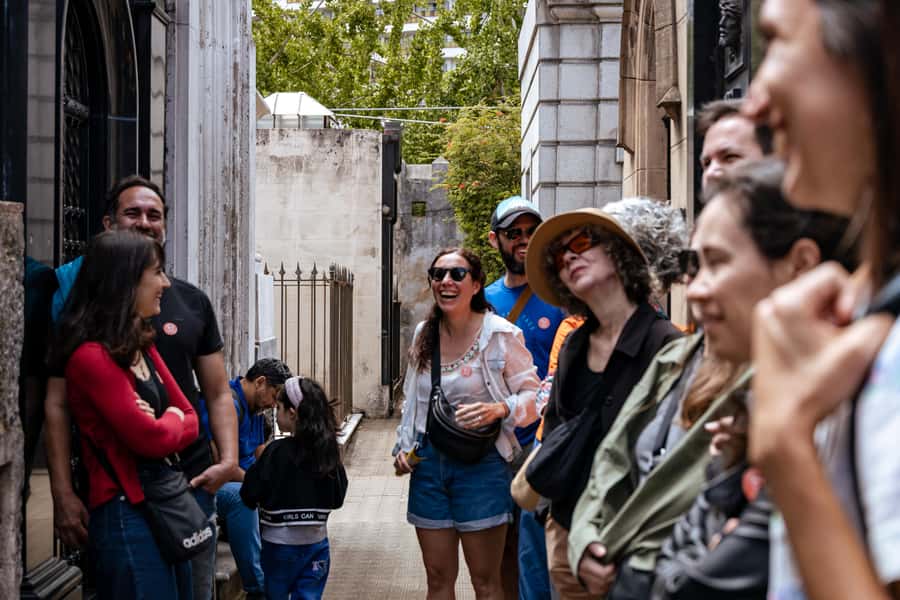
Two and a half hours is a useful length for this site. A shorter walk could cover Evita and a few famous names, but it would leave little time for the stories and architectural details that make Recoleta worth visiting. This tour has enough time to build a sense of place without turning into an all-day commitment.
You will walk and stand among the mausoleums, so comfortable shoes are important. The cemetery may expose you to sun, heat, or rain depending on the day. Several accounts describe Esteban looking for shade during stops, and one describes him providing umbrellas during a sudden rainstorm. Those details suggest a guide who pays attention to conditions rather than delivering the same talk without adjustment.
That said, shade and weather protection cannot be guaranteed at every point. If the forecast is hot, bring water and sun protection. If rain is possible, carry a light layer or umbrella if you have one. The tour is listed as wheelchair accessible, but you should still consider that it is a long walking experience through a cemetery, with repeated stops and outdoor surfaces.
The small group format helps the pace. A group of four to six allows direct questions and makes it easier to hear the guide. Even at the maximum of 15, this is more personal than a large coach-style outing. You are less likely to feel lost in a crowd, and the guide can respond to the interests of the group.
The guide makes the difference
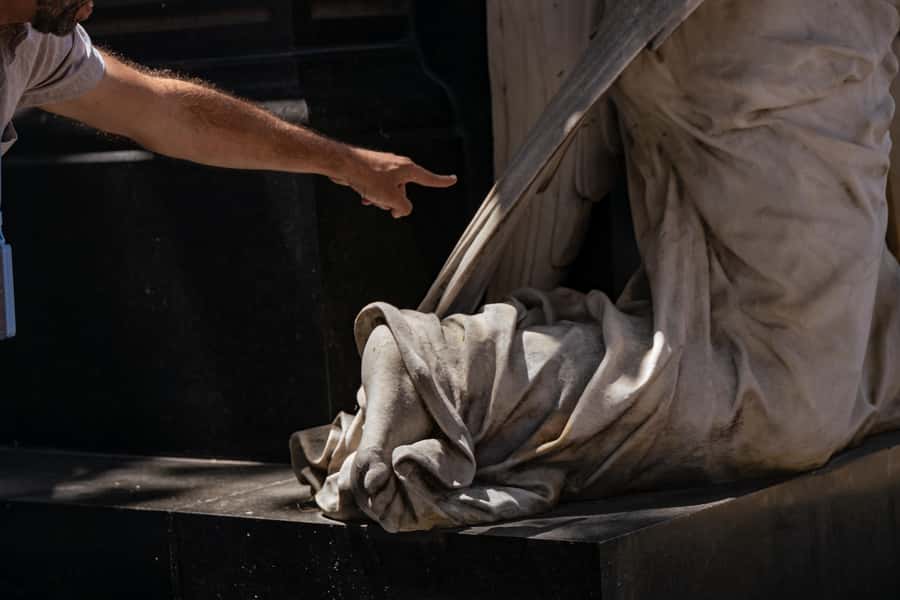
The strongest part of this experience is the guiding. Esteban is described as enthusiastic, funny, attentive, and deeply informed about both the cemetery and Buenos Aires. Several accounts point to his storytelling as the reason the tour became a highlight of the city visit.
That praise is specific. He learns names and backgrounds, encourages questions, projects his voice well, and adjusts stops for shade. He also appears to coordinate his route with other groups so you are not always standing in the same crowded place. These are small choices, but they shape the day.
He is also described as helpful beyond the cemetery, offering recommendations and broader cultural context. That can be useful early in a Buenos Aires visit, when you are still deciding what to eat, see, or explore next. Do not book this expecting a silent architecture lesson. The experience depends on a lively spoken presentation.
The exact guide can differ. Ivana and Sebastian are also named in the feedback, with both receiving strong praise for historical insight and presentation. The provider is Esteban_Nigro, and the supplied information identifies English as the tour language.
Is $49 good value when the ticket costs extra?
The tour costs $49 per person, with a separate cemetery entrance fee of 22,600 Argentine pesos. That extra charge is the one clear irritation in an otherwise straightforward plan. One piece of feedback specifically suggests that paying the cemetery ticket in advance with the tour would improve the experience.
Look at the total cost rather than the headline price. You are paying for a 150-minute guided walk, English commentary, a small group, historical interpretation, and access to stories you are unlikely to get from the basic map alone. If you enjoy history, architecture, biography, or unusual local stories, the guide adds real value.
If you are content to wander, take photographs, and see Evita’s tomb without much explanation, you may find the cost harder to justify. Recoleta’s visual appeal is available without a tour, but the meaning behind the monuments is much harder to reconstruct on your own.
The reserve-now-and-pay-later option also helps if your schedule is still shifting. Free cancellation is available up to 24 hours before the tour for a full refund. Those terms make it easier to reserve a place while keeping your itinerary flexible.
Who should take this cemetery tour?
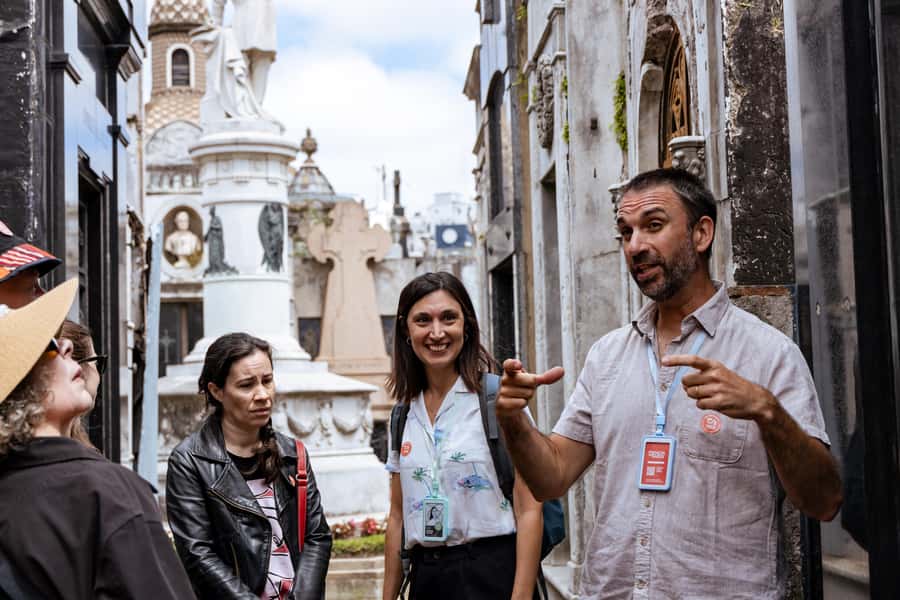
I would put this high on the list for first-time visitors who want a clear introduction to Buenos Aires history. It also fits people who enjoy art, architecture, politics, biography, or stories with a slightly spooky turn.
Families can take it too, especially if children enjoy mysteries and historical characters. The guide’s ability to explain complex material in an accessible way is a plus, but parents should prepare children for the subject matter and the respectful tone required in an active cemetery.
This is less suited to you if you dislike walking, standing, or listening to long-form storytelling. It is also not a photography-first outing. You can take pictures, but the focus is learning, and discretion is expected.
For the best experience, arrive ready to pay the separate entrance fee, wear comfortable shoes, and bring protection from sun or rain. A small bottle of water is a sensible addition, even though it is not listed as an included item.
Should you book Recoleta Cemetery: Small Group Tour of History & Secrets?
Book it if you want Recoleta Cemetery to make sense rather than simply look impressive. The small groups, clear English, strong storytelling, and links to Buenos Aires history make the $49 fee reasonable for most history-minded visitors, even with the separate 22,600 peso entrance ticket.
I would be especially inclined to book with Esteban if you value a guide who answers questions, watches the weather, and brings energy to the subject. If your main goal is a quick look at Evita’s tomb, go independently and save the tour cost. If you want the family rivalries, legends, art, and social history behind the stone, this 150-minute walk is the better choice.
FAQ
Where does the Recoleta Cemetery tour meet?
The meeting point is outside the cemetery at Plazoleta Chabuca Granda. If you use a taxi or Uber, say you are going to La Biela at Avenida Presidente Manuel Quintana 596. The guide wears a blue cap for easier identification.
How long does the tour last?
The tour lasts 150 minutes, or 2.5 hours. Check availability for the departure times offered on your chosen date.
Is the cemetery entrance fee included?
No. The cemetery entrance ticket costs 22,600 Argentine pesos and must be paid separately from the $49 tour price.
Is Evita Perón’s tomb included?
Yes. The guided walk includes a visit to Evita Perón’s mausoleum, one of the cemetery’s most visited burial sites.
What language is the tour conducted in?
The tour is conducted in English with a live guide. Esteban Nigro is named as the main experience provider, and other guide names listed include Ivana and Sebastian.
Can I cancel the booking or pay later?
You can reserve now and pay later. You can also cancel up to 24 hours in advance for a full refund.
Just added around Buenos Aires
- Tango Show at El Querandi with optional Dinner★ 4.2 · 3 reviews
- Wine Tasting in Buenos Aires★ 4.2 · 4 reviews
- Walking Tour: Buenos Aires bookstores★ 4.3 · 12 reviews
- Velez Sarsfield Football Match★ 5.0 · 3 reviews
- Unique Tigre and Delta Private Day Cruise Navegation★ 5.0 · 3 reviews
- Tour Buenos Aires in one day on Electric Scooters★ 5.0 · 33 reviews
- Private Underground Tango Immersion★ 5.0 · 31 reviews
- Sailing with Wine Tasting in Buenos Aires★ 5.0 · 50 reviews
Recoleta Cemetery Tours, compared.
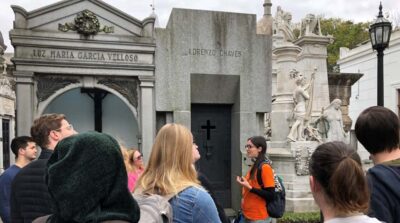

Buenos Aires Bike Tour: North Districts, Recoleta and Palermo
Read our review →

Cultural Experience by Bike around Palermo and Recoleta Max 6 ppl
Read our review →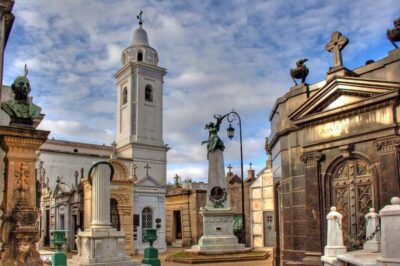
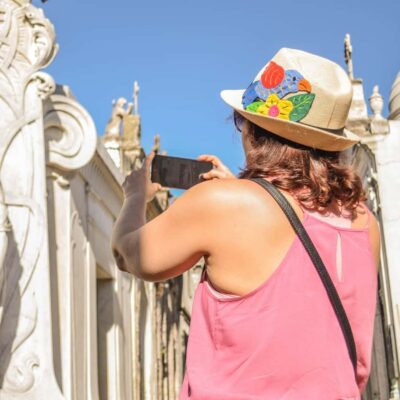

Full Day City Tour Buenos Aires, Recoleta Cemetery and Tigre
Read our review →Browse the lists this tour appears in