
Reviewed · WALKING TOURS
La Docta Free Walking Tour “Córdoba La Antigua”.
Córdoba’s old center packs four centuries into a walk of just 150 minutes. La Docta Free Walking Tour takes you from Plaza San Martín through churches, colonial buildings, the Jesuit quarter, and the city’s political heart, ending at Patio Olmos. It is a useful first look at Córdoba, especially if you want history with some humor rather than a dry parade of dates.
I like the pay-what-you-wish format, which keeps the entry cost tiny while letting you reward the guide based on the experience. I also like the guides’ lively approach. Tomas, also called Tomy or Thomas in the feedback, is praised for humor, strong English, and clear explanations, while Valeria has used games and group activities to get people talking.
The main consideration is time. Two and a half hours on foot, with several stops, can feel long in poor weather or if you want to linger inside each museum. Museum admission is not included, so this works best as an orientation walk rather than a full museum tour.
In This Review
- Key points at a glance
- Why this is a good first walk in Córdoba
- Plaza San Martín and the city’s opening chapter
- The UNC Historical Museum and Jesuit Manzana
- Cabildo de Córdoba and the Cathedral
- The Jesuit Crypt below the city
- The Marquis of Sobremonte’s house
- The Society of Jesus Church
- Monserrat and Córdoba’s academic character
- The guides make the difference
- Local sounds, tastes, and a social pace
- What the $0.50 price really means
- Timing, walking comfort, and practical advice
- Who should book this Córdoba walking tour?
- Should you book La Docta Free Walking Tour?
- FAQ
- How long does the La Docta Córdoba La Antigua tour last?
- Where does the tour meet?
- Where does the walking tour finish?
- Which languages are available?
- What sights are included?
- Are museum entrance fees included?
- What should I bring?
Key points at a glance
- Four centuries in one central walk: See colonial buildings and landmarks dating back more than 400 years.
- A smart first-day choice: The route gives you a useful map of Córdoba’s old center and ends near Patio Olmos.
- Strong guide-led experience: Tomas, Valeria, and Aldy are praised for humor, energy, clear English, and personal attention.
- Nine major sights: Visit the Cathedral, Cabildo, Jesuit Crypt, Sobremonte house, Jesuit church, Monserrat, and more.
- Small-cost reservation: A $0.50 deposit holds your place, then you decide what the tour was worth at the end.
- Culture beyond buildings: Planned local sounds, tastes, games, and conversation add a social touch.
Why this is a good first walk in Córdoba
Córdoba can seem scattered at first. Its grandest churches, colonial institutions, museums, and university buildings sit among ordinary city streets, modern shops, and busy central plazas. This tour helps you connect those pieces.
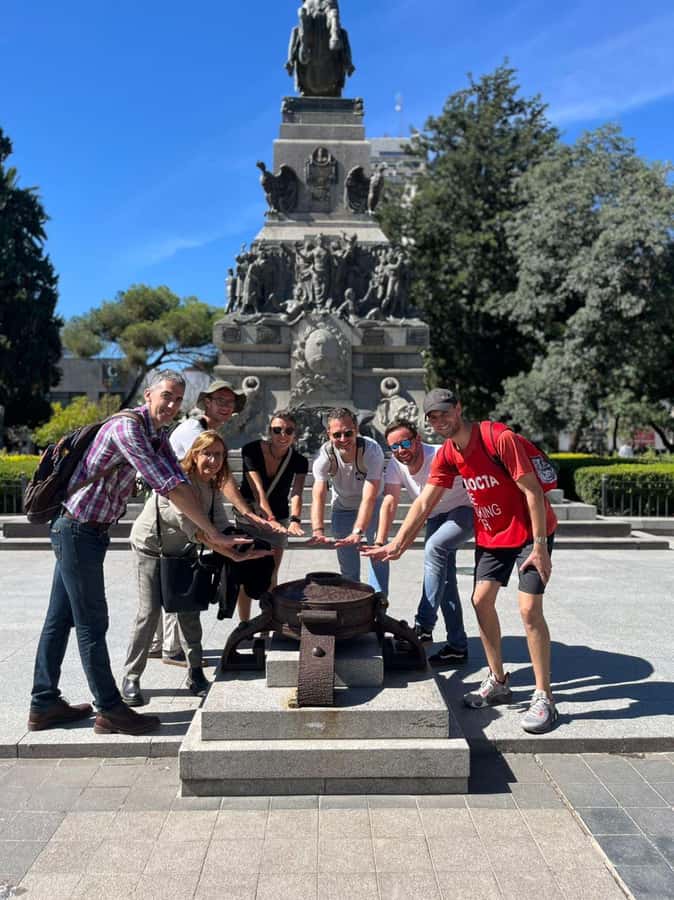
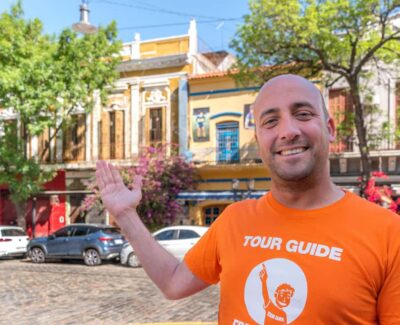
The route begins at the statue in Plaza San Martín, one of the easiest places to find in the center. Look for the guide in a red T-shirt. From there, you move through the city’s oldest core on foot, learning how Córdoba developed from its colonial founding to the present day.
I would take this tour near the start of a stay. You will hear the names of central landmarks, get a sense of walking distances, and finish near Patio Olmos shopping mall. That makes it easier to plan your next few hours, perhaps with lunch, shopping, or a return visit to a building you want to see more slowly.
The tour is offered in English and Spanish. The guides also appear comfortable adapting to mixed groups. One guide made a point of speaking with people in their native languages, which can make a big difference when a group includes several nationalities.
A few more Argentina trips to weigh up
- Buenos Aires Hop-On Hop-Off Bus, Free Walking Tours & Discounts
★ 4.5 · 2,218 reviews - Buenos Aires: La Boca Guided Walking Tour in English
★ 4.8 · 1,587 reviews - Nazis in Buenos Aires: a historical walking tour
★ 4.9 · 193 reviews
Plaza San Martín and the city’s opening chapter
Plaza San Martín is more than a meeting point. It gives the guide a natural place to begin Córdoba’s story, with the central civic and religious buildings close at hand.
Expect an introduction to the city’s foundation, its colonial period, and the people who shaped Córdoba. The tour’s value here is not just identifying buildings. It gives you a framework for understanding why the Cathedral, Cabildo, Jesuit institutions, and old family homes appear so close together.
Because this is a walking tour, you see how the historic center fits into modern Córdoba. You are not looking at isolated monuments from behind a coach window. You move between them through the same streets used by residents heading to work, school, shops, and offices.
The UNC Historical Museum and Jesuit Manzana
The route continues to the UNC Historical Museum and the Jesuit Manzana, or Jesuit Block. This is one of the key stops, with about 15 minutes set aside for a guided visit and photo stop.
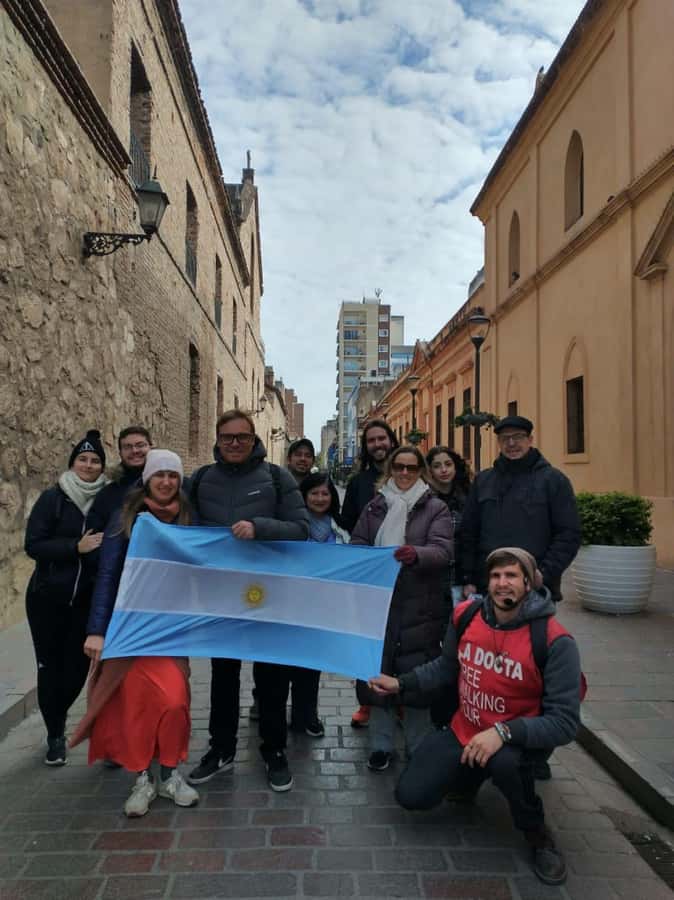
The Jesuit Block is central to Córdoba’s identity. It brings together religion, education, and colonial power in one compact area. The National University of Córdoba grew from this long academic tradition, and the buildings help explain why the city has such a strong connection with student life and learning.
You should pay attention to the architecture as well as the dates. One particularly observant visitor appreciated the old brickwork and archways, so this stop has plenty for anyone interested in construction, masonry, and historic design. If you like taking photographs, the 15-minute pause gives you time to frame the courtyards and façades, though it is not long enough for a slow architectural study.
Admission to museums is not included. That keeps the walking tour inexpensive, but it also means you may want to return later if a museum catches your interest.
Cabildo de Córdoba and the Cathedral
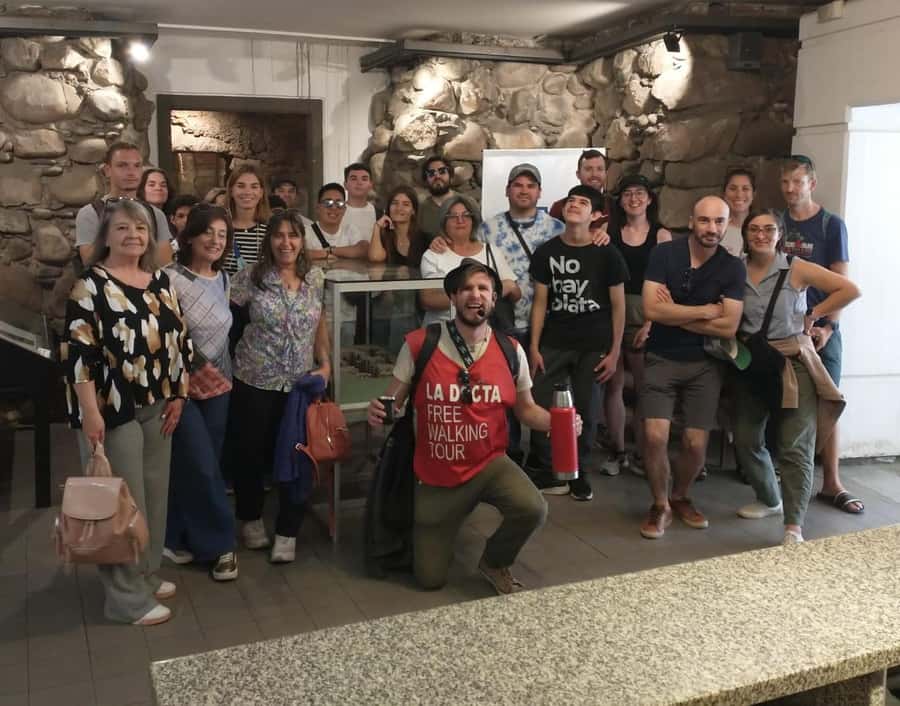
The Cabildo takes around 10 minutes. This former civic building helps explain how Córdoba was governed during the colonial period and how public power operated alongside the Church.
The stop is short, so expect an exterior-focused visit or a quick look rather than a long historical lecture inside. The guide’s role is to point out the building’s place in the city’s story and connect it with the surrounding square.
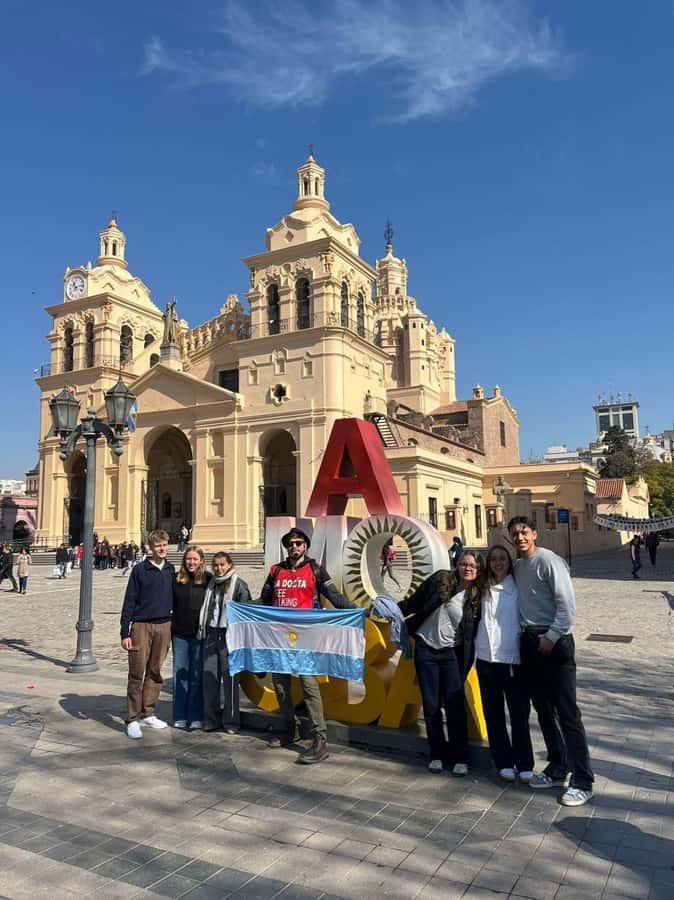
Nearby, the Cathedral of Córdoba, Nuestra Señora de la Asunción, receives another 10-minute stop. This is one of the visual anchors of the route, with the scale and decoration you expect from an important colonial-era church.
I like the way these two stops work together. The Cabildo represents civic authority, while the Cathedral represents religious authority. Seeing them near one another makes Córdoba’s colonial structure easier to understand than reading about each building separately.
The listing describes this part of the route with a hop-on hop-off label, but this is a walking experience. You do not board a vehicle. You walk between the central sights with the guide.
Same city, a completely different kind of day:
- El Calafate: Perito Moreno Glacier & Optional Boat Cruise
★ 4.7 · 2,586 reviews - Buenos Aires: Piazzolla Tango Show with Optional Dinner
★ 4.4 · 2,122 reviews - Buenos Aires: City Highlights Guided Tour with Transfer
★ 4.7 · 1,946 reviews - Buenos Aires: Hop-On Hop-Off City Bus Tour
★ 4.2 · 1,855 reviews
The Jesuit Crypt below the city
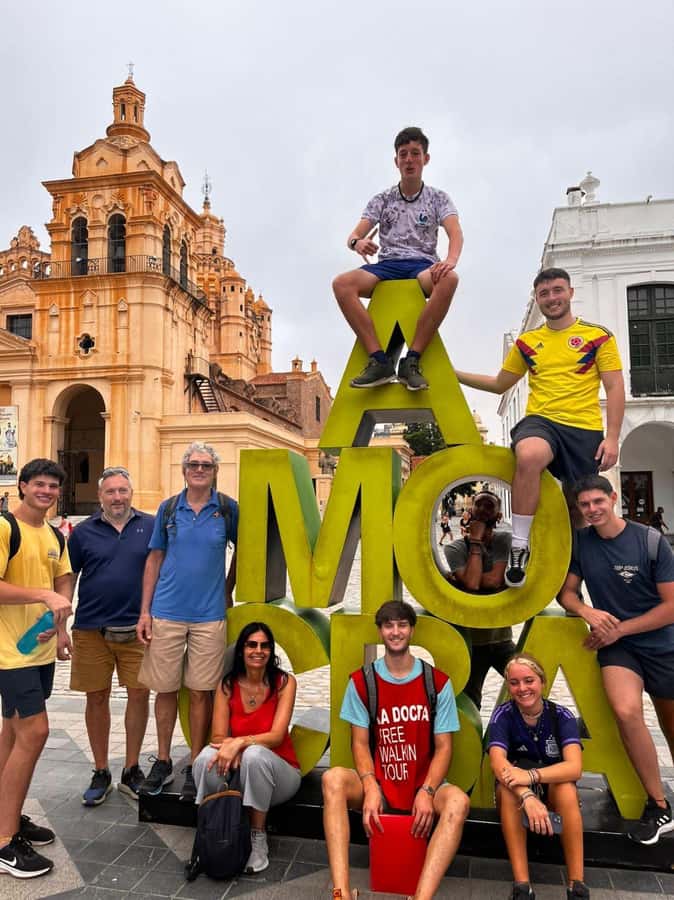
The Jesuit Crypt is another short stop, listed at about 10 minutes. Its underground setting gives the tour a change of mood after the open plaza and larger public buildings.
This is the kind of place that can be easy to miss when exploring alone. A guide helps you understand why it matters and where it fits into the Jesuit story. The stop is brief, so it is best viewed as an introduction rather than a full archaeological or religious study.
Conditions inside historic spaces can differ from the sunny streets above. Wear comfortable shoes, as requested, and keep a drink with you for the full walk. The organizers specifically recommend bringing water or another drink.
The Marquis of Sobremonte’s house
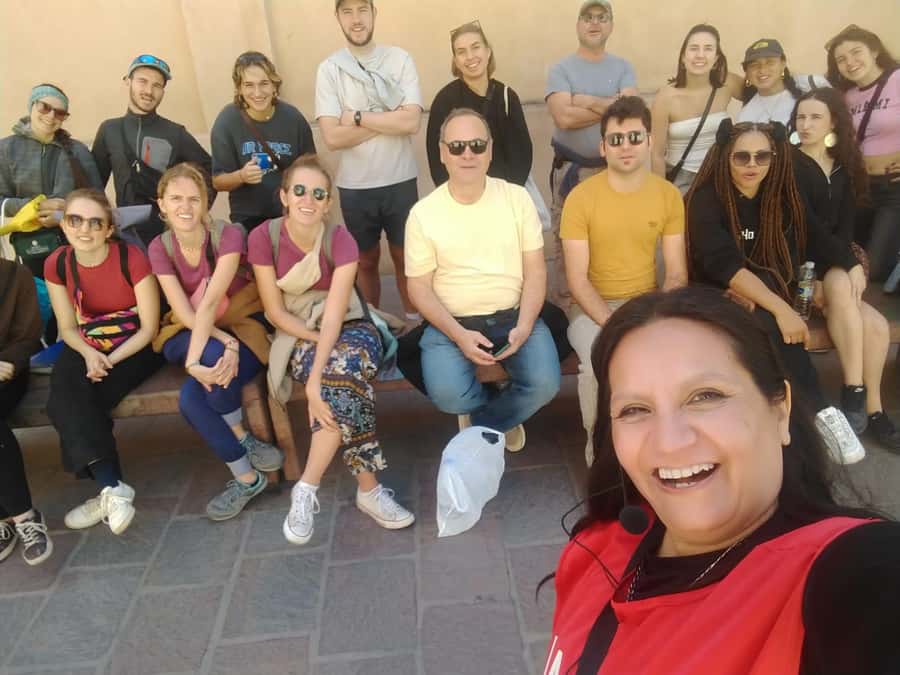
The Provincial Historical Museum in the House of the Marquis of Sobremonte takes about 10 minutes. The building gives you a look at elite domestic life during the colonial period, in contrast with the public spaces of the Cabildo and the religious buildings of the Jesuit Block.
This stop adds a personal side to the city’s past. You are not only learning about institutions and major events. You also get a sense of how one prominent household lived and how domestic spaces reflected status and authority.
Again, museum entry is not included. If you want time with the rooms and collections, plan to return independently. On the walking tour, the emphasis is on context and the building’s role in Córdoba’s larger story.
The Society of Jesus Church
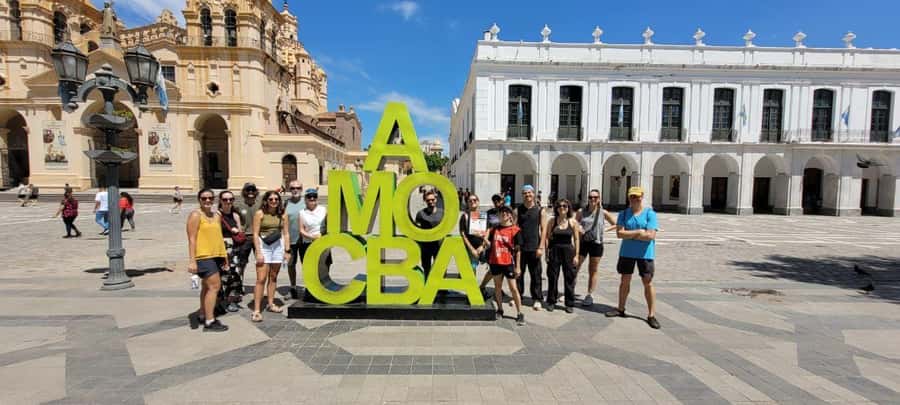
The Church of the Society of Jesus receives one of the longer stops, about 15 minutes. That extra time matters. The church is one of the defining religious buildings in Córdoba, and it deserves more than a quick glance from the pavement.
The guide can help you read the space: its religious purpose, its connection to the Jesuit Block, and its place in the city’s colonial development. Look up and around rather than focusing only on the main façade. Older churches often reveal their character through small details, materials, arches, and changes in construction.
This is also a good point to ask questions. The guides are praised for answering questions about Córdoba, Argentina, local people, and the country more broadly. If you have been wondering how the Jesuits shaped education and city life, this is a natural moment to ask.
Monserrat and Córdoba’s academic character
The National College of Monserrat is scheduled for about 10 minutes. Like the UNC Historical Museum, it shows how education is not a side note in Córdoba. It is part of the city’s core identity.
The building links the colonial past with Córdoba’s continuing academic life. The tour gives you enough background to recognize its importance, even if you are not especially interested in schools or university history.
This is where the tour’s broad approach pays off. You are not moving from monument to monument without connection. Religious buildings, civic offices, private homes, and schools all become pieces of one city story.
The guides make the difference
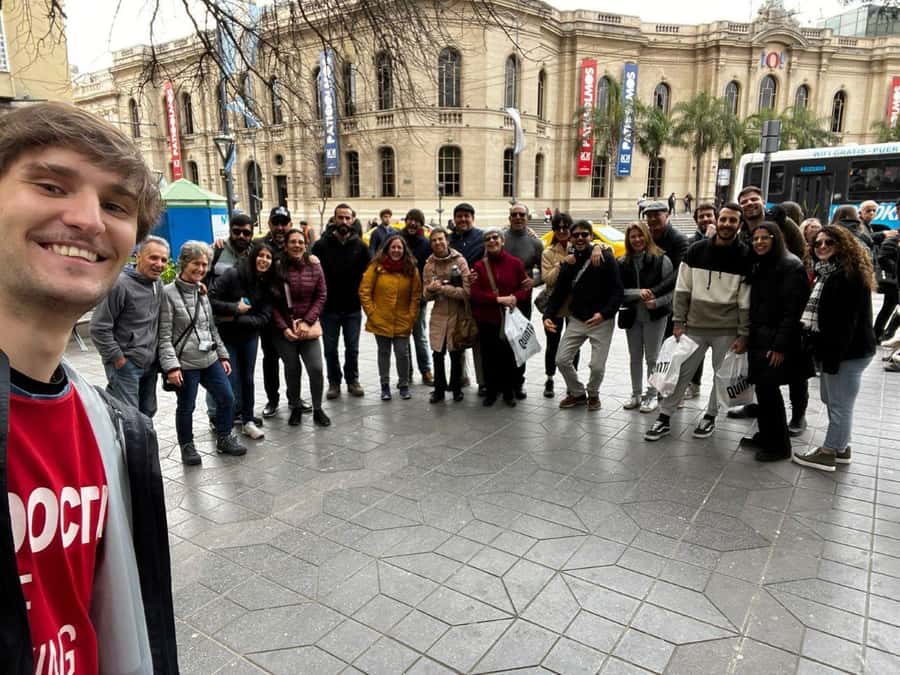
The clearest strength of this experience is the guide-led presentation. Tomas, also referred to as Tomy and Thomas, receives repeated praise for being funny, dynamic, engaging, and clear in English. His approach seems to suit people who want solid historical information without a stiff lecture.
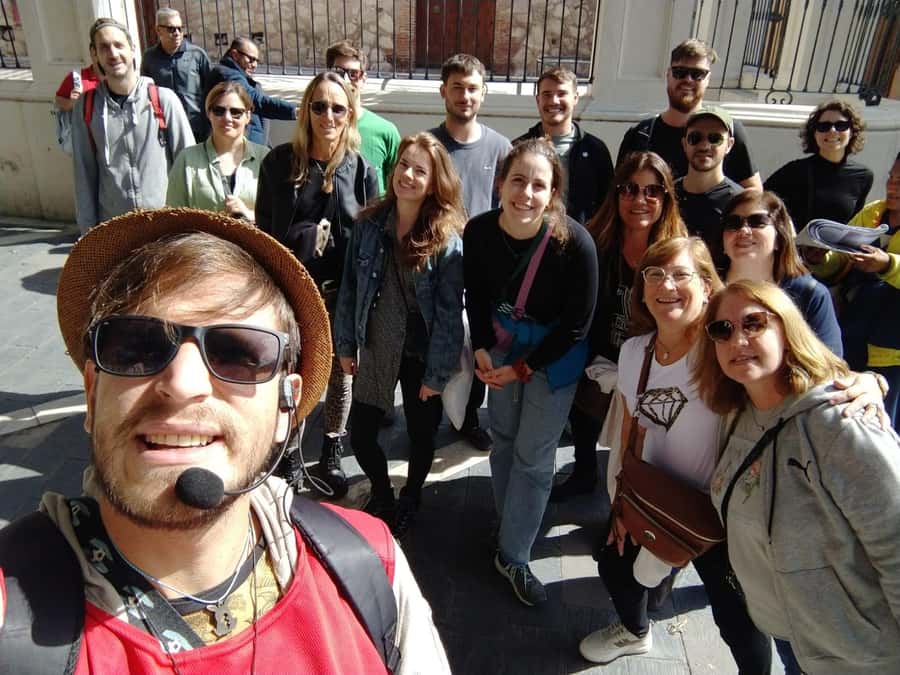
Valeria Velez is also singled out for her energy, emotional connection to the subject, and ability to get the group involved. Games and social activities can sound like a small detail, but they matter on a 150-minute walk. They help break the ice when people arrive alone or when the group includes several languages and nationalities.
Aldy is described as enthusiastic and full of life. That suggests a tour style with plenty of personality, though guides naturally differ from one departure to another. You should expect an animated presentation, not a quiet audio-guide experience.
The feedback also points to an important practical strength: the guides focus on the critical moments of Córdoba’s history rather than trying to cover every date. That is a good choice for a first visit. You leave with a working outline, then fill in details later if you wish.
Local sounds, tastes, and a social pace
The tour promises planned surprises involving local sounds and tastes. The exact details are not specified, so you should treat these as possible additions rather than a guaranteed food stop or formal tasting menu.
That uncertainty is not a problem if you see the experience for what it is. This is a history walk with local touches, not a dedicated food tour. The sounds and tastes are meant to give the city a human feel and keep the pace playful.
The social side is just as useful. You share the walk with other people, and guides may use games or conversation to help the group connect. If you enjoy meeting people during a trip, this format has more warmth than exploring the same route with a phone map.
What the $0.50 price really means
The advertised price is best understood as a reservation deposit, not the full cost of the experience. You pay $0.50 per person to book, then decide how much the tour is worth at the end.
That gives you flexibility, but it also calls for good manners. A free walking tour still depends on the guide’s time, preparation, language skills, and energy. If the guide gives you a useful introduction to Córdoba, a fair tip is part of the value equation.
The format is especially useful if you are trying to control costs or are not sure which kind of city tour suits you. You can secure a place for almost nothing, assess the experience for yourself, and pay according to the value you received.
Museum admissions are separate. You should not assume that the deposit covers entry to the UNC Historical Museum, the Sobremonte museum, or any other paid interior. This is one reason the tour works well as a first orientation, followed by self-guided museum visits.
Timing, walking comfort, and practical advice
The full route lasts 150 minutes and ends at Patio Olmos shopping mall. That is long enough to cover a lot of ground but short enough to fit into a morning or afternoon plan.
Wear comfortable shoes. You will be walking between several central sites, pausing for explanations, and spending time on your feet. Bring a drink, as recommended by the operator.
Meet beside the statue in Plaza San Martín and look for the red T-shirt. Arrive with enough time to identify the guide, especially if the plaza is busy. The tour is available in English and Spanish, and some content may be presented in its original language.
Free cancellation is available up to 24 hours before departure for a full refund. You can also reserve now and pay later, which helps if your Córdoba schedule is still changing. Check the available starting time when booking, since the exact departure schedule is not fixed here.
Who should book this Córdoba walking tour?
I would choose this tour if you are visiting Córdoba for the first time and want the historic center explained in a lively way. It also suits solo visitors and people who enjoy a social group setting.
History fans will appreciate the concentration of colonial buildings. Architecture lovers will find old brickwork, arches, churches, courtyards, and civic façades to examine. The tour can also suit people who want a simple English-language introduction without paying a high fixed tour fee.
It is less suitable if you want long, quiet visits inside museums or a highly specialized study of Jesuit architecture. The schedule gives most stops only 10 minutes, with 15 minutes at the UNC Historical Museum and Jesuit church. Think of it as a guided overview with selected visits, not a museum day.
Should you book La Docta Free Walking Tour?
Book it if you want to get your bearings in Córdoba while learning how the Cathedral, Cabildo, Jesuit institutions, old homes, and schools fit together. The very low deposit, English and Spanish options, lively guide style, and strong praise for Tomas, Valeria, and Aldy make it a sensible first-day choice.
Skip it if you dislike walking for two and a half hours, need extensive time inside each museum, or prefer a fixed-price private tour. For most visitors who want a friendly, informative introduction to Córdoba’s oldest center, the pay-what-you-wish structure offers good value, provided you budget separately for museum admissions and a fair end-of-tour payment.
FAQ
How long does the La Docta Córdoba La Antigua tour last?
The tour lasts 150 minutes, or two and a half hours.
Where does the tour meet?
You meet beside the statue in Plaza San Martín in central Córdoba. The guide wears a red T-shirt.
Where does the walking tour finish?
The tour finishes at Patio Olmos shopping mall.
Which languages are available?
The live tour guide is available in English and Spanish. Some content may be shown in its original language.
What sights are included?
The route includes the UNC Historical Museum and Jesuit Manzana, Cabildo de Córdoba, Cathedral of Córdoba, Jesuit Crypt, House of the Marquis of Sobremonte, Society of Jesus Church, and National College of Monserrat. The tour also begins at Plaza San Martín and finishes at Patio Olmos.
Are museum entrance fees included?
No. Admission to museums is not included in the tour price.
What should I bring?
Bring comfortable shoes and drinks. A $0.50 deposit is required to reserve, then you decide the tour’s final price at the end.
Just added around Argentina
- Zuccardi Legacy: A Journey Through Uco Valley’s Finest★ 5.0 · 5 reviews
- Tango Show at El Querandi with optional Dinner★ 4.2 · 3 reviews
- Wine Tasting in Buenos Aires★ 4.2 · 4 reviews
- Zuccardi Full Paired Lunch at Piedra Infinita in Uco Valley★ 3.0 · 3 reviews
- Wine Icons: Meet the sparkling world of Chandon★ 5.0 · 3 reviews
- Wine Idols: Meet El Enemigo by Alejandro Vigil★ 4.6 · 6 reviews
- Wine and Chocolate Bike Tour: ride, taste, lunch, vineyards.★ 4.1 · 10 reviews
- Wine Icons: Meet Salentein at the heart of Uco Valley★ 4.1 · 6 reviews
Walking Tours, compared.

Nazis in Buenos Aires: a historical walking tour
Read our review →
Buenos Aires Walking Tour with Local Guide and Optional Rooftop
Read our review →
Browse the lists this tour appears in