
Reviewed · WALKING TOURS
Full Day Private Walking Tour of Buenos Aires Neighborhoods
Recoleta Cemetery is the star of this seven-hour private tour, where marble mausoleums, striking sculpture, and the graves of Argentina’s most famous figures set the stage for understanding Buenos Aires. Guide Tracy then links the city’s grand avenues, political heart, old port, tango corners, and colorful La Boca into one full day.
I like the way the tour uses several kinds of transport, rather than turning the day into one long march. I also like the personal touch: Tracy has adjusted plans for shopping, helped with currency and arrival advice, and directed guests to local food and tango shoes. The main consideration is the pace. Seven hours across seven areas is a lot, and food is not included.
In This Review
- Key points at a glance
- Starting with Buenos Aires’ extraordinary cemetery
- Recoleta and the Parisian side of the city
- Plaza General San Martin and the city’s grand architecture
- The Obelisco and Avenida 9 de Julio
- Plaza de Mayo, where the national story gathers
- San Telmo, from old wealth to bohemian streets
- La Boca and the old port
- Why the private format changes the day
- Is $135 per person good value?
- Who should book this Buenos Aires tour?
- My verdict: a strong first day with one clear tradeoff
- FAQ
- How long does the Buenos Aires neighborhood tour last?
- Is the tour private?
- What neighborhoods and sights are included?
- Is the Recoleta Cemetery entrance fee included?
- Is transportation included?
- Are food and drinks included?
- Can the tour include a custom stop?
- What time does the tour operate?
- Is the tour offered in English?
- Can I cancel for a full refund?
Key points at a glance
- Recoleta Cemetery comes first: The included entrance fee covers one of Buenos Aires’ most unusual sights, with Evita’s grave and many less obvious works of sculpture.
- Seven neighborhoods fit into one day: Recoleta, Retiro, the Obelisco, Plaza de Mayo, San Telmo, and La Boca give you a strong first look at the city.
- Walking is mixed with transport: Your price includes the subway, taxis, buses, and private transportation at the beginning and end.
- Tracy offers a personal approach: Her bilingual English and Spanish make the day easier for English-speaking visitors, and the route can be adjusted when practical.
- History and daily life meet: You get grand palaces and government buildings, then cafes, antiques, street tango, football culture, and old port neighborhoods.
- Best for a short stay: If you have only one free day in Buenos Aires, this tour covers ground that would take careful planning to organize alone.
Starting with Buenos Aires’ extraordinary cemetery
La Recoleta Cemetery is a smart first stop because it gives the rest of the day a human frame. Instead of seeing Buenos Aires as a collection of handsome buildings, you begin with the people, families, politics, and social changes that shaped the city.
Expect about one hour among mausoleums and sculptures. The site is famous for Eva Perón, known as Evita, but her grave is only one part of the visit. The cemetery contains the final resting places of influential and controversial figures from Argentine history, and the most rewarding details are often the monuments you might walk past without noticing.
That is where a private guide matters. Tracy can point out the less obvious sculptures and explain the stories attached to them. The cemetery is not simply a place to tick off Evita’s grave. It is a compact lesson in Argentine ambition, wealth, public life, and memory.
The entrance fee, listed at about $15 per person, is included. That removes one small but useful nuisance, especially in Argentina, where prices and currency conversions can shift. Give yourself room to pause here. The sculpture and architecture reward close looking, not just a quick photograph.
A few more Buenos Aires trips to weigh up
- Buenos Aires Hop-On Hop-Off Bus, Free Walking Tours & Discounts
★ 4.5 · 2,218 reviews - Buenos Aires: La Boca Guided Walking Tour in English
★ 4.8 · 1,587 reviews - Nazis in Buenos Aires: a historical walking tour
★ 4.9 · 193 reviews
Recoleta and the Parisian side of the city
After the cemetery, you walk through Recoleta for about an hour. This is the Buenos Aires of elegant streets, large homes, polished cafes, luxury shopping, and grand architecture.
The nickname Paris of South America makes more sense here than in many other parts of the city. Recoleta shows how strongly European styles influenced Buenos Aires, particularly in the avenues and palaces associated with the city’s wealthier residents.
I like this pairing of cemetery and neighborhood. The cemetery introduces the people behind the city’s old power, while the surrounding streets show how that power was displayed. You are not just looking at attractive buildings. You are seeing the social world that produced them.
There is no separate admission charge for this walk, but shopping and cafe stops are your own expense. If you want a relaxed morning coffee or a purchase, tell Tracy early. The tour is private, so you are not locked into the needs of a large group.
Plaza General San Martin and the city’s grand architecture
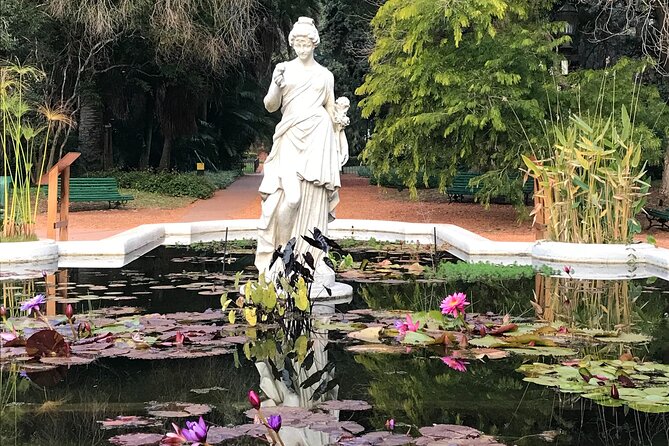
The next hour brings you to Plaza General San Martin in the Retiro area. The square gives you a useful cluster of architectural views, including Retiro train station, the British Tower, the Kavanagh Building, and the Palacios San Martin and Paz.
The Kavanagh Building is especially notable as the city’s first skyscraper and an example of rationalist architecture. That detail helps break up the usual parade of colonial and French-influenced buildings. Buenos Aires is not one architectural story. It has several, and this stop lets you compare them in a short walk.
The plaza honors José de San Martín, Argentina’s celebrated independence hero. This adds a national story to the private wealth and urban style you saw in Recoleta.
From here, the group takes the subway. The subway itself is part of the experience, described as a work of art. The included transport is more than a convenience. It lets you move like a resident and reach the central districts without spending the whole day in a car.
You should still expect some walking between the sights and the station. Comfortable shoes are sensible, particularly because the tour keeps moving for most of the day.
The Obelisco and Avenida 9 de Julio
The Obelisco marks the center of Avenida 9 de Julio, one of Buenos Aires’ grandest urban spaces and described here as the widest avenue on the planet. The area is the city’s answer to Times Square, with traffic, theaters, signs, and a constant sense of public movement.
You spend about an hour around the Obelisco and walk along Diagonal Norte, keeping the monument in view as you continue toward Plaza de Mayo. The route gives you a strong sense of Buenos Aires as a city built for spectacle.
The theater setting is a major part of this stop. Buenos Aires is often ranked among the world’s leading cities for live theater, and the Teatro Colón is close by, along with many other theaters. The tour does not list a performance or an interior visit, so think of this as an exterior and city-life stop rather than a theater ticket.
That distinction matters. If you want to see a performance or take a full guided visit inside Teatro Colón, you would need to arrange that separately. Still, the Obelisco area helps you understand the city’s modern identity, its love of public gatherings, and its grand scale.
Same city, a completely different kind of day:
- Buenos Aires: Piazzolla Tango Show with Optional Dinner
★ 4.4 · 2,122 reviews - Buenos Aires: City Highlights Guided Tour with Transfer
★ 4.7 · 1,946 reviews - Buenos Aires: Hop-On Hop-Off City Bus Tour
★ 4.2 · 1,855 reviews - Buenos Aires Hop-On Hop-Off Bus and Exclusive Benefits
★ 4.4 · 1,714 reviews
Plaza de Mayo, where the national story gathers
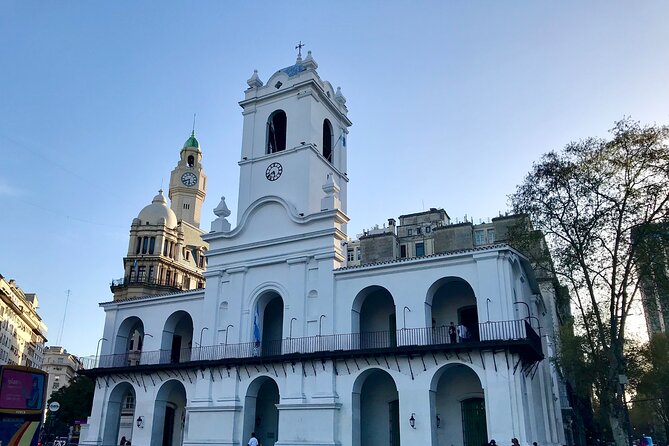
Plaza de Mayo is the political and symbolic center of the tour. In one square, you see the Casa Rosada, Argentina’s pink government house, the national cathedral, and the Cabildo, the former government building from the Spanish colonial period.
You get about an hour here. That is enough for an explanation of the principal buildings and the events tied to them, though anyone who wants long interior visits should ask how much time is available before the day begins.
The cathedral has a special connection to Pope Francis, who worked there before becoming pope. The Cabildo takes you back to the colonial period, while the Casa Rosada connects the square to modern Argentine government and public life.
This is one of the places where a guide can turn a pleasant square into a meaningful stop. Without context, you see a pink building, a church, and old civic architecture. With context, the plaza becomes a place where colonial rule, independence, national politics, and public identity meet.
It is also a useful moment to slow the pace. The first half of the tour covers a lot of ground, and Plaza de Mayo gives you time to orient yourself in central Buenos Aires before entering San Telmo.
San Telmo, from old wealth to bohemian streets
San Telmo offers one of the clearest changes in mood. In the early days of Buenos Aires, wealthy families lived here. Yellow fever epidemics later pushed many of those families toward what are now Recoleta and Retiro, and the old mansions took on new lives as artists and working-class residents moved in.
That shift helps explain San Telmo today. You find antiques, tango, cafes, bars, restaurants, and old buildings with a worn, lived-in feel. The neighborhood is especially famous for its Sunday street market, but the tour does not promise a Sunday departure, so do not assume the full market will be operating on another day.
The one-hour stop is a chance to snack, shop, watch street tango, and enjoy a less formal side of the city. Food and drinks are not included, but one previous itinerary allowed time at a reasonably priced local cafe. Treat that as a useful possibility, not a guaranteed meal arrangement.
San Telmo is also where the tour’s balance becomes clear. Recoleta shows luxury and order. San Telmo shows adaptation and reuse. The neighborhood’s appeal is not perfect polish. It is the way old houses, small businesses, music, food, and street life share the same setting.
La Boca and the old port
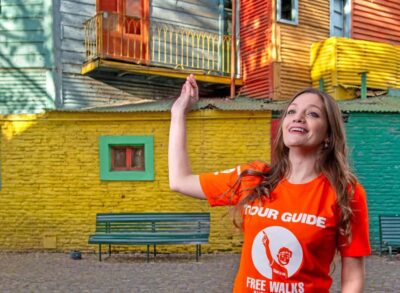
The final neighborhood is La Boca, the area associated with Buenos Aires’ original port. Its identity is tied to tango, art, football, colorful streets, and the old conventillos that once housed port workers.
Many of those former tenements now contain cafes, steakhouses, and souvenir shops. That gives you a way to see how a working port district has been turned into a place for visitors while still keeping links to its earlier life.
You spend about an hour here, with time for local tastes, tango, and a keepsake or two. Shopping is not included in the price, so bring a payment method that works for your plans and keep purchases modest if you still have transport and other stops ahead.
La Boca is a strong finish because it is visually different from Recoleta and the central squares. The colorful streets and football references offer a direct look at the city’s popular culture. At the same time, you should keep your expectations practical: this is a guided neighborhood visit, not a football match or a formal tango performance.
At the end, private transportation takes you back to your accommodation. That return transfer is valuable after a full day on foot and by public transport.
Why the private format changes the day
A private tour means only your group participates. That gives Tracy room to explain a point when you want more detail, adjust the route when practical, or help with a specific interest.
One person used the day to shop for tango shoes. Another used Tracy’s advice for food and plans beyond the tour. She also provided pre-arrival help with currency exchange and general planning, and her colleague Osvaldo was available for airport and other driving services. Those extras are not listed as part of the seven-hour tour itself, but they show the wider practical support available through the provider.
Tracy is Canadian and bilingual. Her English is reported as easy to understand, while her Spanish lets her communicate with local businesses and residents. For you, that can remove the friction of handling transport, food stops, or shopping in a new language.
The tour also combines walking with private car, taxi, bus, and subway travel. All transportation costs during the tour are included, as are private transfers at the start and end. That is a strong feature for a first day, particularly if you have limited time or are arriving from a cruise and want a dependable plan.
Is $135 per person good value?
At $135 per person, this is not the cheapest way to see Buenos Aires. It is also not a simple walking tour. The price includes roughly seven hours of one-to-one guiding, the Recoleta Cemetery admission, transport during the route, and private transportation at the beginning and end.
You pay for time saved as much as for sightseeing. Planning this route alone would mean working out connections between widely separated districts, finding the cemetery entrance, choosing what to see in each neighborhood, and handling taxis or public transport. The private format also avoids waiting for a group and gives you a direct source of local advice.
Food and drinks are extra. Shopping, theater tickets, and any activities beyond the listed stops are also your responsibility. Argentina’s peso can be volatile, and the tour price is set in US dollars before conversion to your local currency. Check the currency setting carefully when booking, since paying in Argentine pesos is not advised for this experience.
The value is strongest if you have one full day, want historical explanation, and prefer someone else to manage the connections. If you have several days and enjoy building your own route, you could visit these areas independently for less.
Who should book this Buenos Aires tour?
I would choose this for a first visit, a short stay, or a cruise stop with only one free day in the city. It is also a good fit if you want a guide who can explain architecture and history while helping with practical choices such as food, shopping, and later plans.
Families and couples can benefit from the private pace, and solo visitors get the same individual attention without joining a large group. Most people can participate, service animals are allowed, and the route is near public transportation.
The pace may be demanding for anyone who dislikes full days of walking and moving between districts. Ask about the exact meeting point and the day’s rhythm before setting out, especially if you need frequent breaks. The listed start window is between 9:00 and 11:00 a.m., Monday through Sunday.
Free cancellation is available if you cancel at least 24 hours before the local start time. Changes or cancellations inside that window are not accepted for a refund.
My verdict: a strong first day with one clear tradeoff
Book this tour if you want Buenos Aires explained, not just photographed. Recoleta Cemetery, Plaza de Mayo, San Telmo, and La Boca are very different places, and Tracy connects them with stories, architecture, transport help, and practical advice.
Skip it if you prefer slow, self-guided days or want long visits inside individual museums and landmarks. For everyone else, the cost buys a remarkably efficient introduction to Buenos Aires, with the benefit of a private guide and a comfortable ride back at the end.
FAQ
How long does the Buenos Aires neighborhood tour last?
The tour lasts approximately seven hours.
Is the tour private?
Yes. Only your group participates in this private activity.
What neighborhoods and sights are included?
The route includes La Recoleta Cemetery, Recoleta, Plaza General San Martin, the Obelisco, Plaza de Mayo, San Telmo, and La Boca.
Is the Recoleta Cemetery entrance fee included?
Yes. The listed entrance fee is approximately $15 per person and is included in the tour price.
Is transportation included?
Yes. Transportation costs during the tour are included, including private car, taxi, bus, and subway travel. Private transportation at the beginning and end is also included.
Are food and drinks included?
No. Food and drinks are not included. You may have the chance to stop at a local cafe, but meals and snacks are your own expense.
Can the tour include a custom stop?
The private format allows the guide to adjust the day when practical. A previous guest arranged time to shop for tango shoes, so you can discuss special interests with Tracy.
What time does the tour operate?
The available opening window is 9:00 a.m. to 11:00 a.m., Monday through Sunday, for the dates shown in the booking information.
Is the tour offered in English?
Tracy is bilingual in English and Spanish. Her English is described as easy to understand for English-speaking visitors.
Can I cancel for a full refund?
Yes, if you cancel at least 24 hours before the experience start time. Cancellations or changes made less than 24 hours before the start time are not accepted for a refund.
Just added around Buenos Aires
- Tango Show at El Querandi with optional Dinner★ 4.2 · 3 reviews
- Wine Tasting in Buenos Aires★ 4.2 · 4 reviews
- Walking Tour: Buenos Aires bookstores★ 4.3 · 12 reviews
- Velez Sarsfield Football Match★ 5.0 · 3 reviews
- Unique Tigre and Delta Private Day Cruise Navegation★ 5.0 · 3 reviews
- Tour Buenos Aires in one day on Electric Scooters★ 5.0 · 33 reviews
- Private Underground Tango Immersion★ 5.0 · 31 reviews
- Sailing with Wine Tasting in Buenos Aires★ 5.0 · 50 reviews
Walking Tours, compared.
Nazis in Buenos Aires: a historical walking tour
Read our review →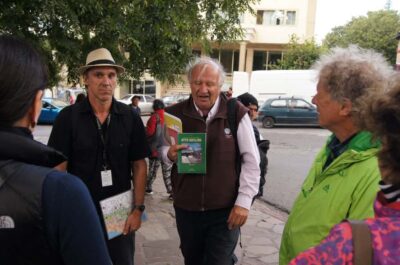
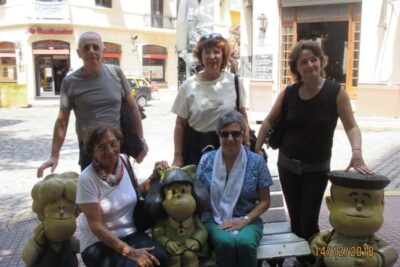
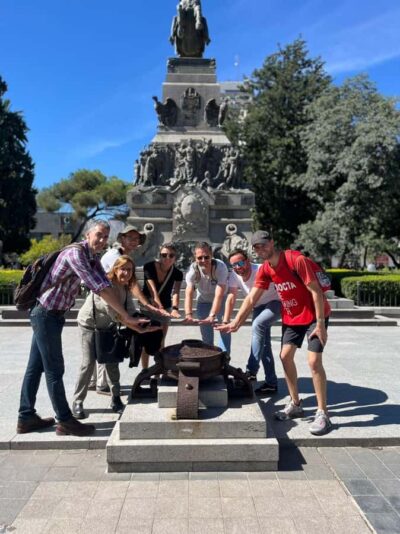
La Docta Free Walking Tour “Córdoba La Antigua”.
Read our review →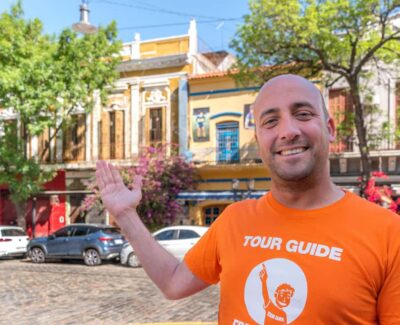
Buenos Aires Walking Tour with Local Guide and Optional Rooftop
Read our review →
Browse the lists this tour appears in